Oh, well… but not everything is so bad
 Though I had unrealistic high hopes for the remake of The Prisoner, if only because of the presence of Ian McKellan, early returns are not good,other than noting that Ian McKellan is the only redeeming value.
Sigh. I guess the success of Battlestar Galactica and perhaps also the Star Trek reboot resulted in unwarranted optimism about remakes, as the track record remains mostly abysmal, with the exceptions proving the rule. And the exceptions usually have the advantage of source material in sore need of improvement.
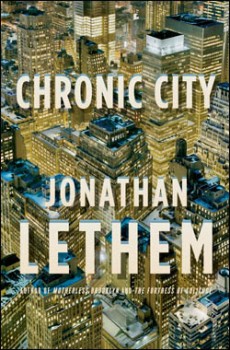 On a more positive note, I just finished Jonathan Lethem’s Chronic City I’ve only read a few reviews, and then only just skimmed them, which can be the only explanation why I haven’t seen anyone draw the obvious line between Philip Dick and this novel. Besides the overall Dickian theme of “just because I’m paranoid doesn’t mean they’re not out to get me,” one example of Lethem’s riffs on Dick is the protagonist’s highly publicized relationship with his astronaut fiancée, trapped in orbit by Chinese mines, whose love letters try to make the best of both their situations. I’m assuming it is not coincidental that in Dick’s Dr. Bloodmoney, the character Walt Dangerfield is also stuck in permanent orbit around the earth, and whose daily broadcasts inspire his devoted listeners to carry on in the aftermath of catastrophe. Somewhere, there’s a master’s thesis in picking out all the Dickian parables in Lethem’s wonderful novel.
You might have to be a bit of a geek to appreciate this (and would you be reading this if your weren’t?). Highly recommended.
 In today’s mail arrived the December 2009
 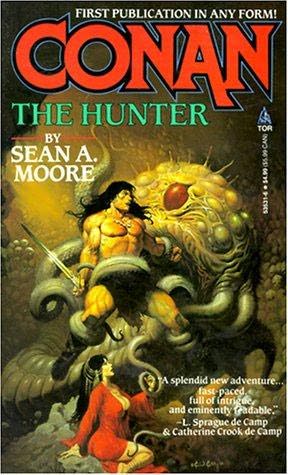 Conan the Hunter


 with my good friend
 ![[info]](http://l-stat.livejournal.com/img/userinfo.gif)
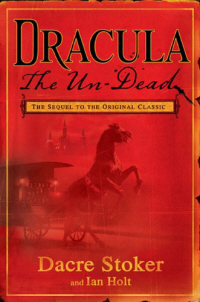 As far as I’m concerned, Christmas just came early.
 If there is a watch, then there must be a watchmaker. That’s the crux of the argument for intelligent design, that existence, and specifically you and me, are the result of some conscious creator. My main problem with this is the adjective “intelligent.” If I was designing existence, there’s a lot I’d leave out, like cancer or maggots or flatulence or Glenn Beck. Or that for certain kinds of life to continue and thrive, other life forms must suffer. Besides, this all begs the question of, if there is a designer (intelligent or otherwise), who created the designer?
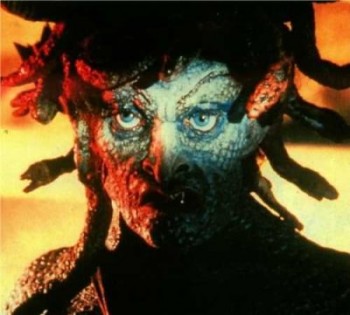 I’m not going to say anything about how Hollywood hasn’t had an original thought since 1997. Or the absurdity of remaking films when they are going to be rewritten or re-imagined anyway. Or how most remakes turn into hyper-kinetic kaleidoscopes of eye-candy and dumb dialogue.
 From Jason Sizemore of Apex Magazine:
 My novel-writing continues apace. Therefore, I shall be brief today. Or as brief as I possibly can.
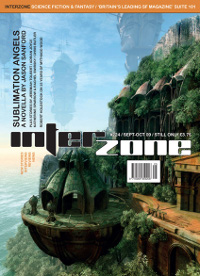
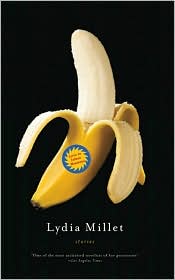 While her work sometimes hints at the fantastic, Lydia Millet isn’t strictly speaking a fantasy writer, certainly not in the sense of questing elves or weird alternate universes, and certainly not as evidenced in her new short story collection, Love in Infant Monkeys. Yet Millet’s work is frequently mentioned in genre venues; indeed, one of the stories collected here, “Thomas Edison and Vasil Golakov,” (in which the famed inventor of light bulbs and power generation attains metaphysical illumination by continually re-running a film of a circus elephant’s seemingly Christ-like electrocution)previously appeared in