Robert Low’s The Wolf Sea
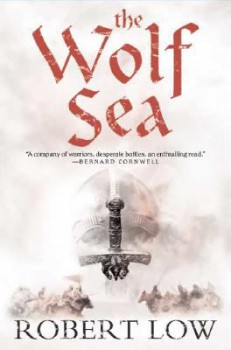 The Wolf Sea
Robert Low
Thomas Dunne Books — St. Martin’s Press (340 pages, Hardback, June 2008, First published in Great Britain by HarperCollins, $24.95)
Reviewed by Bill Ward
This follow-up to 2007’s The Whale Road, Robert Low’s debut novel of grim Viking adventurers questing for the lost horde of Attila the Hun, is a continuation of the story of the Oathsworn and their new and untested leader, Orm Rurisksson. Orm, still a teenager, earned a reputation as a ‘deep thinker’ amongst his Viking crew and was their choice for leader with the death of Einar the Black — the man who had led them on a doomed expedition to the very ends of the earth in the first book of this series.
The Wolf Sea begins in Miklagard — the Norse-termed ‘Great City’ of Constantinople — with the theft of the jeweled saber Orm rescued from the Volsung horde in The Whale Road. Valuable in and of itself, perhaps even magical, the saber is also the key to finding Attila’s silver because Orm has carved its hilt with runes that will act as a guide should the Oathsworn ever return to the steppe. It turns out the saber has fallen into the hands of their old enemy, Starkad, who also seeks the fabulous treasure but has no idea that he possesses the key to finding it. Starkad is convinced that Martin, the venal priest that journeyed with the Oathsworn in their quest for Attila’s tomb, knows the way to the treasure and he sets off to the Holy Land to find him — with Orm and the Oathsworn in pursuit.
…
 Don’t talk to a wolf in your Grandma’s nighty, don’t take an apple from a creepy old lady and when in doubt, trust the house mice.
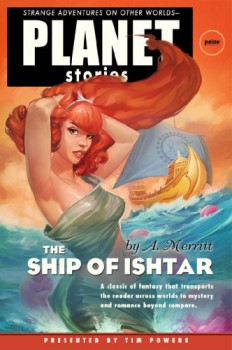 The Ship of Ishtar
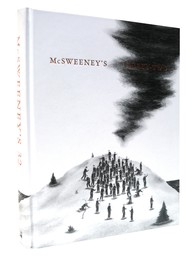 McSweeney’s is a quirky quarterly that breaks conventional publishing boundaries with each issue devoted to a unique theme, both in terms of editorial content and physical packaging. For
  In the age of fat fantasy series, doorstop thrillers, and historical epics it’s often impossible to find a short, satisfying read. Gone are the days of the 60,000 word science fiction novel, or even the novella doubles series Ace once put out. Long a standard of genre fiction — both the worlds of SF and of fantasy having a host of renowned novellas and short novels considered classics in their respective fields — these short, sharp stories are increasingly ignored for multi-book works of massive length. But, sometimes, it’s nice to get a book done in a day or two, it’s nice to explore an idea, premise, or setting without committing to dozens or hundreds of hours with it.
 I don’t think I’ve gone to see a children’s play since my youngest brother was in a community church production of Grease. I’ve certainly never attended one with an eye out for analysis.
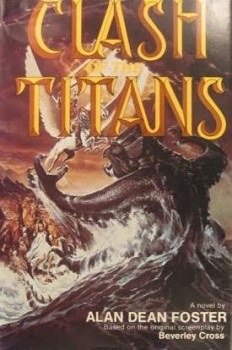 Update: Alan Dean Foster has generously provided some comments of his own about the novelization. Please see the comments section.