Black Gate Zeppelin to Dragon*Con Update 5: It’s too Hideous
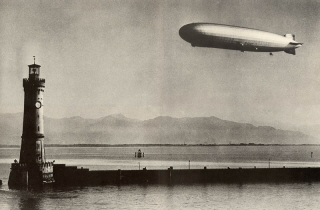
Oh God. Oh, God. Lovecraft was right. Things that are seen, cannot be unseen.
So I thought I’d have a private cabin on this flying death-trap Howard Andrew Jones has poetically named The Harold Lamb, but no. That’s reserved for important bloggers, like Sue “Goth Chick” Granquist, and our fancy pilot, Bill Ward. During our trip to Atlanta, I’m stuck down here in engineering, sharing a tiny cabin with Jason Waltz and John Woolley. They’re good guys, but for the past two days they’ve been laughing about some private joke. This morning, when I was finally done shoveling coal into the engines, I asked them to let me in on it.
They share a glance, and then Woolley moves a little closer, his voice lowered. “Okay,” he says. “You know how naive editor John O’Neill is, right?”
Well, yeah. He’s a Canadian, he trusts everyone. I nod, and Woolley continues: “He’s never been to Dragon*Con before. Yesterday he asks me and Jason about it. What he should expect, stuff like that. So I tell him, it’s tradition to dress up as Princess Leia — that wins everyone over. And he totally falls for it.”
I chuckle. That sounds like John. Right now he’s probably in the stores, cutting up sheets to make a white princess dress. But before I can comment, Jason adds: “That’s not the worst part. Yesterday I heard him asking Howard about those illegal genetic samples we picked up when we raided Dr. Zarius’ polar labs. He took two back to his room.”
“Wait,” I say, with mounting horror. “O’Neill’s not crazy enough to experiment with those…. is he? They can change you, in ways you’d never imagine.” I can see in John’s and Jason’s faces that they’ve suddenly come to the same dread conclusion I have. In moments, the three of us are pounding on the door to O’Neill’s cabin.
“Go away!” he shouts from inside. But his voice…. it’s changed. Changed in indescribable ways.
“We’ve got to break down this door,” Woolley says fervently, grabbing a crow bar. Jason helps him, but I start to back away. I know, with absolute mounting horror, what we’ll find when we open that door. It can’t be… it can’t be… but I know that it will be. And I can feel my very sanity slipping away… just as I hear the door crash open, and the screaming begins, as John and Jason look upon the horror within…
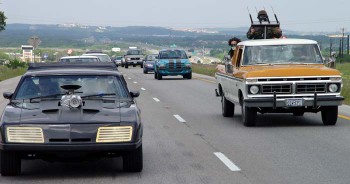 No deals . . . I want to drive the truck.
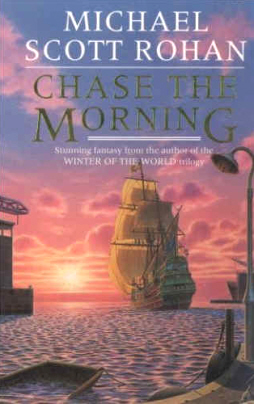 Steve is a very normal man, perhaps even a bit boring. He works at an English shipping company, handling inventories and looking forward to a career in politics once he climbs the business ladder as far as it will take him. One day, for no particular reason, a sudden fit of discontent sends him down to the docks looking for something different, perhaps a restaurant he hasn’t visited. In an alley, he sees a man being attacked . . .
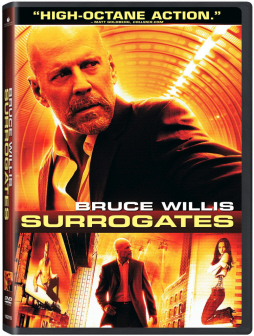 Early on in this film we see Bruce Willis with hair and looking young, and not Die-Hard bashed up, and we wonder absently if this time he’ll actually finish the film as scar-free as he began it. The Willis we begin with is quickly established as a ‘surrogate,’ the robot avatar of the real Willis character, Tom Greer, and it doesn’t take long for both Greer and his surrogate to get bashed up in familiar form.
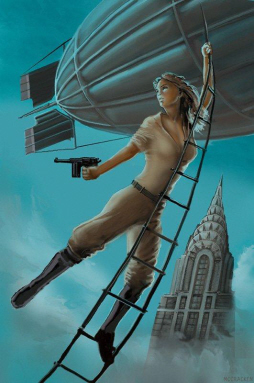 On the whole, I’m not opposed to traveling with boys. Generally speaking they are amusing companions particularly when refusing to ask directions, thereby winding you through mildly interesting places while attempting to locate the desired destination sans MapQuest. Along the route, in an effort to distract their hapless passengers from all the pointless meandering, they can generally be counted on for lively and revealing conversation about former girlfriends, prior arrests and entirely icky things done in frat houses; all of which become prime blackmail fodder for later use.
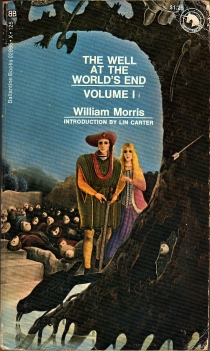 Who was the first person to write high fantasy?
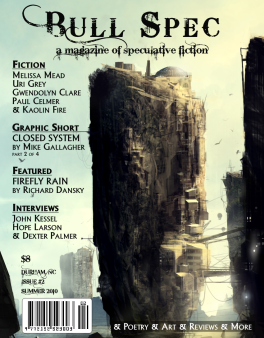 The second issue of Bull Spec, Samuel Montgomery-Blinn’s quarterly print magazine of Speculative Fiction, arrived last week, with a spectacular cover by Vladimir Krizan.
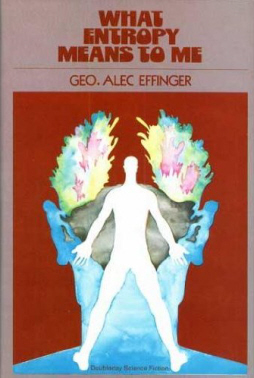 There are indeed urban legends at work in the Collector’s market. For example, the entire print order of George Alec Effinger’s first novel, What Entropy Means to Me (Doubleday, 1972) was supposedly pulped before publication (almost certainly untrue).
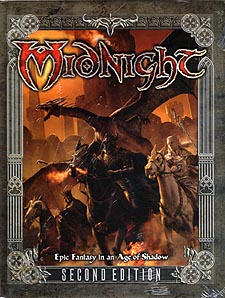 “Imagine if Frodo had died during his journey and the One Ring had returned to Sauron.”