Are Joe Abercrombie’s Novels “Poison to Both the Reader’s Mind and Culture?”

So I’ve been enjoying the fascinating debate on modern epic fantasy between Leo Grin and author Joe Abercrombie. It opened with Leo’s absorbing essay on what he sees as the profound flaws in modern fantasy in general:
I used to think I was a fan of the genre known today as fantasy, and specifically the subgenres of High Fantasy and Sword-and-Sorcery… But it was only recently, after decades of ever-increasing reading disappointment, that I grudgingly began to admit the truth: I don’t particularly care for fantasy per se. What I actually cherish is something far more rare: the elevated prose poetry, mythopoeic subcreation, and thematic richness that only the best fantasy achieves, and that echoes in important particulars the myths and fables of old. This realization eliminates, at a stroke, virtually everything written under the banner of fantasy today.
And in writers like Joe Abercrombie in particular:
Think of a Lord of the Rings where, after stringing you along for thousands of pages, all of the hobbits end up dying of cancer contracted by their proximity to the Ring, Aragorn is revealed to be a buffoonish puppet-king of no honor and false might, and Gandalf no sooner celebrates the defeat of Sauron than he executes a long-held plot to become the new Dark Lord of Middle-earth, and you have some idea of what to expect should you descend into Abercrombie’s jaded literary sewer.

Joe has responded to this description with typical humor:
That sounds … kind of interesting to me, actually, but I dimly percieve that Leo doesn’t like it. Your mileage may vary, of course. But why all the fury, Leo? Relax. Pour yourself a drink. Admire your unrivalled collection of Frank Frazetta prints for a while. Wrestle the old blood pressure down. When an old building is demolished to make way for a new, I can see the cause of upset… But books don’t work that way. If I choose to write my own take on fantasy, what gets destroyed?
As he has done in the past, Leo lays the blame for many of the ills of the modern era on liberals.
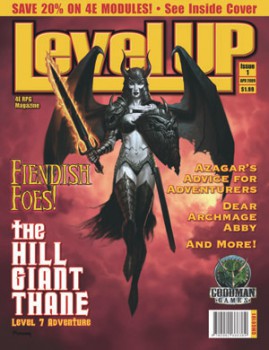 Gaming magazines can be a great asset to planning a roleplaying game, but I’ve often considered them to not be worth the cost. This one, reviewed by our very own Howard Andrew Jones, looks like it gives quite a bit of bang for the buck (or, in this case, 2 bucks). The publisher,
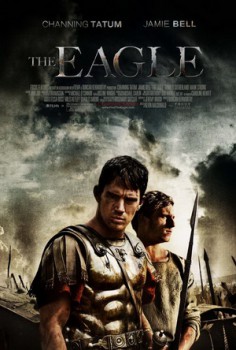 The Eagle (2011)
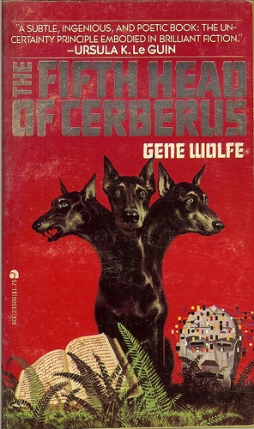 Reading The Fifth Head of Cerberus, I was struck by the way the book seemed eminently suited to the internet age. Never mind that it was written in the early 1970s. Like many of Gene Wolfe’s fictions, it’s a text whose nature is in harmony with the way the internet allows a text to be scrutinised; its depths, its meanings, its allusions — or at least some of them — can produce multiple readings, any of which can be valid, but which deepen the work as a whole the more of them you can think of and hold in your head at once. And can any one reader imagine as many different readings as a community of readers will produce?
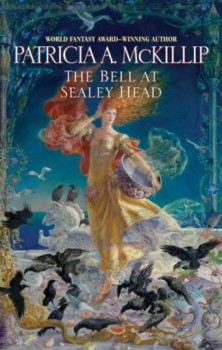 The Bell at Sealey Head