Clockwork Angels II. Winding Like an Ancient River the Time is Now Again
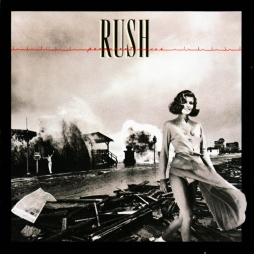 This is the second part of a look at Rush, whose new steampunk epic Clockwork Angels came out earlier this month. I think it’s a wonderful album, but to explain why it seemed to me worth looking at their earlier work — I looked at what they’ve accomplished as a band, and what drummer and lyricist Neil Peart has become as a writer. Last time, I looked at their records up through 1978’s Hemispheres; I therefore begin here in 1980, with the next album, Permanent Waves. (You can find that first post here; the third post, looking closely at the new album, is here.)
Permanent Waves began a process of moving away from the extensive side-long epics of past albums toward more concise songs. In this the band may have been influenced by the contemporary music scene — the title of the album, in addition to being a reference to the last song of the album, also glances at New Wave. Peart originally planned a long song based on the medieval poem Sir Gawaine and the Green Knight, but at some point plans changed. The lyrics were scrapped, and the music adapted for what became the record’s longest song, “Natural Science.”
“Natural Science” is a three-part composition about the complexity of time and space. Some of the imagery verges on the science-fictional (the second part’s titled “Hyperspace”), but it’s not necessarily sf itself. Similarly, “Jacob’s Ladder,” which concludes side one, is a seven-minute-plus song that describes the sun emerging from clouds, filled with nature imagery by way of mythic or fantastic language. Again, though, not explicitly fantasy.
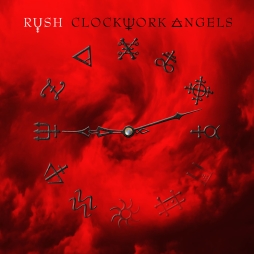 On June 12 the new album by veteran Canadian power-prog-rock trio Rush was released. I went out in pouring rain to buy a copy because I had to have it that day. In reading what follows (the first of three posts, with part two
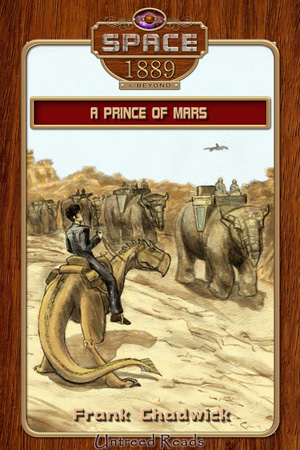 A Prince of Mars
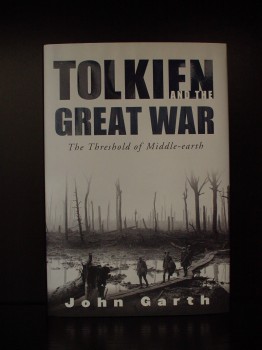 As a subscriber to the Mythsoc listserv, I was very grateful to find a link from Michael Martinez — proprietor of the fine Middle-earth.xenite.org website — to a recent interview conducted with J.R.R. Tolkien scholar, John Garth, author of Tolkien and the Great War: The Threshold of Middle-earth (Houghton Mifflin Company, 2003). It’s a fascinating read and worth checking out;