Interzone 241
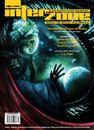 The July-August issue of Interzone features new stories by Sean McMullen (”Steamgothic”), Aliette de Bodard (”Ship’s Brother”), David Ira Cleary (”One Day in Time City”), Gareth L. Powell (“Railroad Angel”), and the 2011 James White Award-winning story “Invocation of the Lurker” by C.J. Paget; cover artwork by Ben Baldwin; an interview with Juliet E. Mckenna by Elaine Gallagher; “Ansible Link” genre news and miscellanea by David Langford; “Mutant Popcorn” film reviews by Nick Lowe; “Laser Fodder” DVD/Blu-Ray reviews by Tony Lee; and book reviews by various contributors.
Interzone alternates monthly publication with sister dark horror-focused Black Static, published by the fine folks at TTA Press.
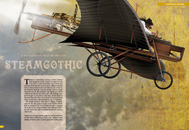
Here’s the opening of the lead novelette:
There is something special about things that change the world. I cannot say what it is, but I can feel it. I have stood before the Vostok capsule that carried the first man into space. Influence glowed from it, I knew where it was even with my eyes closed. In the Spurlock Museum I saw the strange, twisted, lumpy thing that was the first transistor. The significance that it radiated was like the heat from a fire. The Babbage Analytical Engine of 1871 had no such aura, yet the whole of Bletchley Park did. There was no doubt in my mind about which of them had really launched the age of computers.
The Wright Brothers’ Flyer had no feeling of significance for me. This made no sense. It was the first heavier than air machine to fly, it proved the principle, it changed the world, yet my strange intuition said otherwise. Then I saw the Aeronaute, and everything should have become clear to me.

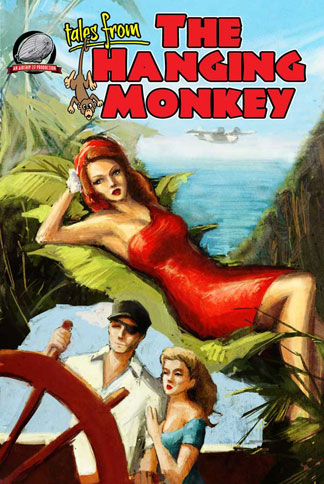 Tales of the Gold Monkey only lasted one season in the early 1980s, but the series has developed a steady cult following in the years since its brief network run. Dismissed as nothing more than an inferior small screen knockoff of the contemporaneous Raiders of the Lost Ark, the series has finally started to earn the recognition denied it at the time. While it took a Hollywood blockbuster to convince network executives to green-light the series, the proposal had been around since the 1970s and the show was conceived, like Raiders, in homage to the serials and classic adventure stories of the past.