Goblin Secrets, A Review
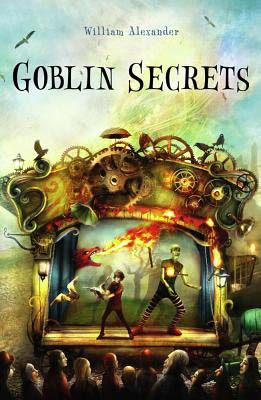 Goblin Secrets
William Alexander
Margaret K. McElderry Books (240 pages, $16.99, Hardcover 2012)
Reviewed by C.S.E. Cooney
After reading this article about the decay of criticism in online book culture and the rise of the “cult of admiration,” I’m feeling a little furtive, a little tender, when I first sit down to write about things I like. Ashamed of, I dunno, “enthusing.”
I mean, look at that word. “Enthuse.” It’s just soggy with connotation. To enthuse is to be ridiculous, unsophisticated, bumptious even — and don’t I wish my brains to be a whirl of razorblades, that my words might be bright like blood on snow?
That said, alas, I can never sufficiently motivate myself to write about things I dislike. The energy it takes to be snarky! And then, to be cleverly snarky! Things I perceive as stupid sap me of that energy. In fact, stupid things fade so fast from my mind, it’s almost like a magical amnesia, like I was wand-bopped by some Fairy of Forgetting on my Naming Day and doomed to be as unlike Addison DeWitt as a self-styled critic may be.
This forgetting may be a kind of criticism in itself, but it’s not the public, in your face(book), post-to-the-Zeitgeist kind. It is personal. It is not at all useful to society in the ways certain negative reviews can be. (For the interested, author James Enge listed a few services negative reviews may provide, in a recent blog:
Negative reviews provide a public health service: some books, or elements in some books, constitute hazards that the public has a right to be warned about… [They also can be] useful autopsies of failure. Sometimes you can figure out how fiction works by examining a fiction that doesn’t work.
The point of all this — the POINT, my friends and fellow readers — is… that I, um, loved Goblin Secrets, by William Alexander.

 Fans of Peter Jackson’s The Lord of the Rings should be thrilled that The Hobbit, originally planned as two feature films,