Teaching and Fantasy Literature: Or Maybe It Can’t Be Toned Down
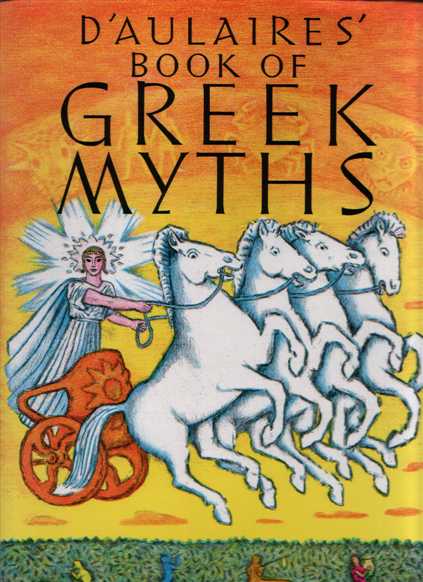 I got my first taste of Greek mythology from D’Aulaire’s Greek Myths. Later, when I was old enough for Bulfinch’s Mythology, I thought I had graduated to the real thing. Homer came to me by way of a dusty turn-of-the-century book with a title along the lines of The Boy’s Own Homer, with glorious color illustrations. D’Aulaire gave me the Norse myths, too, though I didn’t get The Ring of the Niebelungen until a friend gave me a mixtape that included Anna Russell’s brilliant twenty-minute Ring cycle sketch.
When my parents realized I knew nothing whatever about the Bible — I was ten — they rectified my cultural illiteracy with Pearl Buck’s two-volume The Story Bible. Of all those beginner versions of classics, only Buck’s biblical books kept all the sex and violence in. Imagine my shock when my mother handed me Ovid’s Metamorphoses in Mandelbaum’s complete and very faithful translation. I was twelve. What was she thinking? If the Metamorphoses were a blog, every post would have cut text with PTSD trigger warnings.
Mark Rigney’s post on how old a kid should be before reading or watching The Hunger Games touched on a problem I face often as a teacher of teenagers, some as young as 13. Since I’m a freelance teacher, making house calls, my students’ parents are sometimes directly involved in the question of how old is old enough for which book. Other times, especially when the parents don’t speak much English, I actually wish I could involve them more directly than the language barrier allows.
I’ll face the age question all over again, differently, when my own kids can read on their own. Inevitably, I come at the predicament through my own history as a reader — which stories I was denied too long or permitted too early. As a maker of stories, I’m fascinated also with seeing what of a story can survive the translation into the consciousness of the young, either through the efforts of adult writers who reinterpret the stories, or through the efforts of kids themselves when they try to make sense of them.
 Paul Kearney’s piece on large-scale battle scenes is just what I hoped it would be. You know all the familiar gripes about fantasy warfare that fails the suspension-of-disbelief test: the army never seems to eat or excrete, never needs to get paid, charges its horses directly into walls of seasoned enemy pikemen, and so on. “So You Want to Fight a War” addresses all those mundane things an author must get right if the fantasy elements of her story are to feel real to the reader, and then Kearney pushes past the gripes into solutions that any conscientious author can learn to implement. It’s that last bit that I found truly refreshing — many discussions of military verisimilitude get bogged down in griping. Kearney assumes throughout that it’s possible for his reader to get this stuff right, with enough good models, research, and practice.
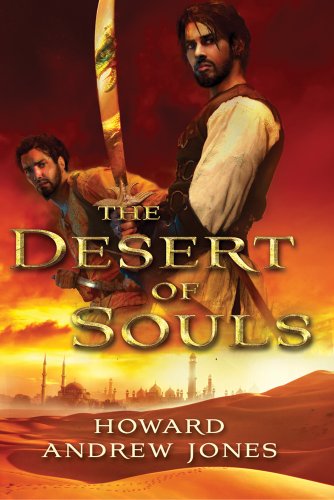 Howard Andrew Jones’s “Two Sought Adventure” details the problems and potentials in stories that have more than one hero. A story with multiple heroes is very different from a one-hero story with a sidekick, love interest, foil, nemesis, or whatever. There are plenty of straightforward techniques for using secondary characters to reveal a single protagonist’s character. Using two (or more) heroes to do this for one another in a way that feels balanced and gratifying for the reader is a tougher trick. Dialogue is crucial, and Jones offers close readings of dialogue from his own work and others’ that illustrate ways to welcome the reader into the shorthand, in-jokes, and shifting tones in conversations between longtime friends. He also addresses a problem I’ve seen in too much professionally published fiction: the duo that bickers like an old married couple, to the point where you wish they would split up, go away, or get eaten by the monster already. Friends have conflict, and friends engaged in epic heroics may have epic conflicts, but bickering is only entertaining in small doses, and it’s rarely illuminating. Jones offers a variety of specific alternative ways to handle conflict between heroes, and to interweave it with a story’s other conflicts.