Browsed by
Category: Vintage Treasures

Vintage Treasures: The Ghatti Tales of Gayle Greeno

Vintage Treasures: The Ghatti Tales of Gayle Greeno

Sunderlies Seeking-small The Farthest Seeking

When I was running SF Site in the late 90s, I got hundreds of review books every year. Many appealed to me, though I had time to read almost none, and instead assigned them to our freelance reviewers. (Isn’t that always the way? You can have plenty of books, or you can have plenty of time, but you can never have both.)

Anyway, in the intervening 15+ years, I’ve long since forgotten most of the delightful volumes that passed through my hands. Yesterday I was in my basement — excuse me, the Cave of Wonders — making room for recent arrivals, packing up nearly a thousand old review copies to store in the attic, when I came across my dust-covered copy of Sunderlies Seeking, the first novel in Ghatten’s Gambit, a two-volume fantasy series published by DAW in 1998 and 2000.

I did remember Sunderlies Seeking. Even after 17 years, I recalled Mark Hess’s great cover and the evocative description on the back, promising a tale of adventure in a land of “convicts, rebels, and the unwanted refuse of society.” Not to mention a pair of friendly cats on the cover, helping sail a ship into the harbor. I’d never heard of author Gayle Greeno before Sunderlies Seeking crossed my desk in 1998, but after it did I sought out her other novels with great interest.

Read More Read More

Adventures In Italy: Calvino’s Italian Folktales

Adventures In Italy: Calvino’s Italian Folktales

Blue FolktalesI grew up on Hans Christian Anderson, the Brothers Grimm, and the myriad anthologies of Andrew Lang: The Blue Book Of Fairy Tales, The Brown Book Of Fairy Tales, The Red Book Of Fairy Tales, etc. Most of these were read aloud by my father, so I received them as part of humanity’s long oral tradition, a fact for which I am now very grateful. Aesop, too, arrived in my life as something overheard rather than read.

All of the above work shared a common heritage. In fact, prior to high school at least, they led me to believe that fairy tales were specific to Europe, something vaguely Nordic, and familiar to the degree that the characters within the stories were uniformly white and spoke English. Who knows when it finally occurred to me that these stories were translated, and that many had international sources that transcended culture, race, and geography.

By 1980, when Italo Calvino’s Italian Folktales finally arrived in an English-language edition (translated by George Martin), I was moving into different myths: Tolkien, certainly, but also the grittier, street-savvy story-telling of S.E. Hinton, Robert Cormier, and early Bruce Springsteen. The publication of Italian Folktales made not a ripple in my life. Indeed, I eventually read several other Calvino classics (If On a Winter’s Night a Traveler…, The Baron In the Trees, and The Non-Existent Knight) before realizing his omnibus folktales even existed.

It took me another ten years to order a copy and crack the covers, and ten more still to really delve into this enormous, 760 page trade paperback (Harcourt). What finally tipped me over the edge was the need for a new book to read to my adventure-obsessed youngest son.

At the outset, I admit to being worried that Calvino might not be a hit.

Read More Read More

Tell Me Why

Tell Me Why

The Dark Tower The Gunslinger-smallSomeone please tell me. Why? Why do we do this to ourselves, we devotees of science fiction, horror, and (especially) fantasy? What did we do to deserve this? What crime did we commit in some previous existence that we now have to expiate with such bitter tears? Judge, I deserve to know! I demand answers!

But… I see that you too have questions, like, “What the hell are you talking about?”

Let me explain. I just finished The Dark Tower: The Gunslinger by Stephen King. Seduced by the very cool Michael Whelan cover, I bought this damn thing in 1988 when it first came out and this week I figured it was finally time to read it.

There can be no rational explanation for my behavior, as the book is only the first of seven volumes that King wrote to tell this story (not counting a standalone book that he added after the main sequence was finished), and of course (of course!) they get longer and longer. This one was not much over 200 pages, but apparently King soon shook off his delirium and said “What am I doing? I’m STEPHEN FLIPPING KING!!!” and the succeeding volumes rapidly ballooned to 600 pages, 700… until the final book, 2004’s The Dark Tower, tipped the scales at almost 1,100 pages.

Considering that I’m still waiting on George Martin to put up or shut up before death (his or mine) intervenes, and finish A Song of Ice and Fire, vindicating all of us who’ve already hacked our way through over 4,000 pages of that cursed tale, starting another ambitious, multivolume phonebook series is sheer, unadulterated insanity.

Why? WHY?! Why do we do this to ourselves? People who read westerns or mysteries know no such madness. Oh, they have series all right, but not like we do. Manacling ourselves to extended epics that take up half their writers’ and readers’ lives, built out of mile-high stacks of ever-expanding, elephantine tomes – this seems to be the particular curse of fantastic fiction readers. (I won’t even go into the fact that the 1988 edition I read has been rendered obsolete by a revised edition that King published in 2003; it took him so long to write the sequence that he felt the style of the first book didn’t fit with the rest any more. Thanks Steve, but by God, this is the one I paid my $10.95 for twenty seven years ago, and this is the one I’m reading!)

Read More Read More

The Three Phases of Marvel’s Adam Warlock, Part One

The Three Phases of Marvel’s Adam Warlock, Part One

250px-Marv_premiere_01I think that my first encounter with Adam Warlock was in The Power of Warlock #2. Even at 11 or 12, I gravitated towards the lonely, brooding heroes of the Marvel universe, like Daimon Hellstrom and Doctor Strange, so I was hooked on my first look at Warlock. Like Hellstrom and Strange, Adam Warlock walked around with a heavy touch of destiny and Warlock #2 was a pretty brain-expanding issue. I read a lot of Adam Warlock since then.

In my head, I break down Adam Warlock’s history into three periods: (1) pre-Jim Starlin, which covers from his “birth” to the cancellation of his series in 1973, (2) the Starlin era, covering from 1975 until Warlock’s death in 1977 and (3) the post-Starlin era (which I name with wild inappropriateness, because Starlin still had a big hand in it), which basically covers Warlock’s resurrection onwards.

In this first post, I want to talk about the first period, the pre-Starlin Adam Warlock. I have always felt that this run of comics is a bit like a tiny restaurant serving great food that no one knows about but me.

Read More Read More

Help Uncover the Birth and Rise of Science Fiction: Support the Futures Past Kickstarter

Help Uncover the Birth and Rise of Science Fiction: Support the Futures Past Kickstarter

Futures Past 1926-smallLast month I was delighted to shine a spotlight on the first issue of Futures Past, a new magazine devoted to covering the birth of modern science fiction. Futures Past was originally a highly-regarded print fanzine, which published four issues in the early 1990s, each covering one year of SF history, from 1926-29. Editor Jim Emerson has resurrected it as a 64-page digital magazine, with gorgeous full-color pages illuminating the highlights of science fiction publishing in magazines, books, books and even conventions. The first issue, covering 1926, was released last July, and it looks terrific.

Now Emerson has launched a Kickstarter campaign to fund a print edition of the magazine:

In the pages of Futures Past we will be covering in unprecedented detail, the birth and development of modern science fiction from 1926 to 1975. Unlike other science fiction reference works which offer a mere page or two to a given year, highlighting only the most notable items, we will be devoting an entire volume to each year. This will not only include comprehensive coverage of all the books, films and magazines published, but also in-depth review of less prominent topics such as early fandom, conventions, fanzines, old time sf radio plays and serials, as well as extensive consideration to international science fiction. Each volume of the series is presented in proper sequential order, beginning with 1926 when the first science fiction magazine, Amazing Stories, was published.

The money raised by the Kickstarter will be used to pay for backer rewards, printing costs and computer upgrades, and content for future issues, including reprints and “new articles by the top science fiction writers and historians in the field” — folks like Mike Ashley and Bud Webster.

The campaign has a goal of $16,800, and will close on April 29. See all the details and pledge your support here.

Vintage Treasures: Cities edited by Peter Crowther

Vintage Treasures: Cities edited by Peter Crowther

Cities Peter Crowther-smallIt’s been said many times that the ideal length for SF and fantasy is the novella. Long enough to establish a fascinating setting, and short enough to pack a punch. It’s been my experience that this is very true — much of the best fantasy I’ve read has been at novella length, and the format has a long history of excellence.

Peter Crowther is one of the most accomplished editors in the genre, and he’s produced some terrific anthologies over the years. But I think perhaps I’m fondest of his 2004 collection of fantastic novellas featuring four very different fantasy cities, by four of the biggest names in the field: China Mieville, Michael Moorcock, Paul di Filippo, and Geoff Ryman.

The city has always loomed large in the imaginary landscape of fantasy. Cities celebrates the fantastic potential of the city, whether in the terrible grandeur of China Mieville’s ruined London, a city overrun by a sudden, fantastical invasion, or the unsettling high-tech, high-paranoia of Geoff Ryman’s urban future. Elsewhere, heaven and hell snap at the heels of the inhabitants of Paul di Filippo’s Linear City, and Michael Moorcock invites us to join Jerry Cornelius on a tour of the uneasy streets of a future built on the ruins of September 11th. Here is fiction from four of the genre’s most respected names: an A-to-Z to the streets of the imagination.

With four of the biggest names in fantasy fiction united in one volume, each with a novella that has never been available outside the collectors’ market, Cities is the fourth of Peter Crowther’s Foursight anthologies and is proof positive that the fantastic novella is alive and thriving.

Read More Read More

Two Great Books by Poul Anderson: The High Crusade and The Golden Slave

Two Great Books by Poul Anderson: The High Crusade and The Golden Slave

The High Crusade Poul Anderson-smallIf Three Hearts and Three Lions owes something to A Connecticut Yankee in King Arthur’s Court, then so does The High Crusade. But The High Crusade inverts Mark Twain’s concept. This book isn’t written by a modern who time traveled to Arthur’s court, but rather is written by a medieval scribe who witnessed Sir Roger Baron de Tourneville and his knights and court invade an alien spaceship and end up using it to conquer a major portion of interstellar Space. The bookends are provided by a space captain of Earth’s future space age, who hardly can believe, by reading the contained epistle, that humans from the Middle Ages have been in space for some time now and even have established a Holy Galactic Empire. Add to this, at the plot’s center, a courtly betrayal through a love triangle much like that of Arthur’s, Guinevere’s and Lancelot’s.

This book is really good. It’s a fast, enjoyable read. It was serialized originally in Astounding magazine as that publication was changing its name to Analog. When the book was published as a novel, it lost out on a 1961 Hugo to Walter M. Miller, Jr.’s A Canticle for Leibowitz. I find it interesting that Miller’s work, along with Anderson’s The High Crusade, limned medieval perspectives on futuristic landscapes. Perhaps this was the zeitgeist of the time. I read Baen’s edition of The High Crusade, which begins with a number of appreciations. This edition also contains a coda in the form of a short story called “Quest”, which takes place in the universe of The High Crusade. If the novel is a take on the Arthurian love triangle, then this story is a take on Galahad’s quest for the holy grail.

Also really good is what Wikipedia calls a historical novel and what Zebra, one publisher, calls heroic fantasy, though I certainly see no reason to quibble about terms of genre, and I’m guessing that terms were not so rigid in 1960 (or even in 1980, which is the date of the revised Zebra edition). I am talking about Poul Anderson’s The Golden Slave.

Read More Read More

Join Howard Andrew Jones and Bill Ward in a Swords Against Death Re-Read

Join Howard Andrew Jones and Bill Ward in a Swords Against Death Re-Read

Swords Against Death-smallI’ve been enjoying the re-read of Fritz Leiber’s famous Lankhmar stories over at Howard Andrew Jones’ website. Howard and Bill Ward have taken a break from their entertaining examination of Lord Dunsany, and have turned their keen eye towards one of the most famous sword and sorcery series of all time, Fritz Leiber’s Fafhrd and the Gray Mouser books. They open the series with an overview of the second volume, Swords Against Death, a collection of short stories. Here’s Howard.

Once I got past the short, storyless opening (“The Circle Curse”) I was engrossed. Every short story was approximately the same length, and a few were tangentially connected. It was a little like episodic television.

More importantly, it was exciting, fast-paced, brimming with magic and sword-play and horror and mystery — and beautiful women, a subject that was becoming increasingly interesting to teenaged Howard. I loved Swords Against Death so much that I read it at least six times in the next few years (oh, to have so much spare time and energy).

Swords Against Death was not only one of the first fantasy books I read, it was my introduction to true sword-and-sorcery. These days the line between sword-and-sorcery is a lot more blurred than it was in the mid ’70s. Back then you pretty much had high fantasy, or sword-and-sorcery, and I definitely preferred the latter for the grit and the kind of protagonists, not to mention the pacing.

Swords Against Death was published in July 1970 by Ace Books. It is 251 pages, originally priced at $0.75. The gorgeous cover is by the one-and-only Jeff Jones.

Read the complete overview here, and part one (a look at “The Circle Curse”) here.

Vintage Treasures: Science Fiction: The Great Years edited by Carol & Frederik Pohl

Vintage Treasures: Science Fiction: The Great Years edited by Carol & Frederik Pohl

Science Fiction The Great Years Pohl-small Science Fiction The Great Years Sphere-small

Science Fiction From the Great YearsOne of my favorite pulp reprint anthologies is Science Fiction: The Great Years, edited by Carol & Frederik Pohl and released by Ace Books in 1973 (cover artist unknown), and by Sphere in the UK in 1977 (cover by Peter Jones).

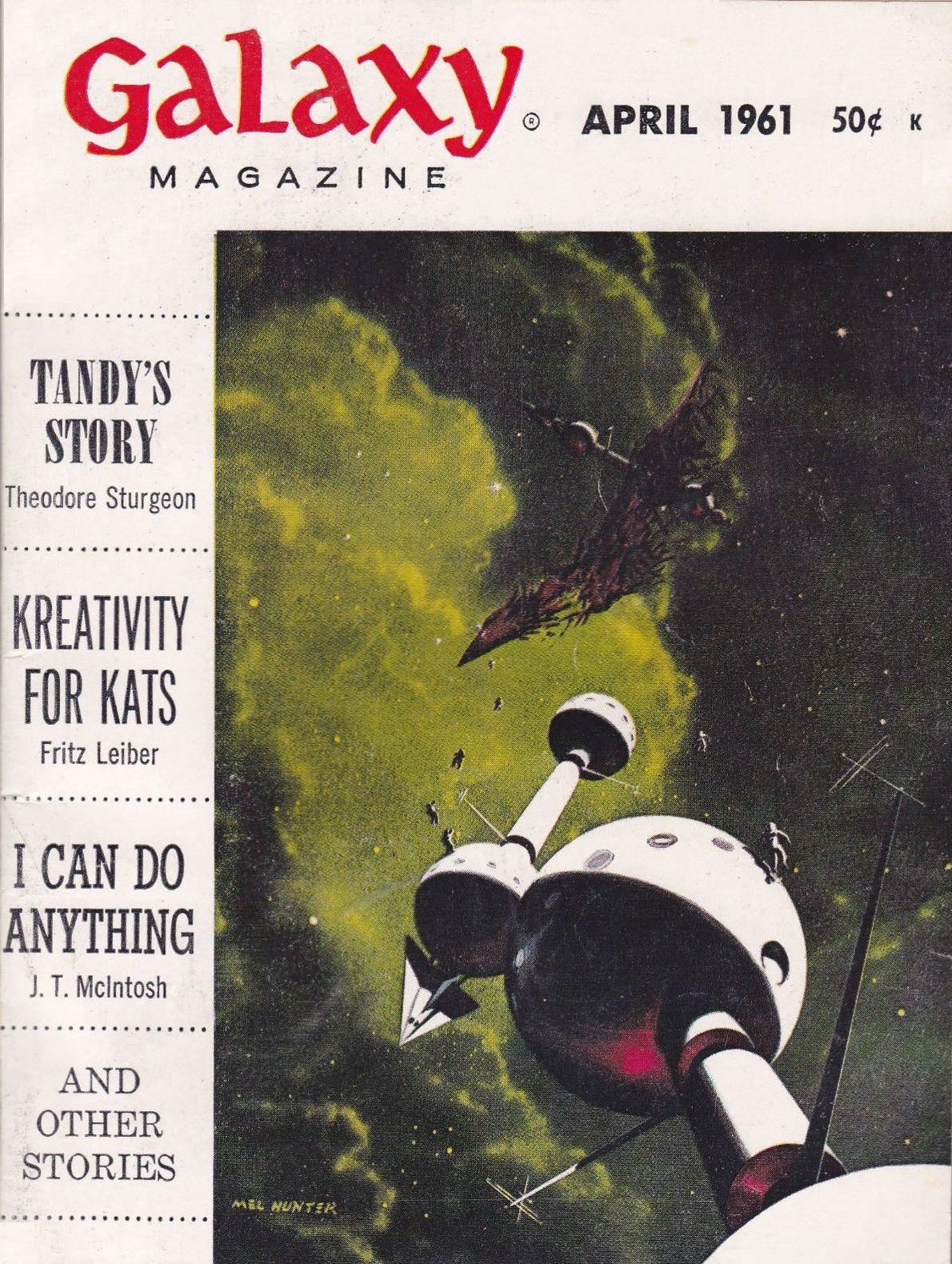
Part of the reason I like it is because it’s part of a series I remember very fondly. The second volume, Science Fiction: The Great Years, Volume II, was released in 1976. It was also part of an Ace imprint, Science Fiction From the Great Years, a line of 17 pulp classics edited and selected by Fred Pohl and published in paperback between 1972 and 1976. All bore the colophon at left. I first discovered pulps in the mid-70s, in Jacques Sadoul’s marvelous art book 2000 A.D: Illustrations From the Golden Age of Science Fiction Pulps, and finding these paperbacks on the shelves proudly proclaiming their pulp roots at around the same time was an exciting discovery.

Read More Read More

The Public Life of Sherlock Holmes: Asimov’s The Caves of Steel

The Public Life of Sherlock Holmes: Asimov’s The Caves of Steel

caves of steelIn 1953, Isaac Asimov combined the science fiction and mystery genres with a three-part serial. In The Caves of Steel, Asimov painted a bleak future for humanity that served as more than just the background of a murder investigation.

Earth became overpopulated and civilization had to adapt to the massive resource needs. Cities became densely populated collectives. Efficiency drove everything. Section units (one, two and three room apartments) rather than houses. Group eating areas, rather than individual kitchens. Common shower and bath units instead of one (or more) per family. Hundreds of miles of high-speed conveyer belts, rather than roads and cars. The ancient, underground roadways were used by official forces to fight fires, to move about to quell riots and such.

Towns and cities were absorbed by ever-growing CITIES. The huge Cities were roofed in by domes until “Outside” became a terrible place that city dwellers never went to: they stayed in their caves of steel, eating mass produced yeast and hydroponics. Direct sunlight was not experienced. As Asimov says, “There was no doubt about it: The City was the culmination of man’s mastery over the environment.”

Then the Spacers came. Man had colonized other planets but those inhabitants eventually rebelled and broke free. They then returned and easily defeated Earth’s defenses.

The Spacers lived on other planets in wide-open spaces, with many robot servants. Asimov essentially paints a picture of the rich, upper class, living indolently, and the poor, lower class, packed together like sardines.

Read More Read More