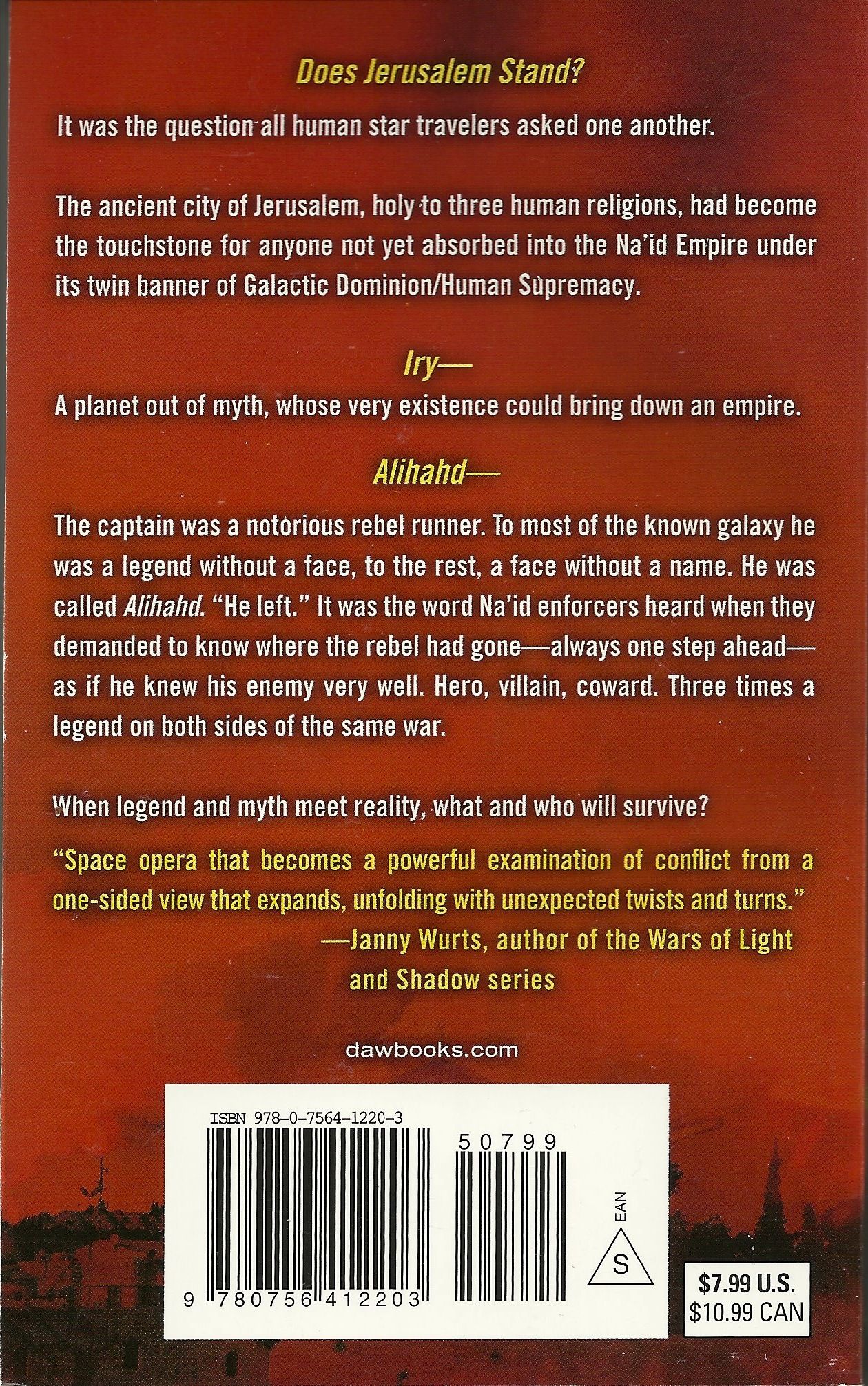
I’ve been trying to pay attention to mass market paperbacks lately (since it’s easy for new releases to slip past you if you’re not paying attention.) In my last trip to the bookstore I found R.M. Meluch’s Jerusalem Fire tucked between Jack McDevitt and China Miéville on the shelves, and it had me at “A planet out of myth.” Religion, space empires, and rebel captains — always a good mix in my book.
Meluch is the author of the ongoing Tour of the Merrimack military space opera series, and this seemed like a promising new direction for her. Except it’s not a new direction at all… turns out Jerusalem Fire is her second novel, originally published in paperback by Signet in 1985. It’s been reprinted several times since.
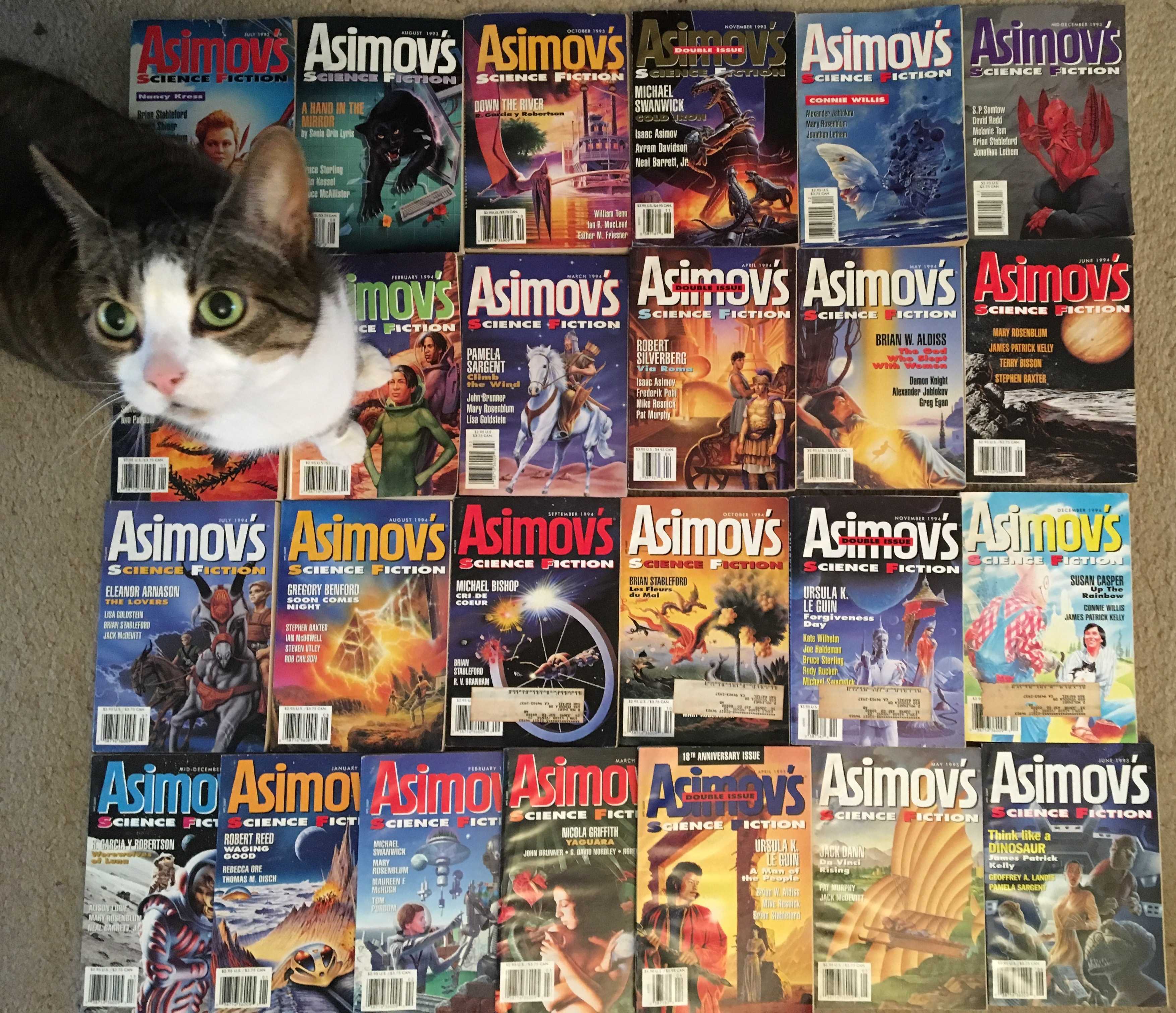
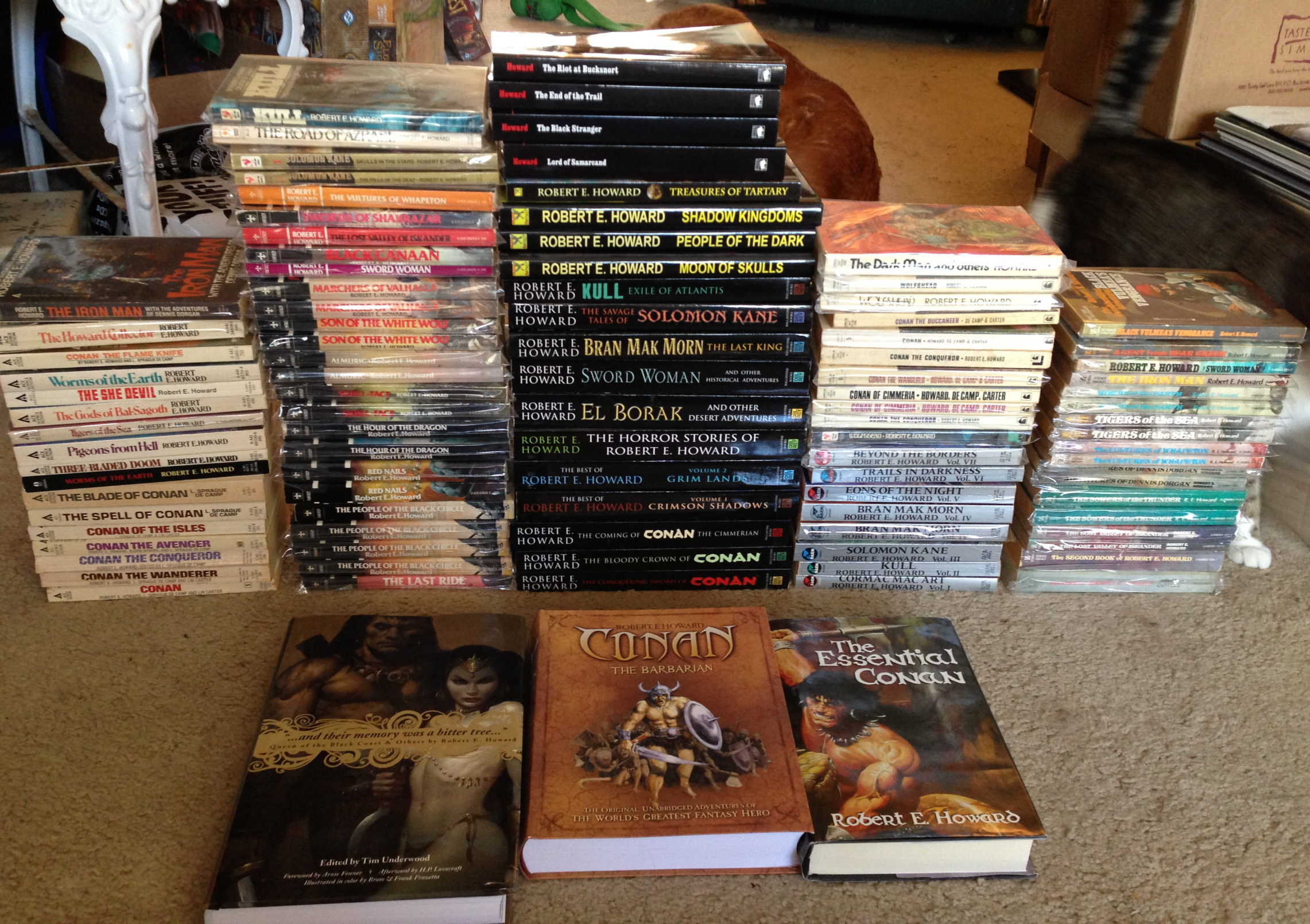
Okay, my cat doesn’t really read science fiction. But she does wander over to see what’s going on when I’m photographing eBay purchases. She even knocked over part of my collection as I was prepping a piece on Robert E. Howard a while back (yeah, that’s her white paw on the far right). Cats. They don’t care.
But if Jazz did read science fiction, I’d tell her the early 90s was probably my favorite era of Asimov’s Science Fiction magazine. Not because the fiction was necessarily better — although there was some really great stuff! — but because it was before I started producing publications of my own, and thus it was the last time I had enough free time to read the magazine even semi-regularly. I have a (complete?) run of the magazine from 1977, but most of my copies are in storage. So when I saw the set above (minus the cat) for sale on eBay, I put in a low bid, and won the entire lot for around ten bucks. Most of them are in terrific shape, and only a few have mailing labels, so overall I’m thrilled with the purchase. (Although the February 1994 issue now has a pair of cat prints on the cover.)
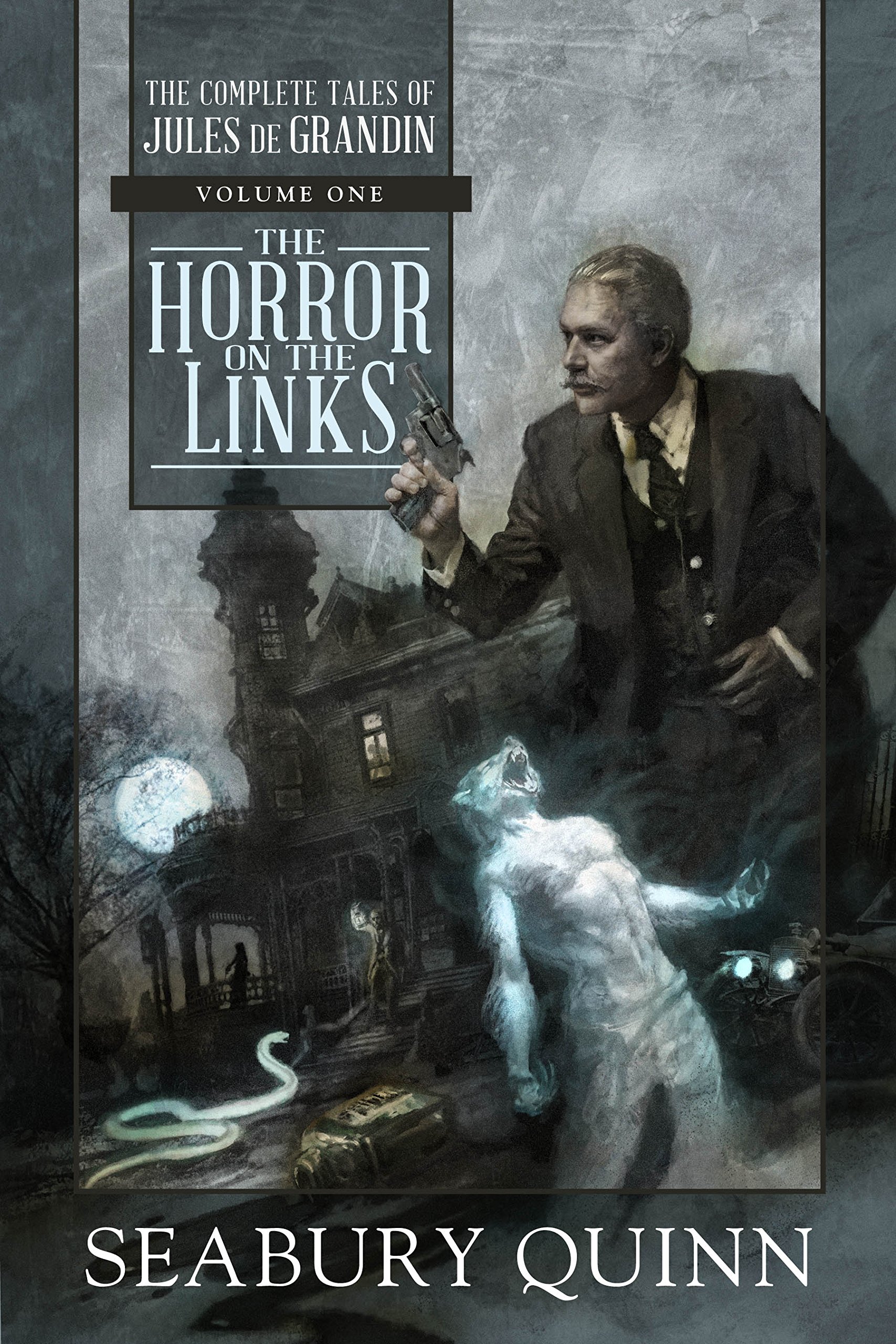
Today Weird Tales is chiefly remembered as the magazine that launched the careers of the great pulp fantasy writers of the 20th Century. But as most fans of the Grand old Lady of the pulps know, the most popular Weird Tales author wasn’t Robert E. Howard, or H.P. Lovecraft, but Seabury Quinn, someone whom is almost completely forgotten today. Quinn’s supernatural detective Jules De Grandin — a top-seller in the 20s and 30s, appearing in over ninety stories and a single novel between 1925 and 1951 — has been out of print for decades. Night Shade rectifies that injustice with the first volume of The Complete Tales of Jules De Grandin, arriving in hardcover next week.
Today the names of H. P. Lovecraft, Robert E. Howard, August Derleth, and Clark Ashton Smith, all regular contributors to the pulp magazine Weird Tales during the first half of the twentieth century, are recognizable even to casual readers of the bizarre and fantastic. And yet despite being more popular than them all during the golden era of genre pulp fiction, there is another author whose name and work have fallen into obscurity: Seabury Quinn.
Quinn’s short stories were featured in well more than half of Weird Tales’s original publication run. His most famous character, the supernatural French detective Dr. Jules de Grandin, investigated cases involving monsters, devil worshippers, serial killers, and spirits from beyond the grave, often set in the small town of Harrisonville, New Jersey. In de Grandin there are familiar shades of both Arthur Conan Doyle’s Sherlock Holmes and Agatha Christie’s Hercule Poirot, and alongside his assistant, Dr. Samuel Trowbridge, de Grandin’s knack for solving mysteries — and his outbursts of peculiar French-isms (grand Dieu!) — captivated readers for nearly three decades.
Collected for the first time in trade editions, The Complete Tales of Jules de Grandin, edited by George Vanderburgh, presents all ninety-three published works featuring the supernatural detective. Presented in chronological order over five volumes, this is the definitive collection of an iconic pulp hero.
The first volume, The Horror on the Links, includes all of the Jules de Grandin stories from “The Horror on the Links” (1925) to “The Chapel of Mystic Horror” (1928), as well as an introduction by Robert Weinberg.
The Horror on the Links: The Complete Tales of Jules De Grandin, Volume One will be published by Night Shade Books on April 4, 2017. It is 512 pages, priced at $34.99 in hardcover and $9.99 for the digital edition. Not sure who did the cover, but I’m working on it.
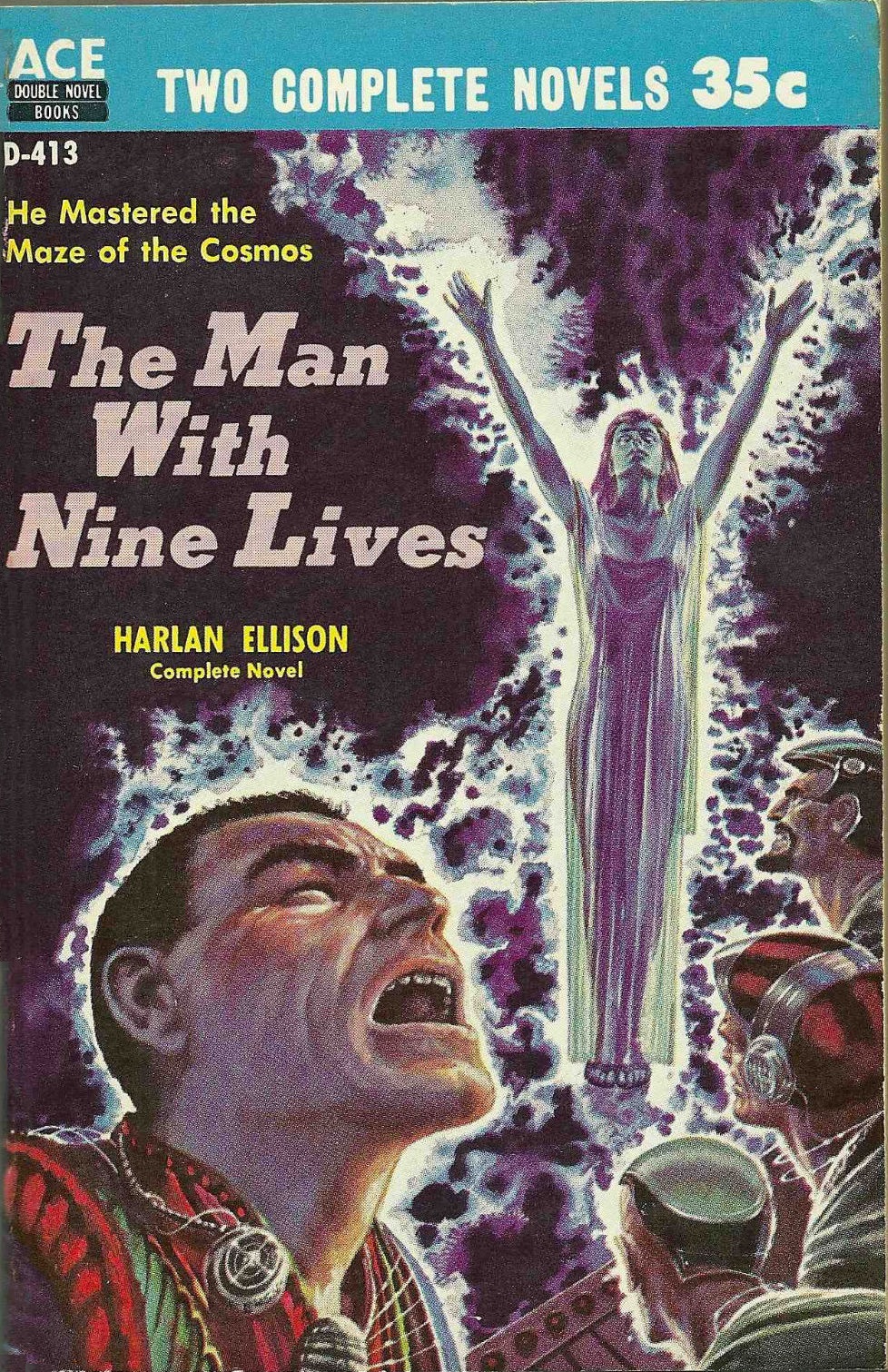
Assassins, Mad Robots, and an Alien Hunt: Rich Horton on The Man With Nine Lives and A Touch of Infinity by Harlan Ellison
Back in the early days of the print version of Black Gate, our first Managing Editor, Dave Truesdale, wanted to bring in some big names to the magazine. So I paid a fortune to get a big novella from Michael Moorcock in our first issue, and I got a phone call from Harlan Ellison, whom Dave had contacted to commission a story.
We were paying six cents a word for fiction at the time, but Dave had coached me that Harlan expected to get paid more than that. “His rate is 13 cents a word,” Dave told me.
I was trying to launch a nationally-distributed magazine with my own money (and money I’d begged from friends and family), and paying that kind of money was not in my meager budget. But I grit my teeth and told Dave to go ahead and make the offer. I’d make up the difference with cuts elsewhere, I figured. Harlan agreed, and we were in business.
It’s a long way between an agreement and a completed story, however. Shortly after we made Harlan the offer, he sold a story to Hemispheres, the inflight magazine of United Airlines. They paid Harlan more than 13 cents a word — a lot more. When Harlan called it was to tell me, in considerable detail, just how much he’d been paid for that story.
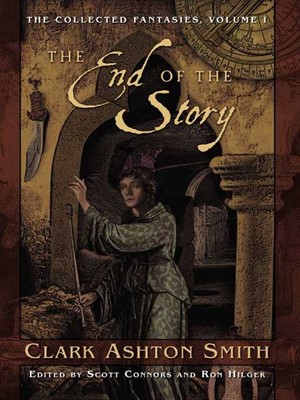
I’ve read the complete works of Clark Ashton Smith. And I’ve been known to write at length about them, or to chat with journalists on the topic. There’s nothing unusual about this, since Smith ranks among my favorite five or so authors of all time.
But only recently did I decide to undertake reading his fantasy stories in the original order he wrote them. I can thank Night Shade Books’ five volume series, The Collected Fantasies of Clark Ashton Smith, for making this an easier task than it would’ve been only a few years ago. When the series started to appear in 2007, the hardcover volumes went out of print rapidly. Even a hardcore fan like myself couldn’t justify a purchase of one of the high-priced used copies.
However, as of 2016, all five of The Collected Fantasies are now available in inexpensive trade paperbacks that can be purchased through online retailers with a few clicks. The texts for these volumes have been meticulously prepared (no simple feat considering the revisions and alternate versions published in the past) and offered in the chronological order of composition.
I’m taking a stroll through these editions to read the stories as they were imagined and committed to paper. Instead of regaling you with further long essays, I’m going to take on the role of sightseer, bringing back notes and a slideshow presentation about the best — and the rest — of each volume.
By the way, if you are new to Clark Ashton Smith, the Night Shade editions aren’t the best way to start out. They’re aimed at the collector and long-time connoisseur. I recommend the Penguin Classics collection The Dark Eidolon and Other Fantasies as a better Smith introduction. If you like the heady journey, there’s much more to explore in the dark fathoms below…
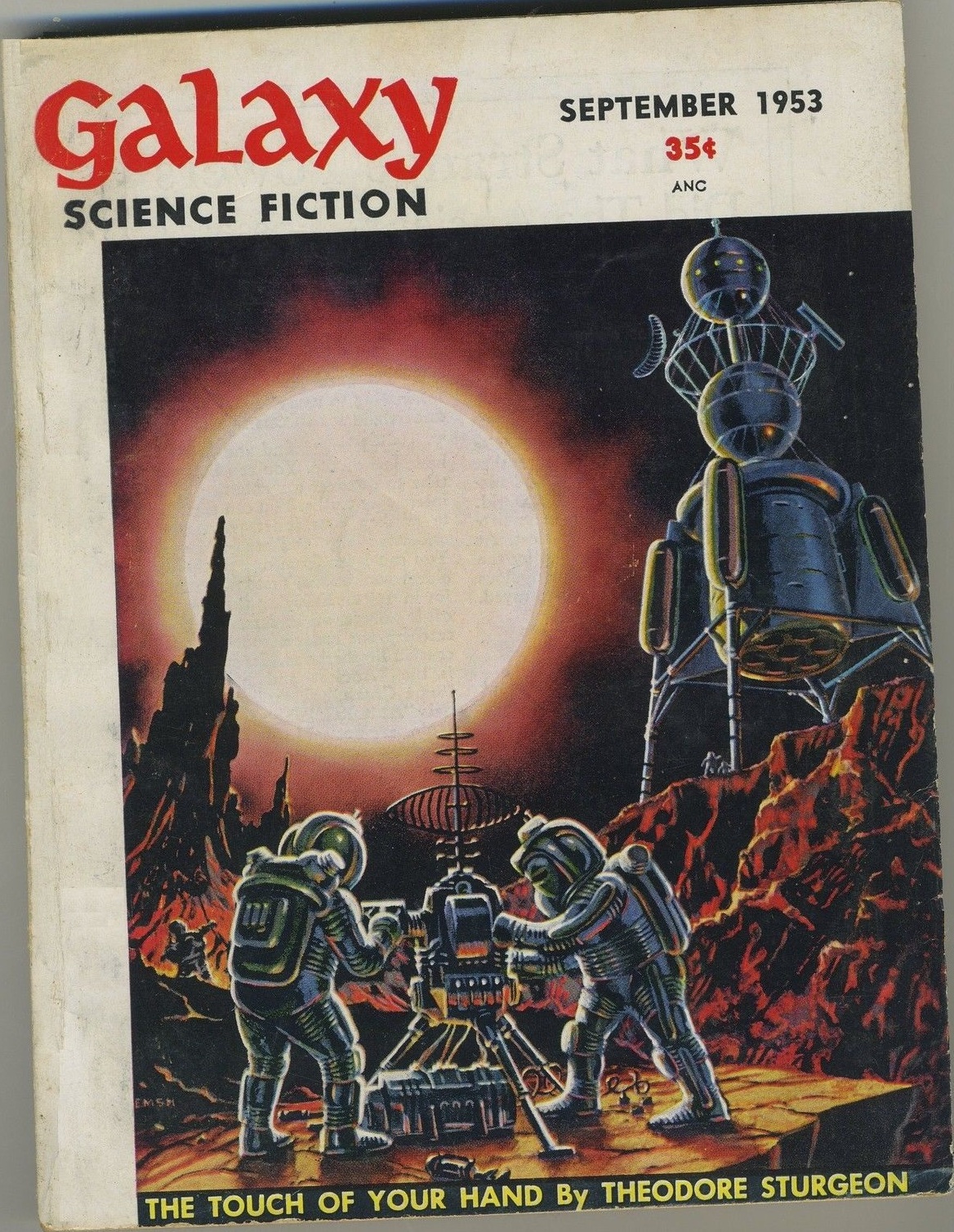
The September, 1953 issue of Galaxy Science Fiction opens with Editor H. L. Gold weighing in on vocabulary guessing for future science fiction. He writes that
Objects and methods must be named so the reader will recognize them. All the author can do is apply logic, which sometimes works, as in the case of several commonly used terms invented by science fiction, but more often does not, as in terms that are born naturally, not synthesized.
He describes how some words, like nylon and Kleenex, are trade names. The word jeep came from how soldiers abbreviated “General Purpose Car” (listed as “G.P.” in stock lists). He concludes his remarks by writing:
If we were trying to predict instead of entertain, you’d be right in objecting to our inevitable bloopers (origin unknown). But would you rather wait for the correct lingo (lingua, tongue) or enjoy our guessing right now?
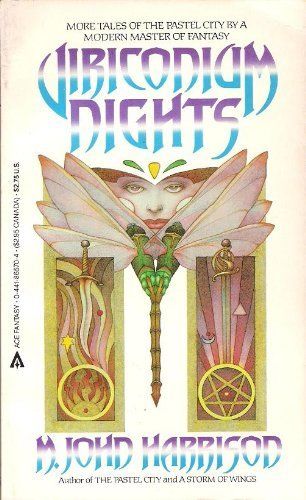
The three novels of the Viriconium sequence, The Pastel City, A Storm of Wings, and In Viriconium, are not the entirety of M. John Harrison’s intricate, multi-faceted portrayal of the titular city. A fourth book, Viriconium Nights (1984), collects seven stories written between 1971 and 1983. Each is strange, some bordering on the inpenetrable, but all attempt to shine lights onto new aspects of the larger story.
As he did with each succeeding novel, Harrison twists, recasts, and reweaves characters, thematic melodies, and locations first found in The Pastel City. Sometimes, as with that book’s ostensible hero, tegeus-Cromis, things seem to be exactly as they were before. Other times, particularly with the city of Viriconium itself, they are changed considerably. Its very name becomes mutable, one time being Uriconium, another just Vriko. This reminds us of one of Harrison’s central ideas: that there is no real “there” to Viriconium; it is just a bundle of words painted on a page at its creator’s discretion.
Viriconium Nights commences with “The Lamia & Lord Cromis.” tegeus-Cromis is in search of the lamia, a beast which has slain numerous members of his family. Though he appears to have accepted the same will happen to him, still he sets out accompanied by the wonderfully named Dissolution Khan and the dwarf gladiator, Morgante. The hunt ends in a morass of complications, death, and unclarity.
I was reminded of something while perusing Thomas Parker’s laudable Master List of Fantasy, Science Fiction, and Horror Literature last week ( or “The List” — posted HERE on Black Gate).
Each of us likely has a book or two (or ten) we adore – absolutely cherish and consider indispensible – that will never appear on any of these lists (unless we compile our own list).
These are gems worthy of our love, yet they are just not that well known, or they have been overlooked or mostly forgotten. Some books, after all, are trees that grow for hundreds of years, while others are flowers that bloom in glory and then are gone.
Later on I might mention a few that I admire, but I will not be arguing that any of them should be on Parker’s or any of the other lists. My thesis here is simply that there are far more great books than can be squeezed onto a top 500 or top 700 or top 5,000. And that’s wonderful news, isn’t it?
Put another way: If some horrible cosmic accident occurred in the multiverse that wiped out all 700 of the books (and book series) on Parker’s list – suddenly none of them existed here on our version of Earth – much of our great fantasy, science-fiction, and horror literature would be lost, granted. Still, I believe we could, from what remained, start right back at square one and compile another list of 700 books just as worthy and strongly representative of the genres.
Of course, why we even need such lists is simple: One reason there are so many great books and so many good books is because there are so many books. Period. (With between 600,000 and 1,000,000 new ones being added each year in the United States alone.) And, as you might guess, the ratio of the good to the bad, mediocre, ambivalent, hackneyed, limp is, well, daunting. If you try to find the great or the good without guidance, the odds are stacked against you. Like going alone to Manhattan without a map and just assuming you’ll walk around and stumble into the best places.
There are a few novels I will return two over and over. García Marquéz’ One Hundred Years of Solitude is one. Dan Symmons’ Hyperion is another. I’ve been back to R. Scott Baker’s Prince of Nothing series a few times.
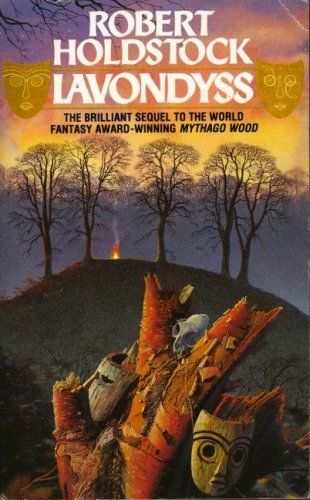
But my pile is shrinking. I’ve grown as a reader and can’t read Dune anymore, and I haven’t tried to go back to Tolkein in probably a decade. But one truly haunting work is Robert Holdstock’s Mythago Wood and Lavondyss. The novels won the World Fantasy Award in 1985 and the BSFA Award in 1988 respectively, if my dates aren’t off.
The two novels center on three families who live around Ryhope Wood, which is one of the last ancient, undisturbed forests in England, meaning that its roots and its ghosts are truly ancient. Now, there are lots of people who evoke deep time in their writing. Tolkein obviously. Edgar Rice Burroughs. Steven Erikson.
But reading Holdstock is to viscerally experience layers of deep, Jungian time. The wood is haunted not by ghosts of the past per se; it is haunted by the ancient memories of ghosts that each person carries within them, all the legends, remembered in story and forgotten.
Ace Doubles are a popular topic at Black Gate. I suspect there may even be a bit of friendly competition to see who can unearth items not already reviewed. While John O’Neill and Rich Horton most certainly have a lead on the rest of us, it is a pleasant experience to find a book that has not yet been dealt with and add one’s own commentary.
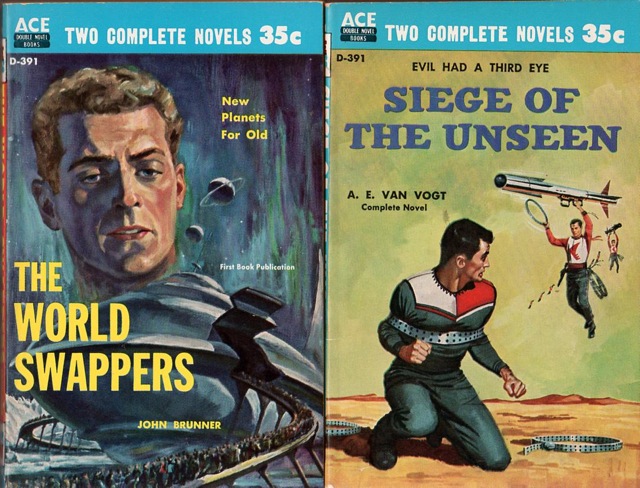
That was the case with D-391, originally published in 1959:
The World Swappers by John Brunner
Siege of the Unseen by A.E. Van Vogt
I took a deliberate break from my ongoing analysis of Jane Gaskell’s Atlan Saga to clear my mind, and I needed something to tide me over. Working alphanumerically through my growing Ace Double collection, the first unread book that came to hand was this somewhat tatty volume. (Well technically it was a western — D-034 Hellion’s Hole/Feud In Piney Flats by Ken Murray (1953) — but the allure of Messrs Brunner and Van Vogt proved too great.)