“Hi-yo, Silver! Awayzzzzzz…” The Lone Ranger Defeats Insomnia!
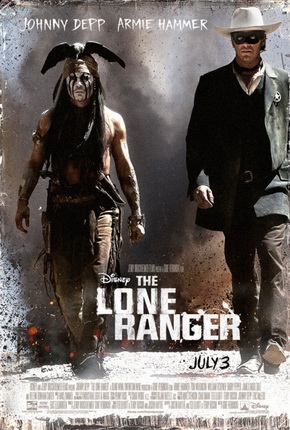 The Lone Ranger (2013)
Directed by Gore Verbinski. Starring Silver, Johnny Depp, Armie Hammer, Tom Wilkinson, William Fichtner, Barry Pepper, Ruth Wilson, James Badge Dale, Helena Bonham Carter.
At the climax of the new cinematic exploit of the Lone Ranger, director Gore Verbinski finally busts out his skills at orchestrating thrilling and intricately choreographed action set pieces. He hits viewers with a top-notch closer aboard a train full of silver roaring around a Mousetrap structure of parallel tracks. The sudden eruption of “The William Tell Overture” on the theater sound system stirs listless audience members awake. For a few minutes, The Lone Ranger feels like The Lone Ranger: old-fashioned Western thrills starring one of the great Do-Gooder heroes. A few folks in the audience clap. Some notice they haven’t finished their popcorn.
Then everybody leaves the multiplex to go home and catch up on their nap times, which they never realized they needed.
That’s the most damning criticism I can lob at this new Lone Ranger: I nearly nodded off twice during my screening. I say this as a hardcore fan of the Western genre, a nostalgia monster, and a fellow who has never before fallen asleep during a theatrical showing of a movie. Not even Meet Joe Black. The only other time I came as close to the narcoleptic fit I experienced here was due to an unfortunate application of medicine that carried warnings regarding heavy machinery.
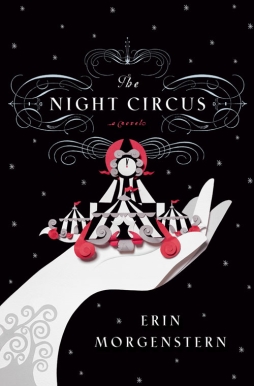 ‘Magic’ is an elastic metaphor. Among its many possible uses is that of a descriptor for something that happens in performance, especially live performance: the magic of an actor possessed by a character, the magic of a given moment invested with wonder and remaining in the memory, though inevitably passing away. The magic of stage magicians isn’t in the sleight-of-hand; it’s in the effect on the audience. The related magic of the carnival — the amusement park, the theme park — is a kind of second-person secondary-world magic. You are there. You are in a conjured fantasyland. A circus, in this reading, isn’t about the stink of animals or the scutwork of putting up tents and preparing performance spaces; it’s about the feeling the show tries to inspire. It is, potentially, for some, a venue for magic — transient, susceptible to thinning, but capable of generating wonder.