Browsed by
Category: Movies and TV

Jerry Lewis (Julius Kelp, Buddy Love), March 16, 1926 – August 20, 2017

Jerry Lewis (Julius Kelp, Buddy Love), March 16, 1926 – August 20, 2017

Jerry Lewis-small

The book has finally closed on the eight decade long career of Jerry Lewis, the American actor, comedian, and filmmaker, who died on Sunday, August 20th, at the age of ninety one. Jerry Lewis is one of those colossal, divisive figures like Lenin, Mao, or Meryl Streep; few people are noncommittal about him. Ever since he shrieked and jerked his way into the public consciousness with his partner Dean Martin, first in nightclubs and on radio, then in a series of highly successful movies, and finally, after an acrimonious split with Martin, on his own as an actor and director, the standard responses have been either overboard adoration or utter loathing, a split that even effects entire nationalities — the French have a much snickered-at (at least among Americans) reputation for their extreme and almost universal love of Lewis, while Swedes and all other Scandinavians can’t stand him. (I made that last part up, but it’s probably true.)

This might be of only passing interest to Black Gate readers, except for one thing. In 1963, Lewis co-wrote (with Bill Richmond), directed, and starred in what is arguably the best version of that much-filmed classic of dark fantasy, Robert Louis Stevenson’s The Strange Case of Dr. Jekyll and Mr. Hyde. Lewis altered the title even more than most adapters do, calling his movie The Nutty Professor, and that’s not all he altered.
Read More Read More

Galaxy Science Fiction November 1969: A Retro-Review

Galaxy Science Fiction November 1969: A Retro-Review

Galaxy Science Fiction November 1969-small Galaxy Science Fiction November 1969 back cover-small

This is Part 2 of a Decadal Review of vintage science fiction magazines published in November 1969. The articles are:

Amazing Stories, November 1969
Galaxy Science Fiction, November 1969
The Magazine of Fantasy & Science Fiction, November 1969
Worlds of If, November 1969
Analog Science Fiction/Science Fact, November 1969

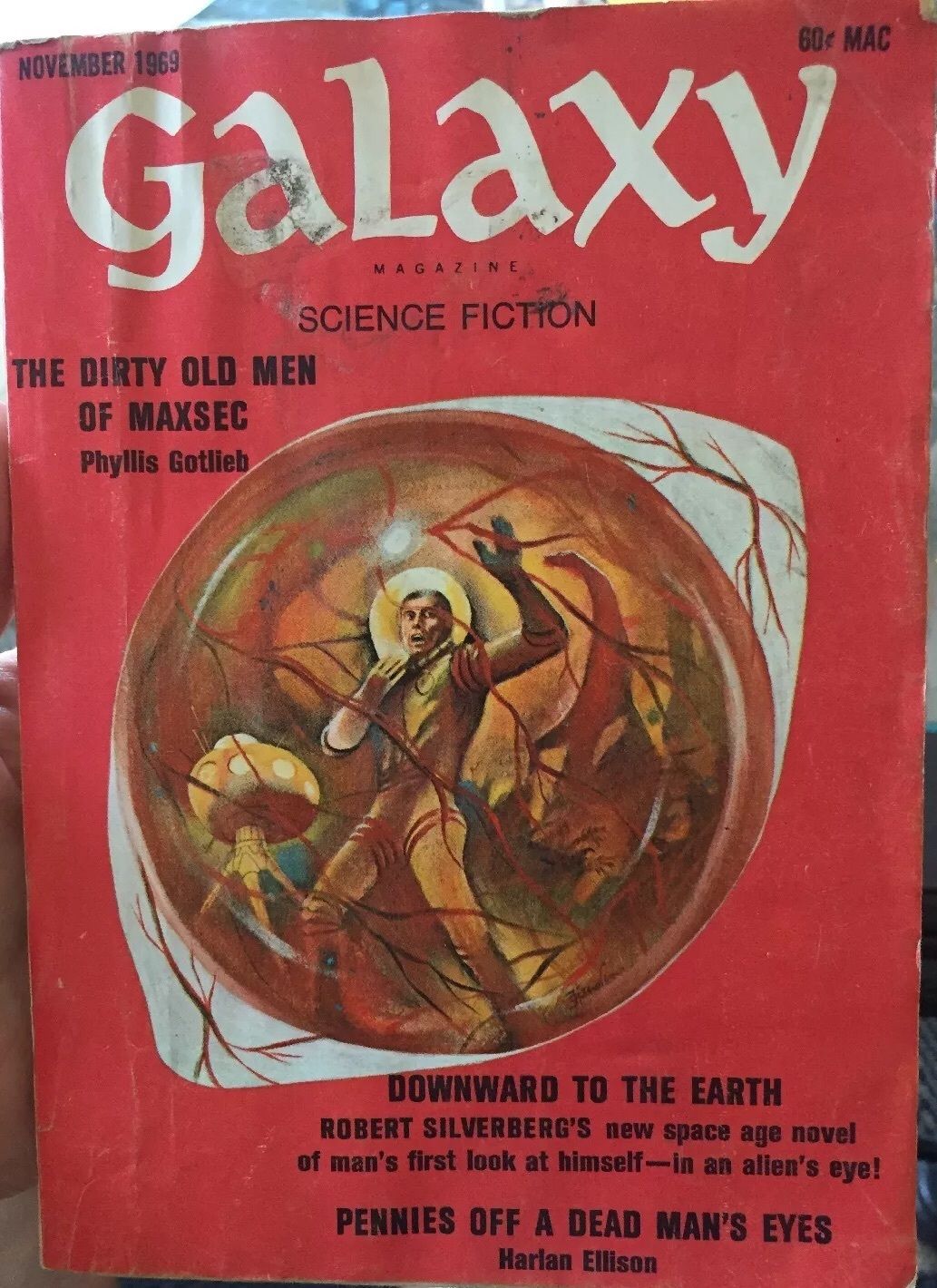
Cover by Gaughan, the TOC notes that it was “Suggested from Downward to the Earth.”

Editorial, “Brain Pollution” by Ejler Jakobsson. This delves straight into race issues, in a kind of winking/new-wavy way. There was, it would seem, an article or articles on IQ tests between blacks and whites making waves, with Jakobssen quoting an editorial by John W. Campbell.

If they, (the blacks) basic intelligence pattern is of a different type — naturally it’s harder for them to fit into the Scholarly type that Caucasoids developed — with unquestionable and world-shaking success — so that although they’ve been working into Western culture for as long as time as the Scots, they haven’t been able to fit in anywhere near as well.

Jackobsson doesn’t agree, or at least I don’t think he does. His weird addled-fanboy style makes it hard to tell if he disagrees with the fundamental IQ test issue, or just the way J.W.C. stated it. The former… I think.

Read More Read More

The Complete Carpenter: The Thing (1982)

The Complete Carpenter: The Thing (1982)

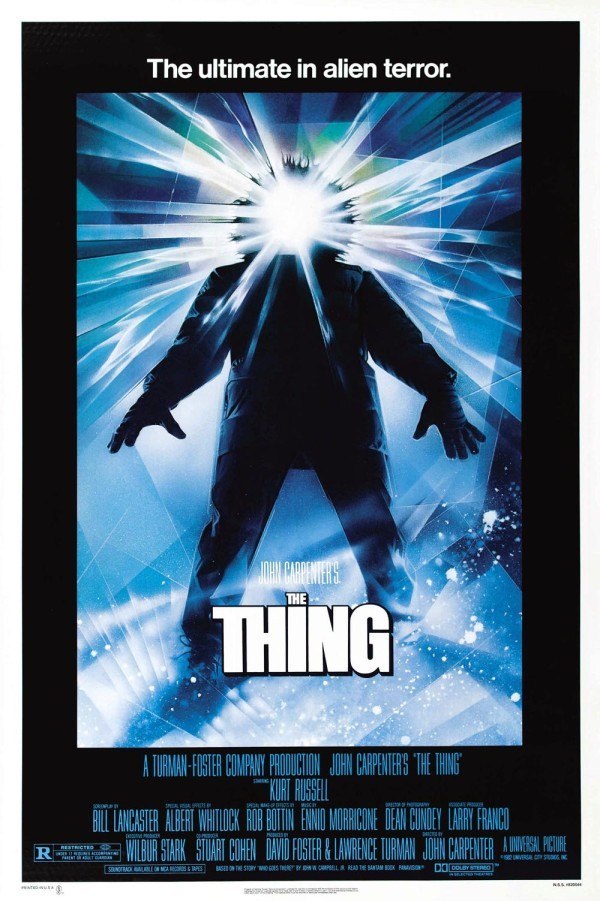
drew-struzan-the-thing-1982-posterIf you’re a fan of the career of director John Carpenter, you probably have an idiosyncratic favorite among his pictures. The one that has special meaning for you, possibly because of nostalgia, a particular theme, or sheer rewatchability. I’ll telegraph ahead in this series and mention that In the Mouth of Madness is one of those special Carpenter films for me. Looking backward, Assault on Precinct 13 is the Carpenter movie I’m mostly likely to rewatch, and it rises in my estimation each time I return to it. One of my close friends is deeply in love with Big Trouble in Little China, and his wife roots hard for Christine. Carpenter’s catalog has a range of minor-league wonders, and I can’t feel upset for anyone picking offbeat choices. I’ve even heard stimulating defenses of The Ward, which (spoilers for future reviews) I think is Carpenter’s worst film.

However, general consensus says 1982’s The Thing — a remake of the 1951 SF classic The Thing from Another World by way of its source material, John W. Campbell’s 1938 novella “Who Goes There?” — is John Carpenter’s masterpiece. And general consensus is right.

The Story

It’s the first week of the winter-over at US National Science Institute Station 4 (aka Outpost #31) in the Antarctic interior. It doesn’t start well. A helicopter from a Swedish Norwegian base makes an explosive landing at the outpost while trying to gun down a runaway sled dog. The men at the outpost take in the dog and try to figure out what happened, although failed radio communications make it difficult. They investigate the Norwegian base and discover it devoid of life with signs of a horrific violent event. It seems the Swedes Norwegians dug up and thawed out an alien lifeform from a spaceship trapped under the ice pack for thousands of years, and that didn’t turn out that swell for them.

Oops, too late … That adorable sled dog allowed into the US station is actually the alien, which can alter its shape and assimilate other organics while perfectly imitating them on the outside — and it’s started in on the men at Outpost #31. Paranoia and alien transformation freakiness break out. If it takes them over, then it has no more enemies, nobody left to kill it. And then it’s won. World assimilation in 27,000 hours after first contact with civilized areas.

Read More Read More

Goth Chick News: Chas Kline Makes a Friend… Literally

Goth Chick News: Chas Kline Makes a Friend… Literally

Frankenfriend-small

As you likely know, the staff at Black Gate has the distinct honor and pleasure to witness the passion that goes into the creative process. We get early looks at everything from books to movies, and comics to gaming. Each and every effort is the result of someone making the decision to put their imagination and creativity on display for the world to enjoy or possibly to pick apart – but in the mind of the creator, the risk is worth the reward.

Back in 2000 when I began contributing to the print version of Black Gate, I submitted a rather scathing review of a new author’s work. True, it was my opinion and to this day I stand by my comments, but I never stopped feeling bad about delivering this critical feedback in a public forum. That new author made a leap of faith sending his work to Black Gate and I feel my review disrespected the creative process.

Since that point, if I truly am not a fan of something that is sent to me, I simply do not tell you about it. And if pressed by the creator, I will share my thoughts with them privately, but never here.

So what’s the point of telling you this?

It’s a typical GCN setup of course and a way to tell you that if I write about a topic, it’s because I truly believe it’s something you need to experience for yourself. And in a rare case, that your need is more important than say, Tom Cruise’ ego or the collective commercial power of the Twilight franchise.

So with this in mind, I invite you back to last week when I reintroduced you to the wonderful, twisted world of Charles M. Kline in the form of his latest book, The 12 Frights of Christmas. At that time, I also said we’d talk about Mr. Kline again this week in the context of his short film, Frankenfriend.

Read More Read More

Fantasia 2017, Day 5: Prisons, Rituals, and Explosions (The Honor Farm, Shock Wave, and Free and Easy)

Fantasia 2017, Day 5: Prisons, Rituals, and Explosions (The Honor Farm, Shock Wave, and Free and Easy)

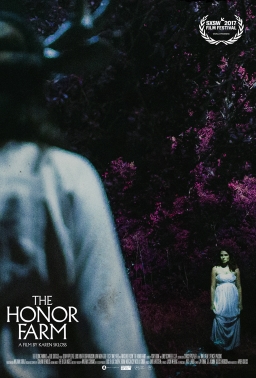
The Honor FarmSunday, July 16, felt in some ways like the day Fantasia 2017 really began for me. I had three movies I planned to watch, of three very different kinds, though all at the De Sève Theatre. The first was a horror-inflected American independent film called The Honor Farm. The second was a Hong Kong action movie called Shock Wave (Chaak Daan Juen Ga). The third was a Chinese art movie called Free and Easy (Qīng sōng yú kuài). That mix of approaches, genres, and countries was characteristic of the festival. I looked forward to each movie individually, and to how they’d work together.
The Honor Farm was directed by Karen Skloss from a script written by Skloss with Jay Tonne Jr. and Jasmine Skloss Harrison — Skloss’ teen daughter. It’s the story of Lucy (Olivia Grace Applegate), who’s about to attend her senior prom and plans to lose her virginity with her boyfriend Jake (Will Brittain). It is, Lucy reflects, “the night I was finally free to do whatever I wanted. And everyone was expecting me to.” But things don’t go as she’d hoped. The date goes sour, and Lucy ends up hanging around with her best friend Annie (Katie Folger). They run into another group of teens led by the gothy Laila (Dora Madison Burge), who’re planning to go into a deep forest and take mushrooms provided by a group of boys led by the presumably-symbolically-named JD (Louis Hunter). There’s an abandoned prison close by they plan to investigate, the Honor Farm of the title. What will they find in the supposedly haunted building?

Nighttime, woods, hallucinating teens, an abandoned building, ghost stories: this sounds like a certain kind of horror movie, but in fact isn’t that at all. The Honor Farm owes very little to Wes Craven, and much more to John Hughes and David Lynch. That’s an odd pair of influences, and yet I found them inescapable: structurally the story’s about a weird mixture of teens with nothing in common who learn to be friends, while the story itself is built out of surrealism, dream-imagery, disorienting sounds and cuts, and extended sequences that might have happened and might only be hallucinations. Surprisingly, the two things balance each other very well. The arc of the story gives a clear framework for the stylish eruptions of the unreal.

Read More Read More

Fantasia 2017, Day 4: Urban Spaces (The Final Master and Tokyo Ghoul)

Fantasia 2017, Day 4: Urban Spaces (The Final Master and Tokyo Ghoul)

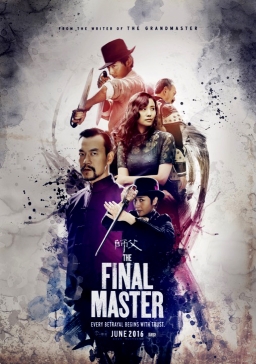
The Final MasterI had an odd schedule on Sunday, July 17. There were two movies I wanted to see. The first was a Chinese historical martial-arts film called The Final Master (Shi Fu), which played at noon. The second was a live-action Japanese manga adaptation, Tokyo Ghoul (Tôkyô gûru), and that played at 9:35 in the evening. I eventually decided to go to the Hall Theatre for the first movie, spend the afternoon doing errands, and return for the second movie in the evening. In the end, this turned out to be a good plan.
The Final Master was written and directed by Haofeng Xu, based on his original novel. It follows Chen Shi (Fan Liao), a martial-arts master, who arrives in the city of Tianjin in 1932. He wants to establish a school there of his own but faces opposition from the major schools already in the city. He has to overcome a series of challenges from his scheming rivals, political as well as physical. He begins a romance with Zhao Guohui (Jia Song, also at Fantasia this year in the Hong Kong action film Shock Wave), a beautiful woman with a scandal behind her, and begins training a rickshaw driver named Geng (Yang Song, who was also in both of Xu’s previous movies, Judge Archer and The Sword Identity) who may have even more talent for fighting than Chen himself. But if Geng may help him overcome some of the trials set by the other schools, yet other levels of politics come into play as the military plans a takeover of the martial-arts world.

This really only scratches the surface of the intricate film. There’s a novelistic feel to it in the accumulation of incident and character, but it’s remarkably effective because Xu keeps things moving at a rapid if not unforgiving pace. Plans are hatched, betrayals accumulate, and the scope of the film increases bit by bit. It’s not quite an epic, but characters who seem minor develop into major figures, and the city of Tianjin acquires a character of its own.

Read More Read More

Fantasia 2017, Day 3, Part 2: Genre Shift (Mohawk)

Fantasia 2017, Day 3, Part 2: Genre Shift (Mohawk)

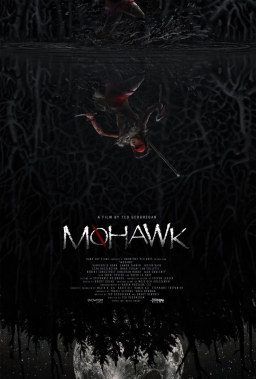
MohawkAfter seeing two showcases of short films on the afternoon of Saturday, July 15, in the evening I went to my first movie of the 2017 Fantasia festival to screen in the 400-seat D.B. Clarke Theatre. That was a film called Mohawk. Directed by Ted Geoghegan, his second film after 2015’s We Are Still Here, with a script by Geoghegan and Grady Hendrix, it tells a story from the War of 1812. In upstate New York a British agent, Joshua (Eamon Farren, Richard Horne on Twin Peaks: The Return), is in a polyamorous relationship with a Mohawk woman, Oak (Kaniehtiio Horn), and a Mohawk man, Calvin (Justin Rain). Calvin’s stirred up American soldiers in the area by an injudicious attack; when Joshua meets a unit of about a half-dozen Yanks in the woods, Calvin and Oak save him — but the confrontation turns into a running battle. The brutality mounts, revelations are made at inopportune times, and an image from a dream recurs.

This is less an action film than a suspense film, built around two small groups chasing each other through the woods. The focus is admirable, but the last act of the movie drifts from suspense into fantasy-horror — or, perhaps, into a dark super-hero story. To me, there isn’t enough groundwork earlier in the film setting up the movement into fantasy. Viewers more sympathetic to the genre shift will appreciate the movie more, although I think there are a few other issues with it as well.

Before discussing the storytelling, it is perhaps worth talking about the film’s portrayal of the Mohawks in the context of a violent historical adventure. Notably, it avoids a lot of action-film clichés and imagery. This is clearly a movie that wants to be on the Mohawks’ side; I suspect audiences will have varying opinions of how well it succeeds at that. I can say that at the question-and-answer period after the film, Horn and Rain were clearly proud of their work and the story of the film. I can also say that a non-Indigenous friend of mine who works with First Nations people left the screening early.

Read More Read More

Fantasia 2017, Day 3, Part 1: Cinematic Anthologies (SpectrumFest: Films from the Autism Spectrum and The International Science-Fiction Short Film Showcase 2017)

Fantasia 2017, Day 3, Part 1: Cinematic Anthologies (SpectrumFest: Films from the Autism Spectrum and The International Science-Fiction Short Film Showcase 2017)

The Kenners 3Saturday, July 15, looked like an unusual day for me at Fantasia: I’d mostly be seeing short films. It’d begin a bit after noon, with a set of shorts called SpectrumFest: Films from the Autism Spectrum, a collection of pieces from young filmmakers on the autism spectrum. Then would come this year’s edition of the International Science-Fiction Short Film Showcase, featuring eight science-fictional short films from around the world. Both showings looked fascinating, if in different ways. SpectrumFest was new to me, but I’d seen the SF showcases in previous years, and been impressed both by the individual films and by the way they worked together — if short films are loosely equivalent to prose short stories, the SF short film showcases make excellent anthologies.
First came SpectrumFest. Montreal’s Spectrum Productions is a non-profit organization who works with youth and young adults on the autism spectrum, giving them resources and equipment to express themselves creatively through film and animation. Among other programs, Spectrum runs summer camps and a weekly after-school program, as well as Saturday morning cartoon-making workshops. This year, Fantasia hosted an exhibition of some of the films created by the young filmmakers working with Spectrum in a showcase that was free to the public. Almost two dozen of the student filmmakers’ productions were screened, collectively a stunning and unpredictable burst of creativity.

Read More Read More

Haruo Nakajima (1929–2017): The Man Who Was Godzilla

Haruo Nakajima (1929–2017): The Man Who Was Godzilla

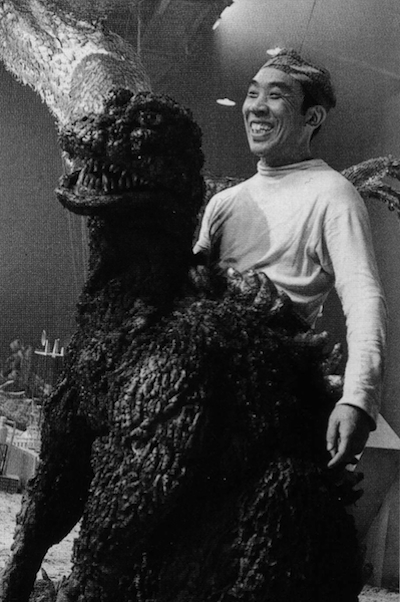
Haruo-nakajima-as-godzillaWhile I was debating on Tuesday whether to focus on writing about the Blu-ray release of Shin Godzilla or completing the next John Carpenter series installment, The Thing, the news hit of the death of one of the last surviving participants of the 1954 Godzilla, Haruo Nakajima, from pneumonia at age eighty-eight. It was a painful blow: that Nakajima was still out there and alive was a reassurance to any Godzilla fan, because he actually was Godzilla — the first performer inside the monster costume, back in the original Godzilla, and the one who stayed with the part the longest, playing the monster until near the close of the original Showa Era. He suited up as Godzilla in twelve films from 1954 to 1972, a record that’s unlikely ever to be beat now that even Japanese Godzilla films have switched to using CGI rather than the old fashioned suits.

We talk about how Japanese giant monster (kaiju) films are done with “man-in-a-suit” special effects, but we often don’t understand what that implies. Since we’re once again deep in the “Does Andy Serkis deserves an Oscar nomination for a performance-capture role?” debate that comes after the release of each of the new Planet of the Apes films, it’s appropriate to remember the great performances from the suitmation actors who long preceded CGI-assisted characters.

And among suitmation performers, Nakajima was one of the finest. He infused Godzilla with a personality that emerged stronger and stronger during the period he was inside the costume. Godzilla, arms stretched forward in an attack pose, daring another giant monster to charge with the slight turn of the head — that’s down to Haruo Nakajima. He influenced the way Godzilla is acted as much as Boris Karloff influenced the Frankenstein Monster.

Read More Read More

How Christopher Nolan’s Dunkirk Immediately Became My Favorite War Movie (With Reservations)

How Christopher Nolan’s Dunkirk Immediately Became My Favorite War Movie (With Reservations)

dunkirk-647_072117021757

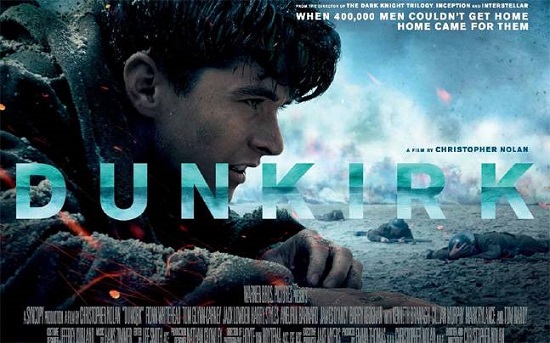
I went to see Dunkirk here in Oxford with a bit of trepidation. Having grown up on war movies, both American and British, I’ve grown weary of the thinly veiled propaganda and nationalism that most of these movies are. I do like a good war movie, but I always find myself squirming in the seat at some of the politics.

Unfortunately there was quite a bit of that in Dunkirk, and yet it is a brilliant film nonetheless. Filmmaker Christopher Nolan (Interstellar, Inception, The Dark Knight Trilogy) has made a film that’s not so much about fighting as it is about the reaction of various individuals to violence and the threat of death. Zeta Moore has already reviewed this film for Black Gate, but I wanted to add my two cents.

Read More Read More