Ellsworth’s Cinema of Swords: Charming and Dangerous: Douglas Fairbanks, Jr.
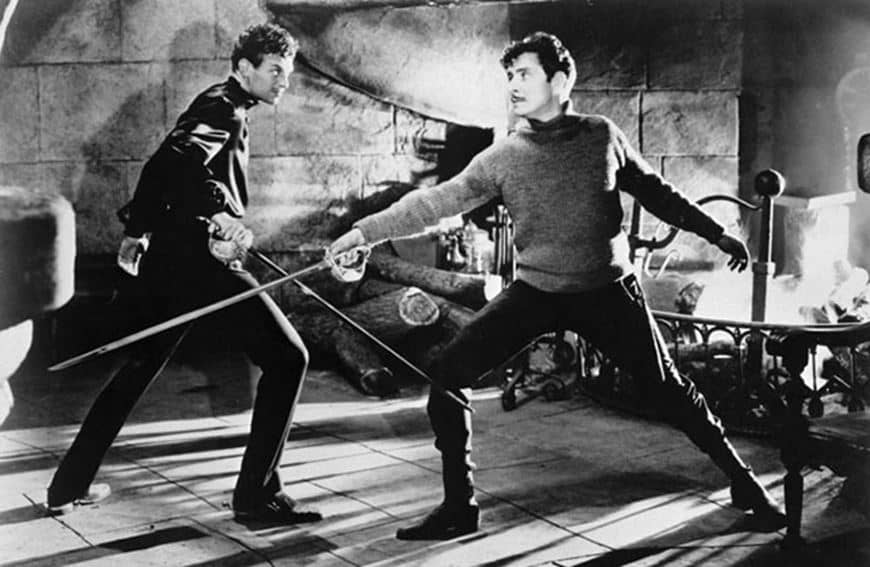
Ronald Colman and Douglas Fairbanks, Jr. in The Prisoner of Zenda (1937)
Douglas Fairbanks, Jr. was a fine actor with a considerable range, but he never got out of the shadow of his more famous father. Douglas Fairbanks Sr., after all, was more than a fine actor, he was a force of nature who single-handedly established the conventions of the cinematic swashbuckler in a series of grand, albeit silent epics. Doug Jr.’s parents divorced when he was young, and against his father’s wishes he was raised in the movies, starting in the silent era as a child star with his own studio contract. He played mostly romantic and dramatic roles as he matured, but inevitably he made some swashbucklers of his own, showing that he had, unsurprisingly perhaps, a natural talent for them. His Rupert of Hentzau is certainly one of the most memorable portrayals in all swashbuckler cinema.
The Prisoner of Zenda
Rating: *****
Origin: USA, 1937
Director: John Cromwell
Source: Warner Bros. DVD
David Selznick bought the rights to The Prisoner of Zenda as a starring vehicle for Ronald Colman, who was at the height of his fame coming off Lost Horizon (1937). Colman played the dual role of Rudolf Rassendyll and King Rudolf, and Selznick surrounded him with a first-rate cast, including the glowing Madeleine Carroll as Princess Flavia, and C. Aubrey Smith and his whiskers as the king’s loyal Colonel Zapt. But best of all were the villains: Raymond Massey, looming and ominous as the would-be usurper Black Michael, and Douglas Fairbanks, Jr., as the raffish rogue Rupert of Hentzau, who stole every scene he appeared in (as Rupert does in every version of Zenda).
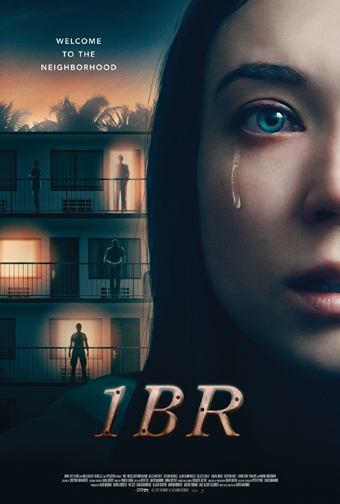 Last year I almost reviewed a movie at Fantasia called 1BR. But exhaustion got to me as the festival wore on, and I passed on the film. I’m never happy about having to compromise with fatigue, though, and since 1BR recently came to Netflix — where for a while it was among their 10 most-streamed movies, at one point even reaching the top 5 — I decided to rectify last year’s omission and take a look at it now.
 Every year I wrap up my coverage of Fantasia with a last post looking back at the festival, reflecting on the experience. This year’s edition of Fantasia calls for reflection even more than most. I have a couple of posts still to come taking care of loose ends from previous years, but here are a few final thoughts on the all-streaming 2020 Fantasia Film Festival.
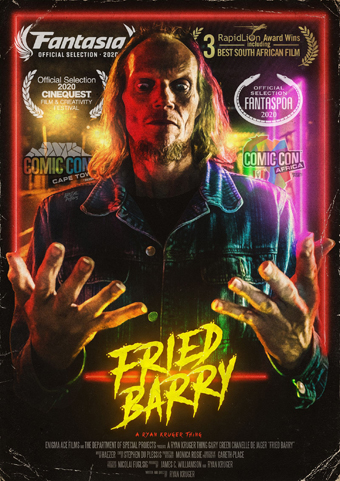 My final film of Fantasia 2020 promised to be weird, and therefore the perfect way to wind down the festival. It was a take on a particular sub-genre of science fiction film: the alien visitor walking among us. The Day The Earth Stood Still, The Man Who Fell to Earth, Starman, E.T., technically I suppose Superman — all stories about a lone extraterrestrial on Earth dealing with humans. It’s a story form that lends itself to reflection on what it means to be human. But just because a form points in a certain direction doesn’t mean every instance of that form will be concerned with grand themes.
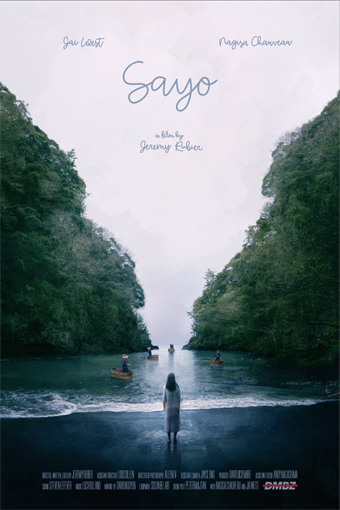 In covering a film festival, one does not always select the films one sees out of a pure love of cinema. Or even love of genre. Scheduling plays a part, and sometimes delivers to you an unexpected delight. Fantasia 2020 had fewer happy accidents of scheduling due to its all-virtual nature, but as the festival’s final day wound down I found myself with just under three hours until all the movies would go offline — meaning I had time for the film I’d wanted to watch, plus an hour or very slightly more. Glancing over the schedule I found a movie I’d considered looking at which was listed at 61 minutes, and decided I should give it a shot.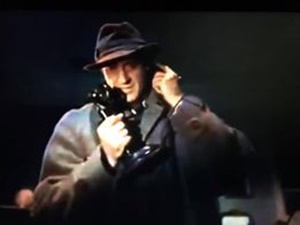
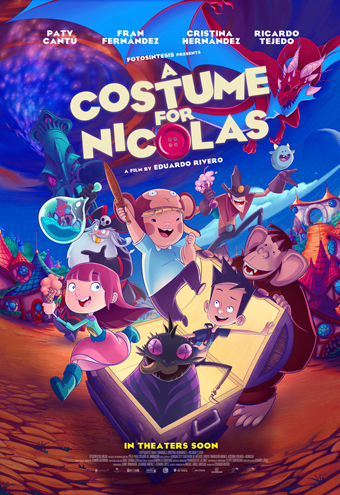 Critic Farah Mendlesohn introduced the term ‘portal fantasy’ in her 2008 book Rhetorics of Fantasy to describe stories in which a protagonist leaves their home and enters a new, larger, magical world. I’ve seen the term used often to refer to a specific subtype of these fantasies, in which a protagonist from conventional reality passes through a portal to a fictional realm and proceeds to quest about and have adventures. The rise of this more specific definition is not entirely surprising, given how common that kind of story is, perhaps especially with younger protagonists. Either sort of portal fantasy can present a character, confronted with a new and strange world, with an opportunity to grow and change. Or, instead, can be about reification of the character’s previous identity — a locking-in of who they are, after the success of a quest that aims to stop a bad change form occurring.
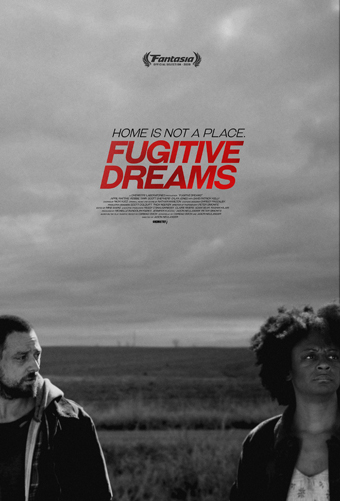 The Fantasia Film Festival usually runs around three weeks, but 2020 and its myriad of challenges meant this year’s festival lasted only two-thirds of that. Time moves fast, faster still during Fantasia, and so it came about that with a sudden shock I found myself in the final hours. I had three on-demand movies still to watch that I hadn’t gotten to, and only one on a fixed schedule, my first of the last day.