Browsed by
Category: Movies and TV

Ellsworth’s Cinema of Swords: Shogunate’s End

Ellsworth’s Cinema of Swords: Shogunate’s End

Red Lion (Japan, 1969)

The Tokugawa Shogunate of the samurai military caste ruled Japan for over 300 years, keeping the island nation in a sort of stasis enforced by rigid regulation and an entrenched hierarchy. But outside, the rest of the world was changing, as the western powers of Europe and America developed economies based on global trade on terms backed up by military might. In 1853, when the United States came knocking on Japan’s door, insisting on trade concessions, the Shogunate had only swords and matchlock muskets with which to oppose armored warships, and had to comply with the American demands. Other western nations followed suit, and Japan began to open its borders, resulting in economic and political instability that the Shogunate was too weak and hidebound to manage successfully.

This period before the imperial restoration of 1868, known as Bakumatsu, was a sort of slow-burning civil war in which a number of factions struggled for ascendancy, all sides resorting to death squads and assassinations. The time of the sword, which had ruled Japan for almost a thousand years, was coming to an end.

Read More Read More

Blood Quantum: Fresh Zombie, Native-American Inspired Mayhem

Blood Quantum: Fresh Zombie, Native-American Inspired Mayhem

Blood Quantum was originally released at the 2019 Cannes Film Market. It is now available online, i.e. via Amazon Prime rental and AMC streaming services.

It is one of the best and most original zombie flicks I’ve seen in years. Character-driven, with plenty of human drama, it is filled with action, blood and violence, and one horrendous scene I’ve never seen in any movie about the living dead.

Great script and direction, the film is set on the Red Crow Reservation in Montana, and there is some dialog spoken in the actual Apsáalooke language. The superb cast is made up of mostly Native American actors, and they deliver. Interesting to note, the director and writer is Jeff Barnaby, who was born on a Mi’kmaq reserve in Canada (Mi’kmaq being of the First Nations indigenous people of North America). He has a history of making ancestry-inspired horror films (i.e., Rhymes for Young Ghouls).

Read More Read More

Goth Chick News: Game Over Man! Let Me Introduce You to the M41-A

Goth Chick News: Game Over Man! Let Me Introduce You to the M41-A

It was July 18, 1986 in the movie Aliens (where the year was 2122), when Ellen Ripley told Corporal Dwayne Hicks to “show her everything.” Ripley was actually referring to the totally badass M41-A pulse rifle, standard issue for the Colonial Marine Corp who is defending space at that time. Ripley ultimately weaponed up and used an M41-A to wreak alien carnage in what has become one of the most iconic combat scenes in cinema history.

Fast backward 101 years minus a month, to August 2021, where we just passed the 35th anniversary of Alienstheatrical release. Here, the Earth is overrun with a different bug for you to hunt, and now you’ve just been given the best belated gift ever…

Behold… the Hasbro Nerf M41-A pulse rifle.

Read More Read More

Ellsworth’s Cinema of Swords: The Book was Better

Ellsworth’s Cinema of Swords: The Book was Better

The Last Valley (UK/USA, 1971)

Was it, though? In the case of the 1972 Treasure Island, absolutely. With a book that good, and with such stirringly visual material, it’s hard to fail at a cinematic adaptation, though this version comes closer than most. However, when it comes to Ivanhoe, give me a screen version, any screen version, over having to read the book again. Brrr! Then, there’s The Last Valley, based on a novel by J.B. Pick that hasn’t crossed my path, so whether the movie is better than the book is a question I can’t answer. Maybe you can, though, so we’ll start with that one. As you’ll see, books win in the end.

Read More Read More

19 Movies Looks At More 1950s SF (Mostly)

19 Movies Looks At More 1950s SF (Mostly)

Them (1954: 10)

The Citizen Kane of Big-Bug Movies. The first and probably the best, it set the template for all the rest. Superior script, superior acting by James Whitmore and James Arness, who actually gets to speak this time around. Keep your eyes out for a very young Leonard Nimoy.

Cast: James Arness: The Thing From Another World (1951).

Themes: Law Enforcement, New Mexico State Police, FBI. Military, Army. Scientist, entomologist. Settings, New Mexico desert. Los Angeles sewer system. Radiation, mutant causing. Giant Animal, ants.

Read More Read More

Ellsworth’s Cinema of Swords: Premium Peplum

Ellsworth’s Cinema of Swords: Premium Peplum

(Goliath and the Sins of Babylon, Italy, 1963)

If you like this kind of thing, this is the kind of thing you’ll like. Between 1959 and 1964, the leading genre of Italian adventure films was the peplum, or sword and sandal movie. The fad for these began in 1958 with the first Steve Reeves Hercules film, and there were a whole lot of Hercules films to follow, but we’re going to save those for another day and cherry-pick our way through the non-Herc movies. Peplum films tended to be made quickly and cheaply: indifferently written, poorly acted, and with weak production values. Even those with larger budgets often ran aground on the rocks of tedium and cliché. But there were a few silk purses among the sow’s ears, so this week let’s point out some fun exceptions that might be worth your time. If, you know, this is the kind of thing you like.

Read More Read More

Warrior Women Watch-a-thon Part 2: The Middle Ground

Warrior Women Watch-a-thon Part 2: The Middle Ground

My look back on my Warrior Women film marathon continues with a clutch of movies that I don’t consider terrible, but don’t meet many of my requirements either. For a detailed rundown of the criteria I imposed on this project, see Part 1 here.

The first four in this group actually pass the Bedschel Test, but are still lacking in anything resembling practical armour. This group also includes a cheat film, as I had seen Red Sonja back in the day (and had mostly forgotten it), but I got around this using an entirely unnecessary loophole, which meant watching it in Spanish on YouTube with a translated transcription on my phone. Red Sonja still feels like a bit of a wasted opportunity and merely a vehicle for more Schwarzenegger flexing (who reportedly regards it as one of his worst films).

Read More Read More

Fantasia 2021, Part I: Introduction and Preview

Fantasia 2021, Part I: Introduction and Preview

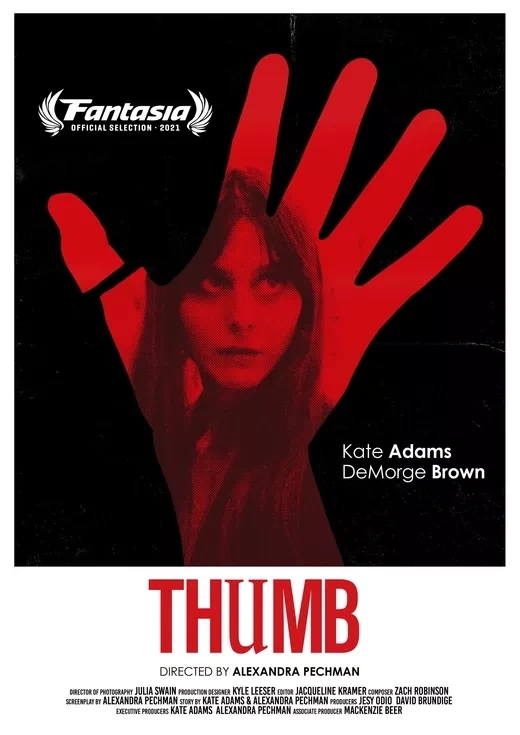
Summer’s come around again, and with it another installment of the Fantasia International Film Festival, the Montreal-based genre festival it’s been my pleasure and privilege to cover for Black Gate since 2014. Fantasia’s back up to a full three weeks after last year’s two-week version, starting today and running until August 25; here’s the full schedule. COVID-19’s still out there, though, so this year like last most of the films are streaming rather than shown in a threatre. Some are at scheduled times, others are available on demand over the course of the festival, and all movies are geo-locked to Canada though panels and discussions will be available worldwide through Zoom or YouTube.

But a few films have in-person screenings at Montreal’s venerable Imperial Theatre. This briefly caused me to ponder: doubly vaccinated as I am, am I comfortable going to a movie theatre? I never came to a conclusion because at the start of July I felt a pain in my foot, and when I finally bothered to have a doctor look at it two weeks later, found out it was a stress fracture. I now have a boot cast to wear through the end of August, and while it lets me get around it’s probably still a good idea to avoid needless strain on the foot. So I’ll be taking in the festival from the comfort of my couch.

Read More Read More

Ellsworth’s Cinema of Swords: Lone Wolf and Cub, Part 1

Ellsworth’s Cinema of Swords: Lone Wolf and Cub, Part 1

Lone Wolf and Cub 1: Sword of Vengeance (Japan, 1972)

Lone Wolf and Cub, the celebrated samurai manga series by writer Kazuo Koike and artist Goseki Kojima, began in 1970 and, wildly popular, eventually ran to many thousands of pages and was adapted to both film and television. However, it was virtually unknown in America and Europe until 1980 when the compilation Shogun Assassin was released, drawing on the first two motion pictures. But Shogun Assassin emphasized the series’ brutal violence and was regarded by most in the west as trash cinema, a reputation that was unchanged until 1987 when the Lone Wolf and Cub manga series was finally republished in the US and UK by First Comics. With covers and endorsements by then-fan-favorite Frank Miller, the comics were widely acclaimed, and the movies finally found release in the United States and Europe in their original forms.

This week we’re taking a look at the first three Lone Wolf movies from 1972-73. Despite their level of gore and carnage, which was considered extreme at the time, these are serious films, adapted from the manga by Kazuo Koike himself. Their success is all the more remarkable because star Tomisaburo Wakayama, middle-aged and heavy, looks so little like a samurai matinee idol. But Wakayama had been a dedicated martial artist before he became an actor, and his surprising athleticism adds depth and credibility to the role.

Read More Read More

Unearthing Scattered Memories: Detectorists

Unearthing Scattered Memories: Detectorists

I don’t really know what to say about detectorists (lower case intentional), which I finished watching this morning. It’s not much of a binge, since there are only nineteen half-hour episodes.

Except to say that this is the sort of thing I want to watch at this stage of my life. Quietly amusing rather than uproariously funny; gently engaging rather than gut-wrenchingly dramatic. It is almost completely devoid of sitcom clichés. No handsome leads — Andy (Mackenzie Crook) looks exactly like a dastardly pirate (he actually was in one or more of the Pirates of the Caribbean movies), and Lance (Toby Jones) looks like a garden gnome. And yet, you grow to like them so much that they become almost handsome. They’re bog-standard middle aged guys who lead mundane lives — but, crucially, they’re not losers. They’re everymen in whom hope springs eternal.

Read More Read More