Browsed by
Category: Movies and TV

My Fantasia Festival, Day 8: Faults, and Predestination adapts Heinlein’s “All You Zombies …”
My Fantasia Festival, Day 8: Faults, and Predestination adapts Heinlein’s “All You Zombies …”

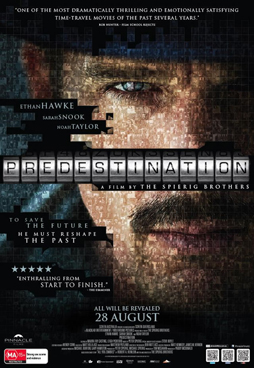
PredestinationOn Thursday, July 24, I saw two movies. One hinted at the supernatural. The other was a surprisingly faithful adaptation of a classic sf story. On the surface, these films didn’t seem to have a lot in common. But to me they raised similar questions about free will, about how people change, and about whether one can really choose that change.

The first was Faults, which screened at 7:15 at the De Sève Theatre. Directed and written by Riley Stearns, it starred Leland Orser as a man who specialised in deprogramming brainwashed cult members; he was trying to undo the damage a mysterious group called Faults had done to a young woman (played by Mary Elizabeth Winstead, who also produced the film). The second movie I saw right afterward at the Hall Theater at 9:45. It was titled Predestination and adapted Robert Heinlein’s “All You Zombies …” — the title, apparently, was changed to avoid confusion in the marketplace: the filmmakers didn’t want people thinking it had to do with the walking dead. It starred Ethan Hawke and Sarah Snook in her first star role in a feature film. Much of the movie was taken directly from the story, the main changes being additions which helped the story work on screen — and which also ultimately challenged the original story, adding a new ending beyond Heinlein’s text.

I’ll start with Faults, which is in many ways an excellent film that does an awful lot right. It’s a period piece set (so far as I could tell) somewhere around 1980. I mention this because this decision affects both atmosphere and plot: there are no cell phones, no Internet. I’ve noticed a number of films at Fantasia set in the 70s or 80s and you can see the logic. The plot becomes simpler to manage. And you can evoke a time with props and costumes that are probably relatively cheap and easy to find. In this case I think it also taps into a fear of cults and brainwashing that was in the air in the post-Jonestown years.
Read More Read More

Goth Chick News: The King Kong vs Godzilla of Movie Remakes

Goth Chick News: The King Kong vs Godzilla of Movie Remakes

image006It’s probably time for me to cave and stop complaining about present-day remakes of classic (or at least older) films.

Things have just gone far too far.

According to several movie sites, upwards of 50 (yes, five-zero) movies remakes / reboots have been green-lighted for production between 2013 and 2016. These movies make bank and there’s no use trying to stop Hollywood by crying foul that they’re defacing original works of art by replacing effect makeup and animatronics with CGI.

Blasphemous as it may sound, CGI can indeed take films that were somewhat “conceptual” 30 years ago and make them insanely realistic today. That’s not to say this is better, just different.

And success has landed all along the spectrum; with blockbusters like Star Trek at one end, whose reboot was admittedly cool and embraced by the fans, to Hitchhiker’s Guide to the Galaxy, whose high-tech remake was spectacularly rejected by fans (rightly so) and which slunk off into obscurity in favor of the low tech but brilliant original.

Sometime more just isn’t better.

Which brings us, in a rather convoluted way, to today’s topic.

During the Legendary Pictures panel at San Diego Comic-Con last Saturday, the production company announced plans to bring King Kong back to the multiplex in the form of a prequel.

Read More Read More

Fantasia Focus: Guardians of the Galaxy

Fantasia Focus: Guardians of the Galaxy

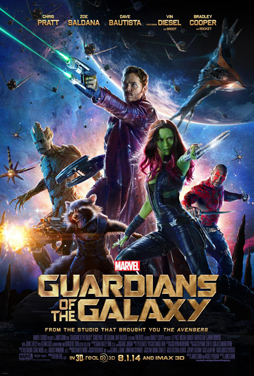
Guardians of the GalaxyI’m going to break from the chronological record I’ve been keeping of the Fantasia Festival to write a bit here about a movie I saw last night. I’m going to do this on the off chance that my doing so may help some of you decide what you’ll be doing with a couple hours of your upcoming weekend. On Tuesday at 7:30, Fantasia presented the Canadian premiere of Guardians of the Galaxy and I was there.
It’s a fun, fine movie. It’s not a great movie, I feel, and not even the greatest Marvel movie — I didn’t think it was as good as The Avengers or Captain America 2. But it’s another solid entry in Marvel’s growing filmography. That said, it’s not really a super-hero movie, but space opera: a group of ragtag adventurers in outer space come together when the retrieval of a mysterious artifact from a dead world leads to the emergence of a threat to the galaxy. Directed by James Gunn from a script by Gunn and Nicole Perlman, it moves swiftly and easily over familiar terrain, primarily using ideas and concepts from Dan Abnett and Andy Lanning’s excellent run on Marvel’s space-oriented comics — notably Nova and Guardians of the Galaxy.

It’s filled with adventure and action scenes. It’s also filled with humour, and largely successful humour at that. The characters are engaging, with each of the heroes distinctive and developed as individuals — though the villains of the piece are underplayed. There are moments of real strangeness, though I’m not sure the richness of the ideas in the original comics always come across. And the worldbuilding — or galaxybuilding — is so minimal that the scope of the film feels limited as a result. Still, this is a tightly-constructed high-velocity movie with a surprising amount of warmth. It’s a story about outcasts coming together for the common good and learning to be better as a group than they could have been apart. There’s nothing revolutionary about that, but Guardians does the old idea well.

Read More Read More

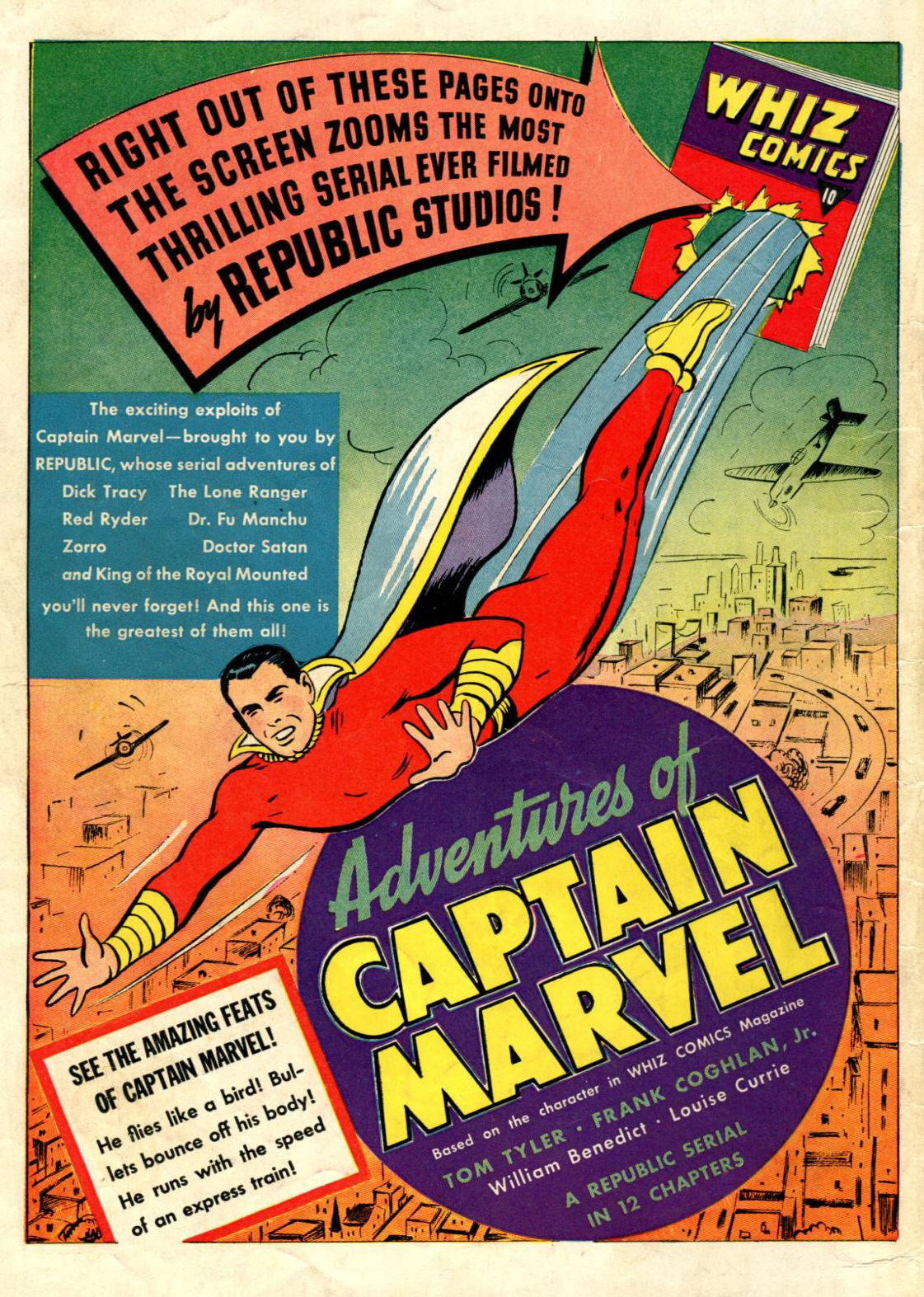
Into the Tomb: The Adventures of Captain Marvel, Chapter Eleven: Valley of Death

Into the Tomb: The Adventures of Captain Marvel, Chapter Eleven: Valley of Death

Captain Marvel Chapter Eleven - poster-smallAh, the excitement in the theater is palpable as we near the end of our journey and today’s eleventh chapter in The Adventures of Captain Marvel, “Valley of Death,” begins to flicker across the screen. Because the seats are largely filled with sweaty elementary school children, something else is palpable too — whew! Baths and showers are definitely called for when you get home, kids…

Today’s title cards summarizing Chapter Ten will, as always, enlighten the enlightenable and confuse the confusable. (Or maybe it’s the other way around.) “Malcolm — Is shipwrecked on a reef off the coast of Siam.” “Captain Marvel — Rescues Malcolm’s party and the crew from the S.S. Carfax.” “Betty — Is left aboard ship by the Scorpion.” Now it’s time for the word we’ve come to know so well, though I’m sure only a few of you remember exactly what the letters mean. Me? Of course I know… but, uh, we’ve no time to waste with trivia… Shazam!

A flashback to the previous cliffhanger puts us with Billy and the unconscious Betty on board the sinking Carfax (and if the title card says it’s the Carfax, that’s good enough for me). As the ship goes down and water pours into Betty’s cabin, Billy gets himself and Betty off the doomed vessel (a judicious cut ensures that we don’t quite see how) and manages to swim to shore with the buoyant secretary in tow. It’s a good thing he decided to skip band camp last summer and take those swimming lessons at the YMCA.

Once on dry ground, Betty relates how an unknown assailant struck her from behind. “Why would anyone want to kill you?” Billy asks. “He must have been after my section of the map; he took my handbag,” Betty replies. Everyone seems satisfied with this explanation. This is 1941 and it won’t do to entertain the idea that the Scorpion just wanted the purse. But what of the map? It wasn’t in the bag — “It’s in a waterproof envelope pinned inside my jacket.” At this news, Bentley looks like a kid who wanted the big new Hot Wheels set for Christmas and instead got one of those last-resort toys that isn’t even really a toy, like a grip-strengthener.

Read More Read More

My Fantasia Festival, Days 5 to 7: Cold in July, The Fatal Encounter, and Huntresses

My Fantasia Festival, Days 5 to 7: Cold in July, The Fatal Encounter, and Huntresses

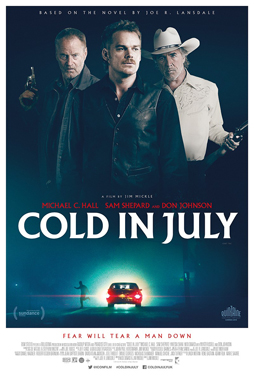
Cold in JulyI’ve mentioned before that the Fantasia Festival has, logically enough, programmed what look to be their most popular movies in the big Hall Theatre. That often means unabashed genre movies — movies that aim at telling a certain kind of story a certain kind of way. A genre’s a set of conventions and a storyteller can play against those conventions or use them to get at whatever they want, as they see fit. And, especially as genres become better-known by audiences, there’s a natural inclination to mix conventions, to set genre against genre within a single story. The trick, of course, is that whichever angle you take, you should try to do it well.

Last week from Monday (the 21st) through Wednesday, I saw three genre movies at the Hall: Cold in July, directed by Jim Mickle from a prose story by Joe R. Lansdale; The Fatal Encounter (originally Yeok-rin), a dark, violent period piece from Korean director Lee Jae-kyoo; and The Huntresses (originally Joseonminyeo Samchongsa), a much brighter period piece from Park Jae-hyun. They all aimed at a certain target, and to various degrees hit what they were aiming at. They were all working in different genres, producing different effects. But they were all intensely conscious of how genre worked.

Monday was Cold in July, scripted by Mickle and Nick Damici from Lansdale’s 1989 novella. I haven’t read it, so I can’t speak to the faithfulness of the adaptation; but the story on screen did some interesting things, starting out as a certain kind of thriller, then changing tones, then changing tone again. It begins with a man in a small town in Texas in the late 1980s, a picture-framer named Richard Dane (Michael C. Hall), who surprises an intruder in his home and accidentally shoots him dead. This leads to the dead man’s ex-con father, Ben Russell (Sam Shepard) swearing revenge. But then Dane makes a discovery that throws into question what he thinks happened, and suggests that the authorities are lying to him and Russell. A private investigator (and pig farmer) named Jim Bob Luke (played with tremendous humour by Don Johnson) enters the picture. The plot thickens. Ultimately, things resolve in a violent third act mission.

Read More Read More

Ancient Worlds: Argonauts vs The Giant Robot

Ancient Worlds: Argonauts vs The Giant Robot

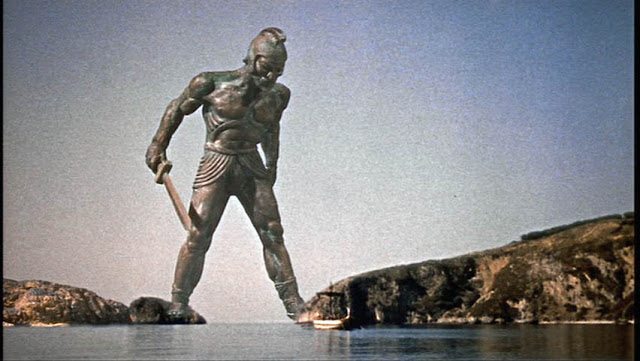
talos3ng4If you saw the 1963 version of Jason and the Argonauts, you probably remember this scene. It’s classic Harryhausen: stop-animation work that was looks cartoonish now, but was state-of-the-art at the time.

Like some of the other episodes in this movie (Skeleton battle!) you may have thought that this was all Hollywood. But Talos, the gigantic bronze guardian of Crete, was described in the Argonautica as well. Apollonius tells his readers that Talos was the last of the race of Bronze (mythical predecessors of modern humans), and that Zeus had set him to guarding Crete as a favor to his lover Europa. Since he was made entirely of metal, he was completely invulnerable, except for one spot on his heel where a thin membrane of skin covered his vein.

Read More Read More

My Fantasia Festival, Day Four: Jellyfish Eyes, In the Land of the Head Hunters, and The Reconstruction of William Zero

My Fantasia Festival, Day Four: Jellyfish Eyes, In the Land of the Head Hunters, and The Reconstruction of William Zero

Jellyfish EyesLast Sunday, June 20, I saw four movies. I’ve already written about one of them, Terry Gilliam’s The Zero Theorem, which deserved its own post. But that’s not to say that all the other films I saw that day were poor. It was in fact an odd mix; out of the three other films I saw, I’m quite glad to have seen two of them, while the third at least had points of interest.
Things began with Takashi Murakami’s children’s fantasy Jellyfish Eyes (Mememe no Kuragi in the original Japanese), which was followed by The Zero Theorem, both at the Hall Theatre. Then I went across the street to the De Sève to watch an utterly fascinating silent film from 1914, Edward Curtis’s In the Land of the Head Hunters, which mixed an early attempt at anthropological documentary into a fantasy adventure. My day concluded with Dan Bush’s intelligent low-budget sf film The Reconstruction of William Zero. Put them all together, and it made for a memorable cinematic experience.

That said, Jellyfish Eyes was something of a disappointment. Murakami’s an internationally-renowned artist, known in particular for creating or identifying the ‘superflat’ style of art — the word’s meant to refer not only to Murakami’s own style, but to the Japanese artistic tradition in general. Which emphatically includes popular art. Anime and manga artists have been exhibited in ‘superflat’ gallery shows, and Murakami’s own art has been said to be inspired by anime. The impression I get from what I’ve read is that it’s almost a take on the idea of pop art, combining Japanese popular culture with certain aspects of graphic design as a way of critiquing consumerism. So, all in all, it’s perhaps not entirely surprising that Murakami’s first film was an anime-inflected mash-up of Pokémon, kaiju, even a bit of Spielberg; nor surprising that its potential is largely nullified by a bluntness of approach.

Read More Read More

Why Must Han Solo Die?

Why Must Han Solo Die?

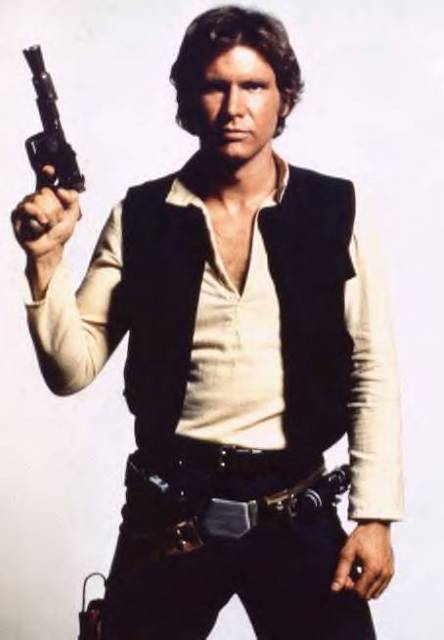
han soloLast week, I made the prediction that Han Solo will die in the new Star Wars film. I have no evidence; it’s just a theory based on a confluence of random speculations and gut instinct. Here I’ll lay out, in no particular order, some of the thoughts that led me to posit this guess.

My premise begins with the knowledge that Han apparently plays a fairly major role in the plot, given that Harrison Ford’s recent injury shut down the entire production schedule for two weeks (an indication that his is much more than just a “cameo,” which easily could have been filmed around, with some scenes rescheduled for later in the shoot).

Observation #1

Some critics decried the rescue of Han from Jabba in the first act of Return of the Jedi as a cop-out, contending that his death would have provided a dramatic catalyst for the other characters. Of course, Lucas wasn’t going to go there (he’s George Lucas, not Joss Whedon); even Han’s blindness following his release from carbonite was temporary. Such characters in traditional heroes’ tales often suffer a permanent physical loss, such as blindness, that is compensated for by new wisdom or insight. Han’s blindness wore off pretty fast, and by the end of the movie he was back to being good ol’ Han Solo, the wise-cracking pirate with a heart of gold. So maybe J.J. Abrams and company will want to make a big end for the character this time out.

Observation #2

For all we know, Harrison Ford — who just turned 72 this month — stipulated that while he’d gladly reprise the role that made him famous, it would be just this once, and that he didn’t want to be running around playing a space pirate at 75. Even if he made no such stipulation, the age of the actor is a big factor. Which leads me to…

Read More Read More

The Public Life of Sherlock Holmes: Sherlock Is Coming Back – Good or Bad?

The Public Life of Sherlock Holmes: Sherlock Is Coming Back – Good or Bad?

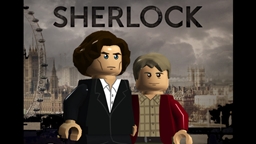
Sherlock_LegoAs a screen presence, Sherlock Holmes was essentially a dormant property from the nineties until 2009. Sherlock Holmes and the Vengeance of Dracula  was a hot script in 1999, with Christopher Columbus set to direct. But screenwriter Michael Valle died unexpectedly and Columbus went on to make some movies with a bunch of kid wizards in a pig school or something like that.

In 2009, Robert Downey Jr. breathed new life into the great detective in the global smash, Sherlock Holmes (worldwide gross: over a half a billion dollars! The sequel did even better).

Mark Gattis and Steven Moffat, writers on the successful Doctor Who series, decided to bring Holmes back to television, but with a twist: the setting would be modern day London. It was a HUGE success, artistically and commercially.

With references to the original stories by Doyle all over the place, including updatings of the original tales (the pilot, A Study in Pink, was a retelling of the first story, A Study in Scarlet), it was a fresh take on an old subject. And with Benedict Cumberbatch playing an obnoxious, young Holmes and likeable everyman Martin Freeman as his trusty sidekick, Watson, the three-episode series was a hit in the UK, America, and all over the world.

Season two was just as good, updating The Hound of the Baskervilles and turning The Woman, Irene Adler, into a dominatrix. Personally, after season two ended, Sherlock was one of my top five all-time favorite shows and even in a battle with Justified for the top spot.

Read More Read More

Confessions Of a Cormanite

Confessions Of a Cormanite

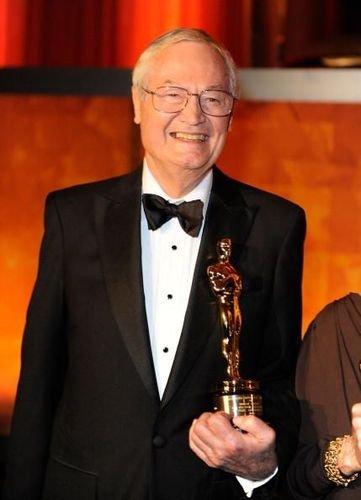
Corman - Academy Award-smallGraham Greene once said that the books that influence us the most are not the ones that we “seriously” or systematically read in adulthood, but are rather those first books we seek out in our youth and that we read for the simple love of reading.

He wrote, “In later life, we admire, we are entertained, we may modify some views we already hold, but we are more likely to find in books merely a confirmation of what is in our minds already.” But when we are children, “all books are books of divination, telling us about the future, and like the fortune-teller who sees a long journey in the cards or death by water they influence the future.” This has been true of my own reading, and I would also assert that for those who love film, it equally applies to the movies that they watched early in their lives.

Movie buffs come in countless varieties; there’s a great variation in their degrees of passion and in the objects of their devotion. Some bring offerings of ice to the shrine of a Kubrick or an Antionioni, and others make blood sacrifices on the altar of a Scorsese or a Peckinpah. Some soar with Hawks while others go to Welles for their refreshment. One group bows silently before Buster Keaton and the next sings songs of praise to Judy Garland.

Now, I am a movie buff and I have been given tremendous pleasure by the artists I just mentioned and by many others. I love Lubistch, would stay up late for Sturges, have been beguiled by Bunel, am wild for Wilder… but none of these immortals occupy the place closest to my heart.

Get me away from the art house, put away the beautifully illustrated coffee table book on the Masterpieces of Swedish Cinema, send home the educated — but dull — guest whose favorite Woody Allen film is Interiors (please!) or who saw The English Patient three times, and leave me alone in my sanctuary — my darkened living room at 2:00 am, lit only by the restless images that pass across the television screen, images selected for no one’s pleasure but my own, and the truth will at last emerge. I am a Cormanite.

Read More Read More