Browsed by
Category: New Treasures

New Treasures: The Shadows by Alex North
New Treasures: The Shadows by Alex North

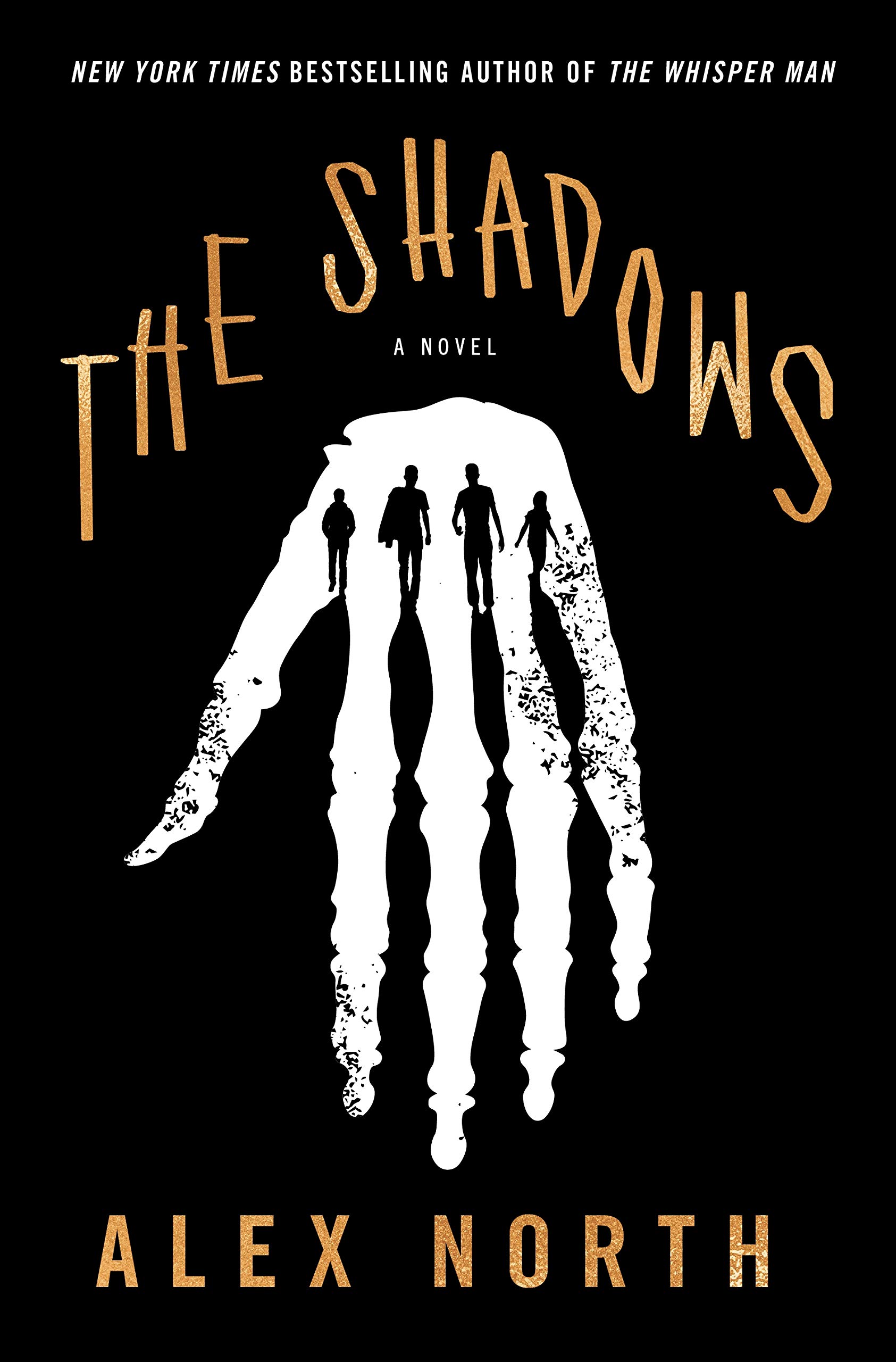
The Shadows-smallAlex North’s previous novel was the bestselling thriller The Whisper Man. With his new novel The Shadows he creeps into horror territory — and does it with style. Publishers Weekly calls it a “terrifying spine-tingler… impossible to put down,” and The New York Times says “This is absorbing, headlong reading, a play on classic horror with an inventiveness of its own… As with all the best illusions, you are left feeling not tricked, but full of wonder.”

It was published in hardcover two weeks ago. Here’s the description.

You knew a teenager like Charlie Crabtree. A dark imagination, a sinister smile–always on the outside of the group. Some part of you suspected he might be capable of doing something awful. Twenty-five years ago, Crabtree did just that, committing a murder so shocking that it’s attracted that strange kind of infamy that only exists on the darkest corners of the internet — and inspired more than one copycat.

Paul Adams remembers the case all too well: Crabtree–and his victim — were Paul’s friends. Paul has slowly put his life back together. But now his mother, old and suffering from dementia, has taken a turn for the worse. Though every inch of him resists, it is time to come home.

It’s not long before things start to go wrong. Paul learns that Detective Amanda Beck is investigating another copycat that has struck in the nearby town of Featherbank. His mother is distressed, insistent that there’s something in the house. And someone is following him. Which reminds him of the most unsettling thing about that awful day twenty-five years ago.

It wasn’t just the murder.

It was the fact that afterward, Charlie Crabtree was never seen again…

The Shadows was published by Celadon Books on July 7, 2020. It is 336 pages, priced at $26.99 in hardcover and $13.99 in digital formats. Read an excerpt at EW.com.

See all our recent coverage of the best new releases here.
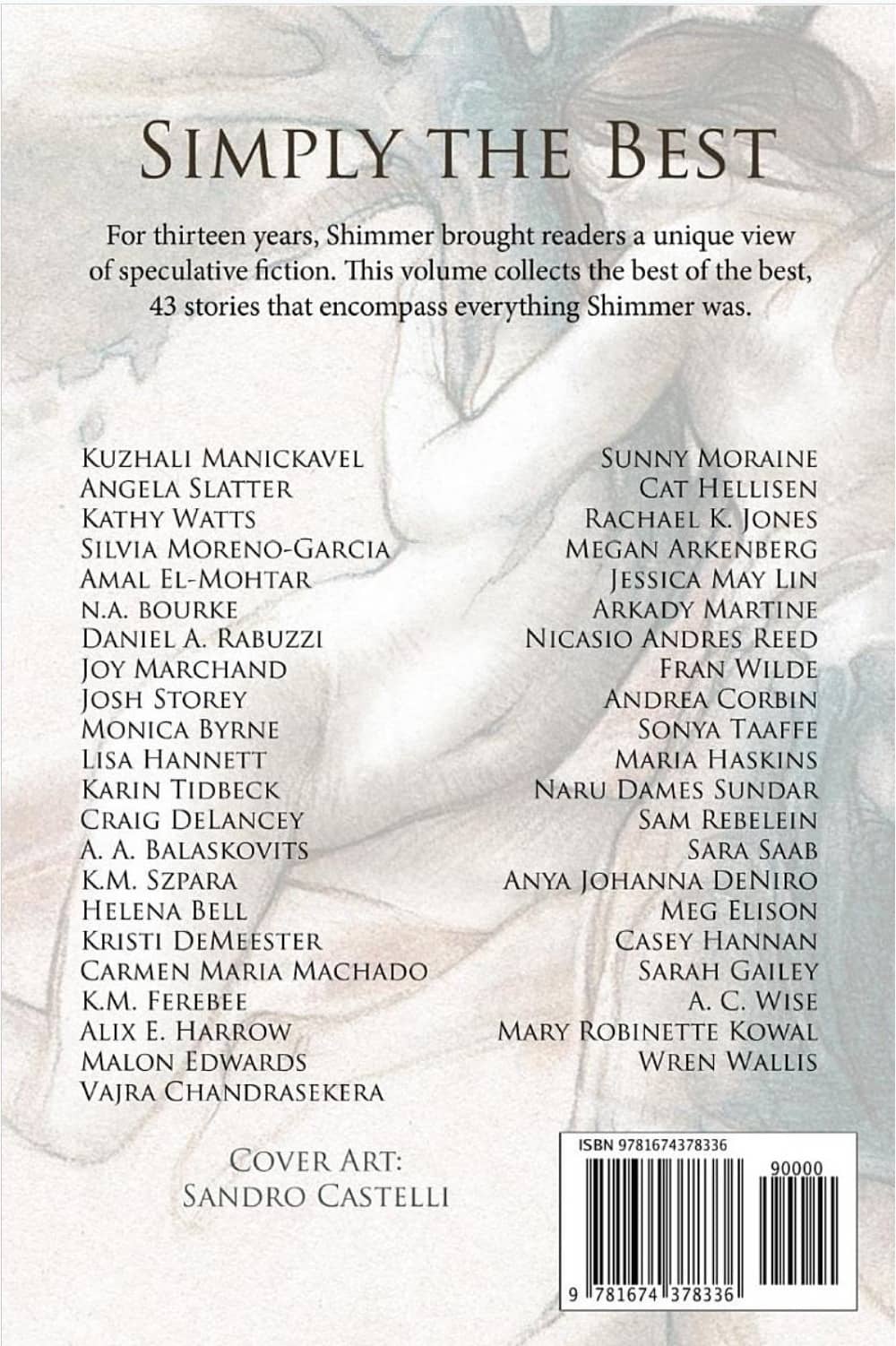
New Treasures: Shimmer: The Best Of, edited by E. Catherine Tobler

New Treasures: Shimmer: The Best Of, edited by E. Catherine Tobler

Shimmer The Best Of-small Shimmer The Best Of-back-small

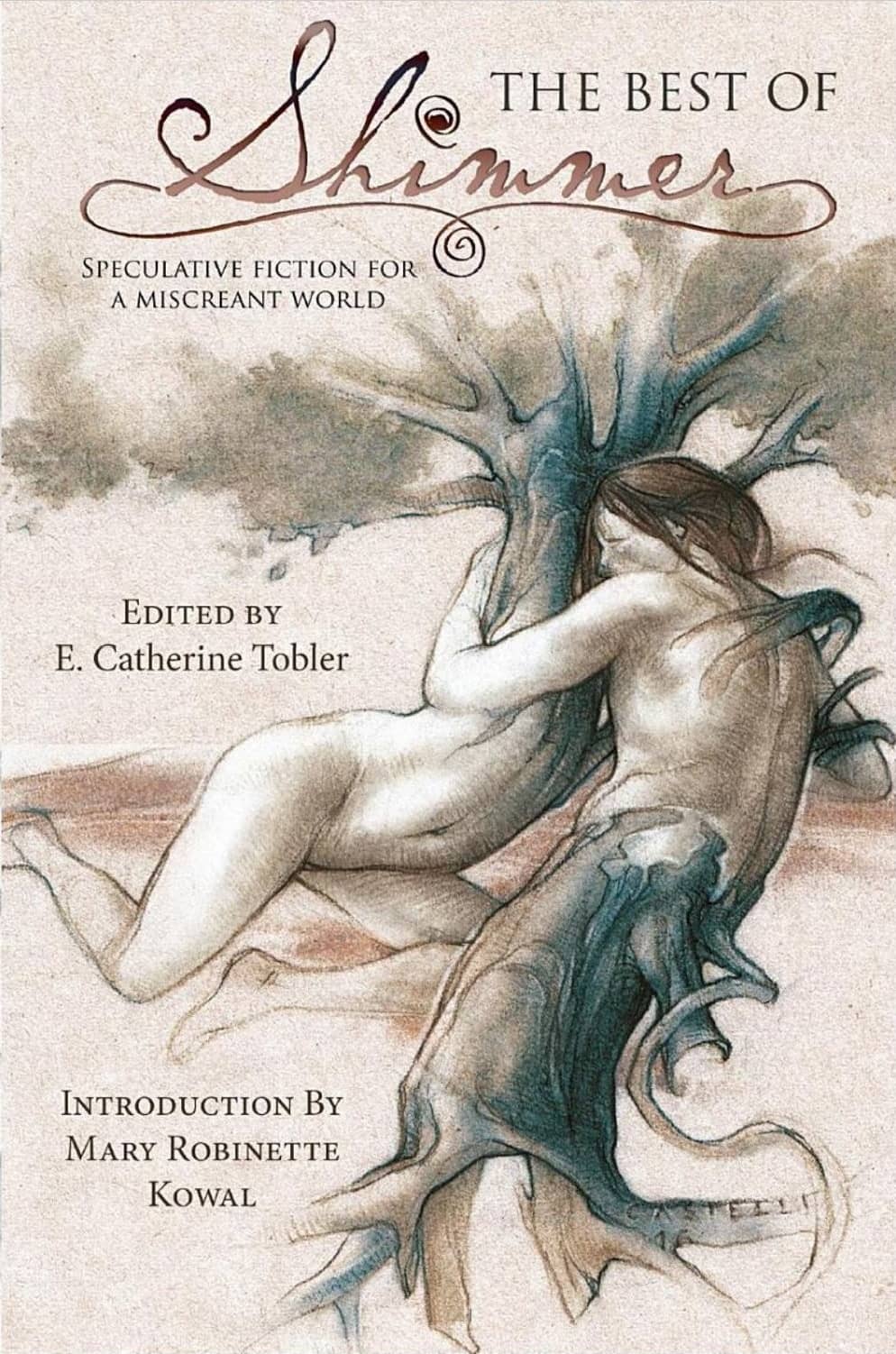
Cover by Sandro Castelli

How did I not know there was a Best of Shimmer anthology? Time to get some better inside contacts in the publishing biz, I think.

Shimmer was one of the best of the small press fantasy magazines. It received a Hugo nomination for Best Semiprozine last year, and editor E. Catherine Tobler was honored with a Best Professional Editor, Short Form nomination. The magazine published science fiction, fantasy, and “a dash of literary horror.” The final issue, #46, appeared in November 2018.

Shimmer was constantly interesting, and we covered over half a dozen issues as part of our magazine coverage over the years. Their greatest skill was spotting talent, and they did plenty of that. Shimmer: The Best Of contains stories by many of the brightest stars of modern fantasy, including Silvia Moreno-Garcia, Amal El-Mohtar, Karin Tidbeck, Mary Robinette Kowal, Carmen Maria Machado, Sunny Moraine, Arkady Martine, Fran Wilde, Sonya Taaffe, A. C. Wise, Sarah Gailey, Vajra Chandrasekera, K.M. Szpara, and many, many others, all packed into a massive 489-page volume.

Here’s the complete Table of Contents.

Read More Read More

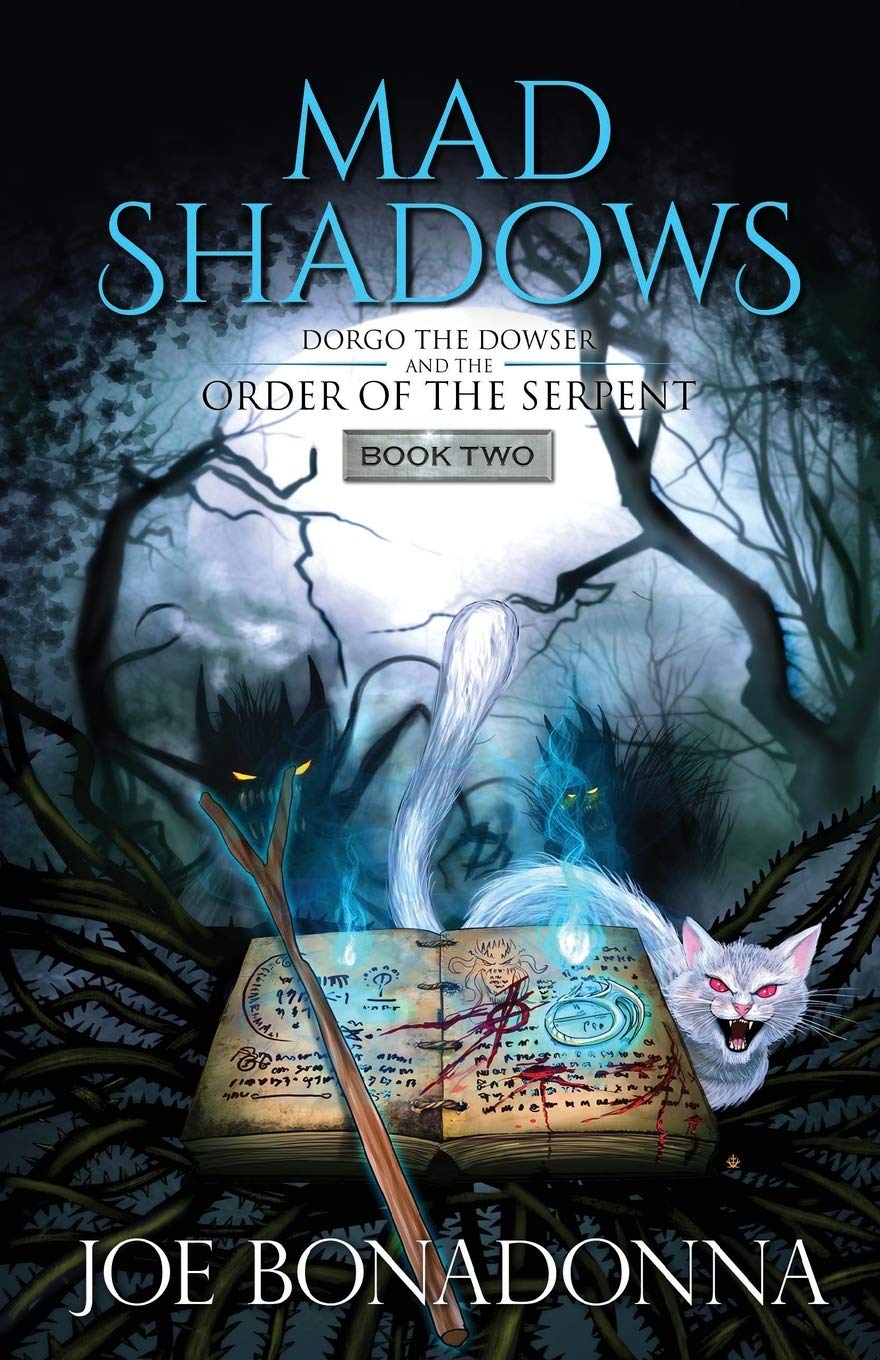
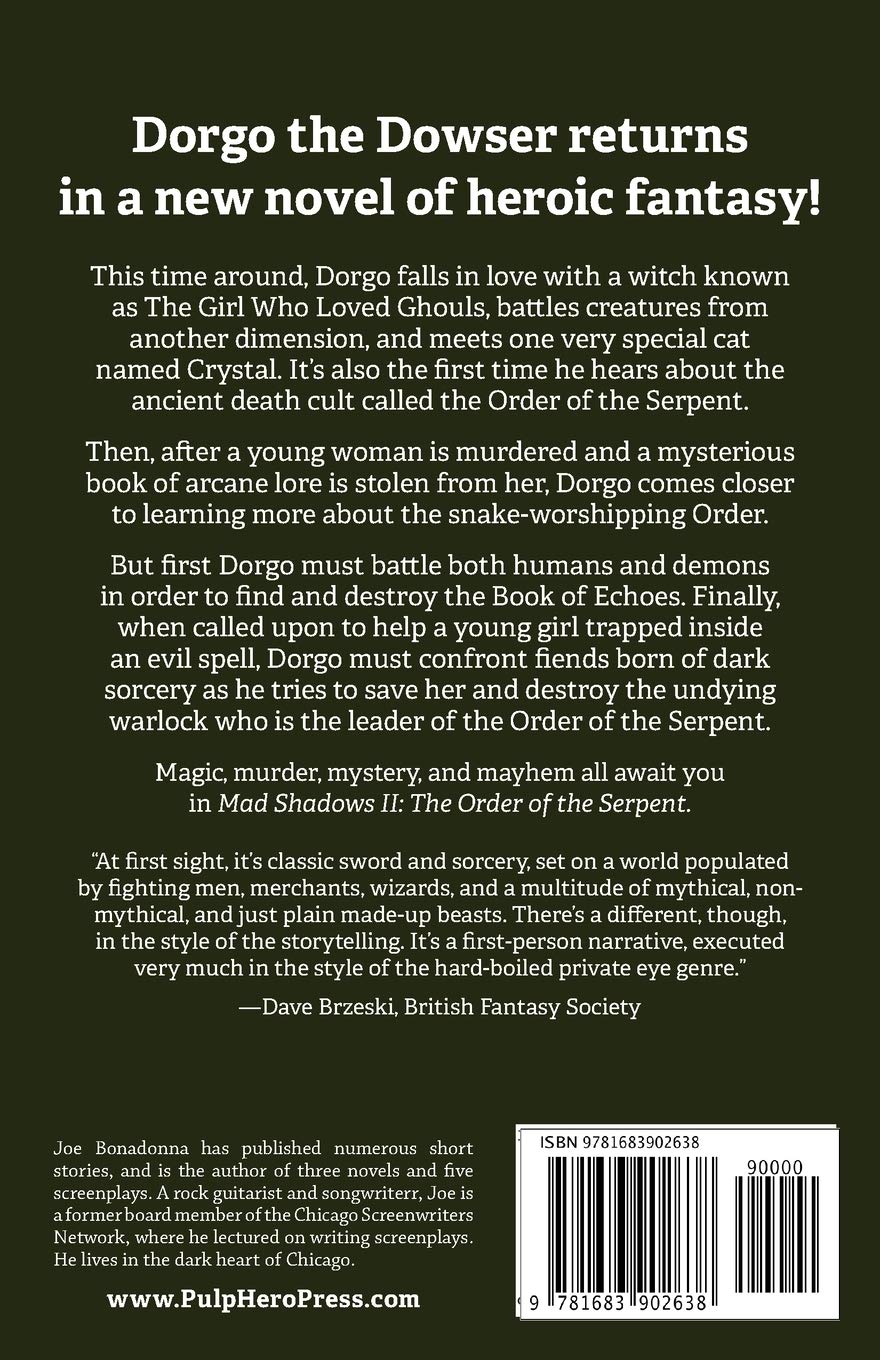
Dorgo Returns! Mad Shadows, Book Two: Dorgo the Dowser and the Order of the Serpent

Dorgo Returns! Mad Shadows, Book Two: Dorgo the Dowser and the Order of the Serpent

Dorgo the Dowser and the Order of the Serpent-small Dorgo the Dowser and the Order of the Serpent-back-small

Joe Bonadonna’s 2011 sword and sorcery collection Mad Shadows: The Weird Tales of Dorgo the Dowser won the 2017 Golden Book Readers’ Choice Award for Fantasy. In his BG review William Patrick Maynard wrote:

Joe Bonadonna describes his fiction as ‘Gothic Noir’ and it is entirely appropriate… The six stories in Mad Shadows offer a mixture of traditional sword & sorcery necromancers and demons as well as werewolves, vampires, witches, and bizarre half-human mutations that H. P. Lovecraft would happily embrace.

Pulp Hero Press reissued Mad Shadows last December, in a revised second edition with a new cover, new maps, revised text, and an expanded Afterword. Now they’ve given the same treatment to the sequel, Dorgo the Dowser and the Order of the Serpent. Here’s a brief snippet from Fletcher Vredenburgh’s terrific review of the original 2017 release.

I totally dig these stories and especially the world Bonadonna’s created. Tanyime is rife with magic and magical beings. Minotaurs serve as guards, a cyclops runs a gambling den, and an old satyr is one of Dorgo’s best friends. Bonadonna’s too skilled a storyteller to let his setting become overwhelmed by the possible cutesiness of it all, instead, creating a good, hardboiled world with room in it for justice…. Aside from his deep understanding of S&S and hardboiled fiction, Bonadonna knows how to write a hero… [Dorgo] is an honest-to-goodness hero looking to do the right thing,

Read a generous excerpt from Dorgo the Dowser and the Order of the Serpent right here at Black Gate.

Read More Read More

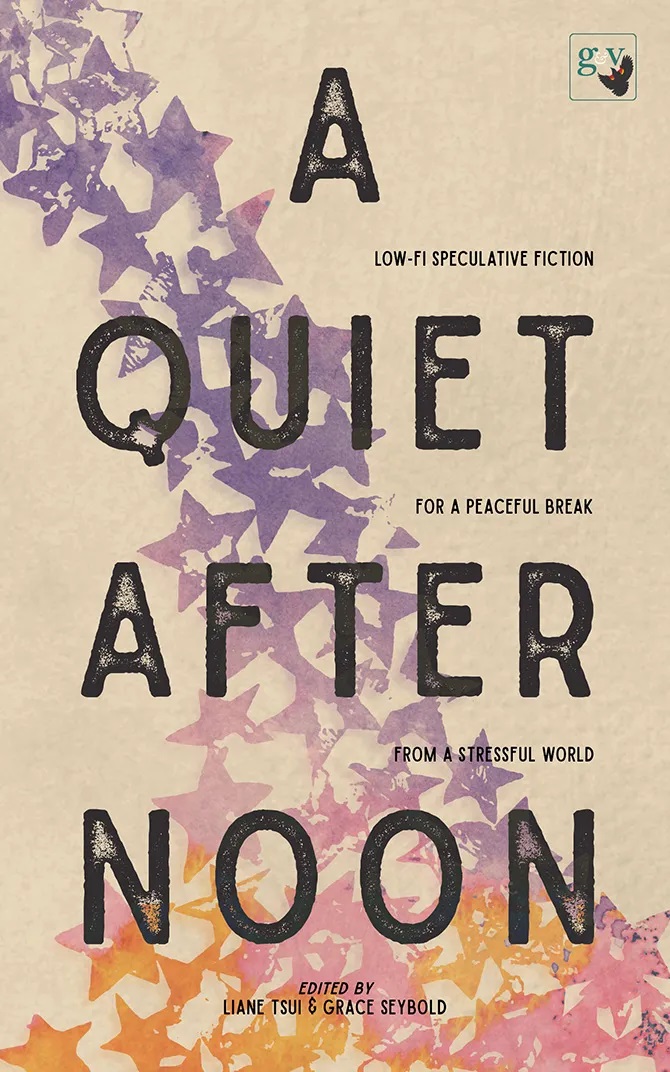
Low-stakes Fiction in a High-stakes World: A Quiet Afternoon, edited by Liane Tsui and Grace Seybold

Low-stakes Fiction in a High-stakes World: A Quiet Afternoon, edited by Liane Tsui and Grace Seybold

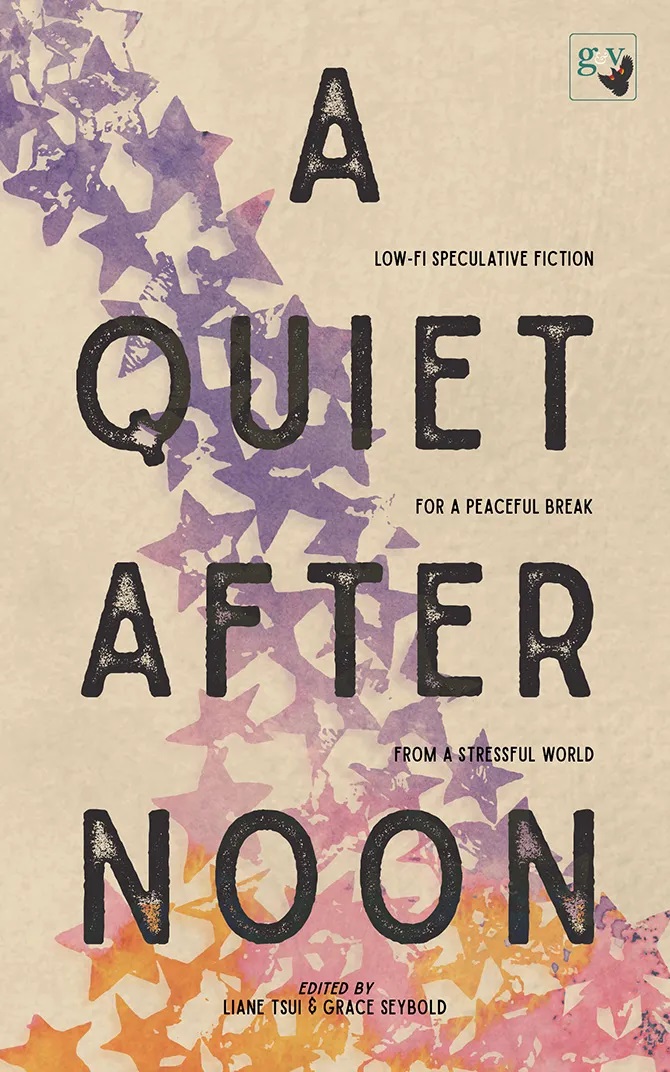
GV Quiet Afternoon image 1-smallIn their recently released anthology A Quiet Afternoon, Canadian micropress Grace&Victory offer calm and gentle SFF tales for the reader who would rather curl up with a mug of tea and an afghan (or a slushie and a hammock, depending on the weather) than dart about the cosmos with lasers blasting.

Grace&Victory team members Victoria Feistner (co-founder and graphic designer), Laura DeHaan (slush reader and morale officer), Liane Tsui (chief editor), and Grace Seybold (co-founder, second editor and legalities wrangler) get together today to share their thoughts on low-stakes fiction in a high-stakes world.

You’ve talked about low-stakes fiction, which you call “Low-Fi.” What does that mean to you?

LD: Stories that are comfortable to read, that don’t excite feelings stronger than warm fuzzies or faint melancholy. Which might not sound terribly flattering, I know. I imagine most authors want their stories to sear a flaming brand across the brains of the readers and leave them shaken and awed by the majesty of the prose, but really what I’m looking for is instant nostalgia. I want to think back on the story fondly, I want to revisit it in the way you enjoy pulling on an old sweater or a tatty pair of shoes.

VF: When I am stressed out, sometimes relaxing with a good book – if the book is full of action, violence, tension – only serves to stress me out more. In such times I often turn to different genres – literary, travel memoir, biography, and the like – for escape into gentler adventures. And yet, when I do, a part of me misses my spec elements. Low-Fi is about bringing the mundane and slice-of-life stories prevalent in other genres into the SF fold. SF has long been about larger-than-life heroes and do-or-die plots, but here and there are stories where the stakes are much lower. Ursula LeGuin’s Changing Planes comes to mind, as does Natasha Pulley’s The Watchmaker of Filigree Street.

So how is Low-Fi different from existing subgenres? Should it be considered its own sub-genre or merely a “tag”?

LD: I think it’s more about tone than anything else. A queen is near death in “An Inconvenient Quest,” there’s deadly traps and adventure in “Hollow,” “Of Buckwheat and Garlic Braids” has a potentially murderous strigoi, but because of the tone we never feel like anyone’s really in danger. I think as well there’s a definite refusal of violence as a solution and an emphasis on conversation as the way to problem-solve. Again, “Hollow” is an adventure story where the characters cast spells and shoot arrows, but in the end it’s a conversation that resolves the situation.

It’s not something we actively set out to enforce, but it seems fitting that Low-Fi also avoids salty language. And while we have a couple smooches, anything beyond that probably wouldn’t be appropriate for Low-Fi.

So I’d say sure, make it a new sub-genre!

Read More Read More

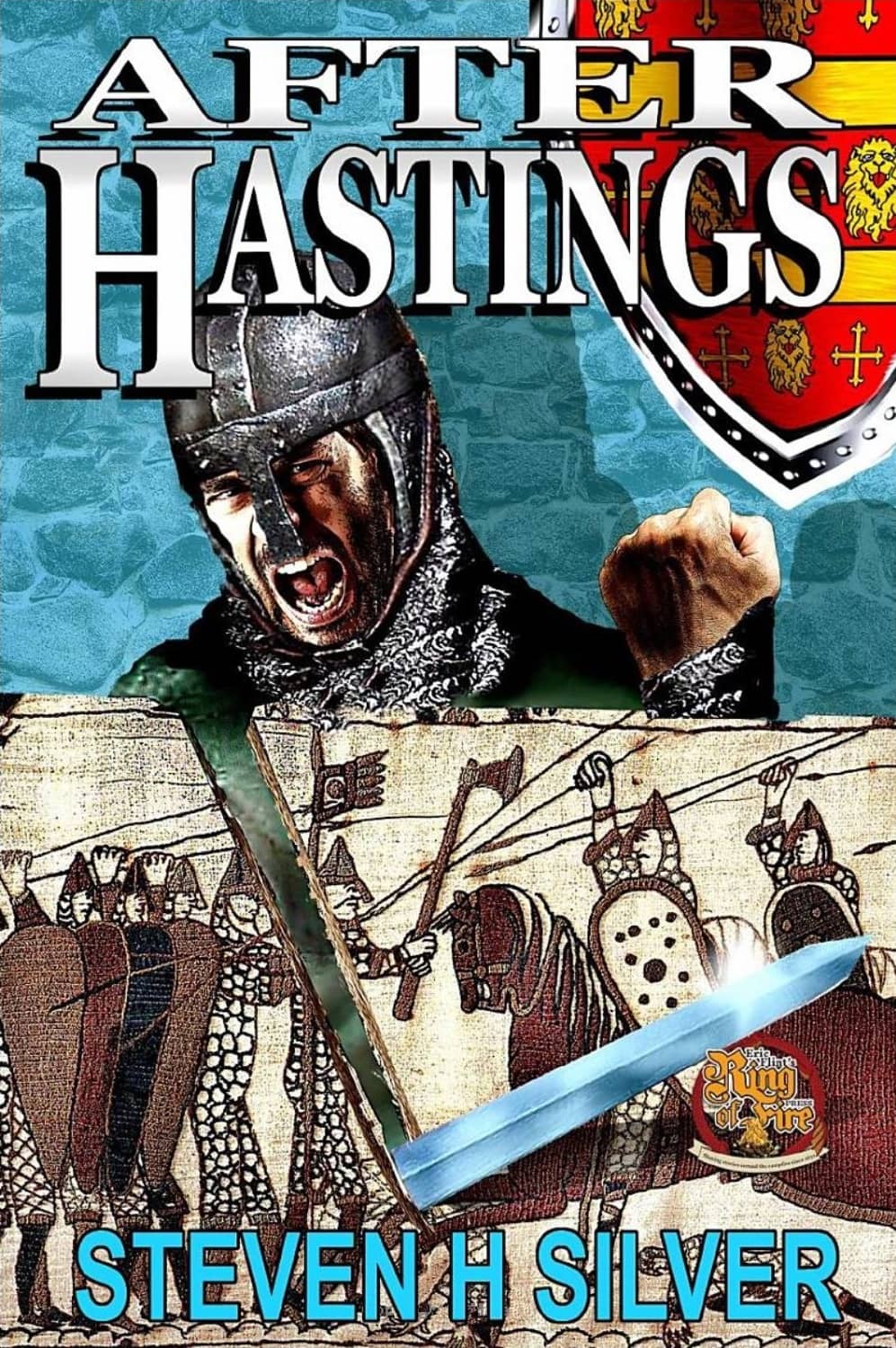
What if King Harold had Prevented the Norman Conquest: After Hastings by Steven H Silver

What if King Harold had Prevented the Norman Conquest: After Hastings by Steven H Silver

After Hastings-small After Hastings-back-small

Cover designed by Laura Givens

Steven H Silver is one of Black Gate‘s most prolific contributors. He produced many reviews for the print magazines, sold me the terrific short story “The Cremator’s Tale” back in 2013, and has written an astonishing 471 articles for the blog.

Steven’s many accomplishments don’t end with Black Gate, however. He’s an acclaimed editor, co-editing three DAW anthologies with Martin H. Greenberg (Wondrous Beginnings, Magical Beginnings, and Horrible Beginnings), and the two volume Selected Stories of Lester del Rey for NESFA Press. His most recent anthology is Alternate Peace (June 2019), co-edited with Joshua Palmatier. From 2004-2012 he was the publisher and editor of ISFiC Press, and his annual fanzine Argentus has been nominated for the Hugo Award multiple times. In fact Steven has received 17 Hugo nominations over the years.

Last week Steven’s writing career entered an exciting new phase with the publication of his long-awaited debut novel After Hastings, a masterfully constructed alternate history from one of the field’s true experts. I asked Steven to say a few words about it for BG readers, and this is what he shared:

After Hastings is an exploration of a world in which King Harold of England successfully beats back the Norman Conquest but finds himself facing other enemies, both domestic and foreign, leading him to jump start the reformation four hundred years early.

After Hastings was published by Ring of Fire Press on July 10, 2020. It is 347 pages, priced at $15.99 in paperback and $5.99 in digital formats. The cover was designed by Laura Givens. Order copies here.

See all our coverage of recent releases by Black Gate staff here.

New Treasures: Murder Ballads and Other Horrific Tales by John Horner Jacobs

New Treasures: Murder Ballads and Other Horrific Tales by John Horner Jacobs

A Lush and Seething Hell Two Tales of Cosmic Horror-small Murder Ballads and Other Horrific Tales-small

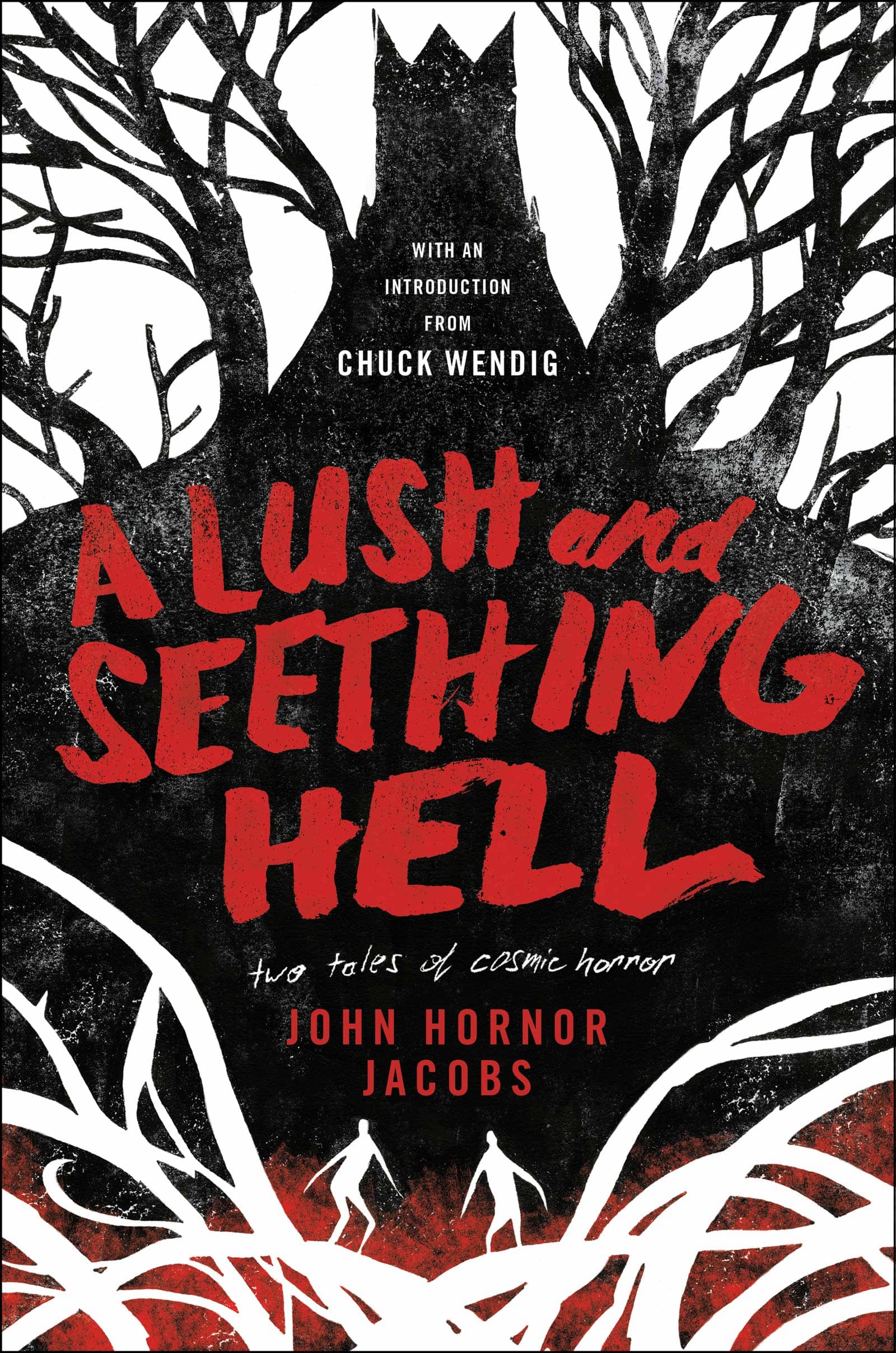
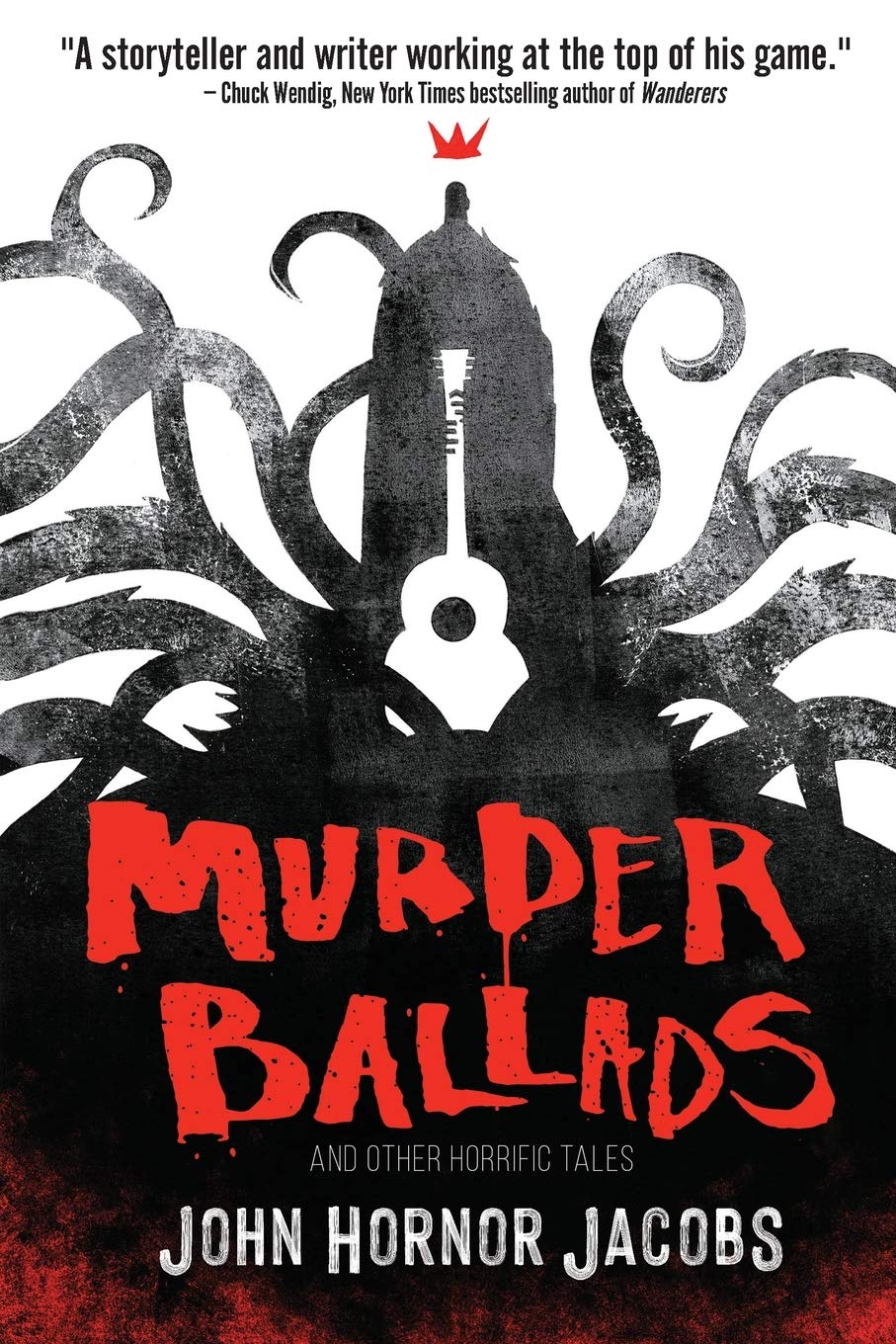
Covers by Jeffrey Alan Love

John Horner Jacobs’s new collection Murder Ballads and Other Horrific Tales has arrived from JournalStone, and my, my. It looks very handsome on my bookshelf right next to A Lush and Seething Hell, his 2019 collection of two novellas of cosmic horror. Yes indeed. The fabulous covers are by Jeffrey Alan Love, and they do look very sharp side by side.

Murder Ballads collects 10 tales of weird horror, and has been called “masterful… marvelously eerie” by Publishers Weekly, in case you let things like reviews sway you (instead of cool cover art, which is the way we prefer to be swayed here at Black Gate.) Here’s the description.

A terrifying collection of horror and crime noir from the author of Southern Gods and A Lush and Seething Hell.

Featuring ten tales, two never before in print, Murder Ballads and Other Horrific Tales is an exciting glimpse into the dark territories of the human heart.

These are coming-of-age stories. Stories of love and loss, grief and revenge. Survival and redemption. From old gods to malevolent artificial intelligences, vampires to zombies to ghosts, Jacobs exposes our fears and worst imaginings.

CONTAINS THE SEQUEL TO SOUTHERN GODS

The sequel to Southern Gods they mention so breathlessly in that last line is the title story, a novella that PW calls “a southern gothic extravaganza.” Here’s a look at the back cover.

Read More Read More

Revisit the Fabled City of Brass: S. A. Chakraborty Wraps The Daevabad Trilogy with The Empire of Gold

Revisit the Fabled City of Brass: S. A. Chakraborty Wraps The Daevabad Trilogy with The Empire of Gold

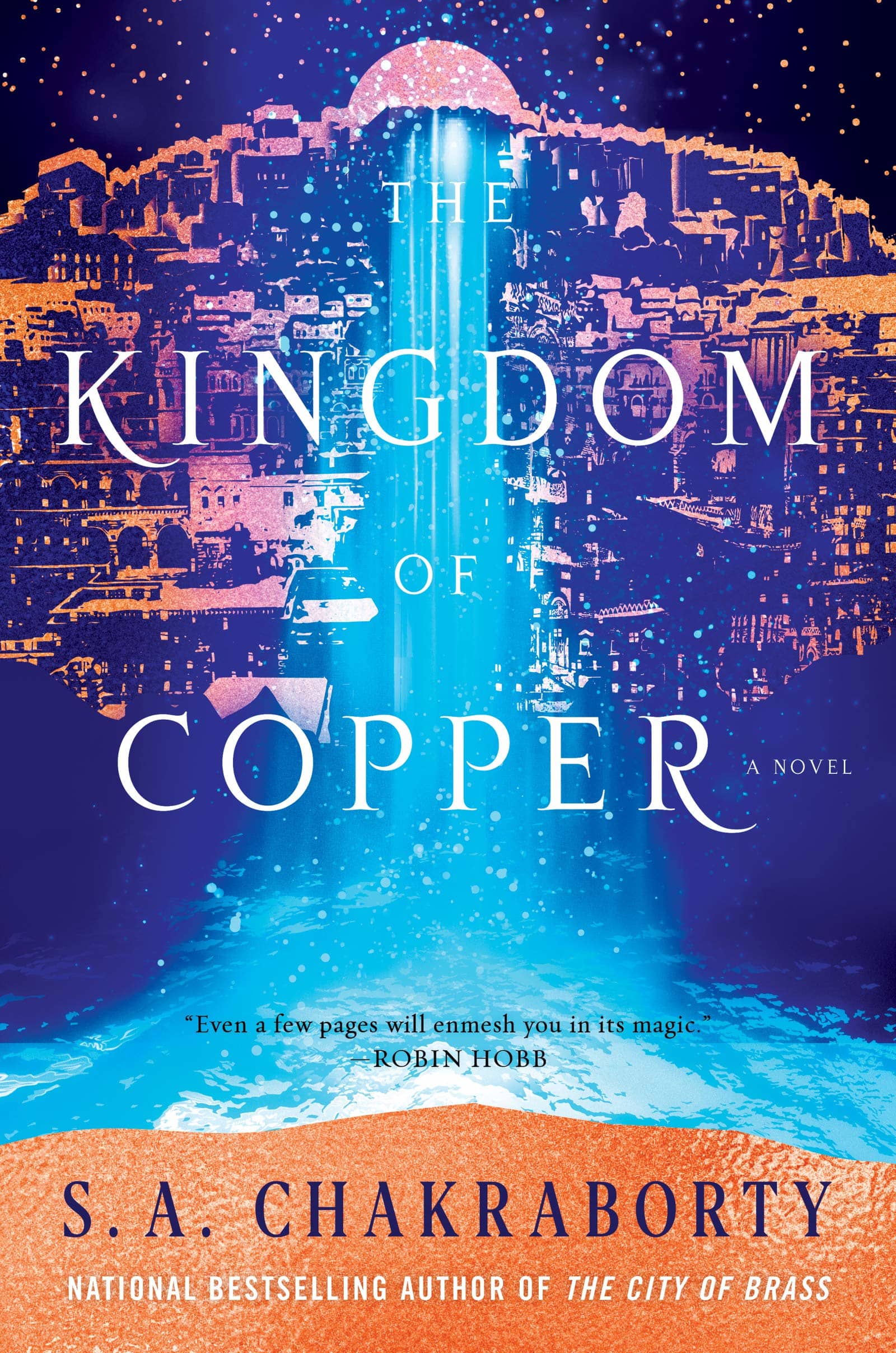
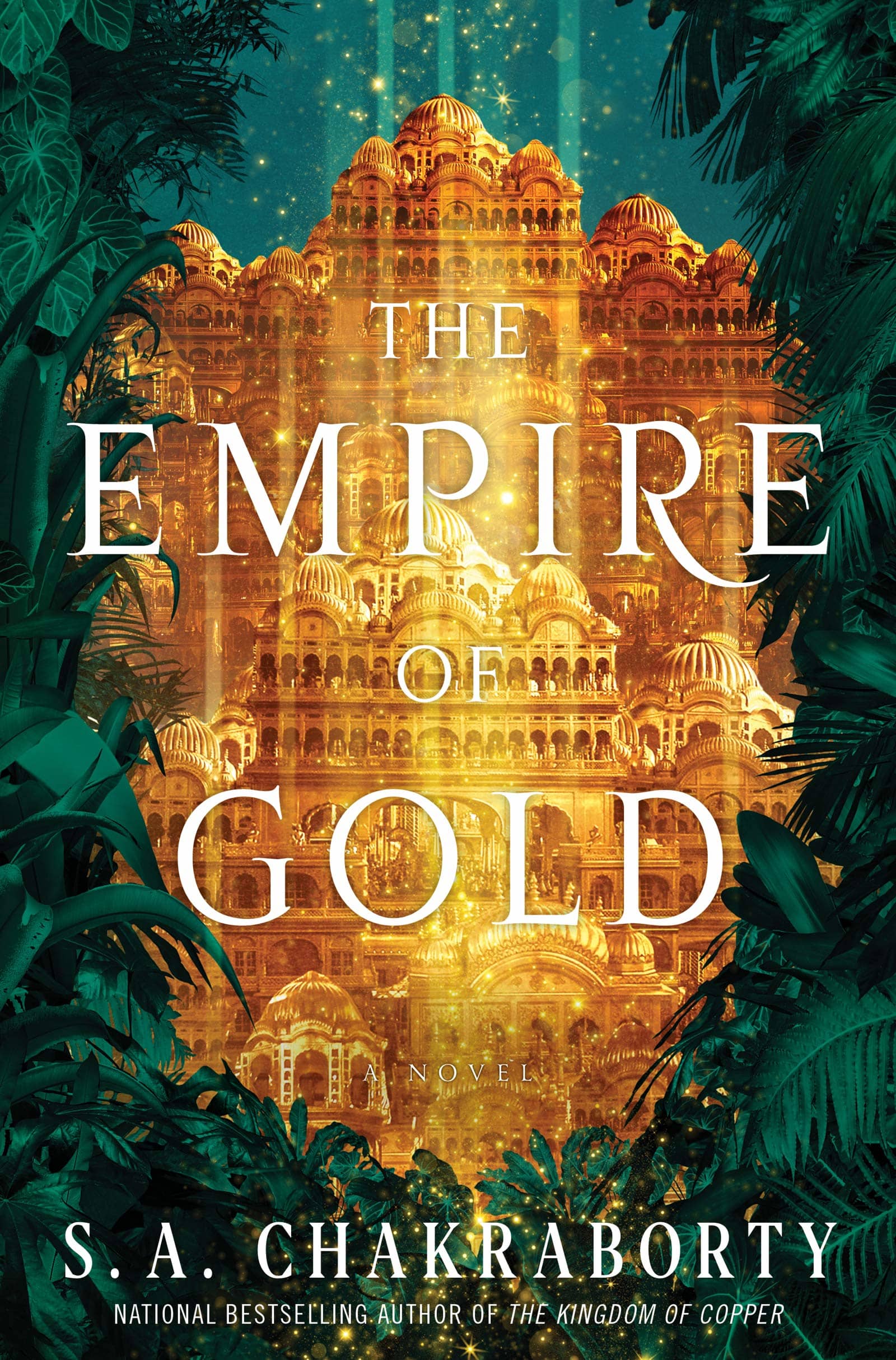
The-City-of-Brass-smaller The-Kingdom-of-Copper-small The Empire of Gold-small

It’s always a delight to watch a talented writer successfully wrap up a fantasy series.

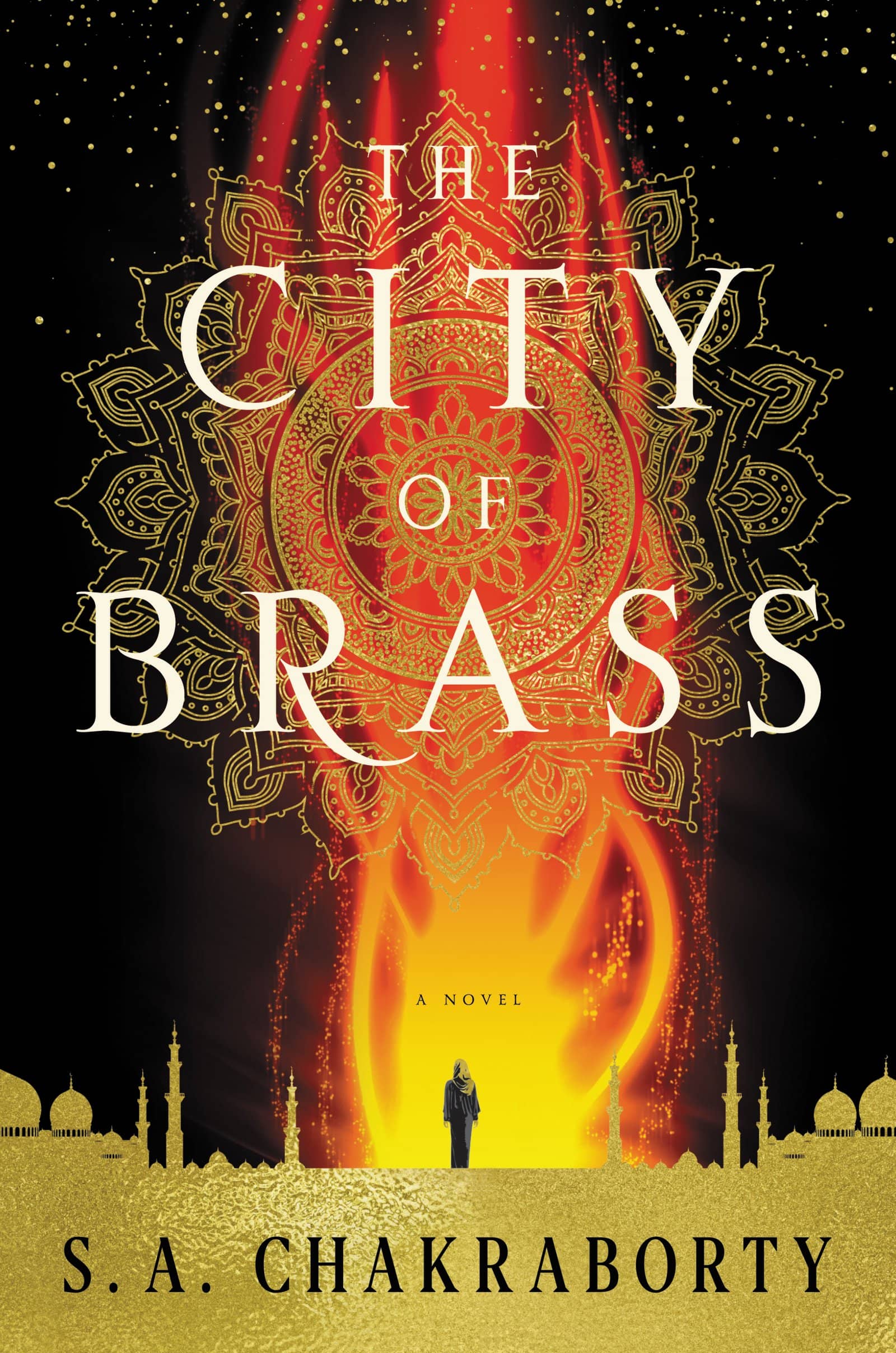
And that’s especially true of S. A. Chakraborty’s The Daevabad Trilogy, which opened with one of the most popular debuts of the last few years. The City of Brass. Here’s what Brandon Crilly’s said in his enthusiastic review right here at Black Gate in 2018.

Chakraborty creates a world that’s nuanced and detailed. It has exactly the vivid freshness we continue to need in the fantasy genre, as a balance for the variations on the same Eurocentric worldviews that are still widely common…. But the novel is much more than its world – at the end of the day, my interest is always characters. Our two main protagonists, Cairo street urchin Nahri and immortal warrior Dara, are great counterparts; they’re equally passionate and protective, but in different ways, and both are seeking to find their place in the world… The City of Brass is excellent. It’s rare that I find a fantasy novel that’s so vividly detailed.

The Kingdom of Copper arrived last year; Kirkus Reviews called it “As good or better than its predecessor.” And now the concluding volume, the massive 784-page The Empire of Gold, arrives in hardcover; here’s the description.

Read More Read More

Space Opera and Romance in Equal Measure: The Consortium Rebellion Trilogy by Jessie Mihalik

Space Opera and Romance in Equal Measure: The Consortium Rebellion Trilogy by Jessie Mihalik

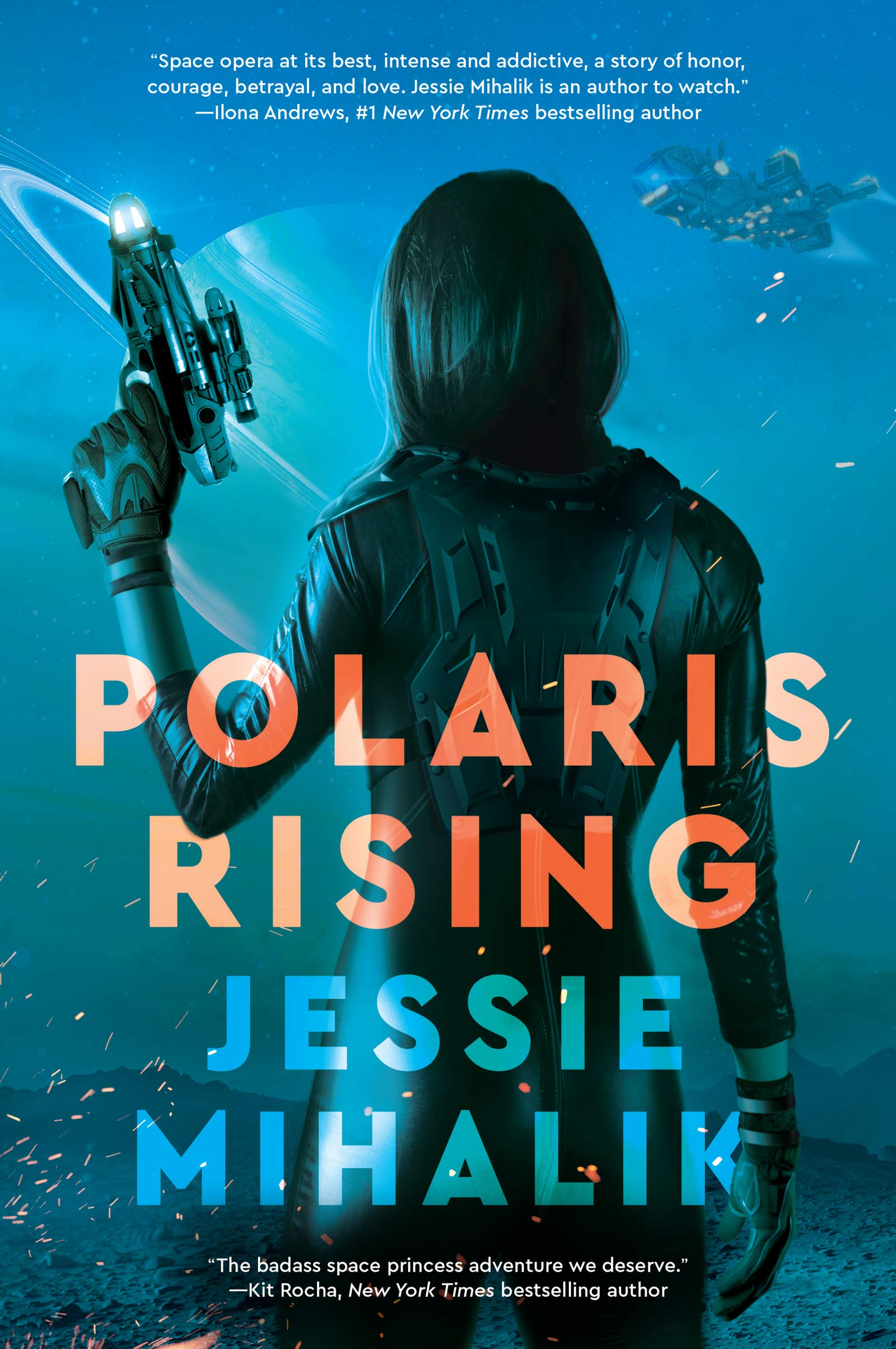
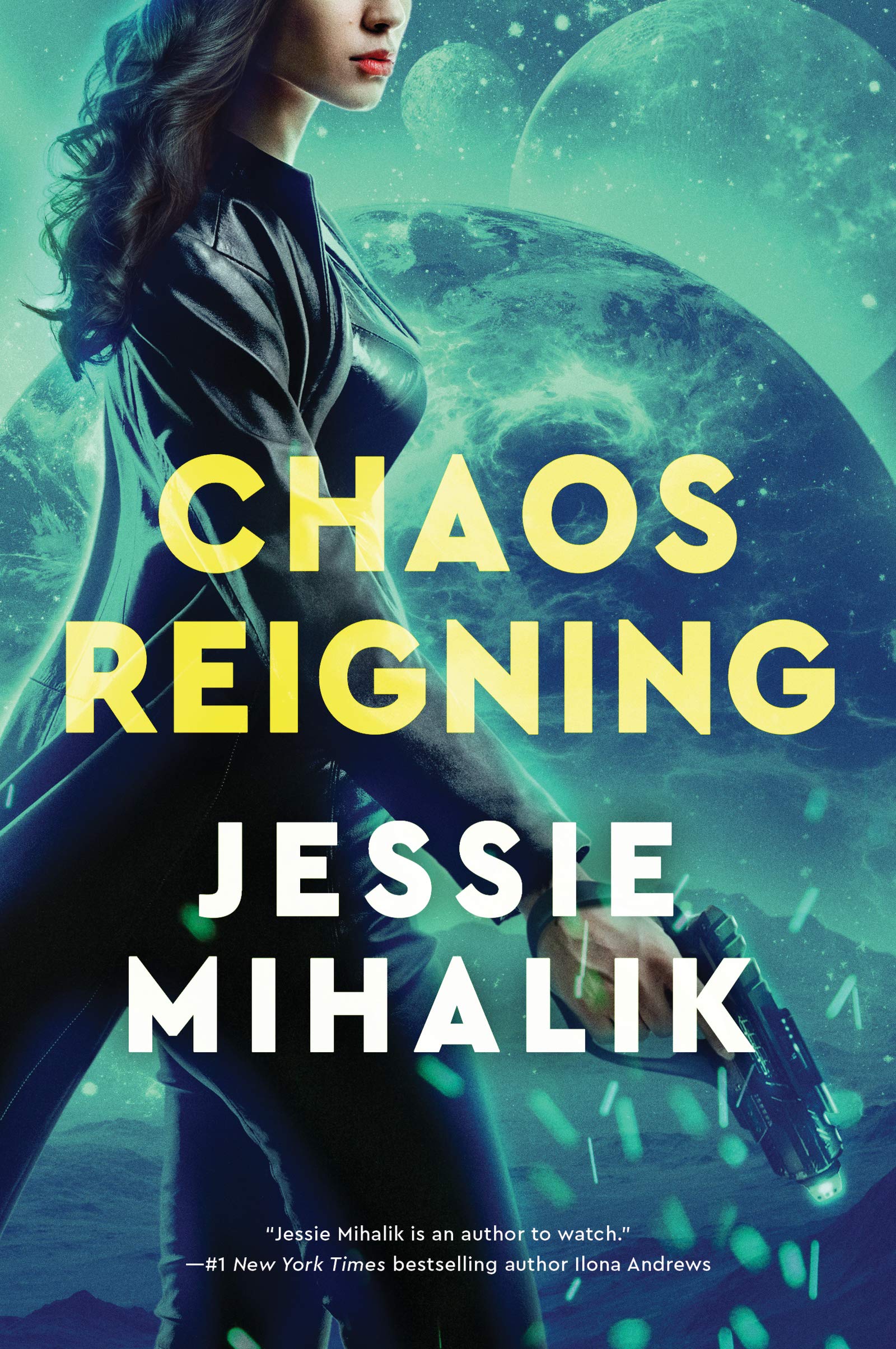
Polaris Rising-small Aurora Blazing-small Chaos Reigning-small

Authors love to blend genres these days, and I’m heartily glad to see it. Thus you get the Horror Comedy, the Science Fiction Police Procedural, the Weird Western (my favorite!) and many other tasty fiction concoctions.

Of course, some are harder to craft than others. I think the trickiest may be the science fiction romance, just based on the fact that there are so few successful examples. So I was very intrigued to see Jessie Mihalik’s 2019 debut novel Polaris Rising hit a bullseye with critics. Here’s The New York Times.

Jessie Mihalik’s splendid Polaris Rising… [is] a thrill of a book. Ada von Hasenberg is the fifth child of one of the three royal houses of the universe’s ruling Consortium. She’s been on the run for the last two years, fleeing an arranged marriage with the son of a rival house. When she finds herself about to be captured by her intended, she manages to escape with a fellow prisoner: Marcus Loch, the Devil of Fornax Zero, and the most wanted man in the universe. Ada soon discovers that the small ship they’ve stolen for their escape holds secrets that could topple the universe’s delicate balance of power.

Mihalik’s universe is vividly imagined… The book is told entirely from Ada’s point of view, offering the reader no more insight past Loch’s cold exterior than Ada herself has. It’s a risk on Mihalik’s part — Loch starts out menacing and mysterious, and he always remains a bit opaque — but it pays off as the reader, right along with Ada, gets to treasure every small crack in his stoic facade. Besides, Ada’s a tremendous heroine, brilliant and capable but never infallible, and I wouldn’t want to give up a moment with her. The set pieces skew toward sci-fi, but the burgeoning attraction between Ada and Loch is just as important to the story. This is space-opera adventure and sweeping romance in equal parts, an enthralling and eminently satisfying book.

You can check out the full review here. Mihalik followed up the success of her first book with Aurora Blazing (“A standout, memorable book that oozes crossover appeal” — BookPage) late last year, and in May of 2020 the series concluded with Chaos Reigning. The Seattle Review of Book says “The third and final volume in this blaster-filled space adventure romance series lands with a bang…” (Is that a euphemism for sex? I’m pretty sure it is.)

Read More Read More

The Stakes Have Never Been More Reasonable: A Quiet Afternoon, edited by Liane Tsui and Grace Seybold

The Stakes Have Never Been More Reasonable: A Quiet Afternoon, edited by Liane Tsui and Grace Seybold

A Quiet AfternoonI don’t think of science fiction as a predictable genre. It’s filled with widely varying ideas, settings, characters, and plots, and produced by a hugely diverse group of writers all over the planet. But in at least one way, SF does tend to be predictable: it’s a genre of high-stakes drama. It concerns itself with apocalypses, alien invasions, desperate battles against evil empires, dystopias, life-and-death court intrigue, world-altering time travel, thunderous space battles — a whole lot of sound and fury, really.

But it doesn’t have to be. Does a good tale require high stakes? That’s the question posed by the new anthology from Canadian small press Grace & Victory, run by Grace Seybold and Victoria Feistner. A Quiet Afternoon, edited by Liane Tsui and Grace Seybold, collects 14 original low-stakes tales that aim to simultaneously entertain and comfort. Here’s the description.

A peaceful break from a stressful world.

The stakes have never been milder or more reasonable.

A Quiet Afternoon brings readers thirteen Low-Fi tales of gentle speculative fiction, stories of wonder and the celebration of small successes. Ease into worlds of quiet triumph and gracious victories; of found families and unlikely friendships; magical constructs, pensive mermaids, fairies and dragons and a barbecue sauce that will literally change your life.

The stakes are low. The expectations are reasonable. The resolutions are satisfactory. Wrap yourself up in a cozy blanket, make a cup of tea, and enjoy A Quiet Afternoon.

Here’s a snippet from Laura DeHaan’s Foreword which explains the intriguing genesis behind the book.

In early 2019, Victoria Feistner and I just wanted to read speculative fiction that wasn’t high-stakes, where the fate of the world didn’t hinge on the actions of a single hero overcoming impossible odds … Manga and anime do a good job of incorporating the fantastic with the mundane (Fruits Basket, Yokohama Kaidashi Kikou, My Neighbour Totoro), but Western SF really likes its earth-shattering consequences and do-or-die protagonists … We started reading for A Quiet Anthology in late 2019. The world was in a weird place, but that made the selection process relatively easy. If the story left behind a feeling of comfort, or relief, or a little sigh of “Wasn’t that nice,” then it was pretty much a shoo-in for the anthology… We are all overcoming impossible odds in our everyday lives — and when that’s the case, where do we escape to? … So, check in with yourself. Take a nap. Have a juice box. Would you like to read stories with magical robots and talking animals and the beginnings of a wonderful friendship? It’s okay. They’re here for you. Take care, and enjoy A Quiet Afternoon.

I think this is a great idea for an anthology, and I’m very much looking forward to reading it. It was released today; here’s the complete Table of Contents for A Quiet Afternoon.

Read More Read More

New Treasures: Corporate Gunslinger by Doug Engstrom

New Treasures: Corporate Gunslinger by Doug Engstrom

Corporate Gunslinger-small Corporate Gunslinger-back-small

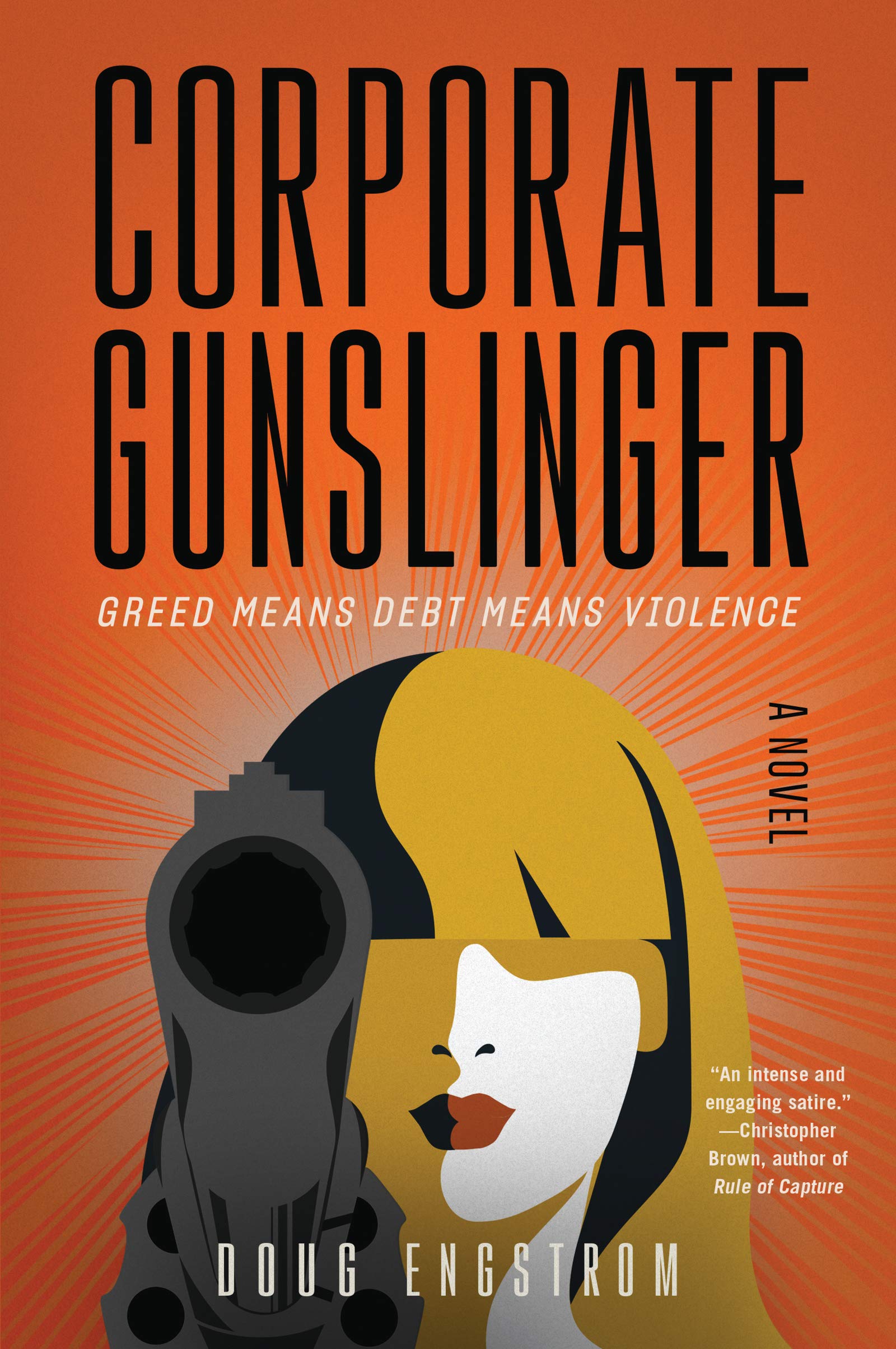
Corporate Gunslinger by Doug Engstrom (Harper Voyager, June 2020). Cover design by Yeon Kim

Doug Engstrom definitely has one of the more original debuts of the month with Corporate Gunslinger, a new-future adventure tale in which…. well, maybe it’s best if we jump right to the Publishers Weekly review.

Engstrom’s promising debut offers a stark, dystopian vision of a near-future American Midwest in which debt slavery is commonplace and livestreamed gunfights are a popular form of entertainment. Former actor Kira Clark accepts a sponsorship from TKC Insurance Company to duel civilians on live TV to avoid defaulting on her student loans and resigning herself to a life of debt slavery. Kira adopts a cold, composed persona in her gunfights, but outside the arena she’s kind-hearted and loyal, if gradually becoming more unstable. At her side are her best friend, Chloe Rossi, and her mentor, Diana Reynolds, who support Kira through all of her highs and lows… [a] grim, intelligent examination of the American debt crisis… fans of insightful dystopias will find plenty to enjoy.

Read the whole thing here. You know, I’m not even sure what category this is. Weird Western? Future Western? Western Dystopia? File it next to Westworld; that should be close enough.

Corporate Gunslinger was published by Harper Voyager on June 16, 2020. It is 320 pages, priced at $15.99 in hardcover and $10.99 in digital formats. The cover was designed by Yeon Kim. Read the first three chapters here, and listen to an audio excerpt here. See all our recent New Treasures here.