Browsed by
Category: New Treasures

New Treasures: Jeffrey E. Barlough’s What I Found at Hoole

New Treasures: Jeffrey E. Barlough’s What I Found at Hoole

what-i-found-at-hoole-smallJeffrey E. Barlough’s Western Lights series may be the best fantasy books you don’t know about.

I didn’t know about them either, until Jackson Kuhl’s review of Strange Cargo in Black Gate 8. Jackson has called Barlough “a wonderful yet unappreciated fantasist… a talent I invite everyone to sample.” In his review of Anchorwick, the fifth novel in the series, he summarized the intriguing setting this way:

In a world where the Ice Age never ended, a cataclysm has reduced humanity to a slip of English civilization along North America’s western coastline. It’s neither steampunk nor weird western; the technology is early 19th century. It’s kinda-sorta gaslamp fantasy, except there doesn’t seem to be any natural gas. Barlough’s creation is best described as a Victorian Dying Earth — gothic and claustrophobic yet confronted by its inhabitants with upper lips held stiff. As the books are fantasy mysteries, the less said about their plots, the better… mastodons and mylodons mixed with ghosts and gorgons? Yes, please.

Now the seventh novel in the series, What I Found at Hoole, has arrived in a handsome trade paperback from Gresham & Doyle. It picks up at the end of the second volume, The House in the High Wood, which was a nominee for the 2002 Locus Award for Best Fantasy Novel.

Mr. Ingram Somervell has been called to the remote village of Hoole, in the uplands of Ayleshire, to inspect some property bequeathed to him by an uncle he had never met. Almost at once he finds himself plunged into mysteries that confound him. Why had Clement’s Mill, a dilapidated old mill that did no milling, been left to him… Why had his uncle ordered the old chapel on the fellside and its coffin-crypt sealed after the arrival of Miss Petra, his ward and heir? What was the ghostly yellow light that had been seen on Cowdrie Beacon? And what to make of the frightful dreams hinting at some unimaginable catastrophe plaguing young Somervell since he came into Ayleshire?

These novels, with their oddly pastoral cover art — the cover to this one, F.H.Tynsdale’s A Country Cottage and Church, is from the 19th Century — are an entertaining mix of genres, blending fantasy, gothic mystery, and even a dash of period comedy straight out of P.G. Wodehouse. Don’t miss them.

What I Found at Hoole was published by Gresham & Doyle on November 1st. It is 259 pages and priced at $14.95 in trade paperback. There is no digital edition.
New Treasures: The Enterprise of Death by Jesse Bullington

New Treasures: The Enterprise of Death by Jesse Bullington

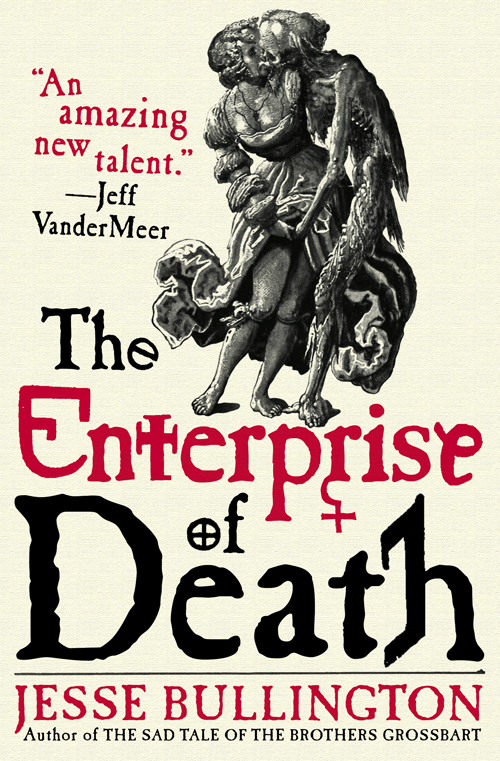
the-enterprise-of-death-smallJesse Bullington received a lot of attention for his first novel, the exceptionally dark fantasy The Sad Tale of the Brothers Grossbart, about which Booklist said, “Modeled after the grimmest of the Grimm tales, Bullington’s debut… [is] aiming instead at gross-out horror fans.”

That one seemed a bit too grim and gruesome for me. But Bullington’s second novel, The Enterprise of Death, looks more my speed.

As the witch-pyres of the Spanish Inquisition blanket Renaissance Europe in a moral haze, a young African slave finds herself the unwilling apprentice of an ancient necromancer. Unfortunately, quitting his company proves even more hazardous than remaining his pupil when she is afflicted with a terrible curse. Yet salvation may lie in a mysterious tome her tutor has hidden somewhere on the war-torn continent.

She sets out on a seemingly impossible journey to find the book, never suspecting her fate is tied to three strangers: the artist Niklaus Manuel Deutsch, the alchemist Dr. Paracelsus, and a gun-slinging Dutch mercenary. As Manuel paints her macabre story on canvas, plank, and church wall, the young apprentice becomes increasingly aware that death might be the least of her concerns.

I’ve been watching the reviews, and they are very impressive indeed. The Wall Street Journal called it “Macabre, gruesome, foul-mouthed and much more complex than the usual vampire-and-zombie routine,” and SF Revu said it was

Darkly comic… Bullington is one of those rare writers who come along once every so often with a truly original vision… this is an author capable of great and profound insight, often conveyed via his equally finely tuned sense of the ridiculous… Highly recommended.

The Enterprise of Death was published by Orbit in March, 2011. It is 464 pages in trade paperback, priced at $14.99 ($9.99 for the digital version). I bought my copy from Amazon as a bargain title for just six bucks.

Adventure in the Spaceways with Perry Rhodan: The Cosmic League

Adventure in the Spaceways with Perry Rhodan: The Cosmic League

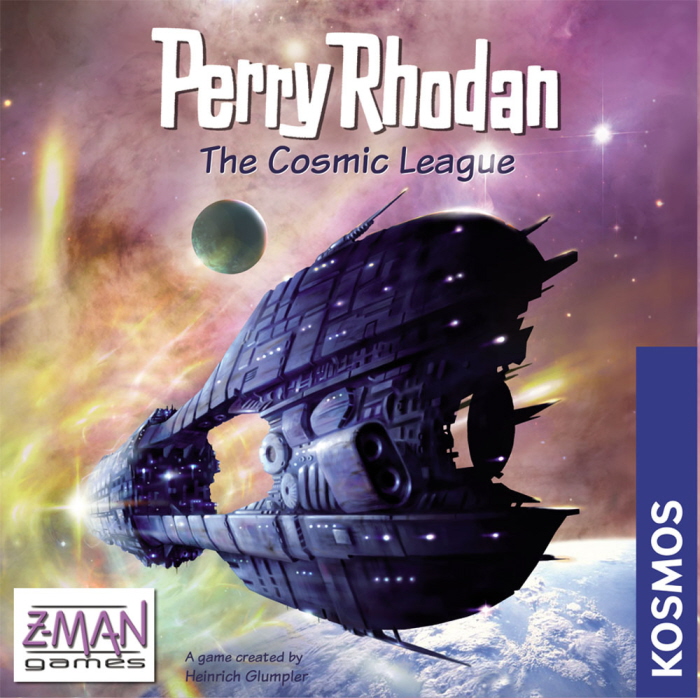
perry-rhodan-the-cosmic-leagueI’m willing to bet most of you have no idea who Perry Rhodan is.

Believe it or not, Perry Rhodan is the most ambitious future history ever written. Since its creation in 1961, over 3,000 Perry Rhodan novels have been published; the series has been translated into half a dozen languages and spawned at least one movie and a popular computer game, The Immortals of Terra.

Why haven’t you heard of him? Probably because the last English-language Perry Rhodan novel, #118 The Shadows Attack, was published by Ace Books in 1977. The English-language version was the brainchild of Forrest J. Ackerman, who hired his wife Wendy to do most of the translations. The series has continued in its native Germany, where it is published weekly.

I bring all this up because A) Perry Rhodan practically introduced me to science fiction, at the tender age of eleven, and B) I recently purchased Perry Rhodan: The Cosmic League, a two-player card game from Z-Man games that makes use of the Perry Rhodan license in a fast-paced game of interstellar trading and politics:

A newly colonized star system, populated by different peoples… Mysterious remains of age-old technology… Orbital stations to organize the trade between the worlds… and you and your spaceship right in the middle of it all…

Discover the Ambourella system with all its opportunities. Fight the adversities of gravity and do business with the planets. Your are the captain of a spaceship transporting goods and passengers. Invest your earnings early in valuable technologies and thus strive to become the most wealthy merchant of the Cosmic League.

Perry Rhodan doesn’t actually appear in the game, but it does draw on the rich backdrop of the Cosmic League. It comes with 60 technology and interventions cards, 6 planet tokens, 30 different cargo cards, and 2 spaceships. The average playing time is under half an hour. It’s a fairly simple game at heart, and the tie-in with Perry Rhodan is fairly light, but nonetheless it brought back a lot of great memories of 1970s pulp science fiction.

Perry Rhodan: The Cosmic League was published by Z-Man Games in 2007. It retails for $24.99, but I bought my copy new online for around 10 bucks.

Keep up on Fantasy Gaming with Kobold Quarterly

Keep up on Fantasy Gaming with Kobold Quarterly

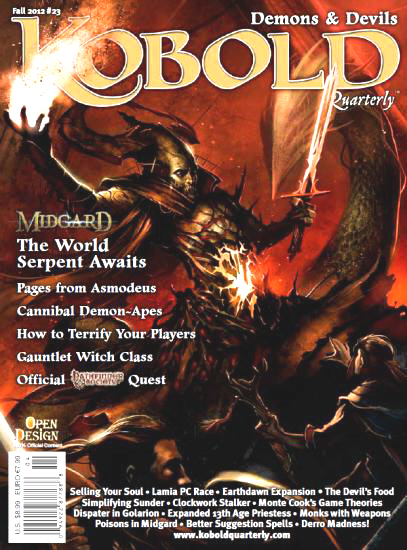
kobold-quarterly-fall-2012-smallIn the early days of the adventure gaming hobby, the field was pretty diverse, with a healthy assortment of successful RPGs and board games. Much like today, as a matter of fact.

One major difference, however, was that each of the major titles was supported with its own magazine: Dragon (for D&D and other TSR games), Different Worlds (Runequest, Call of Cthulhu), Sorcerer’s Apprentice (Tunnels and Trolls), White Dwarf (Warhammer), Space Gamer (The Fantasy Trip), The Journal of the Traveller’s Aid Society (Traveller), and many others. Board gamers, too, weren’t overlooked on the magazine rack, with Nexus (Star Fleet Battles), Ares (SPI’s sci-fi games), The General (Avalon Hill), and others.

With the exception of White Dwarf, all those magazines are dead today.

And I miss them. Many were good, and a handful — including The Space Gamer and Different Worlds — were excellent. They kept us up-to-date on rapid market changes, talked-up overlooked games, and generally kept the level of excitement high around the whole industry.

I never expected the era of the specialized gaming magazine to return. For one thing, I know what it takes to keep a magazine alive these days (a series of miracles).

But Wolfgang Baur’s Kobold Quarterly has changed my mind.

Read More Read More

New Treasures: The Nightbound Land #1: Night’s Engines

New Treasures: The Nightbound Land #1: Night’s Engines

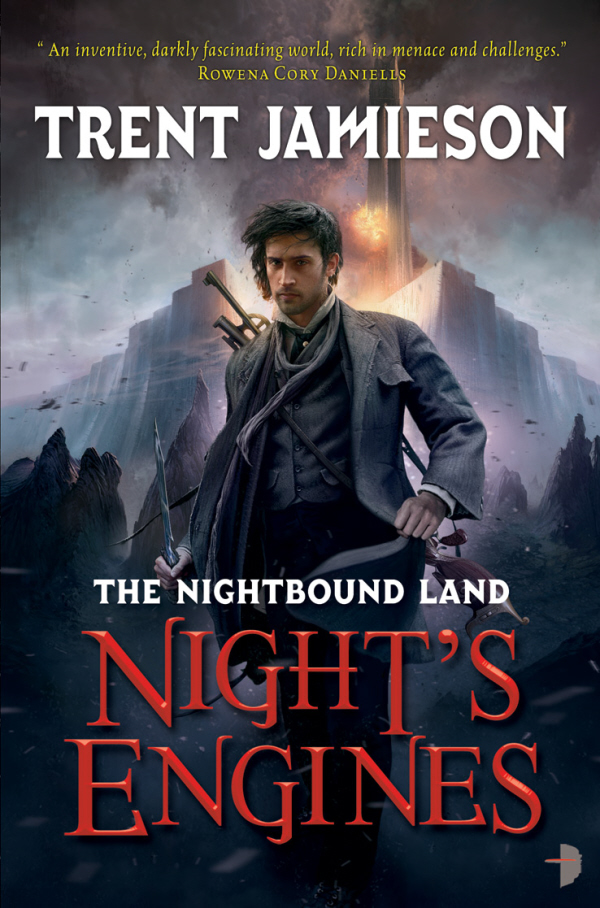
nights-enginesYou’d think the rooftop headquarters of Black Gate would be a great place to stay up-to-date on the best new talent in fantasy. It probably would be, too, if I didn’t waste half my time watching H.R. Pufnstuf DVDs and trying to fix the coffee machine.

Still, I occasionally manage to overhear good tips around the water cooler. When I hear a new name enough times, I go back to my office, move around piles of pulp magazines until I can find a piece of paper, and make a note of it.

Australian writer Trent Jamieson generated a lot of chatter with his Death Works Trilogy. But it was last year’s Roil, the first novel in The Nightbound Land duology, that caused me to jot his name down on the back of a Jimmy John’s receipt.

Now Night’s Engines, the concluding volume of The Nightbound Land, has arrived, and suddenly it seems I can’t change the toner in the office copier without hearing the name Trent Jamieson.

Shale is dying. The vast, boiling maelstrom known only as the Roil has pushed humanity to the edge of extinction. The last cities teeter on the verge of collapse.

There is one hope, but it is enshrined in a decadent wastrel who does not want his destiny, and a young woman who seeks only an end to everything. And yet they go on, in search of the ancient weapons that worked against the Roil once, and must work again.

Even in fantasy, duologies aren’t that common (my spellchecker keeps wanting to change the word to Audiology, in fact). But for someone with precious little leisure time who still wants to join in on water cooler conversations, especially the ones involving that cute new intern, duologies seem like the way to go. Wish me luck.

Night’s Engines was published in May 2012 by Angry Robot. It is 400 pages, priced at $7.99 in paperback and $6.99 for the digital edition.

Black Gate Online Fiction: Pathfinder Tales: Queen of Thorns by Dave Gross

Black Gate Online Fiction: Pathfinder Tales: Queen of Thorns by Dave Gross

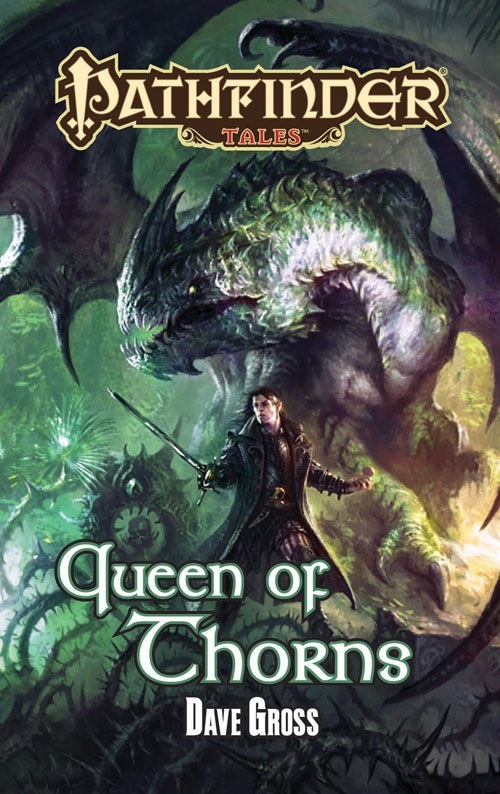
pathfinder-tales-queen-of-thorns-smallBlack Gate is very pleased to offer our readers an exclusive first look at the latest Pathfinder Tales novel by Dave Gross, the acclaimed author of Prince of Wolves and Master of Devils.

In the deep forests of Kyonin, elves live among their own kind, far from the prying eyes of other races. Few of impure blood are allowed beyond the nation’s borders, and thus it’s a great honor for the half-elven Count Varian Jeggare and his hellspawn bodyguard Radovan to be allowed inside. Yet all is not well in the elven kingdom: demons stir in its depths, and an intricate web of politics seems destined to catch the two travelers in its snares. In the course of tracking down a missing druid, Varian and a team of eccentric elven adventurers will be forced to delve into dark secrets lost for generations — including the mystery of Varian’s own past.

Dave Gross is the former editor of Dragon, Star Wars Insider, and Amazing Stories. His adventures of Radovan and Count Jeggare include the Pathfinder Tales novels Prince of Wolves and Master of Devils, as well as many novellas and short stories available at Paizo.com. His other novels include Winter Witch with Elaine Cunningham, and the Forgotten Realms novels Black Wolf and Lord of Stormweather.

We previously reviewed the Pathfinder Tales novels Death’s Heretic by James L. Sutter, Master of Devils by Dave Gross, and Howard Andrew Jones’s Plague of Shadows, and introduced you to BG Contributing Editor Bill Ward’s Pathfinder Tales story “The Box, and “The Walkers from the Crypt” by Howard Andrew Jones.

Pathfinder Tales: Queen of Thorns is published by Paizo Publishing and is part of their Pathfinder Tales Subscription. It is a 432-page mass market paperback available for $9.99 ($6.99 ePub and PDF). The digital versions are available today; the print version is officially on sale November 13, 2012. Learn more at Paizo.com.

“The Midsummer Masquerade,” the complete first chapter of Queen of Thorns, is presented exclusively here at Black Gate; Chapters Two and Three are available at Flames Rising and SF Signal.

Read Chapter One of Queen of Thorns here.

New Treasures: The Hand of Fu Manchu, by Sax Rohmer

New Treasures: The Hand of Fu Manchu, by Sax Rohmer

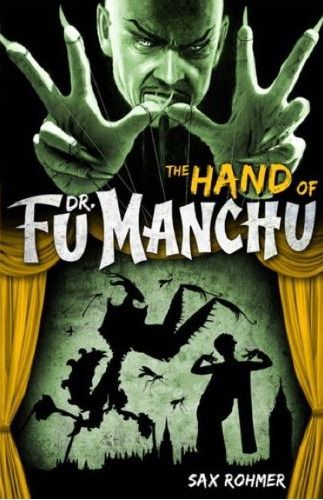
the-hand-of-fu-manchu-smallWilliam Patrick Maynard, Black Gate‘s resident Sax Rohmer expert, wrote an excellent 9-part series on The Hand of Fu Manchu, starting last November. It piqued my curiosity towards Rohmer, and The Hand of Fu Manchu in particular, and I vowed I would spend some quality time with both.

You’ll note it’s now October. Maybe I don’t always do it quickly, but I do keep my promises. This one was made even easier by the arrival of the gorgeous reprint edition of Rohmer’s third Fu-Manchu novel from Titan Books.

London, 1913. The era of Sherlock Holmes, Dracula, and the Invisible Man. A time of shadows, secret societies, and dens filled with opium addicts. Into this world comes the most fantastic emissary of evil society has ever known… Fu-Manchu.

A sealed box and murder most foul call Nayland Smith and Dr Petrie back from distant Egypt to the fog-enshrouded streets of London. There they discover that Dr. Fu-Manchu is an agent of a vast and deadly organization — one which will stop at nothing to achieve its ruthless goals.

The Hand of Fu Manchu was originally published in 1917 (the UK title was The Si-Fan Mysteries). There have been numerous paperback reprints over the last century, but few of this level of quality. These Titan editions are handsome and very affordable, in oversize trade paperback format; this one includes an afterword by Leslie S. Klinger, an abbreviated version of his essay from The Mystery of Fu-Manchu.

The Hand of Fu Manchu was published by Titan Books in May 2012. It is 266 pages, and priced at $9.95 for the print version and $7.99 for the digital edition. Read more at the Titan Books website.

Robots versus Musketeers: The Last Musketeer by Jason

Robots versus Musketeers: The Last Musketeer by Jason

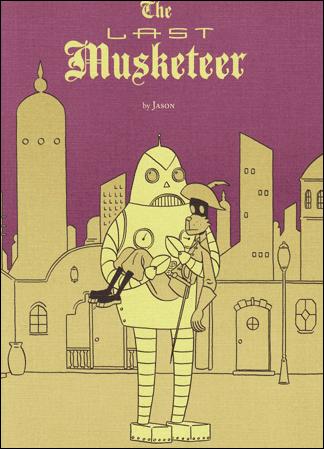
the-last-musketeer-smallI haven’t read anything by the Norwegian cartoonist Jason before, but I’ve been intrigued for a while. So last week I ordered a copy of Isle of 100,000 Graves from Amazon.com. For a while I had The Last Musketeer in my cart as well — I didn’t know anything about it, but the cover looked cool.

Now pay attention, because this is one of the dangers of online shopping that no one talks about. I’ve never wandered by the counter at Barnes & Noble and accidentally purchased something, for example. But apparently, I forgot to take The Last Musketeer out of my cart, ’cause it showed up with the rest of my order. Whoops.

Now, Amazon has a very forgiving return policy. But to take advantage of it, you have to do stuff. Not the least of which is actually return the item in question. That’s a lot harder to do when it has both a Musketeer and a robot on the cover. You try it.

Anyway, now I have a copy of The Last Musketeer. I read it today, and quite enjoyed it.

Athos, one of the original members of Dumas’s The Three Musketeers, is living a wasted existence as a drunk and a bum in modern Paris, when the city is attacked by ‘laser blasts” originating from the planet Mars. In fine pulp fashion, Athos tracks down a pair of ray-gun toting invaders wandering the city, defeats them with his trusty rapier, and forces the surviving Martian to take him to his rocket ship, where they blast off for the alien planet (one of the running gags in the strip is that Athos has no clue what planet he’s on).

It goes without saying that the comic celebrates all the conventions of 1930s-era pulp science fiction, right down to the goofy alien costumes, stubby rockets, and giant cast-iron video screens. There’s no explanation for how an 1840s-era French Musketeer is still alive in modern Paris, and none is needed. This comic has one audience: those who want to see Athos the Musketeer battle robots on the sands of Mars. If that’s not you, don’t put it in your Amazon cart (even by accident).

But if it is you, I think you’ll have a good time. My one criticism is that the dialog seemed oddly wooden; I put the blame for that mostly on Kim Thompson’s translation. Perhaps I’ve just gotten spoiled by the elegant and frequently hilarious translations in modern manga, especially Fairy Tail and the brilliant Fullmetal Alchemist. But it seemed the crisp and subtle artwork demanded crisp and subtle dialog, and that wasn’t always the case.

The Last Musketeer was published by Fantagraphics in January, 2008. It is 48 pages in full color, and priced at $12.95.

New Treasures: Stories, edited by Neil Gaiman and Al Sarrantonio

New Treasures: Stories, edited by Neil Gaiman and Al Sarrantonio

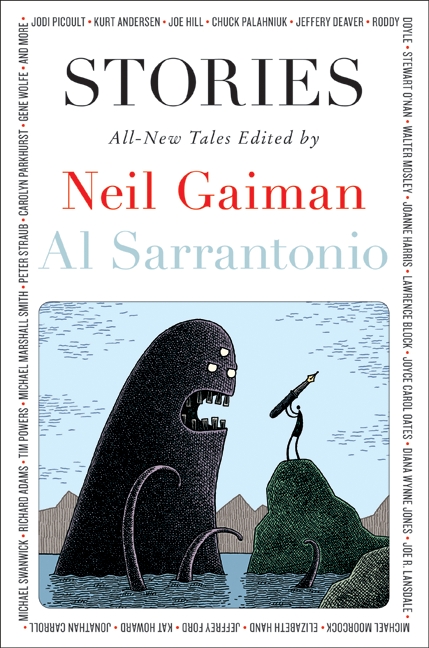
stories-neil-gaiman-smallYeah, I know I’m late to the party with this one. Stories, the high-profile original anthology edited by Neil Gaiman and Al Sarrantonio, was released over two years ago — back in June of 2010.

But I have a good excuse. Despite the incredibly awesome cover by Tom Gauld, after my first glace at the table of contents, I dismissed Stories as a mainstream anthology.

I mean, come on. Walter Mosley, Jodi Picolut, Joyce Carol Oates, Joanne Harris, Lawrence Block, Roddy Doyle, and Chuck Palahniuk? You’d have made the same mistake.

Eventually, I picked up enough on the buzz around this book to realize that its claim to being a “groundbreaking anthology that reinvigorates, expands, and redefines the limits of imaginative fiction” wasn’t just hyperbole. Many of the stories, including Neil Gaiman’s “The Truth is a Cave in the Black Mountains” and Elizabeth Hand’s “The Maiden Flight of McCauley’s Bellerophon,” began showing up on genre best-of-the-year lists.

I finally decided it was time to take another look. It didn’t hurt that by then the hardcover was being offered at a bargain price at Amazon.com for 60% off (still in stock if you act fast).

Stories is by no means a straight-up fantasy anthology. But it includes some terrific fantasy fiction by some of the genre’s biggest names, including Richard Adams, Michael Swanwick, Michael Moorcock, Peter Straub, Gene Wolfe, Tim Powers, Joe Hill, Michael Marshall Smith, and Joe R. Lansdale.

And I think you’ll be surprised by the contributions of the writers I mentioned above — who aren’t known for writing fantasy — as well.

Read More Read More

Discover the Secret History of World War Two in Achtung! Cthulhu

Discover the Secret History of World War Two in Achtung! Cthulhu

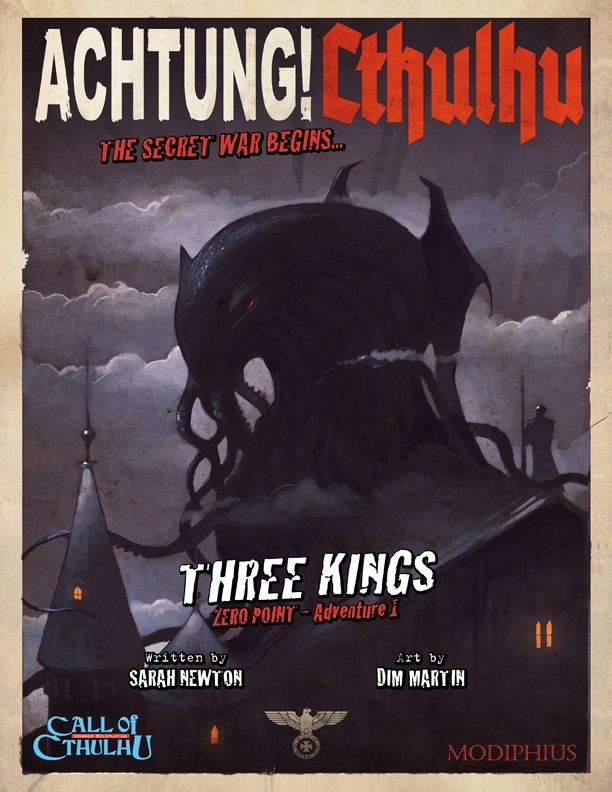
achtung-cthulhu-smallOn Tuesday, I talked about the latest crop of exciting fantasy games I’ve discovered, with the help of The Paris Fashion Week of Fantasy Games. They included recent supplements for CthulhuTech, the game of Cthulhu versus giant robots, and Incursion, an intriguing mash-up of BattleTech and Squad Leader.

Cthulhu, zombies, Nazi super-science, occult experiments… you’d think these two games alone would keep me completely content for the next decade. And they might have, too, if I hadn’t just discovered Modiphius Entertainment’s Achtung! Cthulhu.

Before you accuse me of having the attention span of a three-year-old, I’d like to point out that Achtung! Cthulhu combines all that stuff in one game.

Did you ever want to see what would happen if Sgt. Rock went toe-toe-toe with the minions of Nyarlathotep in Nazi Germany? If Indiana Jones stumbled on a nest of shuggoths in Hitler’s Eagle’s Nest at Berchtesgaden?

These are rhetorical questions; of course you did.

Achtung! Cthulhu is a tabletop roleplaying campaign that pits elite Allied soldiers against Chthonians, Deep Ones, Dimensional Shamblers, the Dark Young of Shub-Niggurath, and other creatures from H.P. Lovercraft’s Cthulhu mythos. It is fully compatible with Chaosium’s Call of Cthulhu, and versions are in the works for Realms of Cthulhu (for Savage Worlds), Pelgrane Press’s Trail of Cthulhu, and the PDQ Core Rules from Atomic Sock Monkey.

The first series of adventures is called “Zero Point,” and so far two chapters have been published: Three Kings and Heroes of the Sea, both written by Black Gate‘s own Sarah Newton. The overall series is under the direction of Chris Birch.

Read More Read More