The Seven Greyhawk Classics of the Ancient World
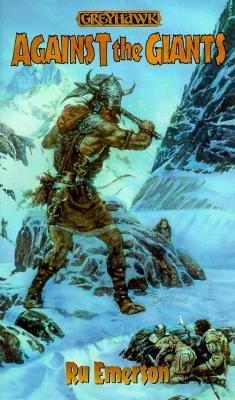 I’ve been pretty hard on Greyhawk novels. They’ve been the butt of more than a few jokes — both mine and others — from those of us who enjoy reviewing and talking about the fantasy genre.
I’m generally pretty forgiving, especially with novels of adventure fantasy. What can I tell you — I’m a fan. But when books can’t be bothered to clamber over the very low bar of my expectations, I’m as capable of a harsh review as anyone.
The novels of Gary Gygax — and in particular his Greyhawk books — routinely limboed under that bar with room to spar, and I’ve said as much in print several times over the years.
Now, I’m second to none in my admiration of Gygax. I consider the man one of the great creative minds of the 20th Century, full stop.
I believe his work with D&D and Advanced D&D — especially the original hardback rules, and the incredibly inventive adventure modules that accompanied them, such as Descent into the Depths of the Earth and The Temple of Elemental Evil — was directly responsible for the mainstream acceptance of fantasy, as manifested in modern role playing obsessions like World of Warcraft and Warhammer.
But his novels? Poo poo.
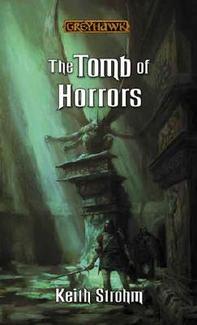 However, Gygax wasn’t the only one to pen Greyhawk novels.
Some of them — especially the so-called Greyhawk Classics published in honor of TSR’s 25th anniversary — are remembed quite fondly.
Written by Paul Kidd, Ru Emerson, Keith Francis Strohm, and Thomas M. Reid, and based on some of TSR’s most famous adventure modules, including Against the Giants, Tomb of Horrors, and Keep on the Borderlands, the seven Greyhawk Classic novels formed a nostalgic return to some of the most fondly-remembered adventure settings in gaming.
They were published in mass market paperback by TSR (later Wizards of the Coast) between July 1999 and February 2002, beginning with Against the Giants and ending with Tomb of Horrors.
Here’s the other thing you need to know about the Greyhawk Classic novels: you can’t have them.
They’re among the most collectible D&D novels ever published, and that’s saying something.
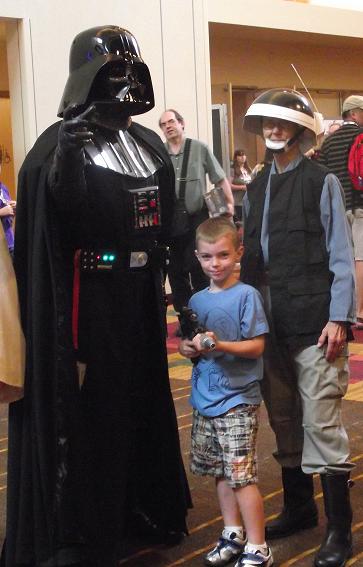 The force is strong with this one, it seems. Yes, that’s my beloved son, taking his first steps toward a larger, more gamer-filled world, as he becomes a temporary apprentice to Lord Vader. (Don’t ask me why the Rebel Alliance officer is standing near them. It just doesn’t fit continuity!)
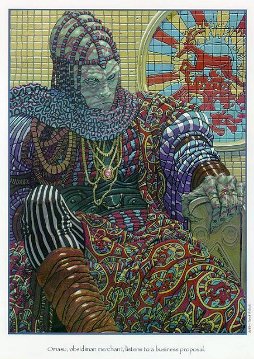
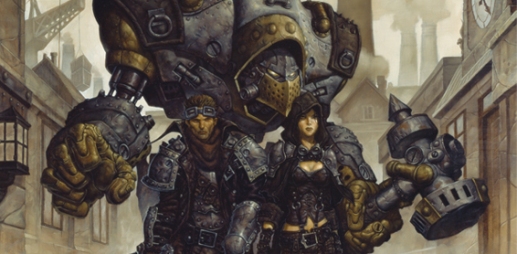
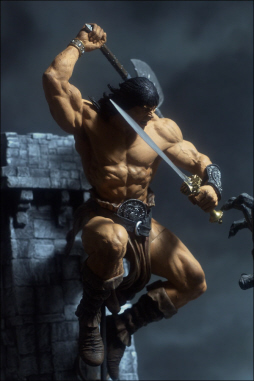 Imagine Conan in Shadizar, meeting with a beautiful woman calling herself Fortuna who pays him to find Thuris, the man who kidnapped her younger sister. Conan accepts the woman’s coin but finds himself in the middle of double and triple crosses as Fortuna — known as Brigid the Bold in the underworld — seeks for the Falcon of Maltus along with her betrayed confederates, Jubliex Cairo, Wilmer the Younger, and Gutmar.
 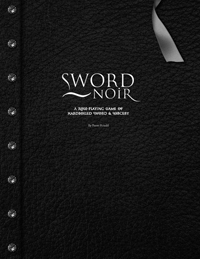 As usual, the kind of stories I was reading and writing bled into the kind of games I was playing, and this took me down a path I did not expect. I ended cobbling together a system that was purpose built to play “sword noir.” In order to do that, I had to define the term.