Browsed by
Category: Essays

King Arthur Revisited: Donald Barthelme’s The King
King Arthur Revisited: Donald Barthelme’s The King

41EQ75FAXGLThe legend of King Arthur has become one of literature’s greatest footballs, and it gets punted hither and yon with often quite careless abandon. Legions of celluloid spinoffs litter the vaults of Netflix, and on the printed page, one can select from heavyweights like Mallory, White, or Steinbeck to enjoy your Age of Chivalry fix.

Flying well under the radar is one of the twentieth century’s best known metafictional writers, Donald Barthelme. His story collections, including City Lights and Sixty Stories, are classics of the form, endlessly inventive, cartwheeling-freewheeling-Catherine wheeling lunacies that manage nonetheless to pack a surprising emotional punch.

Most of Barthelme’s output centered on short fiction, but every so often he ventured into the realm of the novel, as with his knowing, nudge-nudge/wink-wink Snow White and his unjustly forgotten Arthurian outing, The King.

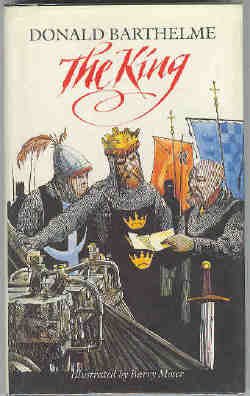
Released by Harper & Row in 1990 and featuring the evocative, jutting illustrations of Barry Moser, The King is an anachronistic treat from start to finish, and hilarious besides.
Read More Read More

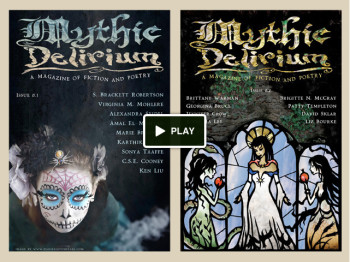
Mythic Delirium, Clockwork Phoenix, Kickstarter & You

Mythic Delirium, Clockwork Phoenix, Kickstarter & You

KickPlayHello, Black Gate denizens! Has it really been a year since I posted here?

Just about. The last time I did a guest post here, it was to talk about a Kickstarter I was running for an anthology called Clockwork Phoenix 4. In that campaign, I asked for $5,000 to fund the publication of the volume and ultimately raised more than $10,000.

And guess what: all those backers have received their rewards, and the anthology has been published.

You can buy it on Amazon for Kindle and in trade paperback, and in numerous other places. The reviews have been terrific – check them out here if you don’t believe me.

Ever since the campaign finished, Black Gate overlord John O’Neill has been asking me for a guest post in which I’d talk about what I’ve learned about Kickstarter. I’ve always intended to do so, but I’ve never been able to budget the time.

So here’s one lesson: A Kickstarter is all-consuming, both when you’re running it and afterward.

Read More Read More

How to Run a Successful Kickstarter – Part I

How to Run a Successful Kickstarter – Part I

This is Part I of a two-part series on How to Run a Successful Novel Kickstarter

For years I’d been planning on pulling together my short fiction into a collection of some sort to get it out and into the world. And for years I hemmed and hawed about actually doing it. I didn’t have the time. It wouldn’t do well. My time would be better spent on my next novel. You’ve probably said many of the same things yourself.

Well, late last year, a few things changed. One, I wrapped up my debut trilogy, The Lays of Anuskaya, which finally freed up a bit of time for me to work on something besides novel-length work. And two, Kickstarter happened. What do I mean by that? Well, Kickstarter had been around for a few years, but more and more I was seeing successful projects being started and completed on the platform. I saw how impressive some of them were as well, how caught up I got in the “community” that successful projects could bring about. I saw how savvy some project owners were about running the Kickstarters during the ‘Starter itself.

And it got me to thinking: it may take some time and effort, but if they can do it, so can I.

And if I can do it, so can you.

The first Kickstarter I ran was for Lest Our Passage Be Forgotten & Other Stories, my premiere short story collection.

The second Kickstarter I ran was for the third book in my Lays of Anuskaya Trilogy, The Flames of Shadam Khoreh, and it came about all quick-like. That is, I hadn’t planned on running a second Kickstarter, but there were a few, well, “issues” with my publisher, Night Shade Books.

Read More Read More

Fantasy Out Loud III: Suffer the Children?

Fantasy Out Loud III: Suffer the Children?

the-mysterious-benedict-society-0316003956-l_5462In the original 2011 edition of Fantasy Out Loud, I took a stab at reviewing the fantasy books I had read aloud to my children. Back in those halcyon days, The Hobbit was front and center.

Some eighteen months later, my boys are older and taller, but not necessarily wiser. Much to my chagrin, older son Corey, aged thirteen as of this writing, no longer wants me to read aloud to him prior to bedtime. On his own, he’s lately polished off all four of the Hitchhiker’s Guide books, and is now slamming through Arthur C. Clarke’s Childhood’s End, which he describes as “weird.” (We’ll see what he says when he gets to the end, one of the best reveals in written English.)

But, because Corey is tackling these titles on his lonesome ownsome, this column is necessarily dedicated to eight-year-old Evan, who still can’t get enough of pre-bed daddy readings.

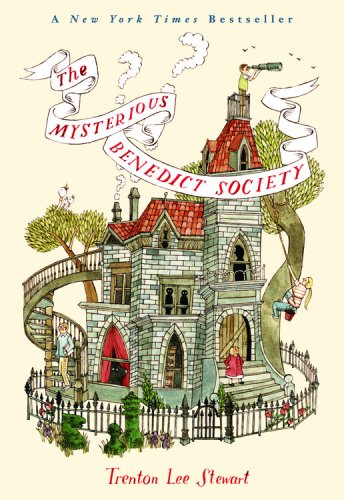
In the last year, fantasy titles we’ve tackled include The Warriors: Into the Wild, The Mysterious Benedict Society, Black Beauty, Summerland, Tuck Everlasting, and Magic By the Lake.

Well, all right: Black Beauty isn’t strictly fantasy, since author Anna Sewell never allows Beauty to actually speak, but for a horse to be so observant, so proscriptive, so downright brilliant?  Sounds like fantasy to me.

Here’s the rub: Evan did not like these books equally. Nor do his growing sense of taste and literary discretion always parallel, sadly, my own. At least two of the books above were volumes I would have preferred to hurl across the room, but in one case especially, despite my jaundice, Evan was enraptured.

Read More Read More

Adventure on Film: Merlin

Adventure on Film: Merlin

shot08Bad films reek, and at a distance, too.

Bad Arthurian films have a special odor all their own. John Boorman’s Excalibur (1981)  may be a mess, but it’s a glorious mess, chaos of the highest and noblest order; in retrospect, it smells remarkably sweet.

Sadly, where Excalibur rises above both its Wagnerian grand guignol and its elaborate and intentional eccentricities, the mini-series Merlin (1998) sinks beneath a morass of imitative, careless, and flashy choices. It’s like a pretty stone chucked into dark and thankless waters: for an instant, on its way down, it glimmers. And then, blessedly, three hours later, it’s gone.

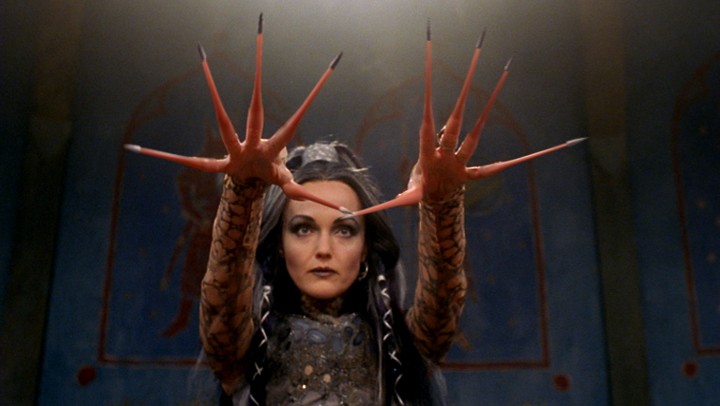
The star-studded cast is jaw-dropping. A film that boasts John Gielgud, Miranda Richardson, James Earl Jones (voice only), Isabella Rossellini, Rutger Hauer, Billie Whitelaw, and Helena Bonham Carter shouldn’t be a failure –– such an outcome shouldn’t be possible –– but as with so many popular music albums featuring a glittering luminati of “guest stars” and “collaborators,” star power proves to be yet another form of lead weight. Without the grace of good storytelling and with far too many overwrought effects, even the best actors on the planet prove to be nothing more than celluloid cannon fodder.

Read More Read More

Our Comics, Ourselves

Our Comics, Ourselves

OrcaSeveral years ago, I handed my older son my pile of Avengers comics, a sequential trove dating from about 1976 until about 1985.

He read them eagerly, then threw them all over his room. I provided a storage bin and said, “If you want the privilege of reading these, treat them well.”

Message received. The comics, when not in use, lived happily in their bin.

He’s now re-reading them, out of order. He left a couple of them on his bed the other night, and rather than flip out –– “You’re grounded for life, plus I’m confiscating your cell phone! Oh, wait. You don’t have a cell phone. Hmm. Maybe I should confiscate my own cell phone?” –– I elected to simply remind him that my yesteryear treasures need to be treated well.

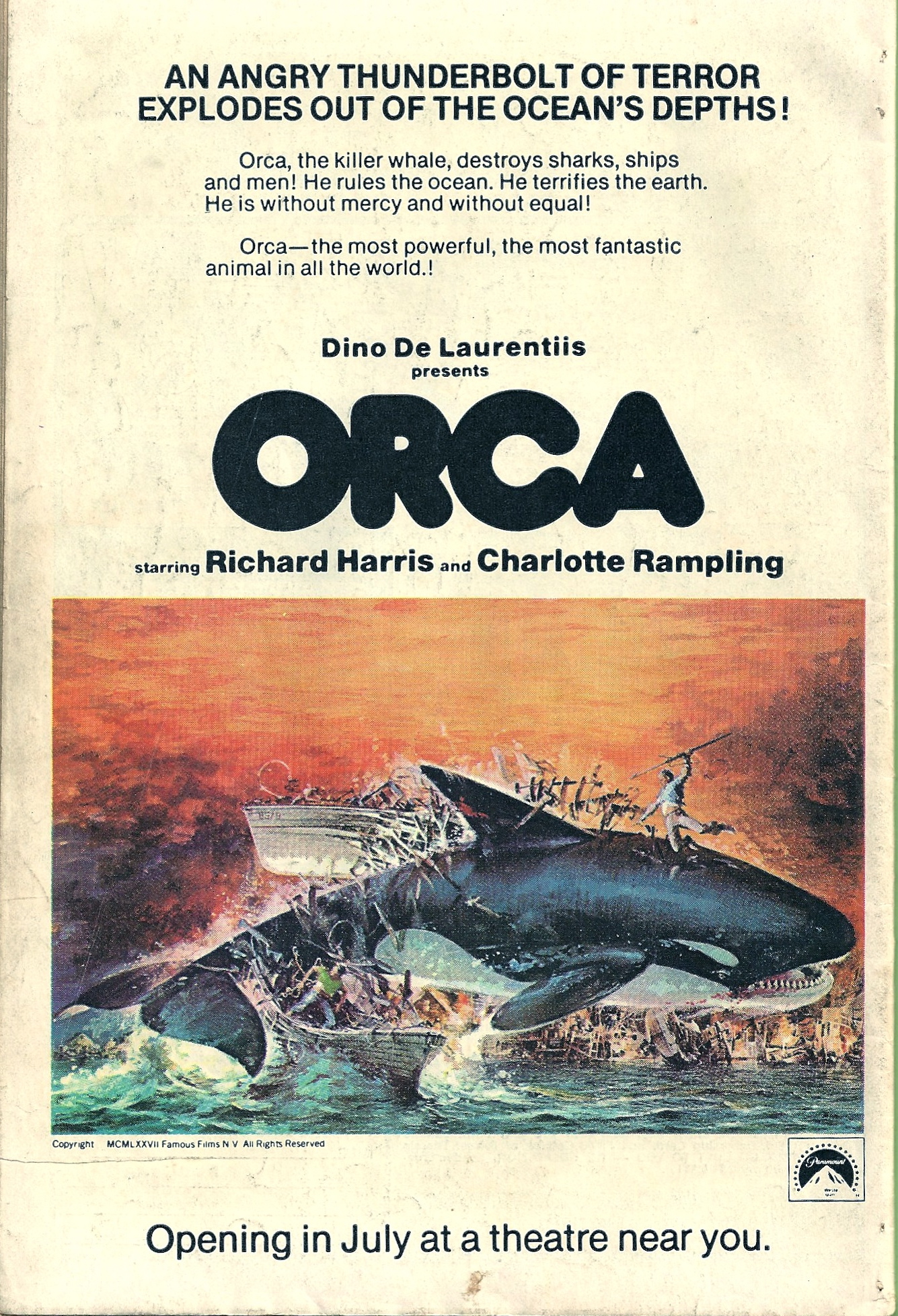
Then I forgot all about the reminder. I found myself hooked by the back cover of Avengers #164. It was an ad, of course –– what else would grace the back cover of a Marvel Comic? But what an ad, a movie poster extravaganza for (hold me back) Orca (1977).

With Richard Harris and Charlotte Rampling, no less.

Read More Read More

Law vs. Chaos replaces Good vs. Evil?

Law vs. Chaos replaces Good vs. Evil?

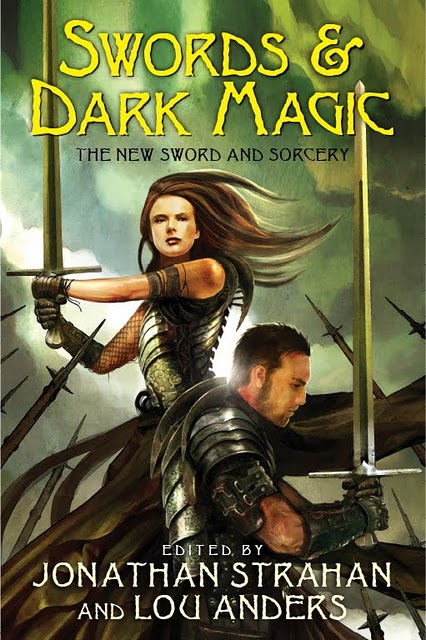
swords-dark-magic-256Jonathan Strahan and Lou Anders dedicate their sword and sorcery anthology Swords and Dark Magic to Robert E. Howard, Fritz Leiber, and Michael Moorcock as “the great literary swordsmen who made it possible.”  Creating one of the most memorable characters in the genre — the “anti-hero” of Elric of Melniboné — would be enough to earn Moorcock this acknowledgment.  But Strahan and Anders suggest that:

It might be his alteration of the battle of Good versus Evil into that of Law versus Chaos (with disastrous consequences implied if either side ultimately triumphed over the other) that made the most significant contribution to fantasy literature (p. xv).

For those who may be unfamiliar with this distinction, Moorcock’s fantasy universe (or multi-verse) is populated, and seemingly controlled to some extent, by the Lords of Law and the Lords of Chaos. These god-like beings seemingly have mysterious and unfathomable intentions.

But they often appear to desire to exert their Lawful or Chaotic control over mortals and their worlds. As Strahan and Anders note, results are calamitous for any such world and its inhabitants when the scale tips too far towards either Law or Chaos.

No doubt this “alteration” has been significant. Outside the realm of fantasy literature, Moorcock’s Law versus Chaos contrast is most notably seen in the early Dungeons and Dragons rules. Its famous notion of alignment spawned a whole cosmological picture upon which this historically important game was built.  (See Appendix 1 “The Known Planes of Existence” in Deities and Demigods.)

Nevertheless, I disagree with Strahan and Anders’s wording of this LC contrast. They seem to suggest — and they are not the first to do so — that Moorcock’s LC is a replacement of the traditional Good versus Evil dynamic within his famous sword and sorcery tales.

I want to suggest that it is rather an added facet. I’ll look at just one of Moorcock’s famous Elric stories to make this case.

Read More Read More

The Nightmare Men: “The Phantom Fighter”

The Nightmare Men: “The Phantom Fighter”

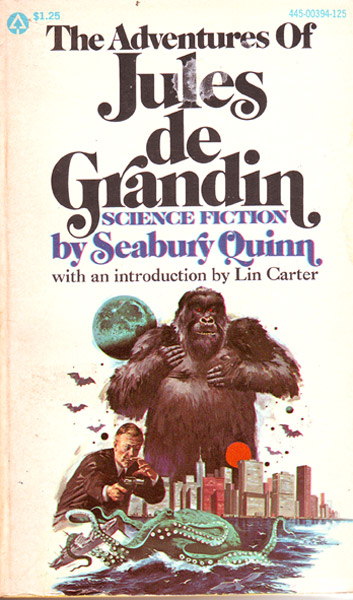
adventuresdegrandin‘He was…rather under medium height, but with military erectness of carriage that made him seem several inches taller than he actually was. His light blue eyes were small and exceedingly deep set and would have been humorous had it not been for the curiously cold directness of their gaze. With his blonde moustache waxed at the ends in two perfectly horizontal points and those twinkling, stock taking eyes, he reminded me of an alert tom-cat.’

Such is the stout Dr. Trowbridge’s description of Jules de Grandin, late of Paris, the Surete, and the Sorbonne, upon first meeting the irascible little French physician in the 1925 story, “Terror on the Links”.  Cat-eyed and ebullient, de Grandin is the epitome of the phrase ‘it’s not the size of the dog in the fight, but the size of the fight in the dog.’ He defends Harrisonville, New Jersey, and by extension, all of mankind, against the spawn of Satan, using forbidden knowledge and firearms alike.

Jules de Grandin and his ever-present companion, Dr. Trowbridge, were created in 1925 by Seabury Quinn for Weird Tales and went on to feature in close to a hundred stories, with the last, “The Ring of Bastet”, appearing in 1951. Quinn, in the introduction to the 1976 Popular Library collection, The Adventures of Jules de Grandin, says that de Grandin is ‘…a sort of literary combination of Topsy and Minerva, that is, he just growed.’

It’s hard to imagine it being otherwise, given the sheer vibrancy of de Grandin from the start. De Grandin, like his more passive predecessor Dr. Hesselius, is a physician, and approaches the supernatural as an illness to be confronted. Unlike the kindly Hesselius, however, de Grandin is no amiable general practitioner, but a surgeon — flamboyant, precise, and ruthless.

Read More Read More

Fantasy Face-Off: Henry Kuttner’s Elak of Atlantis vs. Robert E Howard’s Conan the Cimmerian

Fantasy Face-Off: Henry Kuttner’s Elak of Atlantis vs. Robert E Howard’s Conan the Cimmerian

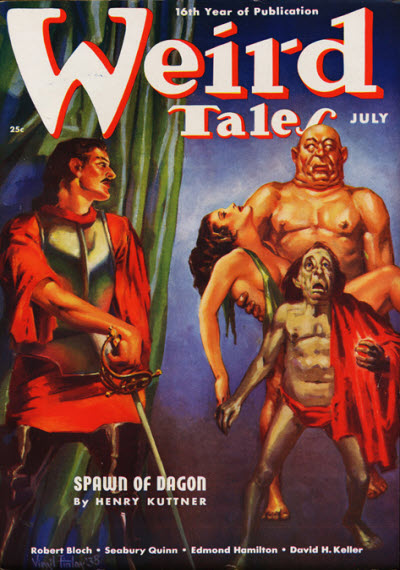
Weird Tales, July 1938, featuring Elak of Atlantis in "Spawn of Dagon"
Weird Tales, July 1938, featuring Elak of Atlantis in “Spawn of Dagon”

Now, before I start actually looking at these two heroes, I should probably explain why I’m doing what I’m doing.

You see, when Robert E Howard — creator of the sword and sorcery sub-genre, bare-fisted boxer, and all-round amazing writer — killed himself at the age of thirty, he left a pretty substantial gap in the pulp fiction market, one that was very hard to fill, but one that had to be filled. So Henry Kuttner, a fellow writer more famous for his science fiction than his fantasy, was called in to take up the sword and sorcery mantle — and stumbled in doing so.

The blurb describes the Elak stories as “exciting tales that helped establish a genre,” and “a major step in the evolution of the genre.” (I read Gateways kindle collection.)

Yeah that’s… an overstatement, not much more than a writer’s hyperbole. To be frank, the Elak tales are most easily comparable to a Saturday morning cartoon or a SyFy B-movie, what with all the hackneyed prose and clichéd characters.

Kuttner makes no attempt to advance the formula that Howard established, no attempt to evolve the genre as the over-enthusiastic blurb suggests. What you get instead is a readable adventure, entertaining, but not much more; it’s plot and prose, its action and characters merging with all the other yarns you’ve read and books you’ve consumed.

But then perhaps that’s the point. Pulp is meant to entertain; it’s not The Lord of the Rings or The Game of Thrones, it’s not supposed to make you think or take sides, not intended to evolve anything. Just to entertain.

Read More Read More

Adventure on Film: Flesh and Blood

Adventure on Film: Flesh and Blood

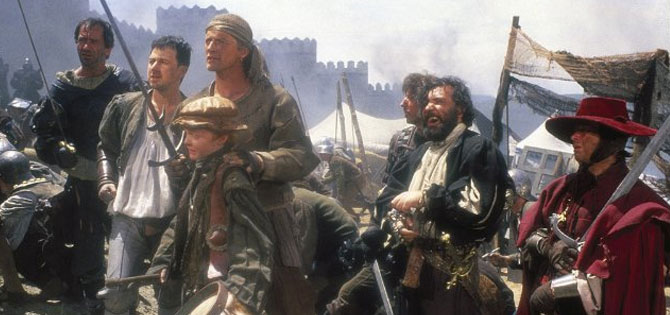
2206Se_ores_del_AceroFlesh and Blood (1985) is neither high art nor Paul Verhoeven’s best film, but it does contain flashes of genuine magic and an exceptional eye for the grime and grit of Medieval Italy. It also carries its fair share of star power thanks to the presence of Rutger Hauer, Verhoeven’s frequent co-conspirator, as mercenary soldier Martin.

The plot in a nutshell: Martin and his band of trouble-making friends are part of Hawkwood’s Army (though which of Hawkwood’s many armies is allowably unclear), but soon enough Hawkwood turns on his scruffy, ill-mannered war-hounds, stripping them of their pay and their pickings. Demoralized but determined, Martin and company make a break for the countryside, where they kidnap Princess Agnes (Jennifer Jason Leigh), then hole themselves up in a rural castle in which Agnes teaches her captors, as best she can, the fine arts of civilized behavior. But of course Hawkwood comes calling, paid now to recapture the princess. The clash that follows pits swords against fumbling attempts at science, with bubonic plague waiting in the wings.

Flesh and Blood proves to be a trifle cartoonish at times, a la Robocop, but one thing Verhoeven never lacks is energy. He’s a naughty schoolboy, yes, and at times his fondness for splatter, gore, and, well, flesh, threatens to undermine the film’s highbrow, philosophical script, but he’s also a craftsman with the heart of an animator –– both the camera and its subjects are in almost constant motion –– and provided you’ve got a strong stomach, Flesh and Blood provides ample period entertainment and many a fine battle.

Read More Read More