Browsed by
Category: Essays

Skyfall: In Which a Pulp Hero Meets the 21st Century
Skyfall: In Which a Pulp Hero Meets the 21st Century

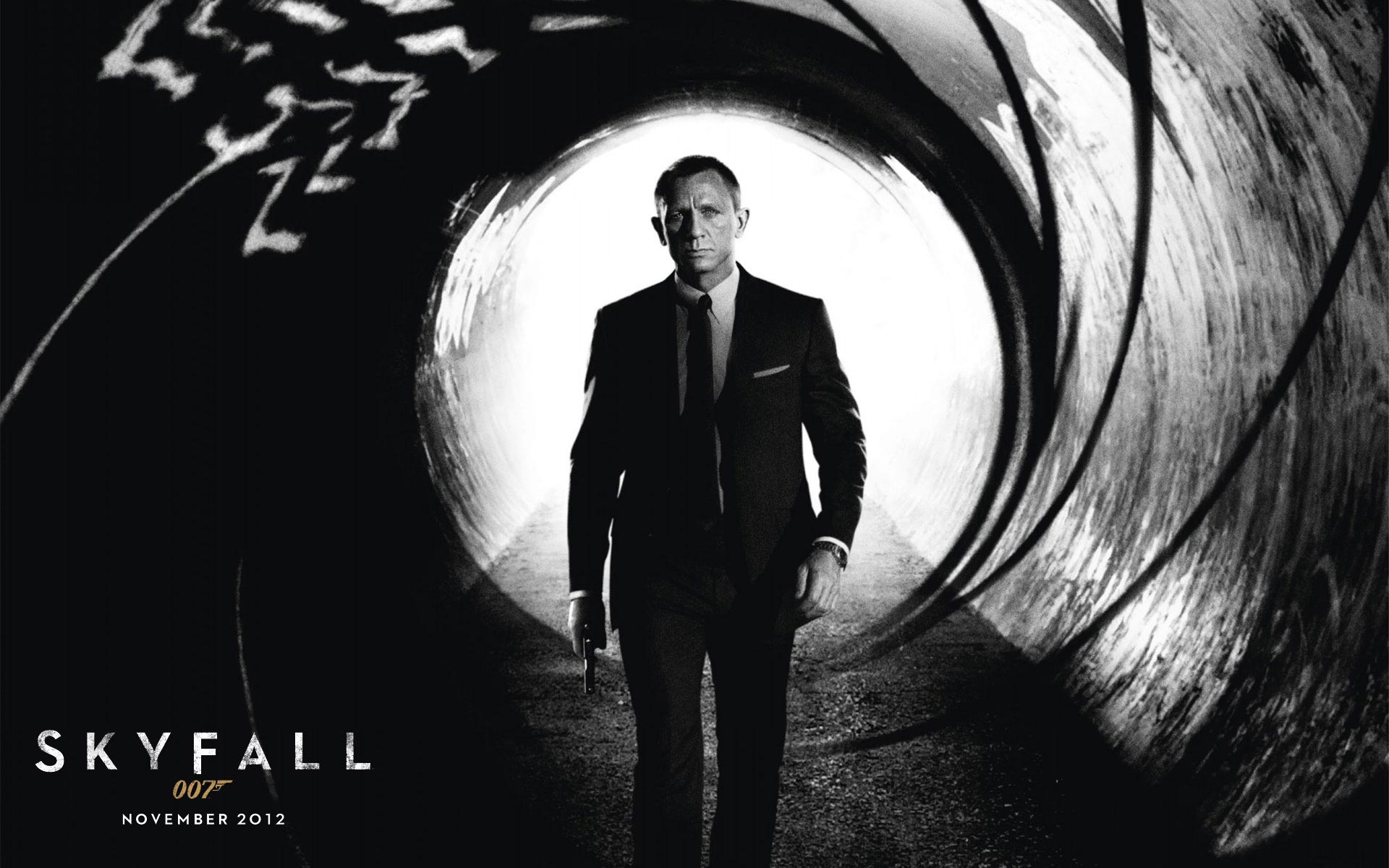
Skyfall_wallpaper1 Let me offend as many readers as possible right at the start by stating that Daniel Craig is the best James Bond the screen has yet known. The man is equal parts chiseled granite and lithe predator; he has charm, but he withholds it whenever possible, forcing us to catch it on the sly, as if we’re at a peepshow. Nobody in movies today looks better in a suit.

Yes, Sean Connery was great, but the role of Bond requires a greater world-weariness than Connery, at least in his nineteen-sixties roles, could bring. Roger Moore brought out 007’s upper-crust prep school tastes, but he was never believably dangerous; he actually needed Q’s endless gimmicks to survive, as Craig surely does not. The various Bond inhabitors since have filled the shoes without fleshing out the man. Only Craig does justice to the flinty, ruthless public servant that Ian Fleming originally envisioned, without reducing the character to a dusty fifties history text: Cold War Tactics 101, With Style. Daniel Craig makes 007 both contemporary and relevant.

Skyfall (2013) opens with a shot of an approaching figure, out-of-focus, stalking down a dim corridor. When the figure gets close enough, the image locks on at last: it’s Bond, of course, weapon in hand, but the initial blurriness is central to the film. Skyfall presents James Bond between epochs, uncertain of his exact identity and purpose. Is he still a tool of the Cold War establishment, of traditional spy vs. spy operations, or does the world now require him to be something new? To be (as he is in the extraordinary credits sequence) reborn?
Read More Read More

The Man Who Was Gilbert Keith Chesterton

The Man Who Was Gilbert Keith Chesterton

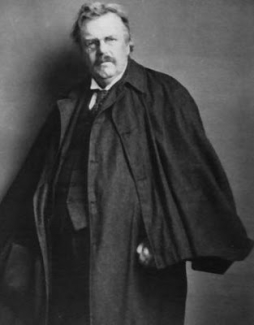
G.K. ChestertonLast week, in a post about Neil Gaiman’s Sandman, I said that certain habits of Gaiman’s plotting reminded me of G.K. Chesterton. It seemed to me that I’d referred to Chesterton fairly often in my posts here, so I did a search of the Black Gate archive. I found that I had in fact mentioned Chesterton a number of times, but that neither I nor anyone else had yet written a post for Black Gate specifically about him or any of his works. I’ve therefore put together this piece to give an overview of the man and his writing. It’s insufficient; Chesterton’s difficult to describe, more so than most writers. But one has to begin somewhere. He’s an important early fantasist, admired by figures as diverse as Gaiman, Borges, Alberto Manguel, and Slavoj Žižek. There’s even a movement to canonise Chesterton, a late convert to Catholicism, as a saint. Many of his writings are online, so you can judge him for yourself; you can find a list of texts on this page, a part of this site dedicated to Chesterton.
It’s almost traditional to say that Chesterton’s writing was defined by paradoxes. It’s not entirely accurate, I think. It’s more precise to say that in both his fiction and non-fiction he often put forward propositions structured something like: “It is frequently said that x is the case; but it is not true. In fact the very opposite is true.” From which point Chesterton would then explain, clearly, simply, and with a common-sense air, just how the opposite of everyone’s assumption was the actual state of affairs. In feeble imitation, I might put it this way: it is not true that Chesterton was a writer who delighted in paradoxes. In fact the very opposite is true. He was a writer that delighted in showing that apparent paradoxes were nothing of the sort, and were easily explained by an appeal to reality. We must not forget that Chesterton studied as an artist; and artists, perhaps more than any other sort of person, are concerned with finding the proper perspective on things.

Read More Read More

Why I’m Here – Part One

Why I’m Here – Part One

I don't want to be this man
I don’t want to be this man

A couple of times this past summer I felt really old. Somehow the classic sci-fi/fantasy books I grew up reading weren’t well known to younger readers (really, you don’t know who Manly Wade Wellman is?!?) or even all that important anymore. In the forty-year span of my sci-fi and fantasy reading life, the genres’ audiences had changed.

Now you could be a sci-fi reader without having read Dune or planning to ever read it. Roger Zelazny’s Chronicles of Amber was “shockingly discordant and unsatisfying to actually read all the way through.” This was nuts — cats-and-dogs-living-together nuts.

After my brain stopped spasming and cooled off a little, I started to actually think. Sure, there are certain — I’d say canonical — books important to the development of fantasy and sci-fi. But if you haven’t read them will somebody revoke your fandom card? If you don’t like the books I like, does that make you less discerning than I? I doubt it.

Besides, discerning is not a word I’d use for a lot of my own book choices. I mean, there’s a certain Lord of the Rings ripoff homage published by Ballantine in 1977 that I, along with the whole fantasy-reading audience, went nuts for. (You had to be there when fantasy pickings were meager.) I still love The Sword of Shannara today. It doesn’t get less discerning than that.

Read More Read More

A History of Godzilla on Film, Part 1: Origins (1954–1962)

A History of Godzilla on Film, Part 1: Origins (1954–1962)

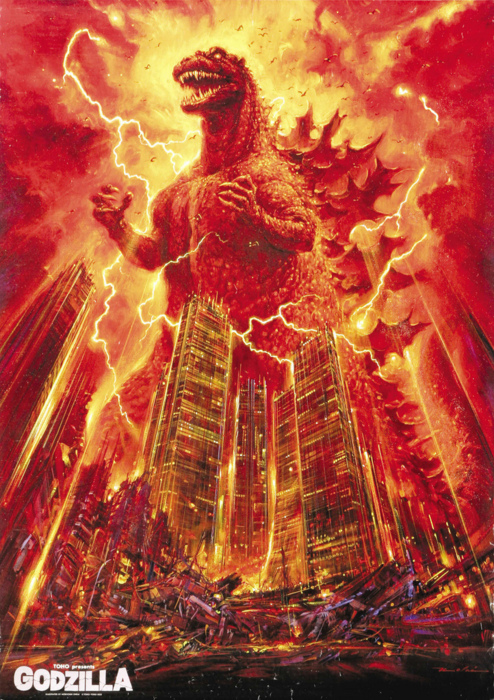
Return of Godzilla 1984 PosterOther Installments

Part 2: The Golden Age (1963–1968)
Part 3: Down and Out in Osaka (1969–1983)
Part 4: The Heisei Era (1984–1997)
Part 5: The Travesty and the Millennium Era (1996–2004)
Addendum: The 2014 Godzilla

With the release of the teaser trailer for the upcoming Godzilla from Warner Bros. and Legendary Pictures, a decade of cinematic silence has come to an end. Godzilla last appeared in 2004 in the Japanese movie Godzilla: Final Wars, which Toho Studios intended as the monster’s final bow before going on sabbatical. It’s the longest break in the iconic monster’s career, and regardless of what happens next, the forthcoming Godzilla ’14 is a reason for G-fans to celebrate. Maybe stomp a few cities. The trailer makes San Francisco look particularly stomp-able.

At this point, we only know as much about Godzilla ’14 as we’ve seen in the teaser. But it was an exciting glimpse that at least assured fans the new movie would not repeat the horrible mistakes of the first American attempt at a stateside Godzilla, the 1998 Roland Emmerich disaster.

This is the first of five (projected) installments covering the history of Godzilla on film, written and condensed for a broad audience. I hope these articles will help readers who have only a passing relationship with Godzilla — the general knowledge from pop culture osmosis — see the unusual variety of one of the longest and most durable film franchises in history. Many Black Gate readers are probably familiar with much of the information I’ll provide in these articles, but since I’ll also sling around my own opinions about the movies mixed in with the history, Godzilla fans may find parts of this worthwhile … if perhaps only to ignite arguments.

Read More Read More

Everything Bad Makes a Puzzle: Some Thoughts on Everything Bad is Good For You

Everything Bad Makes a Puzzle: Some Thoughts on Everything Bad is Good For You

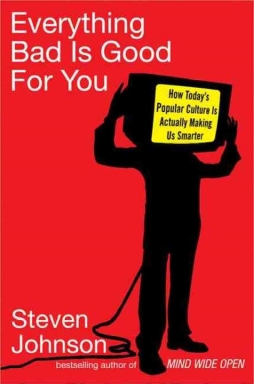
Everything Bad Is Good For YouThere’s a certain kind of structure I’ve lately begun to notice in certain novels. These books read like puzzles, telling one story directly and overtly while implying a second story, or highly variant reading of the first story, through carefully-placed gaps, contradictions, and seemingly-irrelevant details. Throwaway references in highly-disparate points of the book might imply a completely different way to read at least the plot and often the tone or theme. It’s something Gene Wolfe does a lot; other examples I’ve noticed lately are Joyce Carol Oates’ The Accursed, Helen Oyeyemi’s White is For Witching, and Caitlín Kiernan’s The Red Tree. I’d been trying to work out what to make of this ‘puzzlebook’ technique, when as it happened I read a completely different book that seemed to have something to say about this structure — among many other things.

Steven Johnson’s 2005 non-fiction book Everything Bad Is Good For You is an argument about the structure and cognitive benefits of popular culture. Johnson suggests that video games, for example, sharpen certain kinds of problem-solving skills, and in general that the experience of games, TV shows, the internet, and to an extent film represents an engagement with increasing complexity. Most fascinating to me were his discussions of TV and of the way TV’s grown more structurally complex over the past few decades. He seems to me to have not only accurately identified how televised stories have changed but also by extension to have suggested how storytelling generally may be changing. And that in turn perhaps implies a broader context for the ‘puzzlebooks’ I seem to be coming across more and more often.

Read More Read More

Star Trek: Nemesis, One Generation’s Final Frontier

Star Trek: Nemesis, One Generation’s Final Frontier

NemesisposterLet it be known that I missed the release of Star Trek: Nemesis because, in 2002, I was busy shepherding the next generation of science fiction fans into this wondrous, weary world. Eleven years later, I finally have the time to rectify that deficiency.

If the initial appeal of Star Trek (the TV series) was interstellar adventure coupled with wear-it-on-your-sleeve humanism, the long term attraction has proven to be much like that of visiting extended family, the kind of affable clan where reunions are always a treat.  Even if the vehicle in question is a stinker (Star Trek: The Motion Picture et al), a certain pleasure remains simply in spending a few hours in the company of trusted, far-flung friends.

Sure enough, good company is the chief pleasure of the Next Generation’s final outing. Nemesis proves to be a convoluted, shadowy film that trots out any number of sci-fi standbys (baddies in stiff vinyl costumes, fearsome ships much larger than the Enterprise, and diplomatic missions fraught with duplicity and danger), but it’s not by any means a disaster. Gone are the bright scarlet and black uniforms of old; now that the crew has aged a bit, a more somber black-and-heather-blue attire holds sway. Perhaps this is metaphorical? More than a few of our old friends do seem to be feeling the miles. Two exceptions: newlyweds Deanna Troi and Will Riker both look better than ever. Actors Mirina Sirtis and Jonathan Frakes are lucky people; age has brought out a rugged sturdiness to their familiar faces.

Read More Read More

The Uses of Ghosts

The Uses of Ghosts

living-with-ghostsWhile Black Gate readers may (fairly) view me as a sword-and-sorcery writer, thanks to the Tales Of Gemen the Antiques Dealer, a good many of those who have stumbled across my fiction might (fairly) think of me as a horror writer. Since I never expected to fall into that particular category, I’ve been doing a good deal of soul-searching as to the value of what I’m up to – the value, as it were, of basing so much of my tale-spinning on the supernatural instead of, for example, “real life.”

Dare I take this moment to point out that an entirely different set of readers might quite reasonably think of me as a writer of literary fiction?  Yeah, I wear that hat, too.

This odd combination of multiple caps has led me to the following conclusion: ghosts are a tool in the writer’s toolbox, as specific as more established weaponry like setting, length, voice, and theme.

Without further ado, I offer my list of why Things That Go Bump In the Night have worth. I don’t expect this to be an exhaustive list, but I trust that I have made a good start. Perhaps you, gentle reader, will be inspired to add to the till?

Read More Read More

Unlikely Story: BG Interviews the Editors

Unlikely Story: BG Interviews the Editors

Closed dooers slider2It’s been nearly three years since The Journal of Unlikely Entomology made its first appearance, and while this multi-legged publication focused initially on that fertile but narrow intersection of spec fic and bugs, the magazine has since branched out, changed its name, and adopted a rolling series of varied themes (the latest being the upcoming Journal of Unlikely Cryptography, now accepting submissions).

Unlikely Story pays pro rates for fiction, a rarity these days, and manages to make the stories they present look sharper than switchblades by moonlight.  Here’s my interview with editors A.C. Wise and Bernie Mojzes.


Unlikely Story has not only shortened its name, you’ve upped the pay rate. Nobody does both those things in one short span.  Have you gone quietly mad?

A.C.: That implies we weren’t mad to begin with… I mean, we started off publishing a magazine exclusively about bugs, how sane can we be?

Bernie: Indeed.

Read More Read More

Pacific Rim and the Culture of Rip-Off Vs. Homage

Pacific Rim and the Culture of Rip-Off Vs. Homage

“This is not a rip-off, it’s an homage!”–Peter Swan (Liam Neeson) in The Dead Pool

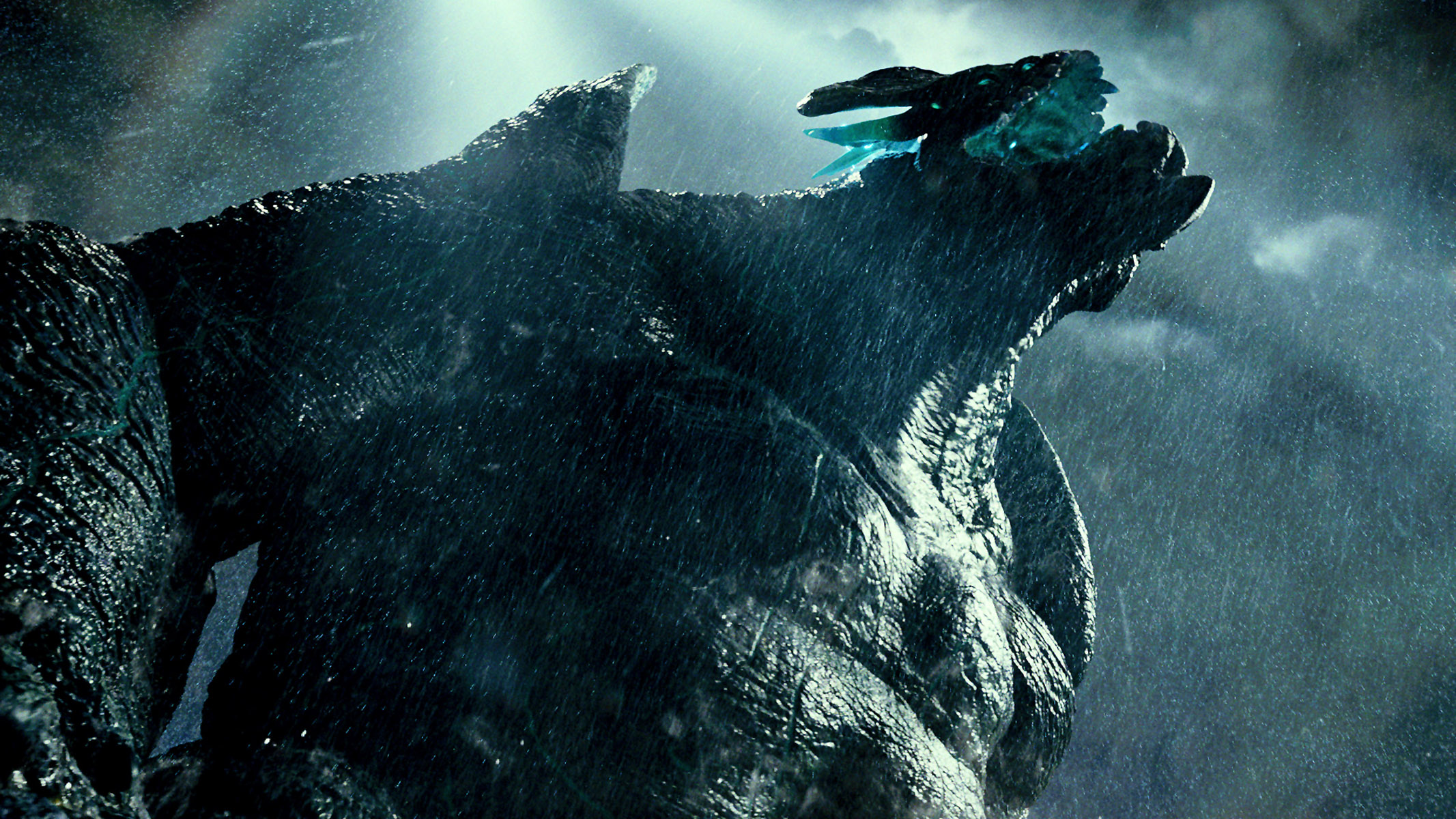
Watching the special features on Guillermo del Toro’s Pacific Rim this past weekend, I was struck by something the director said. Paraphrased, he told the design crew not to take any elements from previously-existing kaiju (such as Godzilla, Gamera and so forth), but to pay tribute to the spirit of those films. In other words, it’s a classic homage.

"And I would do anything for loooove...."
“And I would do anything for loooove….”

Now, bear with me on this. I’m a fan of Asian cinema, particularly the 80s and 90s classics such as The Bride with White Hair, Jet Li’s Once Upon a Time in China series, The Heroic Trio and its amazing sequel Executioners, and so forth.  I’m not obsessive about it — there’s a lot I haven’t seen — but I know the high points.

So when I see something like Crouching Tiger, Hidden Dragon, or Quentin Tarantino’s Kill Bill films, I see exactly what the lnfluences are. Except in this case, they’re not homages: they’re recreations of some of the exact moments from the films that influenced them, only couched so that you (the general American audience who’s never seen them before) will think they’re Tarantino’s or Ang Lee’s original ideas.

That, my friends, is a rip-off.

Read More Read More

An Addendum on Tie-In Fiction

An Addendum on Tie-In Fiction

I wanted to add a couple comments to John’s brief post about tie-ins. Much of the commentary revolved around Alan Dean Foster. He’s a favorite of mine and influenced my writing and career. He and King were the only two authors I took with me to college, and those battered collections are still on my shelves. I’ve corresponded with him over the years, but the only personal contact was when my wife and I shared a pizza with him at Archon (Stephanie did most of the talking, I was hopelessly tongue-tied at sharing pizza grease with a guy who wrote so many books I read to bits). I though I’d expand a little on him as well.

First, to get the curmudgeonly “back in my day” village elder/idiot stuff out of the way . . .

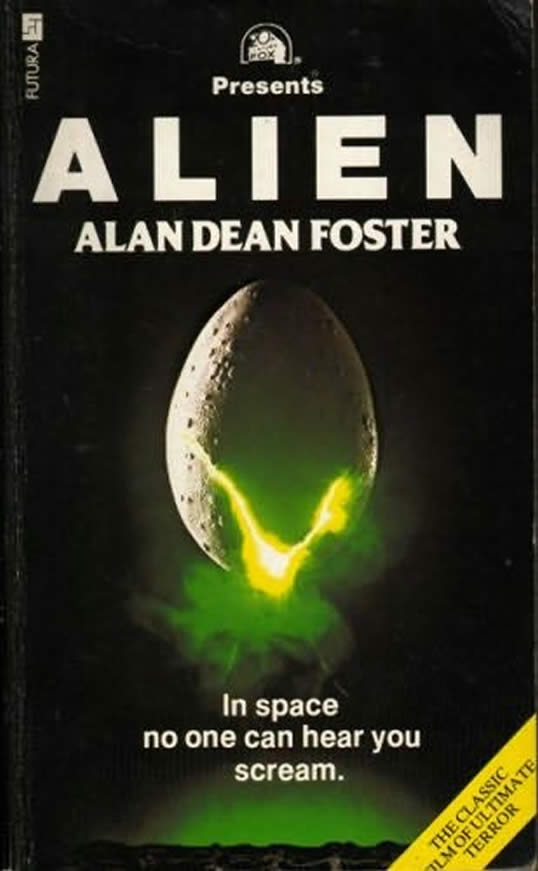
alien-alan-dean-fosterSome of the younger readers of Black Gate might have a hard time imagining how starved we were back then for more of our favorite SF movie worlds. These days, well before a major movie or game comes out, there is almost always a web presence filled with “Would You Like To Know More?” media goodness. But even for a big 20th Century Fox production like Alien, we didn’t have anything beyond a few brief TV spots, reviews, and the same press packet that went to every major paper in the country. If we wanted to know more about the movie’s world, rather than how Sigourney Weaver got along with the cat on-set, all we had to cling to were the tie-ins.

In this, we were very lucky to have a guy like Foster writing the tie-in. In most of his books, he filled in plot holes he spotted with a little business somewhere or other (like why putting the crew of the Nostromo in a single, relatively safe location and turning the rest of the ship into a vacuum wasn’t an option). He also liked to add some flavor to the movie universe, the Alien tie-in memorably begins with a description of the business of recording dreams for entertainment. Since he was usually working from a script, his tie-in also served as a form of “additional scenes” for those days before the advent of DVDs with bonus features. It was from Foster that I first experienced Ripley finding Dallas in the alien’s cocoon, with Brett turning into a facehugger egg next to him. It’s also the only place, even today I believe, where you can get the full scene of the crew getting lucky for a change and Parker almost blasting the damn thing out of an airlock. No need to tell you who sabotages that, I’m sure.

Read More Read More