Browsed by
Category: Editor’s Blog

The blog posts of Black Gate Managing Editor Howard Andrew Jones and Editor John O’Neill

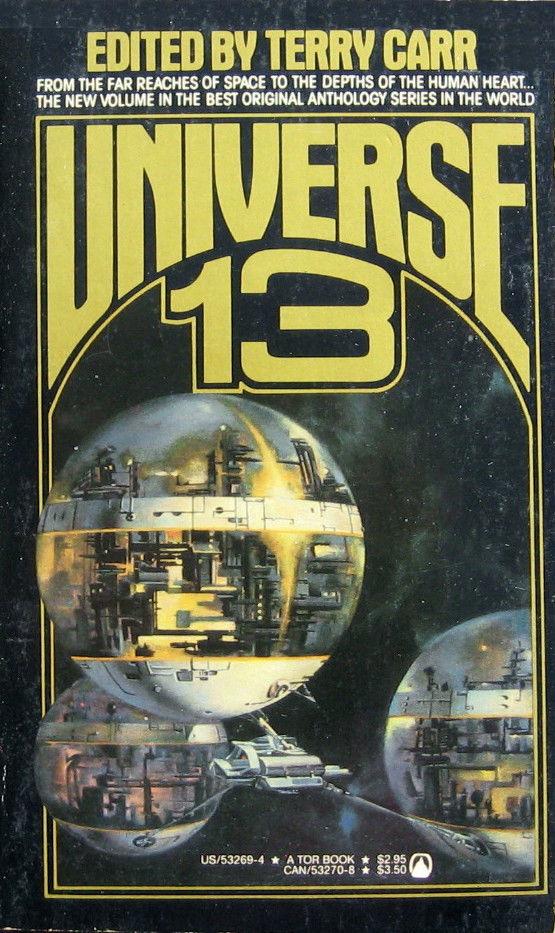
Vintage Treasures: Universe 13 edited by Terry Carr

Vintage Treasures: Universe 13 edited by Terry Carr

Universe 13 Terry Carr-smallLast Sunday, I was busy complaining about the apparent death of the original SF and fantasy paperback anthology series (as one does), when it occurred to me that I should probably read a few of the books I was talking about.

Nothing like waxing nostalgic and working up a good frothy indignation at the death of a vital part of American culture to remind you that your memories on the subject are actually kinda vague and unspecific. It’s a crime that Universe is no longer being published! It was a source of some of the most brilliant SF of the 70s! I think. Wait, which one was Universe again?

So I decided to start by reading Universe 13. Partly because Terry Carr really was a terrific editor and he knew how to put together a splendid anthology. But mostly because I found a copy in easy reach in a stack of vintage paperbacks and I didn’t have to get up out of my big green chair.

I’ve talked about Universe before, especially about Carr’s insight into the field. One of the most famous quotes about science fiction comes from his introduction to Universe 3, which I printed in 2012 and I’d like to reprint here:

When aficionados of this field get together, that’s a standard topic of discussion. When was science fiction’s golden age? Some say the early forties, when John W. Campbell and a host of new writers like Heinlein, Sturgeon and van Vogt were transforming the entire field; others point to the early fifties, to [editors] H.L. Gold and Anthony Boucher and to such writers as Damon Knight, Alfred Bester and Ray Bradbury. Some will lay claims for the late sixties, when the new wave passed and names like Ballard, Disch and Aldiss came forward. There are still people around, too, who’ll tell you about 1929 and David H. Keller, E.E. Smith and Ray Cummings.

The clue in most cases is when the person talking first began to read science fiction. When it was all new, all of it was exciting. Years ago a friend of mine, Pete Graham, tersely answered the question “When was the golden age of science fiction?” by saying “Twelve.” He didn’t have to explain further; we knew what he meant.

Read More Read More

Explore the Echoes of a Vanished Product Line in Lost Empires of Faerûn

Explore the Echoes of a Vanished Product Line in Lost Empires of Faerûn

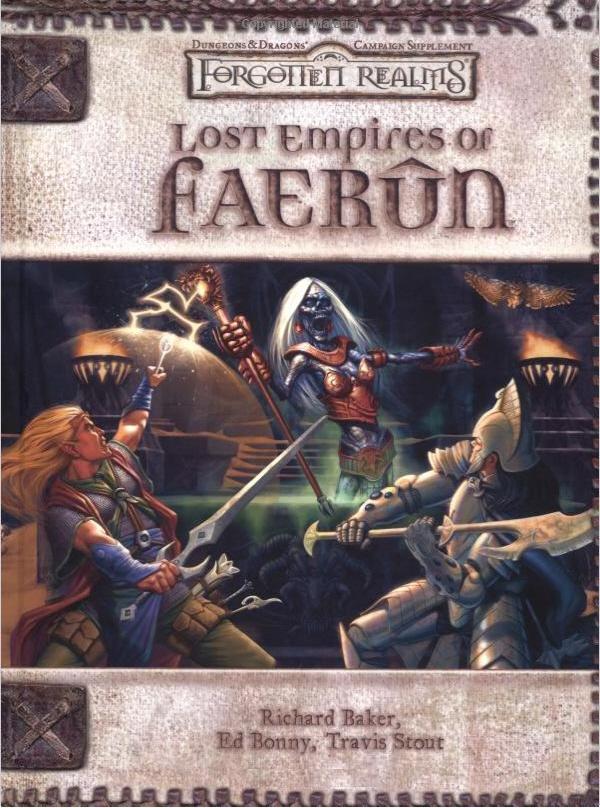
Lost-Empires-of-Faerun-smallI’m still processing the boxes of gaming loot I brought home from the Spring Games Plus Auction. Honestly, this could take a while. You may want to get a coffee or something.

I find it fascinating to watch the items that set off a bidding frenzy. The Descent games I talked about last time, for example. Or absolutely any expansion sets for Wizard of the Coast’s out-of-print Heroscape — lordy, yes. I wish I had a closet filled with those babies. I’d retire to Bermuda.

But it’s no fun to bid on stuff that far out of my price range. Gape while everyone else bids like crazy? Sure. But bid yourself? No. It’s like asking the Homecoming Queen to Prom. Sure, everybody’s doing it, but it ain’t easy on your self-esteem.

But you know what is fun to bid on? Cheap stuff, and especially cheap stuff that was once very expensive. Like premium D&D products that are now one or two editions out of date and selling at rock bottom prices. Items like a brand new copy of Lost Empires of Faerûn, which originally retailed for $29.95 and which I snapped up for 6 lousy bucks.

Let me paraphrase from the back of the book. Something, something, secrets of past empires of the Forgotten Realms, comprehensive sourcebook, new feats, stuff, prestige classes, magic stuff, equipment stuff. Can I use this to put together an adventure in 10 minutes when I manage to forget game night switched to Friday? Yes? I’m sold.

Apparently, the book also contains gaming advice on ruins, including rules for how to build and sustain a ruin-based campaign, a bunch of detailed adventure sites with maps, artifacts, and some new monsters. You had me at “ruin-based campaign.” Take my money already.

Read More Read More

John W. Campbell on Tolkien, Conan, and Sword & Sorcery

John W. Campbell on Tolkien, Conan, and Sword & Sorcery

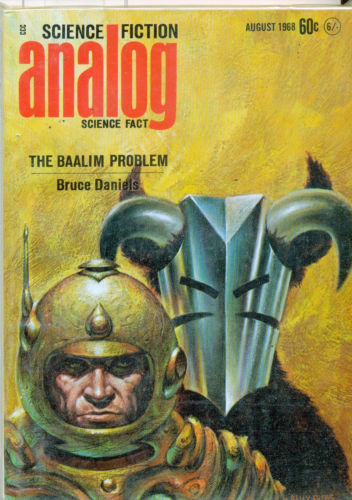
The August 1968 issue of Analog Science Fiction, with Sword & Sorcery creeping up on Science Fiction
The August 1968 issue of Analog Science Fiction, showing Sword & Sorcery creeping up on Science Fiction

Gordon van Gelder, the editor of The Magazine of Fantasy and Science Fiction, has posted a fascinating excerpt from The John W. Campbell Letters, Volume 1. The excerpt is from a September 7, 1967 letter to Analog author and Hugo Award winning writer Gordon R. Dickson, author of Dorsai! and Soldier, Ask Not, and it captures the frustrations of the top SF editor in the country as he senses his audience being lured away by the growing popularity of J.R.R. Tolkien.

The swords-and-sorcery and Tolkien have displaced science fiction almost completely. Why? Well, partly — but I think a small part — is the current leaning to escape-from-reality, LSD etc. to the undisciplined world of my opinion is as good as any other, and don’t tell me there’s a Universe’s Opinion I’ve got to accept, willy nilly.

But the larger item, I suspect, is *human beings want heroes.* Real heroes. Not common-men-who-proved-under-stress-they-could-struggle-through. The swords-and-sorcery yarns are all based on superhuman heroes — and it’s clearly obvious the readers love ’em.

Now in as much as it’s the readers who pay for the magazines, it damn well behooves us to give ’em what they want — and they obviously want super-heroes on the Conan order. They want for Frank Herbert’s Dune, with his super-hero. They used to go with all-out enthusiasm for Jack Williamson’s really-not-very-good “Legion” stories.

Now if the fans want — and they evidently do! — swords-and-sorcery type yarns, then we had damn well better give ’em the type of thing they want, or get out of the way for someone who will.

Campbell never published much fantasy in Analog, but he did champion adventure-oriented science fantasy in the late 60s, like Anne McCaffrey’s Dragonriders of Pern stories (the first of which, the Hugo Award-winning “Weyr Search,” appeared in Analog in October 1967). It would be interesting to take a closer look to see if there was any noticeable editorial shift in this period.

Read the complete excerpt in Gordon’s Facebook post.

Hurry Up With That Doctor Strange Movie, Marvel

Hurry Up With That Doctor Strange Movie, Marvel

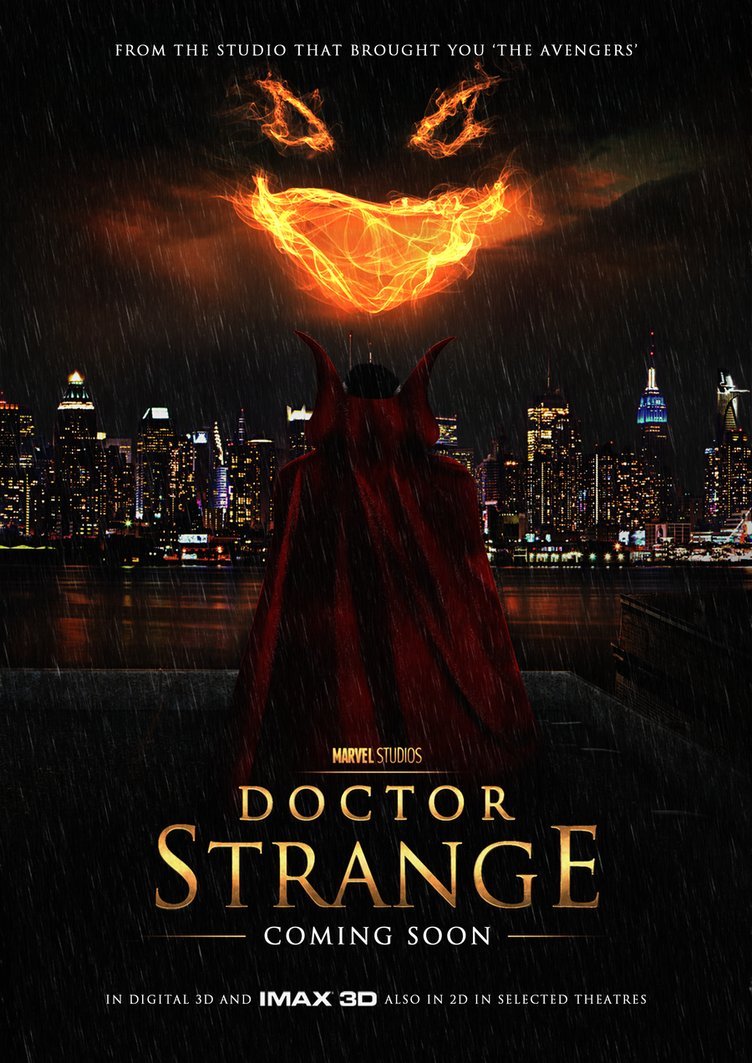
Mesmeretics Doctor Strange poster-smallMarvel Studios has certainly been dragging its feet with the long-delayed Doctor Strange feature film. It still doesn’t have a release date. (Or a star. Or a director.)

That hasn’t stopped enthusiastic fans from trying to nudge the project along with fake trailers and posters, like the fan-made effort from Mesmeretics at left. C’mom, Marvel. If fans can make something that looks that sharp, so can you.

I consider Doctor Strange to be the last major untapped Marvel property and I’m a little cranky that C-listers like Ant Man and Rocket Raccoon are making it to the silver screen before he is. It wouldn’t surprise me if Baron Mordo was behind it all, somehow.

Doctor Strange was created by Stan Lee and Steve Ditko (the same team that created Spider-man) in 1963. He has flirted with live action versions before… there was a 1978 TV movie starring Peter Hooten, which I watched after school and thought perhaps was the coolest thing in the history of ever. In 2005 Paramount acquired the rights to Doctor Strange from Miramax and in 2008 reports surfaced that Guillermo del Toro was attached to direct and that he’d approached Neil Gaiman to do the script. Never happened.

More recently, in June 2010, Marvel Studios hired Thomas Dean Donnelly and Joshua Oppenheimer, the team behind the underrated Sahara and the 2011 reboot of Conan the Barbarian, to produce a script, and in January of last year Marvel Studios president Kevin Feige confirmed that Doctor Strange would be part of “Phase Three” of the so-called Marvel Cinematic Universe. In November, he confirmed that a Doctor Strange feature is in development, but so far no additional details have emerged. And so we wait.

Read More Read More

The Top 20 Black Gate Fiction Posts in February

The Top 20 Black Gate Fiction Posts in February

AppleMarkMark Rigney’s “The Find,” part of his perennially popular Tales of Gemen series, maintained  the top spot last month, holding off a stiff challenge from Jon Sprunk’s hit novel Blood and Iron.

“The Find” is actually Part II of the series. It began with “The Trade,” which Tangent Online called a “Marvelous tale.” Read all three tales in their entirety right here.

Jon Sprunk’s Blood and Iron, Book One of The Book of the Black Earth, was released this month by Pyr Books and we offered an exclusive pre-release excerpt of this brand new sword & sorcery epic in February.

Next on the list was Joe Bonadonna’s fast-paced adventure “The Moonstones of Sor Lunarum,” followed by E.E. Knight’s sword & sorcery epic “The Terror of the Vale,” the second in the Blue Pilgrim sequence, and sequel to “That of the Pit.”

Fifth and sixth were our excerpt from Sword Sisters, the new novel from Tara Cardinal and Black Gate blogger Alex Bledsoe, and “The Sealord’s Successor,” by Aaron Bradford Starr, a new tale of Gallery Hunters Gloren Avericci and Yr Neh, last seen in “The Tea-Maker’s Task” and “The Daughter’s Dowry.” Next was Martha Wells’s complete novel, the Nebula nominee The Death of the Necromancer.

Also making the list were exciting stories by Dave Gross, Jamie McEwan, Janet Morris and Chris Morris, Mike Allen, Ryan Harvey, Nina Kiriki Hoffman, C.S.E. Cooney, Vaughn Heppner, Jason E. Thummel, David C. Smith, Michael Shea, and John C. Hocking. If you haven’t sampled the free adventure fantasy stories offered through our Black Gate Online Fiction line, you’re missing out. Here are the Top Twenty most-read stories in February.

Read More Read More

Take Dungeon Delving to the High Seas in Descent: The Sea of Blood

Take Dungeon Delving to the High Seas in Descent: The Sea of Blood

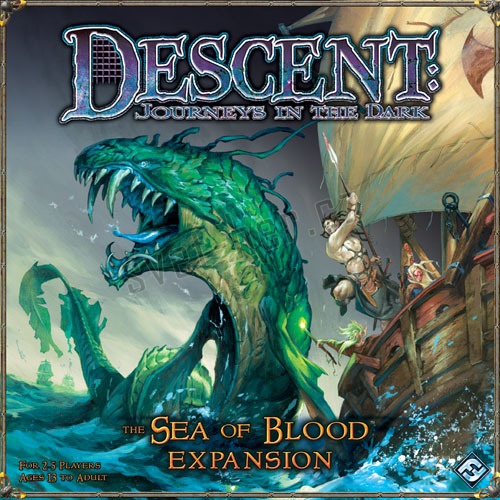
Descent the Sea of Blood-smallOkay, that title doesn’t make any sense. Dungeon delving… on the ocean. You know what that sounds like? Drowning, that’s what it sounds like.

But let’s move on. I’m still processing the four boxes of loot I brought back from the Spring Games Plus Auction and, like a determined CSI agent at a crime scene, putting clues together to determine how I ended up with a copy of Descent: The Sea of Blood.

Let’s say a few words about the basic game, Fantasy Flight’s Descent: Journeys in The Dark, because it came up for auction and … man. Everybody wanted it. Seriously, it was like feeding time at the crazy cat lady house. There were two copies of the long out-of-print first edition and they were way out of my price range. The first, a jumbled box containing the game and all the expansions, sold for $92, and the second, an unpunched set of the first edition only, sold for $130. (If you’re in the market, Amazon still has new copies from a handful of vendors, starting at $289.)

So what’s Descent all about, then? To be honest, I’m a little vague on the specifics, ’cause my copies are still in the shrinkwrap, but I do know it’s one of the most popular of the dungeon-delving board games, which simulate the loot-and-scoot dynamic of Dungeons and Dragons in a more contained setting. (Other examples include Super Dungeon Explore, Castle Ravenloft, Legend of Drizzt, Claustrophobia, Warhammer Quest, DungeonQuest, Tomb, Cutthroat Caverns, and many others. And yes, my copies of those are shrinkwrapped too, so don’t bother asking.)

Descent was originally released in 2007 and designed by Kevin Wilson. It pits an overlord against up to four hero players, who cooperate to complete a range of exciting objectives, like clobbering a sea-monster, or beating down a dragon (going strictly by the box cover art, which is generally a good indicator). For extra collectability — like it needed it — the game shares a setting with Fantasy Flight’s other popular titles, Runewars, Rune Age, and Runebound.

Read More Read More

Is the Original SF and Fantasy Paperback Anthology Series Dead?

Is the Original SF and Fantasy Paperback Anthology Series Dead?

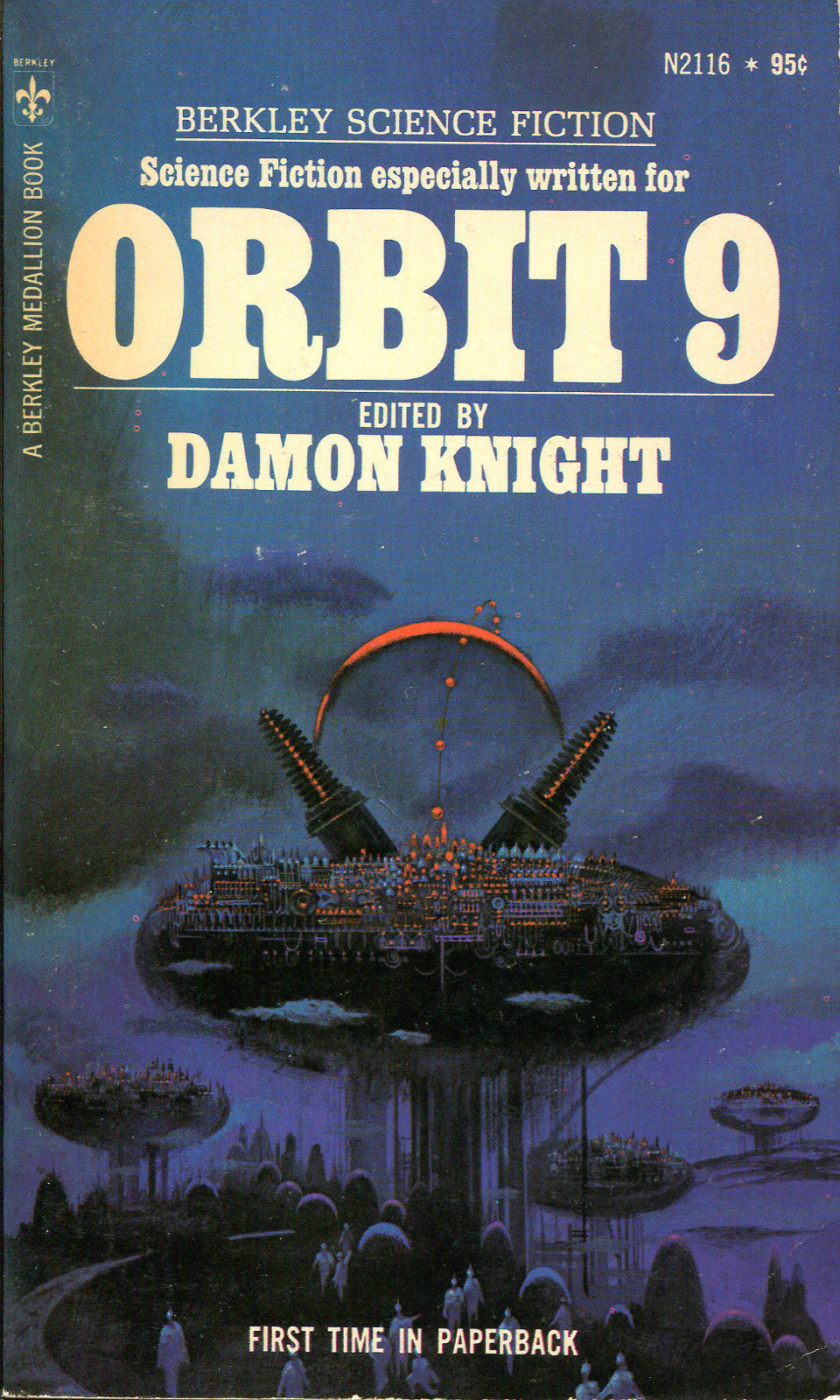
Orbit 9 Damon Knight-smallI miss the era of the original paperback anthologies. It seems to have faded away without anyone really noticing and I’m not sure why.

Well, I guess I do know why, but I’m grumpy about it. Short fiction isn’t really viable in mass market anymore. Ten years of trying — and failing — to publish a fantasy fiction magazine taught me that.

That wasn’t always the case. For decades, SF and fantasy readers supported several prestigious, high-paying paperback markets for short fiction and they attracted the best writers in the field. Damon Knight published 21 Orbit anthologies between 1966 and 1980; Robert Silverberg edited New Dimensions (12 volumes, 1971-81) and star editor Terry Carr helmed 17 volumes of the Universe series (1971-1987), for example.

I’d be hard pressed to tell you which of those three was the best source for original SF and fantasy, and I don’t really feel qualified to anyway, since I didn’t read them all. (Or even most of them — we are talking a combined 50 volumes, just for those three. I read pretty fast, but I’m not Rich Horton.)

In any event, those days are gone. And now that they are, I wonder — was it the sheer editorial talent of Messieurs Knight, Silverberg, and Carr that allowed their respective anthologies to continue for decades?

Or was there simply more of an appetite for short fiction forty years ago? Could an editor with the same talent and drive accomplish what they did today? Or is it futile, like trying to argue football with the Borg?

Read More Read More

Reenact Clash of the Titans on Your Kitchen Table With Mythic Battles

Reenact Clash of the Titans on Your Kitchen Table With Mythic Battles

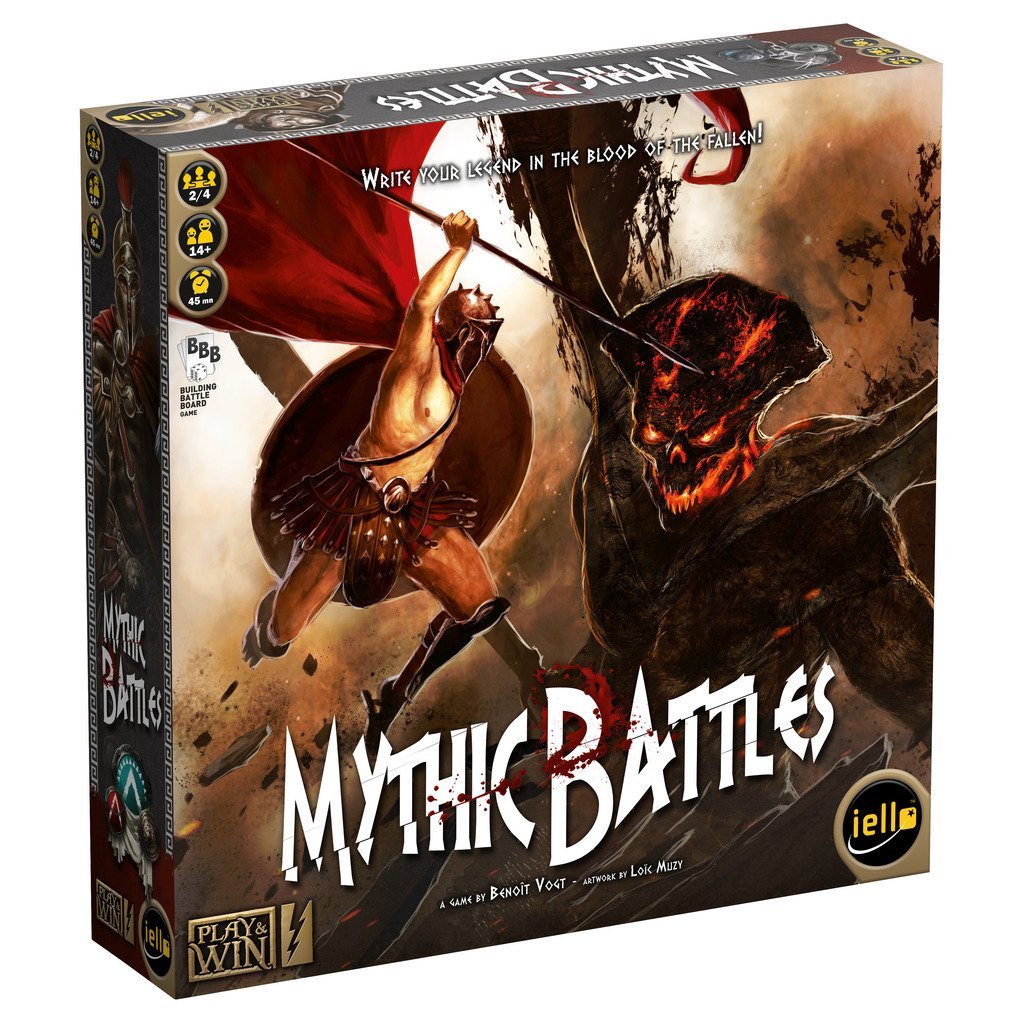
Mythic Battles-smallWhen you’re a collector, your enemy is the impulse purchase. Unless you’re independently wealthy — or you collect caterpillars or something — you need to budget carefully, and make every purchases count. Your goals are ambitious, and one or two impulse buys can leave a carefully thought-out acquisition plan in ruins.

All this goes out the window at an auction. Auctions are all about the impulse buy. A tantalizing treasure is on the auction block for a scant 15 seconds — just long enough to think, “What the heck is that? Is that the guy from 300, or some kind of Spartan paratrooper? Man, I bet Drew would play this with me. Wonder if you can play the guy with the glowing forehead? Is there a Kraken miniature? It’d be worth the 10 buck opening bid just to get a Kraken miniature. OMG it-must-be-mine” — and then bang, the auction is over, you’re the proud owner something called Mythic Battles, and you’re out seventeen bucks.

Mythic Greece is in chaos: Athena and Hades are at war and have sent their greatest heroes to battle. Take on the role of these generals out of legend, leading fantastic armies and lead your troops to victory!

Mythic Battles is a game which simulates epic confrontations and battles that will take your breath away. Thanks to its innovative system – the Building Battle Board (BBB), which combines game mechanisms from miniature games, board games and card games – Mythic Battles offers you an experience the likes of which you have never seen. Recruit your army, play your cards to activate your units, roll your dice to resolve combat – reinvent your way of playing!

This box contains two complete armies to play with two or four players, an initiation campaign, as well as all that’s required to play as you wish. Other armies and units will periodically be released to flesh out your campaigns.

I bought my copy of Mythic Battles at the Games Plus Spring Auction and so far I’ve been very pleased with it. It was designed by Benoit Vogt and was published by Lello/Play & Win in 2012, with a retail price of $49.99. There have been two expansions: The Bloody Dawn of Legends (2013) and Tribute of Blood (2014). And no — there is no Kraken miniature (I know. What were they thinking?)

Tom Reamy, the Iron Throne, and George R.R. Martin’s Plan to Stay Ahead of HBO: The Game of Thrones Issue of Vanity Fair

Tom Reamy, the Iron Throne, and George R.R. Martin’s Plan to Stay Ahead of HBO: The Game of Thrones Issue of Vanity Fair

Vanity Fair Game of Tthrones-smallYou know your HBO fantasy series has hit it big when it makes the cover of culture and fashion magazine Vanity Fair.

The April issue, on sale now, features a cast photoshoot by star photographer Annie Leibovitz and a feature on the making of the show written by Jim Windolf. But more interesting is a wide-ranging interview with author George R.R. Martin which covers, among other things, the true scale of the Iron Throne and Martin’s plan to stay ahead of the rapidly-progressing show.

The season that’s about to debut covers the second half of the third book… But there are two more books beyond that… A Dance with Dragons is itself a book that’s as big as A Storm of Swords. So there’s potentially three more seasons there, between [A Feast for Crows] and Dance, if they split into two the way they did [with Storms]. Now, Feast and Dance take place simultaneously… You can combine them and do it chronologically. And it’s my hope that they’ll do it that way and then, long before they catch up with me, I’ll have published The Winds of Winter, which’ll give me another couple years. It might be tight on the last book, A Dream of Spring, as they juggernaut forward.

I was also fascinated by his comments on the death of the brilliant Tom Reamy, whom we profiled in Black Gate 15:

Tom died of a heart attack just a few months after winning the award for best new writer in his field. He was found slumped over his typewriter, seven pages into a new story. Instant. Boom. Killed him… Tom’s death had a profound effect on me, because I was in my early thirties then. I’d been thinking, as I taught, well, I have all these stories that I want to write… and I have all the time in the world… and then Tom’s death happened, and I said, Boy. Maybe I don’t…

After Tom’s death, I said, “You know, I gotta try this. I don’t know if I can make a living as a full-time writer or not, but who knows how much time I have left?…” So I decided I would sell my house in Iowa and move to New Mexico. And I’ve never looked back.

Read the complete interview here.

Rally Your Armies, Dominate Your Foes, and Give a Boatload of Commands in Warmachine: High Command

Rally Your Armies, Dominate Your Foes, and Give a Boatload of Commands in Warmachine: High Command

Warmachine High Command-smallAll right, so five minutes ago I won a copy of Hordes: High Command at the Games Plus Spring Auction and I’m feeling pretty good. Sure, who wouldn’t? Looks like a sweet game and it’s mine, all mine, thanks to my killer auction skills. That’s right.

And then, before I can even enjoy my victory, the auctioneer calls out the next item up for bid: a brand new, still-in-the-shrinkwrap copy of Warmachine: High Command, starting at the low, low opening bid of one dollar.

Wait, what? Is this the same game? Do I need to own this to play the other one? Come on! I still haven’t figured out the game I just bought. This is why I avoid miniature games, damnit! I’ve only owned it for five minutes and it’s already shaking me down for more money.

Take command and muster the military might of an entire nation to conquer the Iron Kingdoms! Warmachine: High Command is a deck-building card game for 2-4 players set in the steam-powered fantasy world of the Iron Kingdoms. This stand-alone game can be played with just the contents of this box or combined with other Warmachine: High Command products for a customizable experience. Leverage your resources, rally your armies, and dominate your foes to set your banner above all of western Immoren! This box contains game rules and 386 cards, including: 89 Cygnar cards 89 Khador cards 89 Protectorate of Menoth cards 89 Cryx cards 15 Winds of War cards 15 Location cards.

Warmachine: High Command was published by Privateer Press on August 28, 2013. Learn more at the website. It retails for $44.99; I won my copy at auction for $17. Reluctantly. I note that I now own two core sets of a collectible miniatures game and somehow I still don’t own any miniatures. God help me, I’m never gonna figure this game out.