Browsed by
Category: Editor’s Blog

The blog posts of Black Gate Managing Editor Howard Andrew Jones and Editor John O’Neill

Adventures Fantastic reviews James Enge’s “Destroyer”
Adventures Fantastic reviews James Enge’s “Destroyer”

destroyer21Keith West has started a series of “Long Looks at Short Fiction” at the Adventures Fantastic blog, and he’s kicked it off with Black Gate 14:

If you’re a fan of heroic fantasy, adventure fantasy, or just plain good ol’ fashioned storytelling, and you haven’t checked out Black Gate, then you owe it to yourself to do so.  Some of the best writing being done in the fantasy field right now is published here…  John O’Neil [sic] brings the highest production and editorial values to his magazine.
What separates Black Gate from the pro markets is that the Big Three… aren’t willing to publish novellas from writers who aren’t household names (yet).

The first piece he discusses is James Enge’s Morlock tale “Destroyer:”

The story opens with Morlock leading the party between two mountain ranges.  He takes Thend with him to investigate something… a Khroi warrior trapped in a web built by the spider people.
The pace is swift, and the nonhuman characters intriguing as Morlock attempts to guide the party between Khroi and spider people without detection.  You can probably guess how successful he is in this… all the usual sardonic wit and cleverness we’ve come to expect from Morlock are on display here. Morlock has been described as a thinking man’s Conan.
Morlock uses his brain at least as much as he uses his magic or his sword.  The situation here isn’t one he can simply get out of by either magic or swordsmanship (although both are necessary)… If you’re not familiar with Morlock, this is as good a place as any to make his acquaintance.

You can read the complete commentary here.

Art by Chuck Lukacs for “Destroyer” (from Black Gate 14).
Apex Magazine 17 Arrives

Apex Magazine 17 Arrives

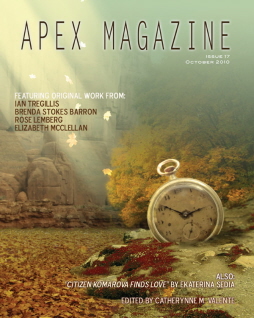
apex-oct-10aThe October issue of Apex Magazine is now available.

Apex is a magazine of Dark Fiction, publishing science fiction, fantasy, horror, and “mash-ups of all three.”  Single issue price is $2.99, and they are available in ePub/PDF/LIT/PDB/ LRF/mobi/RB/prc formats, which is more formats than I knew existed. A lot more, if I’m honest about it.

They have an October Financial Goal meter right on the website, so you can see exactly how your purchase impacts the bottom line, which is fairly gratifying.  If I did that, I’d have to have a separate meter for the uncontrolled pulp purchases currently depleting the Black Gate bank account. Stupid eBay.

Original fiction this issue is from Ian Tregillis and Brenda Stokes Barron, and there’s a special reprint by Ekaterina Sedia. Poetry is by Rose Lemberg and Elizabeth McClellan.

Their September issue apparently snuck past us, but we did profile August.  So we’re not completely asleep.

Apex Magazine is edited by the lovely and tireless Catherynne M. Valente.

Come Visit Port Iris

Come Visit Port Iris

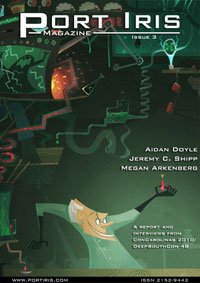
port-isisOK, there’s gotta be a more creative headline when your name is Port Iris magazine, but that’s the best I could come up with.

Editor Casey Seda dropped us a note this week, saying:

I have not come across Black Gate until recently, but when I did, I had to subscribe to your RSS feed immediately. As an editor of my own speculative fiction magazine, I like to see the opinions of readers for other magazines. Our magazine has released its 3rd quarterly issue and is available for free in web and PDF formats.

I was intrigued enough to drop by their website. Port Iris is an extremely attractive publication, and in the Submission Guidelines Casey says he’s “specifically looking for science fiction and fantasy, but I am open to almost anything. Cross-genre is acceptable too.” Sounds like a recipe for an interesting magazine.

Issue 3 contains three short stories, “The Father of the Riverborn,” by Megan Arkenberg, “Salary Ninja,” by Aidan Doyle, and “Watching,” by Jeremy C. Shipp, as well as interviews with A.J. Hartley, Davey Beauchamp, and DJ Torch.

You can find the latest issue here. Check it out and let us know what you think.

Black Gate: Your Definitive Source for Sword & Sorcery

Black Gate: Your Definitive Source for Sword & Sorcery

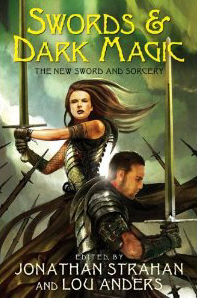
swordssorcery2So I finally had a chance to sit down this week with Swords & Dark Magic, the new anthology from Jonathan Strahan and Lou Anders.
It’s well worth your time.  It has a terrific new story by James Enge, “The Singing Spear,” in which Morlock faces off against an indestructible weapon of his own design. It also includes a new Black Company tale by Glen Cook, and a fresh Elric novella from Michael Moorcock.

Additional contributors include Robert Silverberg, with a new Majipoor story, and Michael Shea with a tale of Cugel the Clever, as well as Joe Abercrombie, Garth Nix, Gene Wolfe, Steven Erikson, C.J. Cherryh, and many others.

The introduction by the editors, “Check Your Dark Lord at the Door,” is a fine retrospective of Sword & Sorcery through the decades. And the editors salute this publication with:

Black Gate magazine… has been the definitive source for sword and sorcery short-form works since its launch in 2000.

Kind words indeed. Always a pleasure to be honored by such distinguished gentlemen. And now I know what book I’ll be giving as a Christmas gift to all my relatives and in-laws. If you’re interested in a copy, better find one before I buy them all.

Mario Vargas Llosa wins Nobel Prize for Literature

Mario Vargas Llosa wins Nobel Prize for Literature

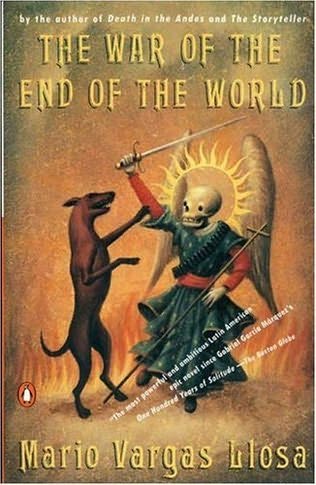
war-of-the-end-of-the-worldPeruvian author Mario Vargas Llosa, one of the finest writers in the world — perhaps, indeed, the finest writer — was awarded the 2010 Nobel Prize for Literature by the Royal Swedish Academy yesterday.

Vargas Llosa wrote two of the best novels I’ve ever read: Time of the Hero, based on his experiences at a Peruvian military academy — which caused such an uproar that a thousand copies were publicly burned by military authorities — and The War of the End of the World, which he’s called his finest book. This historical novel of End-of-the-19th-Century Brazil reads like epic fantasy, chronicling the apocalyptic fate of the small town of Canudos, in the grip of a visionary prophet and home to the country’s outcasts — prostitutes, bandits, and beggars — and a place where money, taxation, and marriage do not exist. Until the Brazilian government deems it must be destroyed at any cost.

In total he’s written over 30 novels and plays, including The Green House, Conversation in the Cathedral, Aunt Julia and the Scriptwriter, and In Praise of the Stepmother.

Vargas Llosa ran for President of Peru in 1990, but lost to Alberto Fujimori, who was later convicted of bribery, embezzlement, and human rights violations and sentenced to 25 years in prison. In 1976 Vargas Llosa famously punched his former friend Gabriel García Márquez (author of One Hundred Years of Solitude and a 1982 Nobel Prize winner himself) in Mexico City, and the two have reportedly not spoken in decades.

The Nobel Prize for Literature is regarded as the highest award a writer can receive. Previous winners have included Guenter Grass, Toni Morrison, William Golding, Saul Bellow, Samuel Beckett, Jean-Paul Sartre, John Steinbeck, Ernest Hemingway, Winston Churchill, William Faulkner, and George Bernard Shaw.

E-Books That Cost More Than Hardcovers?

E-Books That Cost More Than Hardcovers?

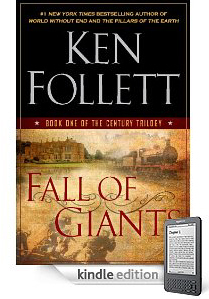
fall-of-giantsThe New York Times is reporting that two recent bestsellers — Fall of Giants by Ken Follett, and Don’t Blink by James Patterson and Howard Roughan — are priced higher in their e-book versions than in print by Amazon.com.

As of press time, Fall of Giants, published by Dutton on Sept 28, is $19.99 for the Kindle edition, and just $19.39 for the physical book (all 1,008 pages).   Don’t Blink is $14.99 for the e-book, or just $14 for the hardcover.

As you can imagine, this has ignited something of a firestorm in Amazon’s Customer Reviews section, resulting in both novels taking a critical drubbing.

Fall of Giants has 63 five-star reviews versus over 200 one-star reviews, with comments ranging from:

Refuse to pay this much for an ebook

and

Let’s boycott the gougers

Read More Read More

Heroic Fantasy Quarterly 6 Arrives

Heroic Fantasy Quarterly 6 Arrives

hfq-bannerThe sixth issue of online fiction zine Heroic Fantasy Quarterly appeared September 30.  What are you still doing here? Jump over to HFQ and check it out!

Contents this issue include the short stories “The Sea Wasp” by Robert Rhodes and “Heart of Man” by David Pilling, as well as poems from Charles Saplak and Shennandoah Diaz.

There’s also an editorial, which includes this amusing update on our pal Adrian Simmons:

After stumbling upon a rare opportunity to level-up, Adrian Simmons will be taking off the next two quarters at HFQ in order take a Numerical Analysis of Data course, as well as a prep course for the Fundamentals of Engineering test. Thus begins a six-month process akin to the development of the classic AD&D bard. If he passes, he looks forward to the ability to charm monsters.

Looking forward to the details at the World Fantasy Convention, Adrian. Bring the harp.

Past issues of HFQ have included contributions from Black Gate stalwarts such as Contributing Editor Bill Ward, Vaughn Heppner (our man!) and Euan Harvey,  as well as Matthew Wuertz, James Lecky, Jeff Crook, and many others. You can find the treasures of the past at their hearty Archives.

Heroic Fantasy Quarterly is edited by the mighty crew of Adrian Simmons, David Farney, William Ledbetter, and James Lecky. Art this issue is by Mariusz Gandzel.

Rigor Amortis: Love and Zombies

Rigor Amortis: Love and Zombies

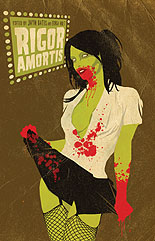
rigoramortisRigor Amortis, a collection of zombie erotica and romance flash fiction edited by Jaym Gates and Erika Holt, was officially released October 1.

According to Jaym, who came by our booth and entertained us during slow moments at Dragon*con, Rigor Amortis started out as a joke on Twitter, and quickly snowballed into a  real book.  A bizarre and strange book, but still a book. Check out this description:

Horror and erotica. Zombies and romance. Rigor Amortis.
       Maybe a tender love story is your thing, a husband doting on his wife’s rotting corpse. Or perhaps a forbidden encounter in a secret café, serving up the latest in delectable zombie cuisine, or some dirty, dirty dancing in the old-time honky-tonk. Voodoo sex-slaves and vending machine body-parts? You’ll find those here, too.
       Whatever your flavor, these short tales of undead Romance, Revenge, Risk, and Raunch will leave you shambling, moaning, and clawing for more.

Contributors include Armand Rosamilia, Jennifer Brozek, Annette Dupree, Alex Masterson, Edward Morris, and dozens more. The sexy and disturbing cover is by Robert “Nix” Nixon.  Rigor Amortis is $14.95 (print) and $2.99 (e-Book) for 148 pages, and published by Absolute XPress.

More details are available on the website.  Show us a little zombie love, and support a quality small press.

Writing: Serial Characters and the Book Deal

Writing: Serial Characters and the Book Deal

World Fantasy Award Nominee
World Fantasy Award Nominee.

A growing number of Black Gate authors have moved on to book deals, and some were published novelists before they appeared in the magazine.

Two of us, James Enge and myself,  landed book deals featuring recurring characters that had appeared in Black Gate short stories.

They were the Dabir & Asim stories for me (“Whispers from the Stone” and “Sight of Vengeance“) and the Morlock tales for James (six appearances in BG so far, starting with “Turn Up This Crooked Way” and “Payment Deferred,” and most recently the novella “Destroyer” in Black Gate 14).

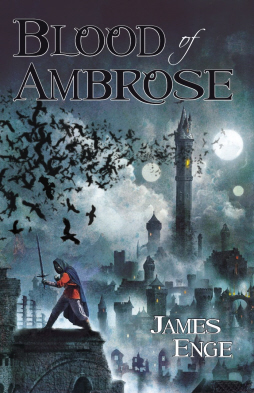
Back before James got nominated for the World Fantasy Award in the Best Novel category (for his first novel, no less! — that’s Blood of Ambrose, if you don’t have a copy yet) the two of us got talking one day about the connections between magazine sales and book deals.

We decided to turn the thing into a public back-and-forth discussion about writing serial fantasy characters, starting with a look at the idea that short story successes lead naturally to selling books.

I’ve captured and condensed that conversation here for your enjoyment.

Read More Read More

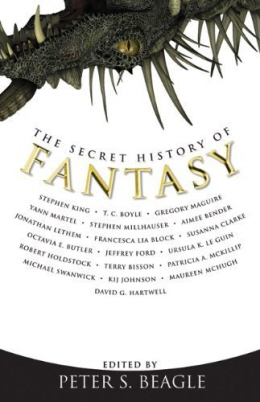
New Treasures: The Secret History of Fantasy, edited by Peter S. Beagle

New Treasures: The Secret History of Fantasy, edited by Peter S. Beagle

secret-history4This book has been sitting on my desk since I bought it from Jacob Weisman, publisher of Tachyon Publications, at Wiscon. My desk isn’t all that big, so every time my to-do list topples over, or I tell the kids to get rid of the copies of Titan Quest and, I dunno, maybe get some homework done for a change, there it is.

The problem with these anthologies is that they’re my weakness. They suck me in. I can resist the novels because, you know, I’m not ready for that kind of commitment. But the anthologies… they’re just harmless diversions, right? And when I sit down to finally get that Goth Chick post formatted for Sue, or clear out a few hundred ageing e-mail from the Black Gate in-box… well, one quick story first can’t hurt. And when the kids find me in the big green chair it’s two hundred pages later.

So, maybe I peeked at this one a bit.  Probably when I should’ve been answering that e-mail you sent me in August. But you’d understand if you had a copy of The Secret History of Fantasy in your hot little hands like I do.

Peter Beagle, who’s been conducting something of a one-man revolution in short fantasy over the last decade himself, has compiled a terrific collection of modern fantasy — the oldest stories here, Robert Holdstock’s “Mythago Wood” and Stephen King’s “Mrs. Todd’s Shortcut,” are from 1981 and 1984, respectively.  The book includes some of the most acclaimed fantasy tales in the intervening decades, including Steven Millhauser’s “The Barnum Museum,” Terry Bisson’s “Bears Discover Fire,” Neil Gaiman’s “Snow, Glass, Apples,” Jeffrey Ford’s “The Empire of Ice Cream,” and stories from Michael Swanwick, Jonathan Lethem, Maureen F. McHugh, Gregory Maguire, T.C. Boyle, and more.

There’s also an intro from Beagle, as well as two long essays, “The Critics, The Monsters, and the Fantasists,” by Ursula K. Le Guin, and “The Making of the American Fantasy Genre,” by David G. Hartwell.  Taken together, it’s an impressive package.  And a highly distracting one — take my word for it.