Pastiches ‘R’ Us: Conan of the Isles
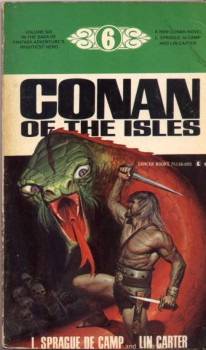 So far in the entries of my informal tour through the Conan pastiches—with a great guest shot from Charles Saunders on Conan the Hero—I’ve focused entirely on the “Tor Era,” the longest and most sustained period of new novels about Robert E. Howard’s Hyborian Age hero. Because of the sheer volume of books in the Tor line, which ran uninterrupted from 1982 to 1997, as well as most readers’ and reviewers’ indifference toward them, the Tor Era provides fertile ground for fresh criticism. It contains a few gems as well among the factory-line production schedule.
But I’ve neglected the earlier Conan pastiches, from publishers Lancer (Sphere in the U.K., later Ace in the U.S.) and Ballantine. Before Tor started its Conan factory with Robert Jordan’s Conan the Invincible, the world of Conan pastiches rested mostly in the hands of two men: L. Sprague de Camp and Lin Carter. They filled in a “Conan Saga” that they had imagined through a constructed timeline, and this framework extended into the Tor Era as well, although turning more overstuffed and inconsistent as the books piled up and eventually the whole series put itself to sleep and Howard burst back into print.
One of the results of de Camp and Carter’s addenda to Conan’s history is the odd, uncharacteristic, yet hypnotically entertaining Conan of the Isles. Years ago I wrote a detailed review of this 1968 novel for a forum posting. I’ve pulled up that old review and done some dusting, revising, and re-thinking to present the first “Pastiches ‘R’ Us” installment that examines the controversial First Responders of the neo-Conan world.
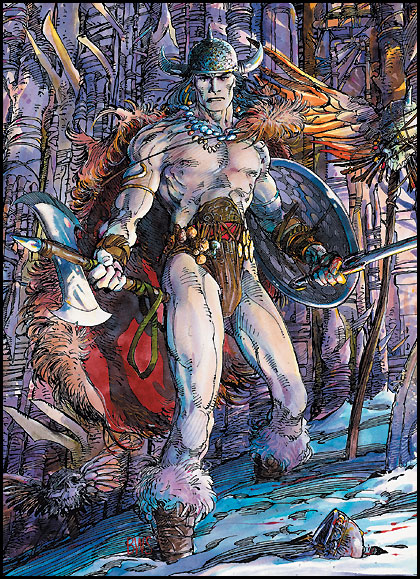
 It’s hard to add much about RE Howard to what’s been said here, but I’ll try.
 Conan the Unconquered
 Conan the Defender
 Conan the Hunter