Browsed by
Category: Books

Suddenly, I like Shelfari

Suddenly, I like Shelfari

sample_shelfI’m not usually one for social networking.  I had to be dragged on to Facebook by Bill Ward, who got tired of Black Gate not having a Facebook page and finally just created one, and then made me an administrator. 

Now we have nearly 400 fans, plenty of new subscribers, and I spend countless hours every week mesmerized by posts about sick dogs, guacamole recipes, and other critical updates from hundreds of “friends,” most of whom I’ve never even met. All when I should be working to return the last of the fiction submissions to Black Gate from last summer, of course.  Thanks, Bill.

One thing about social networks is that they come in all shapes and sizes. One of the more interesting I stumbled upon last year was Shelfari, a social network for book lovers.  They had a pretty neat widget to add a virtual book shelf showing off the titles you’ve read (or want to read) on your blog. It even works with Bebo, Blogger, Facebook, LiveJournal, TypePad, and Vox, and I don’t even know what most of those are.

Not interesting enough to join, of course. I’m distracted enough by Facebook (you suck, Bill) and Season One of Friday Night Lights on DVD. But I liked the book widget.

Then I discovered that Shelfari members can post reviews. They can even, for example, say kind things about Black Gate 14, things like:

Another great issue of fantasy fiction. Outstanding stories in this issue are: “The Bonestealer’s Mirror” by John C Hocking, “The Word Of Azrael” by David Surridge, “Destroyer” by James Enge, and “The Price Of Two Blades” by Pete Butler. Highly recommended.

Several issues of Black Gate have been reviewed in fact, including BG 3, BG 4, BG 7, BG 10, and BG 12.

OK, at the moment all the reviews are written by a single guy, Little Timmy B, who’s just become my favorite subscriber (replacing Bill Ward, who’s still in the dog house.) But suddenly I can see a future where hundreds of readers are using social networking to rave about how great Black Gate is, instead of reporting what Jon Stewart is up to. (And in this future, we’ll all have jet packs.)

Suddenly, I like Shelfari.  And you should too.

Everett F Bleiler, April 30, 1920 – June 13, 2010

Everett F Bleiler, April 30, 1920 – June 13, 2010

years-best-sf-1949aEverett F. Bleiler, one of the most accomplished early anthologists of science fiction and fantasy, passed away this week in Ithaca, NY.

Bleiler created the tradition of “Year’s Best Science Fiction” anthologies with his co-editor, T.E. Dikty, starting with The Best Science Fiction Stories: 1949. He continued the series until 1954, producing a series of volumes that are highly collectible — and still very readable — today. Since the mid-1950s, few years have passed without at least one anthologist following in Bleiler’s footsteps with a “Year’s Best Science Fiction” anthology.

He produced dozens of highly-regarded anthologies, collections, and nonfiction books on all aspects of science fiction and fantasy between 1948 and 1998, including the Checklist of Fantastic Literature (1948), Imagination Unlimited (with T. E. Dikty, 1952), A Treasury of Victorian Detective Stories (1979), and A Treasury of Victorian Ghost Stories (1981).

Two of his detailed retrospectives of early science fiction, Science-Fiction: The Early Years (1990) and Science-Fiction: The Gernsback Years (1998), were nominated for the Hugo Award.

Bleiler received the World Fantasy Award for Life Achievement in 1988, the First Fandom Hall of Fame award in 1994, and the International Horror Guild Living Legend award in 2004.

On a personal note, I’ve spent many hours curled up with Bleiler’s volumes, especially his Best Science Fiction Stories and the massive The Gernsback Years, which details every science fiction story published in Gernsback’s Amazing Stories and Science Wonder.  The field has lost one of its finest editors and one of its leading scholars.

Frederick Faust, Bound for SF and The Smoking Land

Frederick Faust, Bound for SF and The Smoking Land

smoking-landThe Smoking Land
Frederick Faust writing as George Challis (Argosy, 1937)

I’m returning to the subject of Frederick Faust for the third time this year. But I have a specific, Black Gate-centered justification for it: I wish to unearth his single novel of science fiction, a piece of Lost World and Weird Science strangeness called The Smoking Land.

Faust, under Max Brand and his eighteen other pseudonyms, made his reputation with Westerns, but he did write in almost every genre that appeared in the story magazines of the time. He penned historical adventures, detective tales, mainstream short stories for the “slicks,” and espionage yarns. In 1937, he authored his one true science-fiction work, the novel The Smoking Land, which appeared serially under the pseudonym George Challis in the old warhorse of the pulp world, Argosy, starting in the May 29 issue.

(In fact, this Saturday evening I stood face-to-face with one of the actual issues of Argosy in which the novel was serialized, housed in the pulp collection at Author Services in Hollywood. Actual surviving issues of the self-destructive pulps are rare finds, and they need special protection to survive. And hey look! One of the Argosy installments of The Smoking Land shares space with the Cornell Woolrich story “Clever, These Americans”! . . . Okay, so maybe only I care.)

Read More Read More

Read the first three chapters of The Way of Kings

Read the first three chapters of The Way of Kings

way-of-kingsTor.com has put the first three chapters of Brandon Sanderson’s new epic fantasy novel, The Way of Kings, online for free.

Sanderson is the author of Warbreaker, the Mistborn trilogy (Mistborn, The Well of Ascension, and The Hero of Ages), and the book that got him his own publicist, The Gathering Storm, the 12th and final novel in Robert Jordan’s Wheel of Time series, written from extensive notes Robert Jordan made before he died.

Charlene Brusso reviewed Warbreaker for the Black Gate blog here, calling Sanderson an “expert at spinning fantasy stories packed with memorable characters, crisply detailed settings, unique magic, and major helpings of intrigue.”

The Way of Kings is the first book of The Stormlight Archive series. Set in the world of Roshar, where mighty storms cause trees to pull in branches, grass to retract into the ground, and cities to be built only where there is shelter, the novel follows a large cast of characters, including medical apprentice Kaladin, reduced to slavery in a war that rages on a ruined landscape called the Shattered Plains. 

The Way of Kings will be available August 31st, and weighs in at over 1000 pages. Looks like Sanderson served his apprenticeship under Jordan well.

If you haven’t already, you’ll need to register at Tor.com to read the 50-page excerpt.  Registration is free and fairly painless.

Looking Back on the first Sword and Sorceress

Looking Back on the first Sword and Sorceress

sword-and-sorceress-iSword and Sorceress I

Edited by Marion Zimmer Bradley (DAW, 1984)

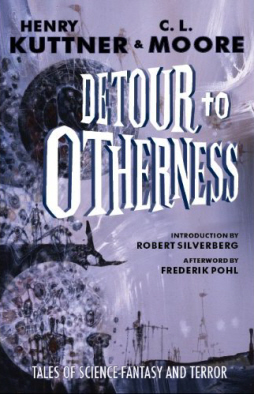
The late author and editor Marion Zimmer Bradley probably could not have dared to guess in 1984 that her anthology series, Sword and Sorceress, would turn into a yearly and best-selling institution of fantasy short stories that would extend past her death. That the first volume in the series bears a Roman numeral shows that she did believe the anthology would see at least two volumes; that it now reaches into the mid-twenties (with the twenty-fifth due this year) shows just how much sword-and-sorcery has embraced inclusiveness during the last three decades. Strong female heroines are now a key part of the genre, completing what C. L. Moore started with her amazing — especially for the time — Jirel of Joiry stories of the 1930s. Bradley invokes Moore a few times in her introduction, and the book is dedicated to both Moore and Jirel.

Over a quarter of a century after publication, the first Sword and Sorceress holds up quite well, while still showing some of the growing pains of sword-and-sorcery in the 1980s. Reading through it makes it clear that the sword-and-sorcery revival still had a distance to go in 1984. About three quarters of the stories Sword and Sorceress I are good-to-excellent, but like all anthologies it has rough patches, some shaky editorial picks, and a few pieces that don’t hit at all. As the series had just started, Bradley did not have a large pool of submissions to pick from. Later volumes would improve the mix as the number of works submitted increased, but this is the start, and therefore worth reading for its historical importance, saggy spots and all.

Read More Read More

Welcome to the Digital Age, Before the Golden Age

Welcome to the Digital Age, Before the Golden Age

btga2One of my favorite books — among a host of many favorites, of course, many many favorites, collected over decades of careful reading in a wide variety of genres, it’s hard to choose, depends on the time of day, naturally, and what we’re talking about, whether you want to include non-fiction, and it’s difficult to judge pleasure reading against, you know, literature like The Sound and the Fury, which was great until the part where I quit reading and pretty much gave up. That Quentin character though, man, what a dick.  Anyway. Where was I.

Aww, screw it.  My favorite book of all time, bar none, is Isaac Asimov’s Before the Golden Age.

Why is it so great?  Dude, it’s totally undiluted science fiction awesomeness. Asimov collected the early pulp stories that first hooked him on science fiction, from magazines such as Amazing Stories, Astounding Stories of Super Science, and Science Wonder Stories, in a 900-page omnibus that captured the heart and soul of early American SF.

Published between 1931 and 1938 — the year that John W. Campbell took over Astounding and ushered in what’s now generally referred to as the “Golden Age of Science Fiction” — the stories in Before the Golden Age feature brain stealers from Mars, two-fisted scientists battling monster hoards, amateur time travel  (“Kiss 1935 good-bye!”), shrink rays, civilizations in grains of sand, humans in rags taking on entrenched alien conquerors, killer robots, giant brain monsters,  and much more.

Read More Read More

Paizo Announces Pathfinder Tales

Paizo Announces Pathfinder Tales

winter-witchPaizo, publisher of the Pathfinder role playing game, has announced a new fiction line called Pathfinder Tales.

It’s a move that has a certain inevitability. When TSR announced a line of novels to support Dungeons and Dragons — beginning with the Dragonlance novels of Margaret Weis and Tracy Hickman in 1984 — it was an instant hit, and helped catapult TSR to new success as the fourth largest publisher in the country.

For a brief time in the early 90s, TSR’s novels far surpassed their game products in sales. At some point virtually every major adventure game publisher — including White Wolf (Vampire the Masquerade), Game Designer’s Workshop (Traveller), FASA (Battletech, Shadowrun), and Chaosium (Call of Cthulhu, Pendragon) — has experimented with a fiction line, with varying success.

Now that Pathfinder has grown to be the system of choice for many gamers, something similar was clearly in the cards. This from the official announcement:

Pathfinder Tales novels are standalone adventures written by some of fantasy’s bestselling authors…  journey through Golarion as you never have before, through the eyes of canny warriors and flippant scoundrels, and see firsthand why the Pathfinder world has twice earned the prestigious ENnie Award for Best Campaign Setting.

Read More Read More

Pyr Books Fall Winter 2010-2011 Season

Pyr Books Fall Winter 2010-2011 Season

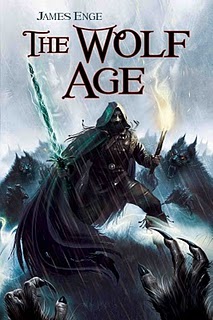
thewolfage1Editorial director Lou Anders has posted Pyr’s complete Fall Winter 2010-2011 catalog online.

There’s a lot of great stuff to look forward to, including James Enge’s third Morlock book, The Wolf Age:

Wuruyaaria: city of werewolves, whose raiders range over the dying northlands, capturing human beings for slaves or meat. Wuruyaaria: where a lone immortal maker wages a secret war against the Strange Gods of the Coranians. Wuruyaaria: a democracy where some are more equal than others, and a faction of outcast werewolves is determined to change the balance of power in a long, bloody election year.

Their plans are laid; the challenges known; the risks accepted. But all schemes will shatter in the clash between two threats few had foreseen and none had fully understood: a monster from the north on a mission to poison the world, and a stranger from the south named Morlock Ambrosius.

Morlock first appeared in Black Gate 8, in the story “Turn Up This Crooked Way.” 

Now he’s all grown up, and taking on Strange Gods in werewolf cities.  It makes us proud.

hornsofruinThere’s plenty more on the Pyr list to command your attention, including Tim Akers’ The Horns of Ruin, which sounds very intriguing indeed:

Eva Forge is the last paladin of a dead God. Morgan, God of battle and champion of the Fraterdom, was assassinated by his jealous brother, Amon… When a series of kidnappings and murders makes it clear that someone is trying to hasten the death of the Cult of Morgan, Eva must seek out unexpected allies and unwelcome answers in the city of Ash. But will she be able to save the city from a growing conspiracy, one that reaches back to her childhood, even back to the murder of her god? 

All this plus Pierre Pevel’s The Cardinal’s Blades, Adrian Tchaikovsky’s Salute the Dark, and new novels from Paul McAuley, Mark Chadbourn, Mark Hodder, Jasper Kent, Sam Sykes, Joel Shepherd, James Barclay, and many more.

Check out all the details (and the fabulous cover art) here.

The Spider vs. The Empire State

The Spider vs. The Empire State

Layout 2The Spider Revival: Part III

The Spider vs. The Empire State
Norvell Page (Ace of Aces Books, 2009)

I have previously written about the revival in trade paperback of the adventures of The Spider, the bloodiest of all 1930s pulp heroes. My reviews of The Spider: Robot Titans of Gotham and The Spider: City of Doom, both published by Baen, contain plenty of background about the character and his main author, Norvell Page, so if you’re unfamiliar with the blood-soaked vigilante insanity of this region of the pulp universe, I’d advise that you start there.

This third collection of Spider adventures comes from a new publisher (Ace of Aces Books) and presents for the first time three connected novels that were originally published consecutively in The Spider Magazine. These three novels, which ran in the September, October, and November 1938 issues, form “The Black Police Trilogy,” one of the darkest episodes in the character’s history. Norvell Page and his editor Harry Steeger decided to put newspaper headlines and national fears into their pulp adventures: an allegory for Nazism, viewed as it might arise in the middle of contemporary New York State. It Does Happen Here might serve a good alternate title.

The first book of the trilogy, The City That Paid to Die, came out exactly a year before the Nazi invasion of Poland. The U.S. and the rest of the world were in an uneasy position with the seemingly unstoppable rise of fascism in Europe and the apparent weakness of the liberal democracies. A few small fascist sympathetic groups bubbled up in the U.S., but by 1938 the isolationist nation was becoming concerned about the ambitions of the regimes of Adolf Hitler and Benito Mussolini. It was an era ripe for terror and panic—and Norvell Page seized those feelings to create a pulp adventure uncomfortably close to 1938 concerns.

Read More Read More

Because One Frederick Faust Post Isn’t Enough: The Sacking of El Dorado

Because One Frederick Faust Post Isn’t Enough: The Sacking of El Dorado

frederick-faust-in-brentwood“So it will be when we are dead that perhaps our lives will stand for something.”

“A typewriter is almost like a human being to me.”

“Have recently sent thirty-eight poems to our leading magazines and received thirty-eight poems back from our leading magazines.”

“All that can save fiction is enormous verve, a real sweep, plus richness of character, blood that can be seen shining through.”

“Why is my verse so difficult, so dead, so dull to other people?”

—Frederick Faust, from various letters

I was surprised but pleased to see the positive reaction that my post about Frederick Faust, a.k.a. Max Brand, received last week. It was enough for me to want to spend an extra week on the author, specifically to take a closer look at an individual volume of his work. Faust has rarely received this sort of attention, as John C. Hocking pointed out in the comments last week, and so I’ll spend another Tuesday of your time talking about a man who was not only the most prolific of the pulpsters, but one of the most skilled and literary.

Read More Read More