No doubt somewhere someone is writing a vampire series based on Hamlet (there is, alas, a Romeo and Juliet and Vampires novel) but, for now, they are separate categories for two of my reviews posted on the current (mid-May) SF Site.
The first is Orson Scott Card’s retelling of Hamlet, which pretty much follows the play’s plot, but with a twist at the end I suspect the original author no more would have thought of than, well, making Hamlet a vampire.
The second is Cherie Priest’s kickoff of an “urban fantasy” (a term which I take to mean “vampires who live and suck blood in cities”) called Bloodshot, featuring Raylene Pendle (aka Cheshire Red), and thief for hire who also happens to be a slightly neurotic vampire.
Are you a Tolkien imitator? A riffer? A rejector? One way or the other, if you’re writing epic fantasy, the Oxford professor is sitting on your shoulder, sniggering and blowing dirty pipe smoke up your nose.
It doesn’t matter that you’ve never read Lord of the Rings; declaring Conan the Cimmerian to be your only true love won’t save you. The man with two “R”s didn’t invent the field, but he dominates it to the extent that we all write in his shadow.
The Sorcerers’ Plague
David B. Coe
Tor (496 pages, $7.99, February 2009 (originally December 2007))
Reviewed by Bill Ward
The Sorcerer’s Plague from David B. Coe is the first book in a planned trilogy entitled The Blood of the Southlands, which takes place in a different section of a world already established in Coe’s previous series, The Winds of the Forelands. While some characters and basic information is carried over from Coe’s previous series, familiarity with these elements is not necessary to the enjoyment of The Sorcerer’s Plague.
The Southlands are divided along racial and clan lines, and much of the back-story of this book goes into describing the various divisions and antagonisms between its competing peoples. No love is lost between the Qirsi, white-haired and pale-eyed sorcerers, and the Eandi, dark-haired people incapable of magic. Between these two racial groups are the Mettai and the Y’Qatt, people that inhabit the Companion Lakes Region in which most of the book’s action takes place. These two groups blur the distinction between the races as the Y’Qatt are Qirsi who refuse, for religious reasons, to use any magic, and the Mettai are Eandi who are actually powerful magicians — only the Mettai use earth and blood magic rather than the Qirsi’s channeling of their life essence for purposes of sorcery. The competing abilities and philosophies of these groups are fertile ground for the plot.
City of Bones by Martha Wells
Tor Books (383 pages, hardcover, June 1995)
It’s always fun to find a fantasy book that isn’t based on medieval Europe. City of Bones, by Martha Wells, is advertised as a story which draws on the Arabian Nights, and it does not have genies and magic lamps, but certainly brave thieves and dangerous deserts. It also contains a little bit of steampunk and a post-apocalyptic element.
Our hero Khat is a relic dealer, which is to say, a shady and unlicensed archeologist-for-profit. It seems that long ago, the world was wetter and cooler and more hospitable, and artifacts from that time have great value — not to mention, very occasionally, magic powers. Now, most of the world is covered by a rocky desert called the Waste. Khat is a krisman, a hardy marsupial humanoid who is well-adapted to the Waste, but reviled in most cities. Charisat, where he lives, may be one of the richest trading cities in the world, but it’s a cruel and hierarchical place.
Khat and most of the people he knows are noncitizens, and they take it for granted that they have very few rights. They aren’t even permitted to use “real” money, just tokens that serve the same purpose. Khat and his associates are very careful never to speak of buying artifacts; they barter for them. Even using the word “buying” could bring the Trade Inspectors down on them, and if the Trade Inspectors take them away, they won’t be coming back.
This tension between the powerful and the powerless is one of the driving forces of the story. When Khat is hired by a Patrician to help explore a nearby ruin, he takes it as read that he’ll probably be betrayed. It only becomes worse when he realizes that the Patrician is actually a Warder, a law enforcer who uses sanity-destroying magic. Khat becomes more and more involved in events, but he never entirely trusts any of his companions, even fellow relic dealer Sagai, his long-time partner. His paranoia is at least partly justified.
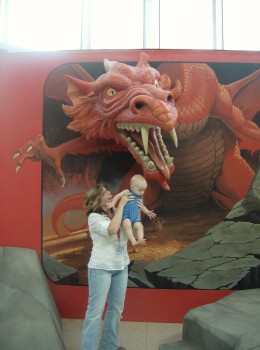
Did I say I was an unapologetic geek? My wife, Amber, offered our son to a dragon at GenCon!
I’m an unapologetic geek. I don’t just watch genre shows and read genre books, I immerse myself in them. The ones that stay with me, that I actually decide to devote myself to, linger with me, becoming part of the fabric of my internal world, the thought processes that help me deal with the mundane levels of reality. I analyze these cultural components, trying to pick them apart to figure out why the events unfolded the way they did and, more importantly, what I can learn from it. (For an example, consider how I found an excuse to talk about Thoron my Physics blog, using the film as a lesson in how to be a good scientist.)
Black Gate is also dedicated toward this sort of exploration, publishing not just fantasy fiction but also thoughtful commentary on the genre, in both the magazine and also on this blog. (At this point, I feel the need to point out Aaron Starr’s recent excellent post “The Gods Never Urinate,” which is an exceptional case of this.) Even on our Twitter feed, @BlackGateDotCom, we try to share as much of this sort of material as we can.
But let’s really think about what’s going on here. The genre of science fiction and fantasy, more than any other, reflect upon the fundamental nature of reality. They can do this literally, metaphorically, or (when at its best) in complex combinations of the two. So you have reality, and then you have the genre literature which is reflecting upon that reality.
And the truly motivated fans don’t just read the literature. Remember, the word “fan” comes from “fanatic.” If you don’t obsess at least a little bit, you aren’t a fan, you’re just someone who likes the show or the book. Fans go a step further, and we reflect upon the genre. We reflect in our own minds, and through the written word, both online and in print, in podcasts and vidcasts, and in person at gaming stores, comic shops, bookstores, conventions … or, let’s be honest, any time more than two of us are in contact with each other. The depth of the analysis can vary widely, of course, but that reflection on the genre is the defining trait of fandom.
Fandom is the process of reflecting upon the reflection of reality. …
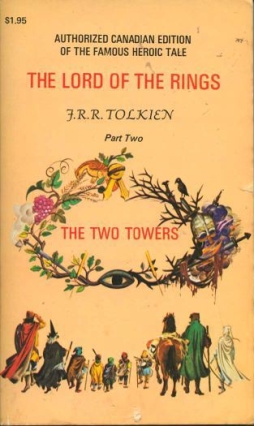
This is the second of three posts prompted by a recent re-reading of The Lord of the Rings. As I said in the first post, I went back to the book with the general idea of approaching it as one would a medieval saga, rather than a contemporary novel, and seeing what struck me as a result. I wrote in that post about what it seemed to suggest to me about Tolkien’s sense of character, and next week I intend to write about his use of irony — or, if you prefer, an anti-irony that shows how good can emerge out of apparent evil.
But this week I want to consider the aspect of the work which is perhaps the least saga-like thing in it, and something which has been criticised even by readers who have generally liked the book. And that is Tolkien’s depiction of landscape, and his approach to the natural world. Specifically, his tendency to describe his settings in detail.
I should say firstly that I am not one of the readers who dislikes the detail of the book. I generally prefer long books; I think the tendency to brevity is natural for stage and film dramas, but I’m not convinced it’s either natural or desirable in prose narratives like the novel or the romance. That is, the short story obviously has to be brief, and you can get certain effects from stories of certain lengths. But when you’re talking about a novel-length work, I think there are many approaches one can take; and I think that sometimes the best books are made out of digressions and an author exploring obsessions at the risk of apparent narrative shapelessness.
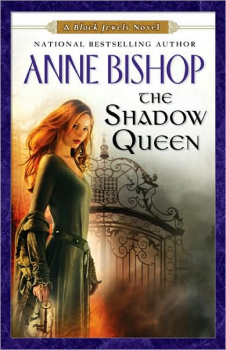
The Shadow Queen
Anne Bishop
Roc (368 pp, $7.99, March 2010 mmp (originally March 2009))
Reviewed by Thomas M. MacKay
Anne Bishop burst onto the fantasy scene in 2001, releasing 12 fantasy novels in the last 8 years. An accomplished epic story teller, her work features magic in strange and edgy forms, where power, sexuality and love become hauntingly bound with darker impulses. The critically acclaimed Black Jewels trilogy introduced a world of a power-stratified society where those with the most power seem to be the least stable, living on the knife-edge of control and constantly at risk of being overtaken by storms of rage and desire – and other more sanguinary passions.
The Shadow Queen marks the seventh novel in this series, and explores the issues faced by one of the lesser lands attempting to recover after the war of power and dominion between the Blood was conclusively ended by the magic of the Witch of Ebon, Askavi.
Theran Grayhaven is the last of his line, a Blood family that had ruled the land of Dena Nehele for generations until it was taken over by the corrupt Blood when Theran was just a small child. Raised in a rebel mountain camp, Theran only knows war, and finds himself at a loss when peace suddenly arrives. His war-torn country is on the edge of collapse, its people in chaos, the magic-less landen still chafing at the rule of the powerful Blood, and few of the Blood remaining in Dena Nehele to aid in the rebuilding. Theran knows he needs a Queen of the Blood, someone who follows the old ways, who believes in the responsibility of stewardship. He needs a Queen with the strength to deal with the struggle of rebuilding, the grace to evoke loyalty in a conflicted people, and the power to claim authority over the Blood. He only knows one place to ask for help in finding such a Queen, at the Keep at Black Mountain, where the most powerful and unpredictable Blood hold court.
Confession: I’m a top 10/top 100/top whatever list addict. If I find an article on a subject about which I’m even remotely interested, and written in the form of a numbered list, I’ll generally stop to read it. That chance increases when said list is arranged in ascending or descending order of quality.
I fully admit that many top 10/ top 100/top whatever lists are contrived hit count fodder (slugging something a “top 10” anything is guaranteed to increase the number of visits to your web site–you’re welcome Black Gate editors!), but occasionally these lists serve a worthy function. For example, if I’ve just finished The Rise and Fall of the Third Reich or Flags of Our Fathers and am looking for another good World War II title, I’ll Google “top 10 world war 2 histories.” This practice typically generates a good suggestion or two–and another “top 10” article to read.
Top 10/top 100 lists are also flashpoints for debate, often stirring up vigorous agreement or righteous anger and indignity. I generated an angry response with my Top 10 Fantasy Fiction Battles of All-Time, in which former Cimmerian blogger Al Harron took me to task for excluding Robert E. Howard, and also for including some borderline “fantasy” choices. Hey Al, let’s still be friends, okay?
Which leads me to the point of this post. Have you ever typed “top 100 fantasy novels,” or “top 10 fantasy books,” into your search bar? If not, I’ll save you the work. You get this site, the “Top 100 Fantasy Books”.
I’ve been sitting here all day trying to figure out what a goth chick’s equivalent of “wishing on a star” is.Somehow “wishing on my voodoo doll” doesn’t sound right, “wishing on my crystal skull” makes me sound like some sort of twisted, California bunny-hugger, and wishing on my ankh makes me seem like a hopeless Hot Topics poser.
In any case, trust me when I say that wishes come true, whatever media you do it on.
A couple of weeks back I told you that my favorite New Orleans ghost story had finally been made the subject of a book, which I’d been wishing for so hard that during one Rum-drink soaked evening on Bourbon Street, I (think) I vowed to do it myself.
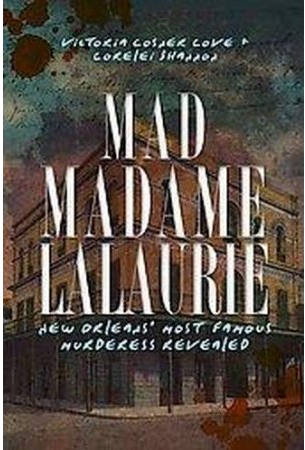
But earlier this year, along come authors and life-long partners-in-crime Victoria Cosner Love and Lorelei Shannon to finally give Madame Delphine LaLaurie and her sadistic house of horror the real literary treatment.I was already excited to finally get to the bottom of this oft-told-but-rarely-documented tale, but making the acquaintance of these two ladies was simply icing on the Death by Chocolate cake.
It is therefore my sincere pleasure to introduce you to two fellow Goth Chicks and the entirely entertaining historians behind the book Mad Madame LaLaurie…
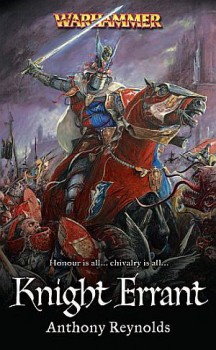
Knight Errant
Anthony Reynolds
BL Publishing (411 pages, $7.99, 2008)
Reviewed by Bill Ward
Every race or culture in Warhammer has fairly clear antecedents — Dark Elves are reminiscent of Moorcock’s Melnibonéans, Orcs and Goblins have their ultimate roots in Tolkien, and human societies like the Norsca and Kislivites have obvious historical counterparts. But it’s almost odd that the Bretonnians, a society modeled on Medieval France, have received as little attention as they have because, when most people think of secondary world fantasy, it is Medieval Europe that immediately springs to mind as the foundation for such worlds. Not so in Warhammer, which overwhelmingly focuses on the territory of the Empire, a society modeled on the Renaissance principalities of Germany.
But with Knight Errant, Anthony Reynolds sets out to give the Bretonnians their due, with what is obviously the first book of a planned series chronicling the adventures of a young knight named Calard. Calard is the first son and heir of the Lord Garamont, castellan of Bastonne, one of the primary dukedoms of the realm of Bretonnia. Bretonnia is patterned on Medieval France, with similar names, chivalric code, heraldry, emphasis on mounted combat, and feudal structure. But this is also the world of Medieval romances such as the Song of Roland and Le Morte D’Artur, complete with a Lady in the Lake, magic weapons, and knights who have sworn to quest for the Holy Grail.
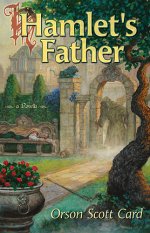 No doubt somewhere someone is writing a vampire series based on Hamlet (there is, alas, a Romeo and Juliet and Vampires novel) but, for now, they are separate categories for two of my reviews posted on the current (mid-May) SF Site.
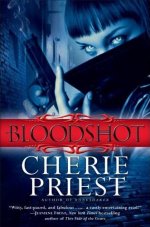 The second is Cherie Priest’s kickoff of an “urban fantasy” (a term which I take to mean “vampires who live and suck blood in cities”) called Bloodshot, featuring Raylene Pendle (aka Cheshire Red), and thief for hire who also happens to be a slightly neurotic vampire.
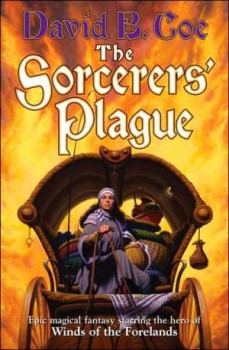 The Sorcerers’ Plague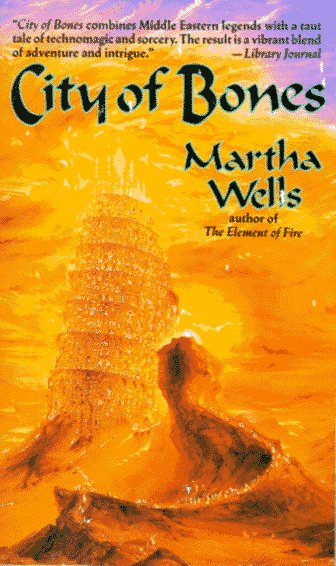
 This is the second of three posts prompted by a recent re-reading of The Lord of the Rings. As I said in
  The Shadow Queen
 Knight Errant