Browsed by
Category: Books

New Treasures: Righteous Fury, by Markus Heitz

New Treasures: Righteous Fury, by Markus Heitz

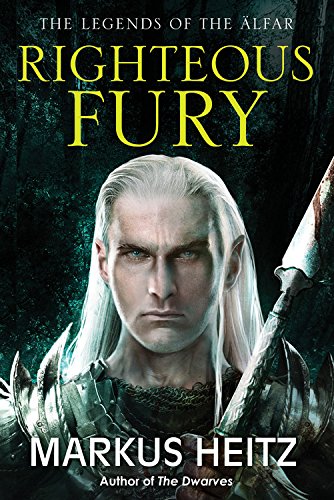
Righteous Fury Markus Heitz-smallAmerican readers, I think, could use a little more exposure to European fantasy. So I’m pleased to see Jo Fletcher Books bringing German author Markus Heitz to this side of the pond.
His series The Dwarves was an international bestseller, and now he launches a brand new series with Righteous Fury, originally published in Germany in 2009.

In Dsôn Faïmon, realm of the cruel and surpassingly beautiful artist-warriors known as the älfar, the military is planning a campaign against the enemies of the empire. Caphalor and Sinthoras are separately looking to enlist a powerful demon to strengthen their army, but the two älfar have very different goals.

While Caphalor is determined to defend the borders of the empire, the ambitious Sinthoras is intent on invasion. In order to expand the borders of Dsôn Faïmon, he has set his sights on the kingdoms of dwarves, elves, and men — a decision that, should it come to pass, may have far-reaching consequences for him and for the älfar.

Righteous Fury, the first volume of The Legends of the Älfar, was published by Jo Fletcher Books on February 10, 2015. It is 402 pages, priced at $24.99 in hardcover and $11.99 for the digital edition. It was translated from the German by Shelagh Alabaster.

See all of our recent New Treasures here.

Vintage Treasures: Pamela Dean’s Secret Country Trilogy

Vintage Treasures: Pamela Dean’s Secret Country Trilogy

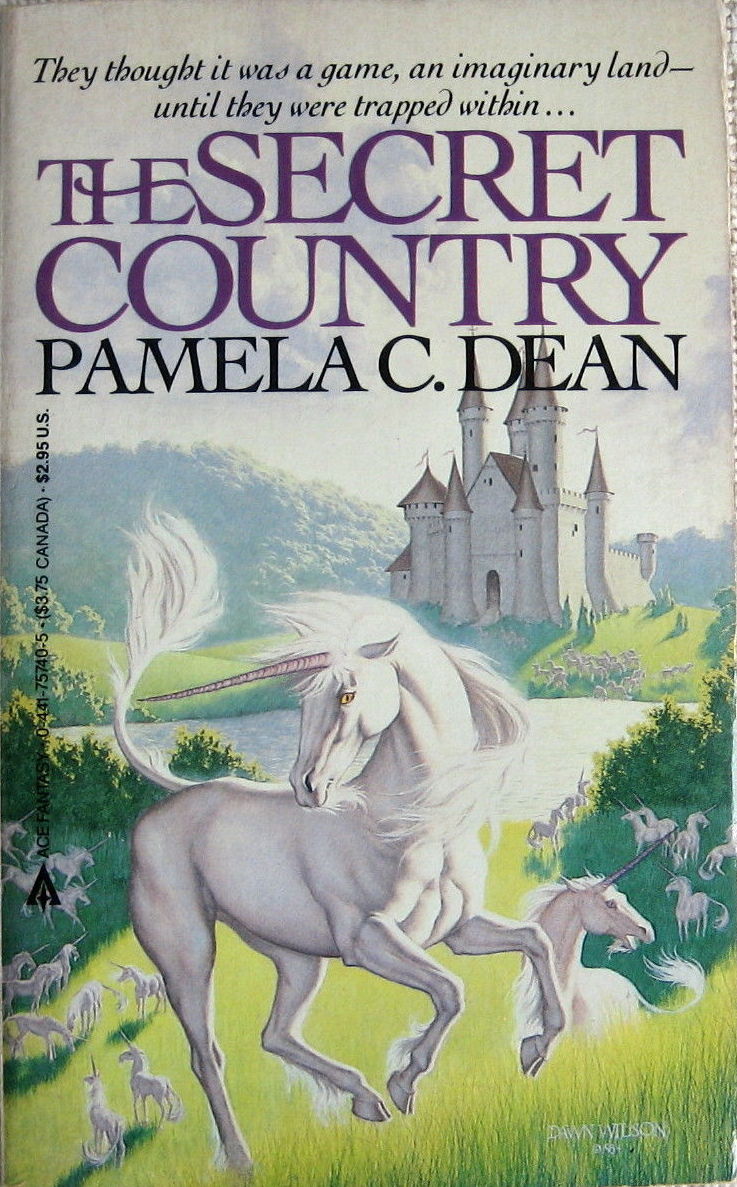
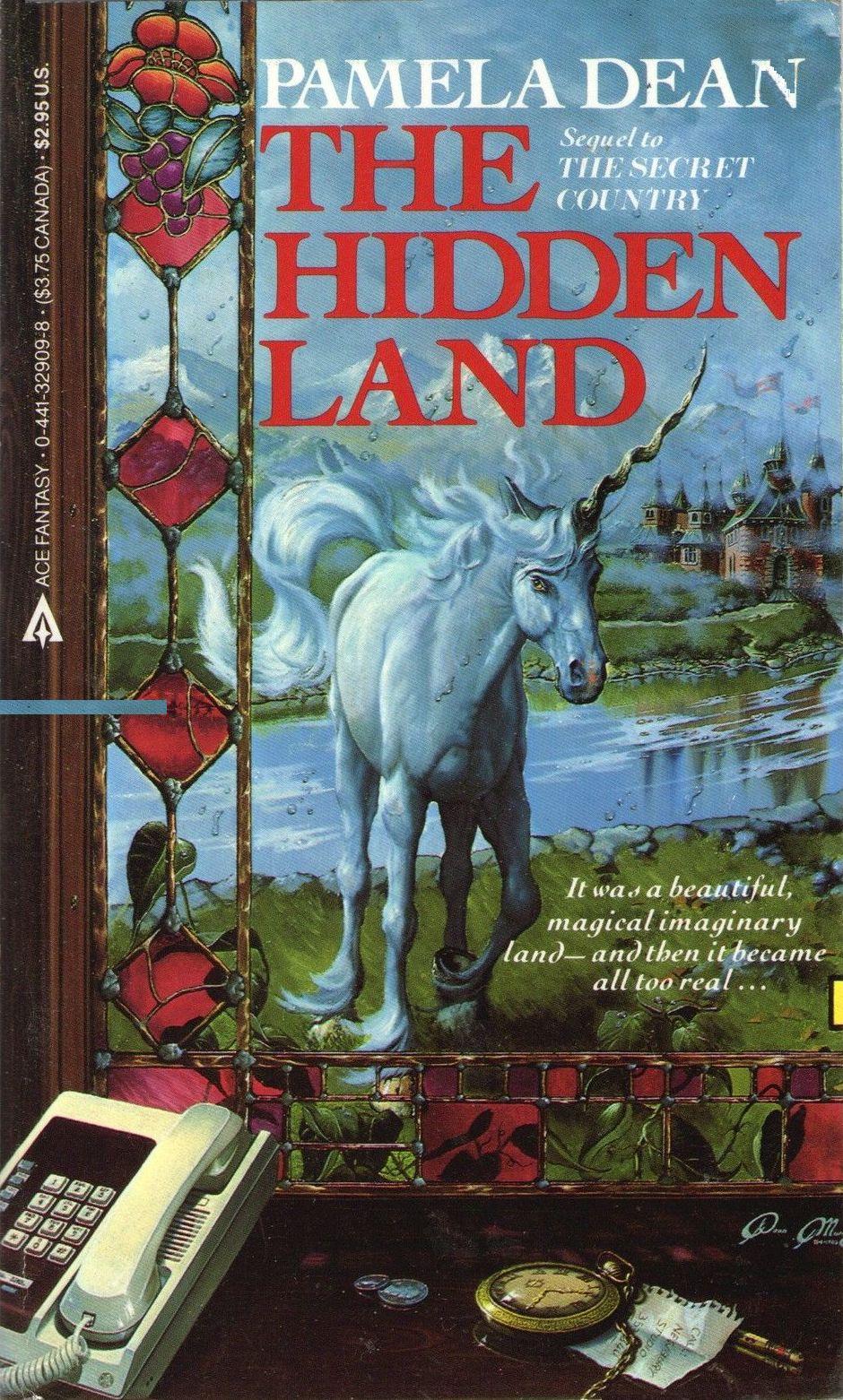
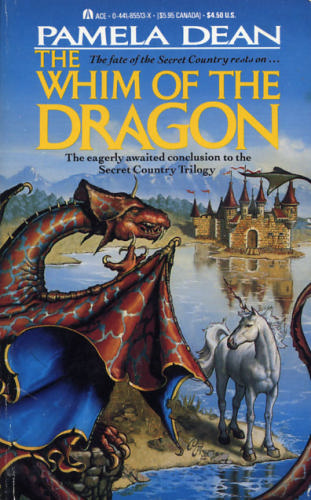
The Secret Country-small Pamela Dean Hidden Land-small Pamela Dean The Whim of the Dragon-small

We’ve been talking a lot about the early days of Dungeons and Dragons recently, and that put me in mind of the early novels directly inspired by fantasy role playing. The most famous examples are probably Andre Norton’s Quag Keep (1979) and Joel Rosenberg’s long-running Guardians of the Flame series, starting with The Sleeping Dragon (1983).

Pamela Dean’s Secret Country Trilogy is another early example, although it’s not as well remembered today. It began with The Secret Country (1985), featuring a group of friends who become stranded in the fantasy realm they thought they had created.

Read More Read More

Poul Anderson and the Northern Mythic Tradition: An Introduction

Poul Anderson and the Northern Mythic Tradition: An Introduction

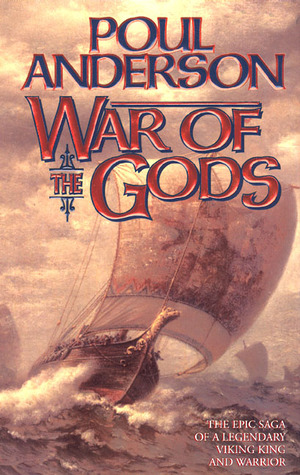
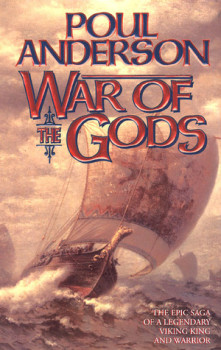
WaroftheGodsI first met Poul Anderson in the little, northern-Iowa town of Decorah, which is fitting, because Decorah has a very large Scandinavian population and takes evident pride in its Scandinavian heritage.

Only in a figurative sense, alas, do I say that I met Poul Anderson. Though, in the time in which I first read War of the Gods, there had been the slightest possibility that I might have met him, for Wikipedia reports that Anderson passed away on July 31, 2001, and the time in which I first became aware of his work was in 2001.

I read War of the Gods because of Dag Rossman (a professor at Luther College and a fellow fantasist likewise inspired by the Nordic mythic tradition) and a fantasy book club that he hosted. I didn’t stay with the club long, because I had to drive across the Minnesota-Iowa border from Lanesboro on back roads that were cold, desolate, and perilous during the winter months, and I had young children at the time, and sitters were always difficult to find – particularly because I was spending most of my money on publishing, with Nick Ozment, Mooreeffoc Magazine. Getting introduced to War of the Gods was the chief experience I took away from that book club – that and a copy of Tim Powers’s Expiration Date, which I always meant to return to the lender. Sorry, guy, if you happen to find me here.

War of the Gods struck me like a hammer-bolt out of the sky. How did I not know, I asked myself, that this book existed? Such is the way of many discoveries. Because, as I cast my memory back over the years, I realize that I should have known. I remembered a too-tall-for-his-age, very blonde, and (to my eyes, at least) somewhat ungainly kid whom I often had regarded with curiosity from afar. This was because I had noted, as so many in our tribe are astute at noting – particularly in those days when geek culture had not yet gone mainstream – that this guy read comic books and fantasy novels and science fiction novels. But I realized that I had no means with which to start a conversation with him, because he wasn’t reading what I was reading. Moreover, this kid’s first name was Poul. Perhaps because of his unusual name, perhaps because of his size, this kid, when I spied him from afar, was always solitary, and perhaps he preferred it that way. But he certainly seemed reasonable and social enough when I finally spoke to him, having come across him in the wilds of Eden Prairie (the parking lot of Lund’s grocery store may very well be “wild,” in the suburbs). Poul told me that Poul Anderson’s novels were awesome, that I should read them, that they were about Vikings and Norse mythology. He also said that I should be reading Walter Simonson’s Thor comics for Marvel, incidentally.

And then I never spoke to him again. And, unfortunately, I never took his recommendations.

Until much later, of course. Now, obviously, both of these oversights have been remedied.

Read More Read More

The Long Reach of Night: The Voidal Vol. 2 by Adrian Cole

The Long Reach of Night: The Voidal Vol. 2 by Adrian Cole

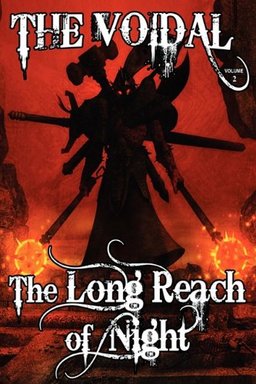
oie_862634UE7X7d5eLast year I reviewed (quite favorably, after an initial aversion to it) The Oblivion Hand (2001), the first collection of Adrian Cole’s stories about the Voidal. To say they’re excessive, over the top, and incredibly phatasmagorical barely does them justice. They are all those things and much more. These traits are carried over into the second volume, The Long Reach of Night (2011), an even better book than the first.

The Voidal is a man, cast out by the Dark Gods onto the currents of the Omniverse as punishment for some unknown sin. He has been stripped not only of his memory but also of his right hand, which has been replaced with the Oblivion Hand — a sentient-seeming thing that carries out the will of his tormentors. The Voidal is endlessly tossed about parallel dimensions and planets of the Omniverse, wholly against his will, a scourge in servitude to some celestial tribunal.

By the end of The Oblivion Hand the Voidal had acquired an associate, the froggy familiar, Elfloq. Together they set out on a search, from one hellish locale to another, for how to restore the Voidal’s lost memories and free him from the control of the Dark Gods.

Like its predecessor, The Long Reach of Night is a fix-up. Two of the stories appeared in magazines previously, but the rest appear here for the first time.

It is Elfloq who is the real protagonist of this book. For much of the time, the Voidal is lost somewhere in the aether. In each story the familiar is forced to hunt for clues to where his master is, ever formulating a plan to get one step closer to their goals.

Sometimes Elfloq is forced to undertake some dangerous task in exchange for information. In the first story, “The Preposterous Library,” he must travel through the pages of a book entitled The Skullworks to a pocket world of the same name.

Read More Read More

Wolfmen in the Wild West: A Review of What Rough Beast by James A. Moore and Charles R. Rutledge

Wolfmen in the Wild West: A Review of What Rough Beast by James A. Moore and Charles R. Rutledge

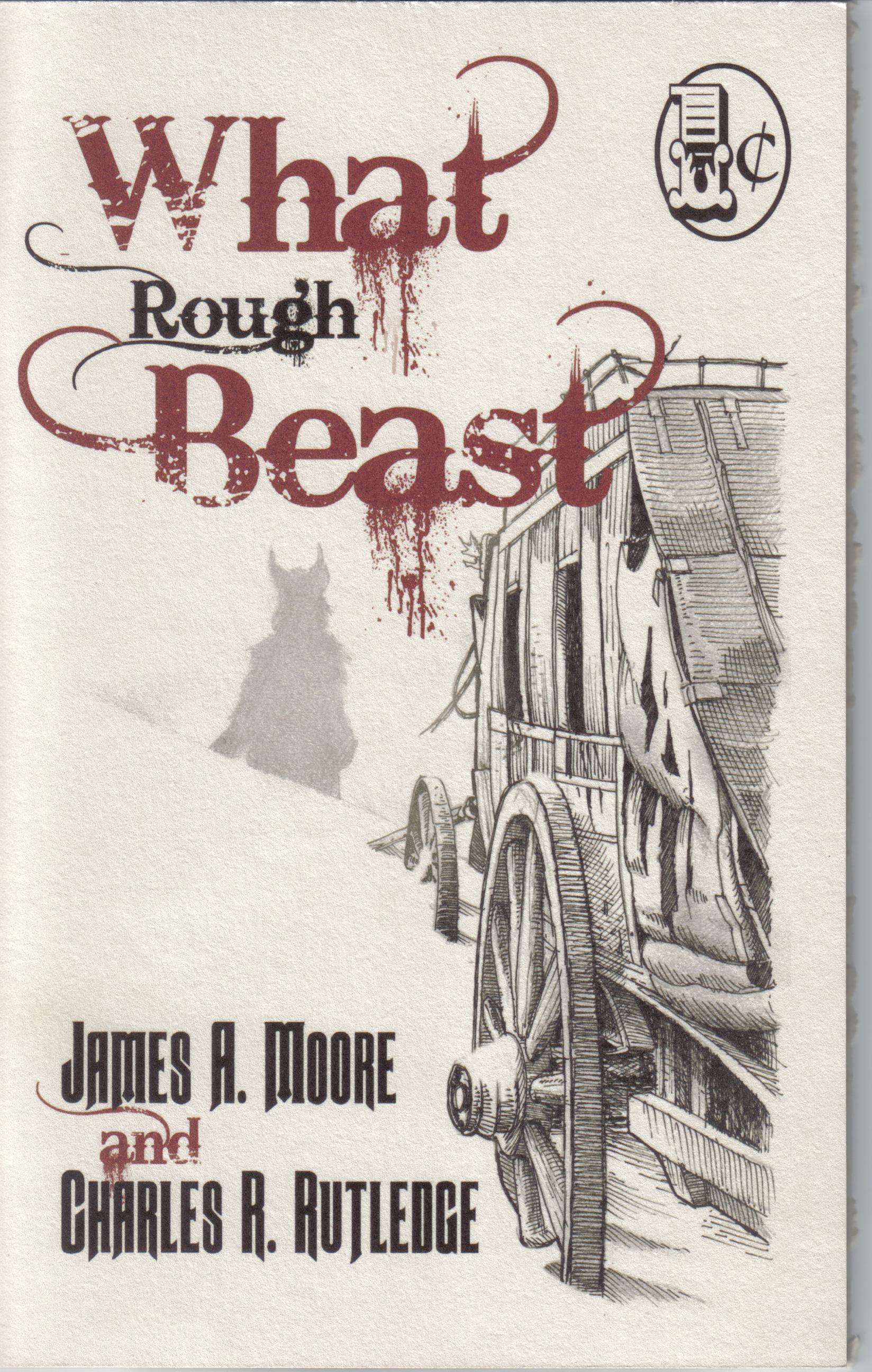
What Rough BeastWhat Rough Beast
James A. Moore and Charles R. Rutledge
Illustrations by Keith Minnion
White Noise Press
Signed and numbered hand-crafted Chapbook, 28 p., $17.00 ($15.00 plus $2.00 shipping)

Chapbooks have been around for a long time. For those who may be unfamiliar with them, they are short books usually consisting of a single story, although short collections are also common. They tend to focus on a particular work, or in the case of several stories, a particular writer.

The quality of chapbooks can vary. Before technology made it possible to produce professional level products, it was not uncommon to see chapbooks that were simply photocopies stapled together. These days, though, chapbooks can be works of art. Like the one we’re going to look at today. More on that in a bit.

Until recently, White Noise Press was not a publisher with which I was familiar. I was, however, familiar with the work of Moore and Rutledge, both collaboratively (here) as well as individually (here and here). These authors have a knowledge and love of the genre, and it shows in their work. Guys who are fans of Karl Edward Wagner and Manly Wade Wellman are all right in my book.

So when Charles contacted me not long ago inquiring if I would like a review copy of What Rough Beast, I thought about it for a while (1 while = 0.5 nanoseconds), then said yes.

Read More Read More

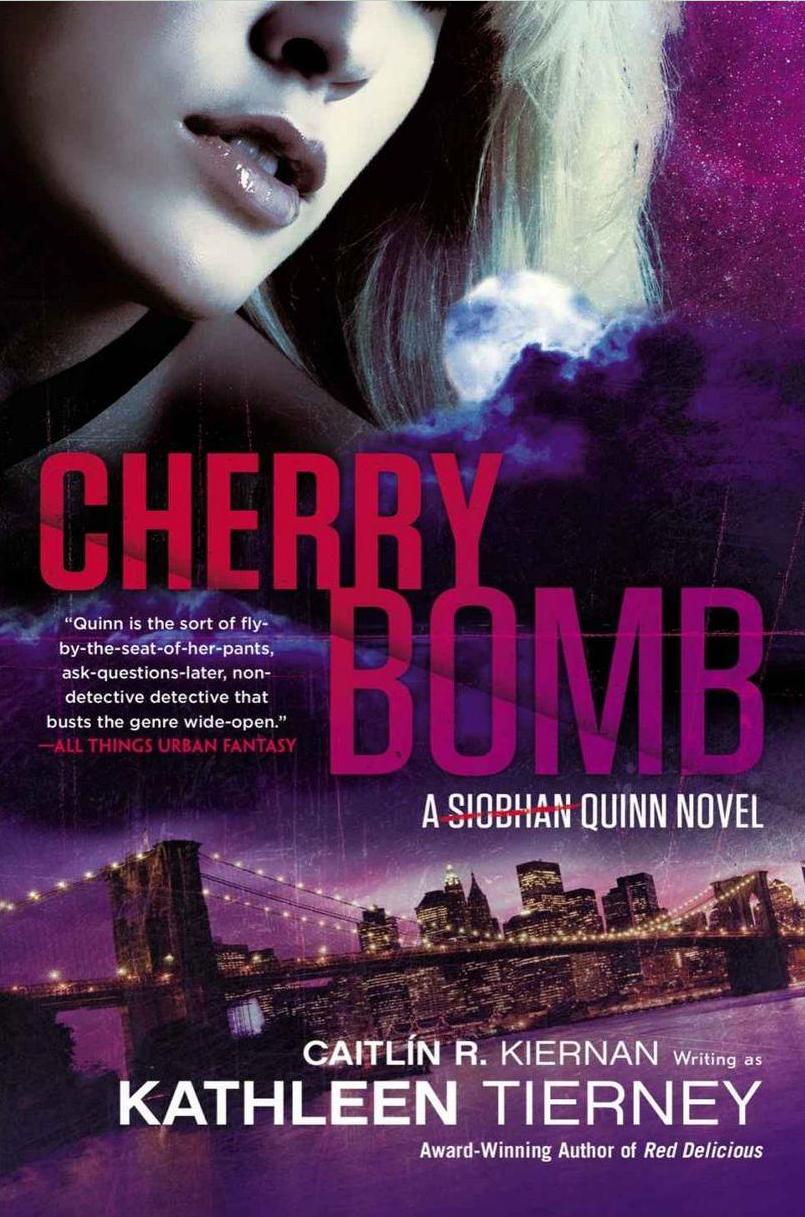
New Treasures: Cherry Bomb by Caitlin R. Kiernan writing as Kathleen Tierney

New Treasures: Cherry Bomb by Caitlin R. Kiernan writing as Kathleen Tierney

Cherry Bomb Caitlin R Kiernan-smallCaitlin R. Kiernan has received a lot of attention for her recent horror novels, especially The Red Tree (2009) and The Drowning Girl (2012). Her Siobhan Quinn urban fantasy novels had an unusual genesis, as she explains in the Author’s Note to this volume:

My thanks to my agent, Merrilee Heifetz, who urged me to do this after reading Chapter One of Blood Oranges, which I’d actually written on a lark, as a joke, a protest against what “paranormal romance” has done to the once respectable genre of urban fantasy. I honestly never intended to write a whole Quinn book, much less three.

Cherry Bomb is the third (and final?) volume in the series, following Blood Oranges (2013) and Red Delicious (2014). All three were published under Caitlin R. Kiernan’s pseudonym, Kathleen Tierney.

Here’s the back cover copy.

Meet Siobhan Quinn — Half vampire, half werewolf, and retired monster hunter. Or so she thought…

Read More Read More

The Public Life of Sherlock Holmes: The Best I’ve Ever Read…

The Public Life of Sherlock Holmes: The Best I’ve Ever Read…

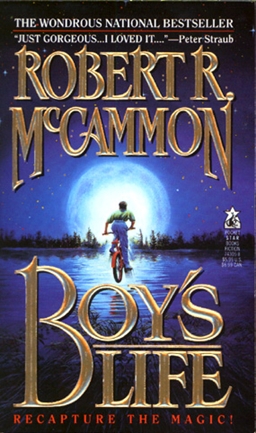
BoysLife_Cover

See, this is my opinion: we all start out knowing magic. We are born with whirlwinds, forest fires, and comets inside us. We are born able to sing to birds and read the clouds and see our destiny in grains of sand. But then we get the magic educated right out of our souls. We get it churched out, spanked out, washed out, and combed out.

And so begins the best piece of writing I’ve come across.

In the seventies and the eighties, Robert R. McCammon was a successful horror author. Usher’s Passing (a sequel to Poe’s classic), Wolf’s Hour (World War II werewolf yarn) and Swan Song (post-apocalyptic epic) were among his excellent works. 1990’s Mine was a different kind of terror tale, as was 1992’s Gone South.

To oversimplify, McCammon wanted to move out of horror and into new genres. And he was told to forget it: to not mess with the formula (shades of Brian Wilson and Pet Sounds). So he wrote two historical novels that weren’t published, and he quit.

A decade later, that first historical book, Speaks the Nightbird finally saw the light of day in 2002 and has spawned seven sequels and one short story collection. The next book is under way. I read the first two and enjoyed them. But they grow continually darker and I quit after book three. Too much for me.

McCammon has written a few other novels and novellas, back in the horror genre. But he returned on his own terms, and not with a major publishing house.

Two thousand is a low estimate of how many books I’ve read, and the single finest piece of writing I’ve ever come across is in the introduction to his 1991’s Boy’s Life. Which isn’t really too surprising, because that is the finest book I’ve ever read; in any genre. It’s not a horror book: it’s a coming-of age tale. It’s a book about the magic of our youth. And what happens to that magic.

One of my favorite authors, Tony Hillerman, said that Fly on the Wall, was his attempt at writing The Great American Novel. He feels he came up short. He would know, though it’s in my Top Five Novels list. But I’m gonna say that Boy’s Life is McCammon’s Great American Novel. And it’s in the running for THE Great American novel You ask me for only one book to read (beyond the Bible), and I’m telling you Boy’s Life.

Here’s the rest of that snippet from the opening that has stayed with me for going on three decades:

Read More Read More

Who Should Be Writing the Cthulhu Mythos Today? Announcing the Winners of Weirder Shadows Over Innsmouth

Who Should Be Writing the Cthulhu Mythos Today? Announcing the Winners of Weirder Shadows Over Innsmouth

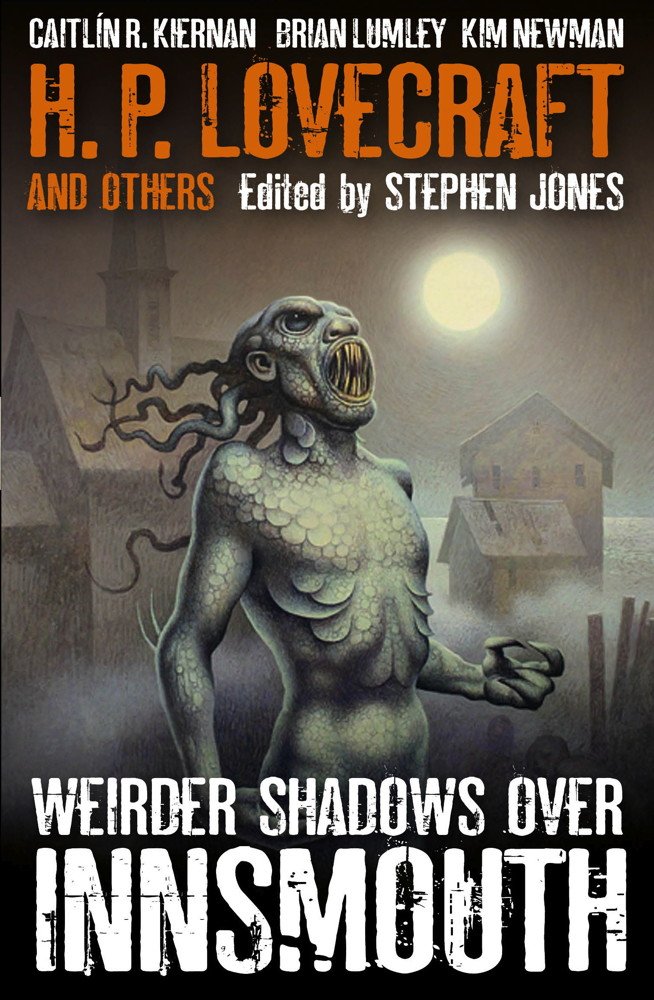
Weirder Shadows Over Innsmouth-small2Three weeks ago we invited Black Gate readers to win a copy of the new Lovecraft-inspired anthology Weirder Shadows Over Innsmouth, by suggesting who should be writing Lovecraftian horror today.

To make it challenging, all entries had to be a single sentence.

We received a near-record number of entries for this contest, too many to print here. But I’ve selected 20 of the more interesting, and reproduced them below.

Two winners were randomly drawn from a list of all qualified entries, and those two lucky readers will both receive a copy of Stephen Jones’s new horror anthology Weirder Shadows Over Innsmouth, on sale now in trade paperback and digital formats from Titan Books.

First up is Jeffery Helms:

The writer I would most like to see write a Lovecraftian horror story today is Scott Snyder, whose comic work has elements of history, folklore, myths, and horror.

That’s certainly a fascinating choice. Scott Snyder’s work on American Vampire and Batman has garnered a lot of attention, and I’d like to see what he could do in Lovecraft’s back yard, too.

Read More Read More

Self-published Book Review: The Pirate Princess by Alice Rozen

Self-published Book Review: The Pirate Princess by Alice Rozen

If you have a book you’d like me to review, please see the submission guidelines here. I’ve run short on books that I’ve received in the past year, so anything new has a good chance of being reviewed.

Pirate_princessThis month’s self-published novel is The Pirate Princess by Alice Rozen. This is a children’s book, and a sequel to a previous book called Jinx, after the main character in both novels. Jinx MacAbre is a ten-year-old witch and the daughter of the demon Lilith. She sees herself as a sort of superhero, dishing out punishments to school bullies, though she seems to lack much in the way of self-awareness. It’s not really clear whether her curses — swelling someone’s tongue so that he can’t speak, or turning someone green — are permanent, but if so, they are disproportionate to the actual crimes of the bullies, who after all are kids who generally grow out of that phase. But a sense of proportion may be a bit much to expect of a ten-year-old, and disproportionate punishments are a standard trope of fairy stories, a genre into which this story fits quite comfortably (though at last count, there was only one actual fairy in the story).

Jinx’s real problem aren’t her schoolyard adventures, though. It’s that not only is she a witch, she was born on Halloween, and as such is a very important ingredient in a rite called for by Davy Jones, the demon who rules the dead of the sea. And Sirena Avery, the titular pirate princess who looks about the same age as Jinx but in reality is a 300 year-old undead sea captain, is on a mission to deliver Jinx to Davy Jones to repay the debt to Jones that gave her The Flying Dutchman and a crew of the most famous pirates swallowed by the sea, including Samuel Bellamy, Edward Teach (“Blackbeard”), and more. They’ve come to claim Jinx and send her to Davy Jones’s Locker. The appearance of Jinx’s identical twin, Felix, complicates matters, and soon Jinx has to rescue her friends and her twin from Davy Jones himself.

Read More Read More

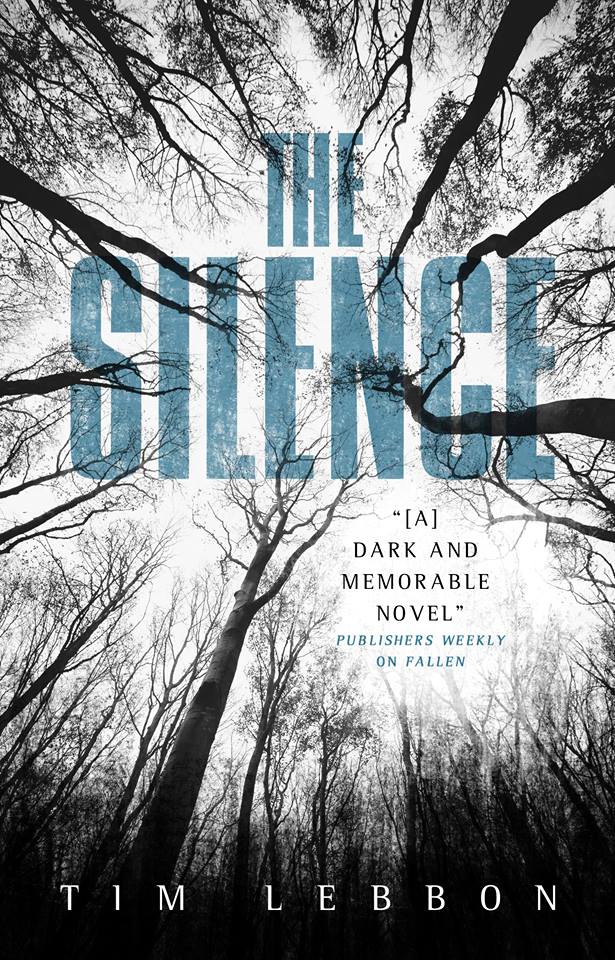
Future Treasures: The Silence by Tim Lebbon

Future Treasures: The Silence by Tim Lebbon

The Silence Tim Lebbon-smallTim Lebbon’s novels include the post-apocalyptic fantasy Echo City, and the dark fantasy Noreela series (Dusk, Fallen, The Island). He won the Bram Stoker Award in 2001 for his short story “Reconstructing Amy,” and Dusk won the British Fantasy Society’s August Derleth Award for best novel of the year in 2007. He had a bestseller in 2007 for his novelization of 30 Days of Night.

His latest is an end-of-the-world thriller featuring a horror born deep in the heart of the Earth…

The End of our world. The beginning of another.

In the darkness of an underround cave system, blind creatures hunt by sound. Then there is light, there are voices, and they feed… swarming from their prison, the creatures thrive and destroy. To scream, even to whisper, is to summon death. As the hordes lay waste to Europe, a girl watches to see if they will cross the sea. Deaf for many years, she knows how to live in silence; now, it is her family’s only chance of survival. To leave their home, to shun others, to find a remote haven where they can sit out the plague. But will it ever end? And what kind of world will be left?

We last covered Tim Lebbon with his 2014 novel Coldbrook.

The Silence will be published by Titan Books on April 14, 2015. It is 361 pages, priced at $14.95 in trade paperback and $9.99 for the digital edition.