Browsed by
Category: Books

Barry N. Malzberg and Bill Pronzini on Astounding Science Fiction in the 1950s
Barry N. Malzberg and Bill Pronzini on Astounding Science Fiction in the 1950s

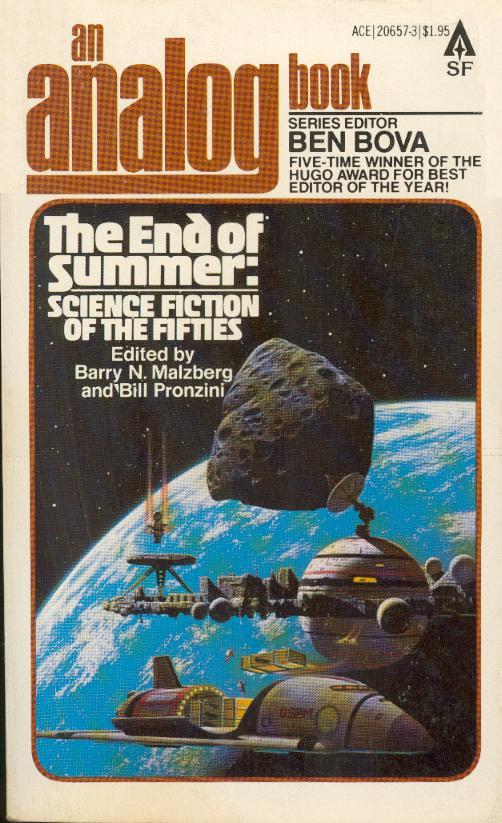
The End Of Summer Science Fiction of the Fifties-smallWe’ve had some discussion here in the last week on the relative merits of the top science fiction digests of the 1950s.

Bob Silverberg offered his opinion that Galaxy magazine took the lead in the field virtually with its very first issue in October 1950, saying “That first year of Galaxy left us all gasping.” And in his Astounding Science Fiction Testimonial, John Boston generally concurs, saying that 1958 was the last good year under editor John W. Campbell.

Over the weekend, I was surprised to run across an interesting and impassioned defense of Astounding magazine in, of all places, the introduction to The End of Summer: Science Fiction of the Fifties, a 1979 paperback edited by Barry N. Malzberg and Bill Pronzini, which collects ten short stories from Isaac Asimov, Poul Anderson, Alfred Bester, Fritz Leiber, C.M. Kornbluth, and others.

Here’s the complete text of the editors’ Prefatory Note:

Six of the ten stories in this anthology are from John W. Campbell’s Astounding. This preponderance was not a publishing decision — Conde Nast gave us complete editorial decision — but our own.

No 70,000-word anthology devoted to the 1950s can give more than a sketchy representation of that tumultuous and fertile decade in science fiction. Accordingly it was felt that a deliberate bias toward Astounding had purpose and would give this book particular value. Concordance on the decade (which will come under increasing challenge as academia’s tanks roll on and on into our little backwater) overrates the not inconsiderable role of Gold’s Galaxy and the Boucher/McComas Fantasy & Science Fiction while somewhat minimizing Astounding, which is felt to have peaked in the forties.

Not quite so. This book is entered in evidence.
Read More Read More

Future Treasures: Thor Volume 1: Goddess of Thunder by Jason Aaronand and Russell Dauterman

Future Treasures: Thor Volume 1: Goddess of Thunder by Jason Aaronand and Russell Dauterman

Thor Volume 1 Goddess of Thunder-smallWhen I was a kid monumental events in comics, like the death of Gwen Stacey or the defeat of Thanos, were discussed in excited whispers on the playground. Not so these days. When Thor, the God of Thunder, became a woman, Whoopi Goldberg made an exclusive announcement live on The View on July 15th, 2014. Times sure have changed.

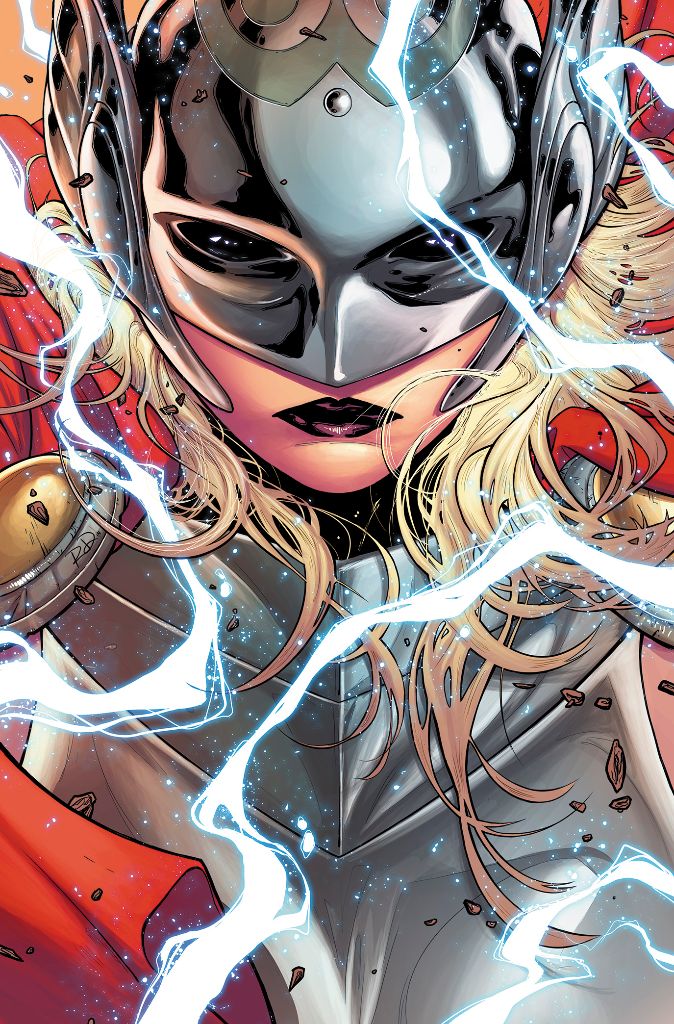
Now, Thor didn’t actually change sex, or anything like that. Thor is still, well, Thor. But he’s the God of Thunder because — as has been well established in Journey into Mystery #83 and the awesome party scene in the upcoming Avengers 2 — he is worthy to wield the mystical hammer Mjolnir. Over the 52-year history of Marvel’s Thor, other individuals have also proven worthy, including the alien Beta Ray Bill, Captain America, Odin, and even Conan the Barbarian and Superman. Last year Marvel revealed a dramatic twist in the saga of Thor, when he became unworthy to lift the hammer for the first time, and the mantle of Thunder God was taken up by an unknown woman who lifts Mjolnir in Thor’s place. The first six issues of the new Thor comic will be collected this May. As predicted, the shift has drawn a whole new audience — including my daughter, who confesses it’s her new favorite comic.

Mjolnir lies on the moon, unable to be lifted! Something dark has befallen the God of Thunder, leaving him unworthy for the first time ever! But when Frost Giants invade Earth, the hammer will be lifted — and a mysterious woman will be transformed into an all-new version of the mighty Thor! Who is this new Goddess of Thunder? Not even Odin knows… but she may be Earth’s only hope against the Frost Giants! Get ready for a Thor like you’ve never seen before, as this all-new heroine takes Midgard by storm! Plus: the Odinson clearly doesn’t like that someone else is holding his hammer… it’s Thor vs. Thor! And Odin, desperate to see Mjolnir returned, will call on some very dangerous, very unexpected allies. It’s a bold new chapter in the storied history of Thor!

Thor Volume 1: Goddess of Thunder was written by Jason Aaronand and illustrated by Russell Dauterman, and will be published by Marvel Comics on May 26, 2015. It is 136 pages in hardcover, priced at $24.99. Digital editions are available through Marvel’s online subscription service.

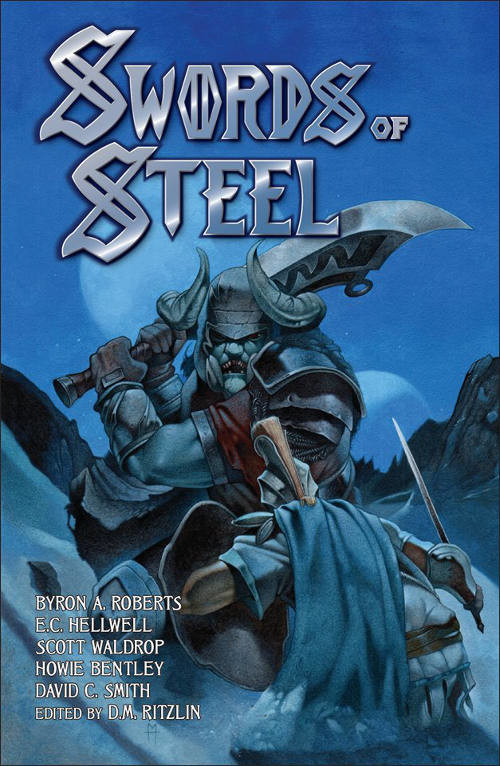
The Forging of Swords of Steel

The Forging of Swords of Steel

Swords of Steel-small

He was met at the gate of Hades by the Guardian of the Lost Souls, the Keeper of the Unavenged. And he did say to him, “Let ye not pass Abbadon! Return to the world from whence ye came and seek payment, not only for thine own anguish, but vindicate the souls of the unavenged.” And they placed in his hand a sword made for him called Vengeance, forged in brimstone and tempered by the woeful tears of the unavenged. And to carry him on his journey back to the upper world they brought forth their demon horse called Black Death, a grim steed so fearsome in might and black in color that he could stand as one with the darkness, save for his burning eyes of crimson fire. And on that night they rode up from Hell! The pounding of his hooves did clap like thunder!

Would you doubt someone if they told you the above text came from an old sword and sorcery paperback with a cover by Frank Frazetta?

Likely not, unless you knew the source: “Dark Avenger,” a song by heavy metal giants Manowar. One day, while listening to this song, an idea struck me like a thunderbolt: To release an anthology of fantasy stories written by authors from heavy metal bands. And thus, the concept for Swords of Steel was born.

The past several decades in fantasy literature have displayed a lot of safe trends not much to my liking. What happened to evocatively-written tales of strong-willed heroes conquering (or succumbing to) exotic, dangerous landscapes? Rather than such epic fare, we’ve been treated to volume after volume of thousand-page Tolkien tributes. (Considering Tolkien spent 20 years on The Lord of the Rings, one would think maintaining quality through each successive sequel would prove difficult.) So rather than wait for someone else, I decided to publish a book myself. I simply needed to find people to write these stories; and who better than the heavy metal bards?

One prerequisite of the metal lifestyle is steadfast resistance against mainstream trends. It shows in the character of men like Cauldron Born guitarist Howie Bentley and Twisted Tower Dire guitarist Scott Waldrop, who founded their bands in the early nineties. At a time when metal was believed truly “dead,” they persevered without any establishment acceptance. This attitude, plus their lyrical talents, made them perfect candidates for Swords of Steel.

Read More Read More

New Treasures: Aetheria by S. Hutson Blount

New Treasures: Aetheria by S. Hutson Blount

Aetheria-smallS. Hutson Blount’s short story “The Laws of Chaos Left Us All in Disarray” appeared in the last print issue of Black Gate. A fast-paced adventure tale of a mercenary’s desperate attempts to protect a secretive group of pilgrims, it was one of the most popular pieces in the issue.

We met up with Stephen at the 2012 World Science Fiction Convention here in Chicago, and he turned out to be as entertaining in person as he is on the page. So I was delighted to discover that his first novel, Aetheria, had arrived this week. The story of an extremely resourceful con artist in a galaxy filled with competing empires, pirates, ice miners and more dangerous things, Aetheria has already shot to the top of my to-be-read pile.

Aetheria Peregrine set out for a career as a merchant spacer — a career cut short in a whirlwind of events. Caught up in the tumult of planetary empires set against each other, she must by turns become a pirate, doctor, ice miner, drug dealer, vagabond, mystic, spy, secret policewoman, pilgrim, fugitive, heiress, scholar, and diplomat.

She faces the opportunities and dangers of a hostile galaxy armed with the only things she can depend on: her wits, her unquenchable drive for love and success, and the flexible ethics of a practiced conwoman.

Befriended, betrayed, recruited, exiled, and more in the course of her travels, Aetheria can be anything except stopped.

Aetheria was published on March 12, 2015. It is 298 pages, priced at just $2.99 in digital format. Buy it today at Amazon.com.

See all the latest publications from Black Gate‘s writers and staff here.

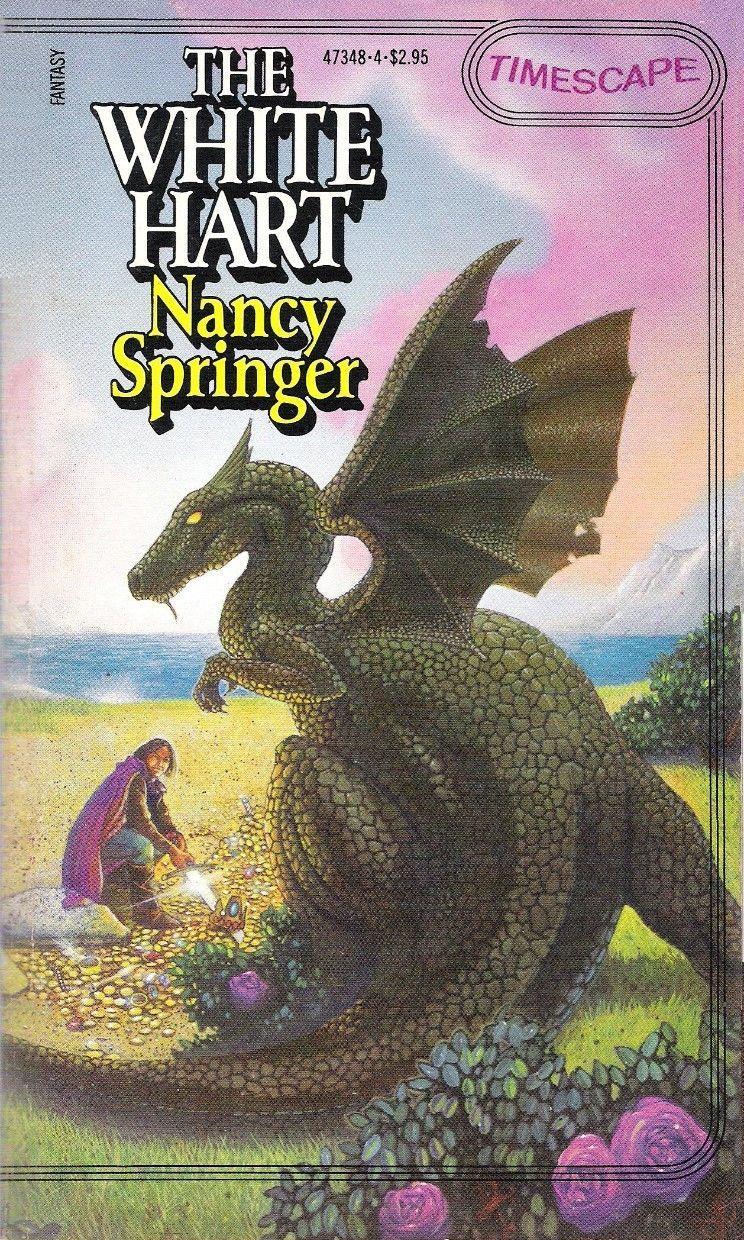
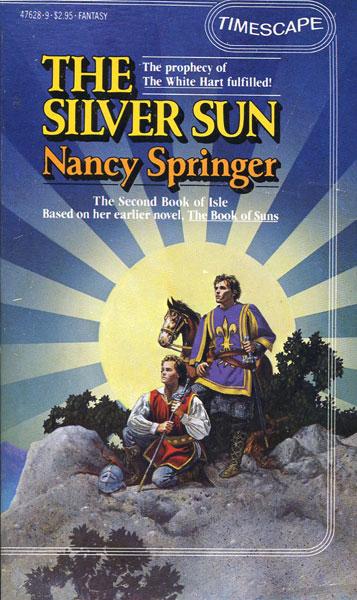
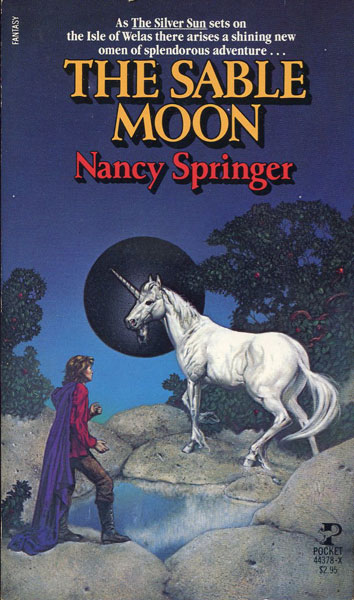
Vintage Treasures: Book of the Isle by Nancy Springer

Vintage Treasures: Book of the Isle by Nancy Springer

The White Hart-small The Silver Sun-small The Sable Moon-small

I have to admit that I was always confused by this series. For several decades, to be perfectly honest.

The problem was that I could never quite figure out what order the books were meant to be read in — or even how many there were. I never did sort it out it on my own… in my first draft of this article, I arranged them in the wrong order, and I was convinced I was missing a volume. (I wasn’t.) I eventually had to turn to ISFDB and Wikipedia to get a definitive answer.

Anyway, the end result was that I never read them, despite having the entire series on my shelves (filed in the wrong order) for over 30 years. I guess it’s true what they say: books are like pretty girls… if they make you feel awkward and stupid, you rarely ask them out.

Read More Read More

Future Treasures: New Cthulhu 2 edited by Paula Guran

Future Treasures: New Cthulhu 2 edited by Paula Guran

New Cthulhu 2-smallLast month I did a quick survey of Prime Books, looking at 24 volumes in their recent catalog. And an impressive lot it was, too (and trust me when I tell you, after 20 years in this industry, I don’t impress easily.)

One of the more intriguing books in their catalog was Paula Guran’s anthology New Cthulhu: The Recent Weird, which my kids bought me for my birthday last year (Isn’t that sweet? I have children who give me anthologies of Lovecraftian horror to celebrate my birth. Just nod and agree, it’s better for everyone.) It contained no less than 27 Cthulhu Mythos tales, all written this century, including stories from Neil Gaiman, Charles Stross, Marc Laidlaw, Laird Barron, Paul McAuley — and even Michael Shea’s chilling novelette “Tsathoggua,” first published right here at Black Gate.

So I was very pleased to see that a follow up volume, New Cthulhu 2: More Recent Weird, with stories from Laird Barron, Caitlín R. Kiernan, John Langan, John Shirley, Simon Strantzas, Helen Marshall, Michael Shea, Carrie Vaughn, Charles Stross and many others, is on the schedule for later this month.

Here’s the book description:

Many of the best weird fiction writers (and creators in most other media) have been profoundly influenced by the genre and the mythos H.P. Lovecraft created eight decades ago. Lovecraft’s themes of cosmic indifference, minds invaded by the alien, and the horrors of history – written with a pervasive atmosphere of unexplainable dread – are more relevant than ever as we explore the mysteries of a universe in which our planet is infinitesimal and climatic change is overwhelming it. A few years ago, New Cthulhu : The Recent Weird presented some of the best of this new Lovecraftian fiction from the first decade of the twenty-first century. Now, New Cthulhu 2: More Recent Weird brings you more eldritch tales and even fresher fiction inspired by Lovecraft.

And here’s the complete Table of Contents.

Read More Read More

West of January, Probably Near the Middle of Wednesday

West of January, Probably Near the Middle of Wednesday

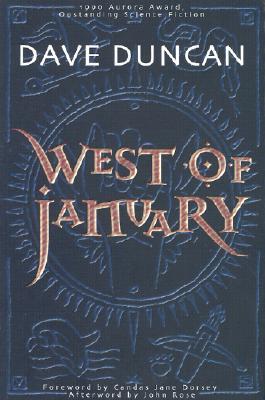
Duncan WestA few weeks ago I was talking about Dave Duncan’s series The Great Game, and that led me to reread his brilliant 2002 novel West of January.

West of January is science fiction that doesn’t, at first, seem to have any science in it. The story is an odyssey, narrated in first person by the main character, Knobil , who tells the tale of his life, from his childhood as part of a herdmaster’s family on the great plains, through to his days as an old man, teaching the young.

Knobil is expelled from his family at puberty and vows revenge on the intruder who murdered his father and mother. While he never completely loses sight of this objective, circumstances take him on a journey through most of the other societies on the world of Vernier, from the Sea People, the Miners, the Traders, and even the Angels in Heaven. It becomes apparent that this world is not Earth, and that while it is suitable for human habitation, its rotation and relationship with its sun causes a cyclical and catastrophic climate change which necessitates the virtual rebuilding of civilization each time.

West of January is a testament to just how important point of view can be. As in the best fiction of any kind, Knobil doesn’t explain anything to the reader that he takes for granted himself – though he might explain things that he knows to his young listeners:

The angels define the world by strips – twelves strips running north and south, seven east and west. The names of these are very old, given by the firstfolk. It is a sensible arrangement with only nineteen words to be learned. Any place can be located by reference to this grid. The west of January is but one example. Geographical features can be named also, like the March Ocean or the Wednesday Desert. This is much easier than remembering an endless arbitrary list, and much more practical when a forest may soon become a desert, or a desert ocean.

Read More Read More

New Treasures: Old Venus, edited by George R.R. Martin and Gardner Dozois

New Treasures: Old Venus, edited by George R.R. Martin and Gardner Dozois

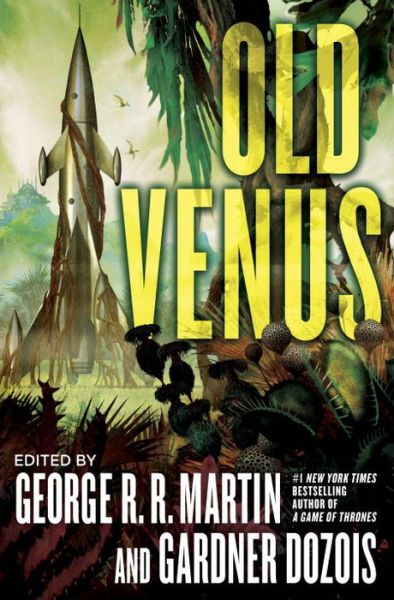
Old Venus-smallI think my favorite book of the year (so far) is George R.R. Martin and Gardner Dozois’s new anthology, Old Venus, which imagines Venus just as the pulp writers of old: a steamy, swampy jungle planet with strange creatures lurking amidst the dripping vegetation.

Old Venus is a follow-up to Old Mars, a tribute to “the Golden Age of Science Fiction, an era filled with tales of interplanetary colonization and derring-do.” It includes brand new fiction from Lavie Tidhar, Paul McAuley, Joe Haldeman, Eleanor Arnason, David Brin, Garth Nix, Joe R. Lansdale, Ian McDonald and many others. Russell Letson at Locus Online offers an enthusiastic review, saying:

In the introduction, co-editor Gardner Dozois writes that he and George R.R. Martin were looking for a return to the ‘‘heyday of the Planetary Romance,’’ when ‘‘the solar system swarmed with alien races and civilizations, as crowded and chummy as an Elks picnic…’’ These 16 stories, mostly of novelette length, aspire to resuscitate not only the obsolete, imaginary planetology of Old Venus, but the iconography and tropes that filled the pulp adventure stories once set there: the rain-soaked frontier outback where questionable characters meet in roughneck saloons before setting out to find abandoned temples or lost cities, guided or preyed upon by aquatic or amphibious natives, pursued by hungry local fauna, and perhaps tempted by exotic-erotic possibilities…

Read More Read More

Vintage Treasures: Sheila Gilluly’s Greenbriar Trilogy

Vintage Treasures: Sheila Gilluly’s Greenbriar Trilogy

Greenbriar Queen-small The Crystal Keep-small Ritnym's Daughter-small

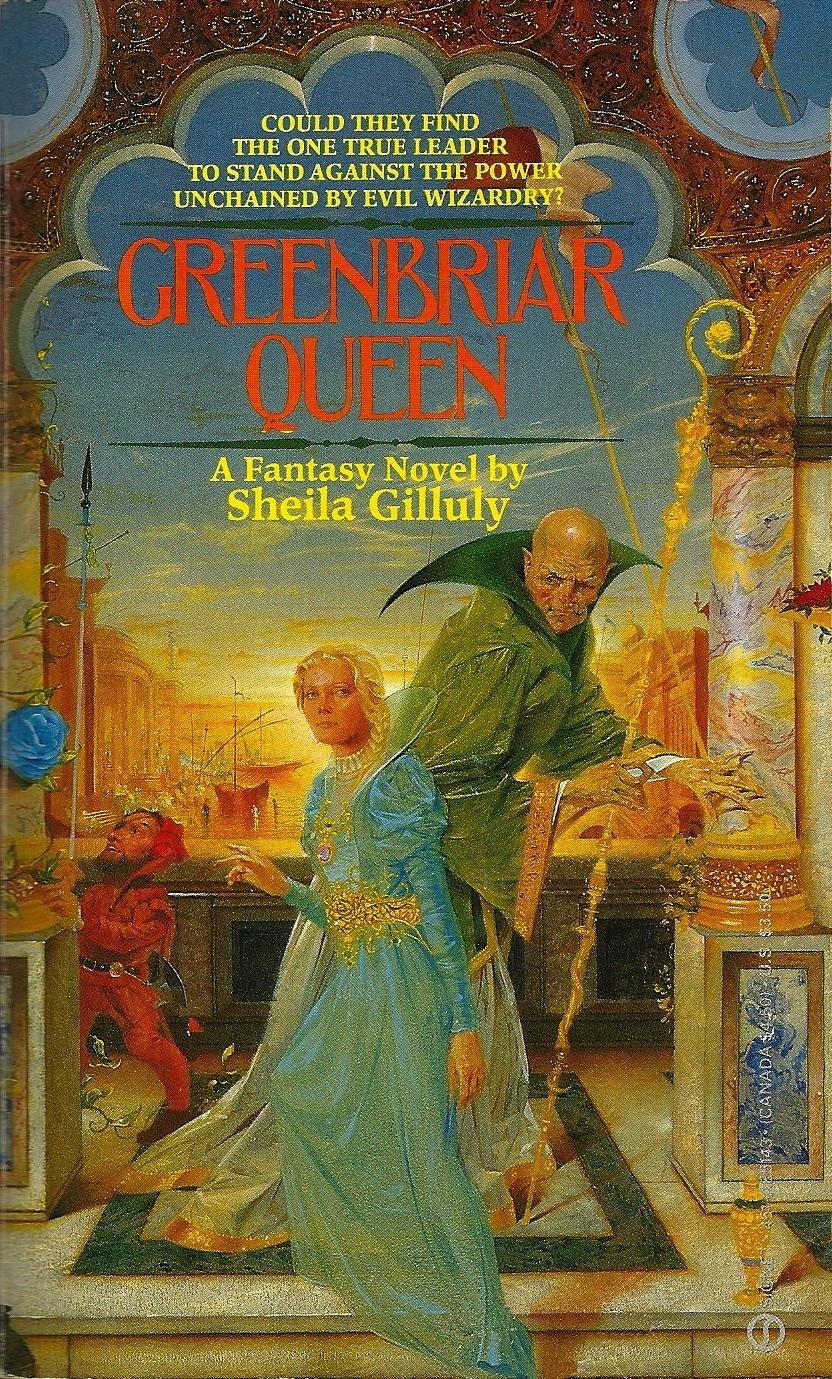
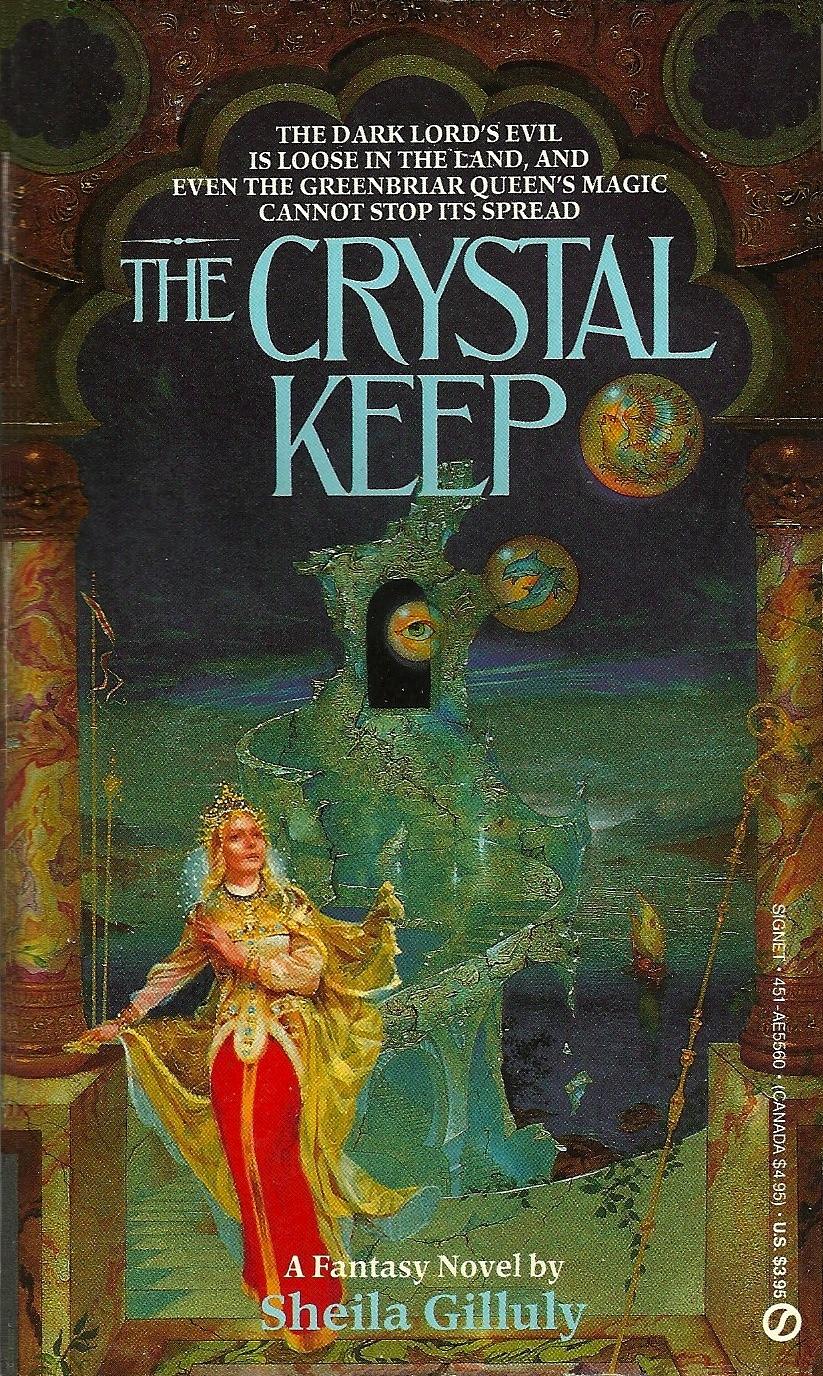
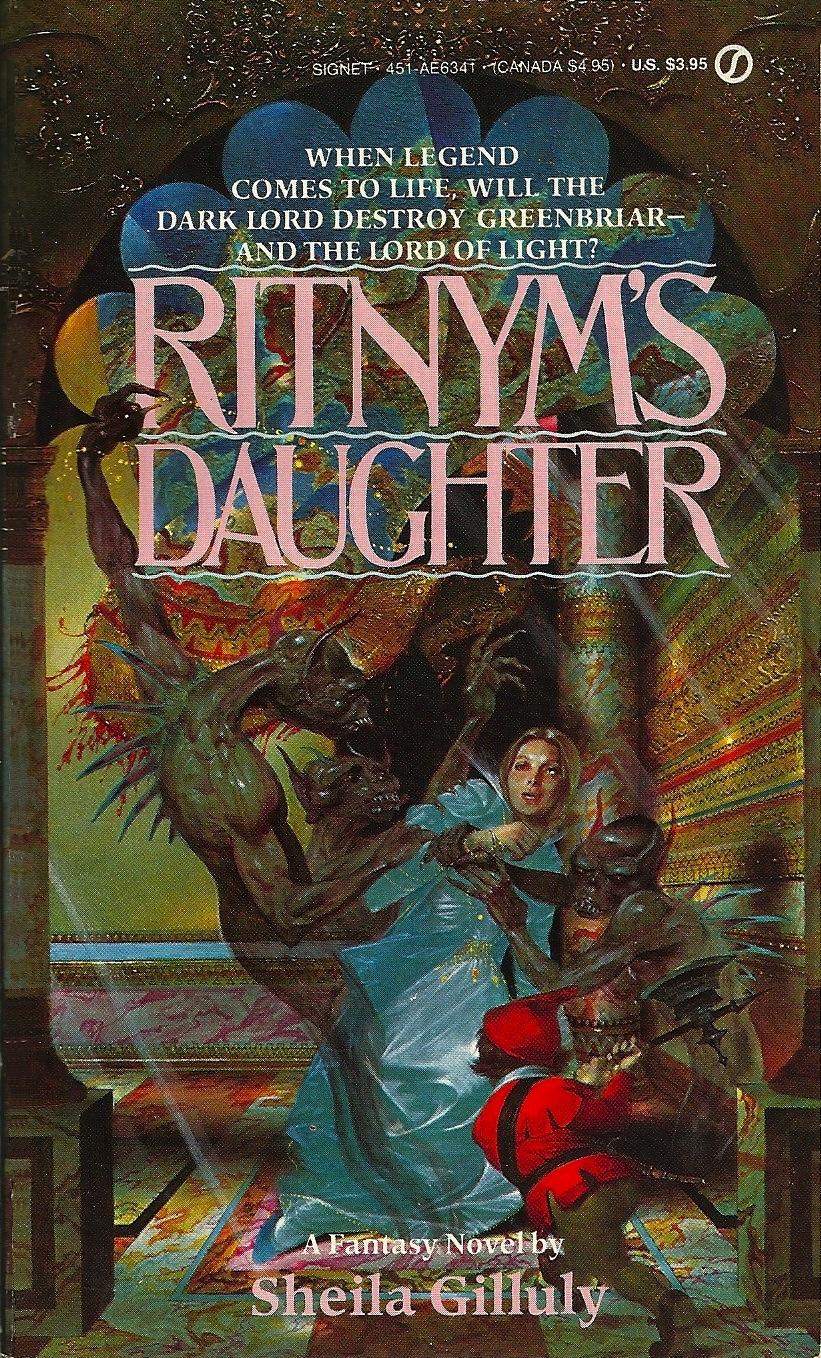
Sheila Gilluly had a brief career as a fantasy writer. She published two trilogies in the late 80s and early 90s, and has produced nothing else for the last 20 years. But I’ve always been curious about her Greenbriar Trilogy — composed of Greenbriar Queen (1988), The Crystal Keep (1988), and Ritnym’s Daughter (1989) — mostly because of the beautiful covers (click the images above for bigger versions). I’ve tried to identify the artist, but the art is uncredited in my copies, and so far an internet search has been fruitless.

Greenbriar Queen opens in a pretty dark place, with the Dark Lord’s reign about to begin, the heroes scattered, the king dead, and a traitor on the throne. If you like high stakes and desperate battles, The Greenbriar Trilogy might be for you.

Read More Read More

Representations of the Amazon in Poul Anderson’s Virgin Planet and in DC’s Wonder Woman

Representations of the Amazon in Poul Anderson’s Virgin Planet and in DC’s Wonder Woman

Legolas_portrait_-_EmpireMagBut first, I’d like to ask readers a very important question:

Do Tolkien’s Elves have pointy ears?

This came up after my last post, in which I wondered why Anderson and Tolkien (and many other fantasy writers) agree that elves are tall and have pointy ears. After reading this, Frederic S. Durbin contacted me to say,

Does Tolkien ever say that the elves have pointed ears? To my knowledge, he never does. Please correct me if I’m wrong! This is a bone I had to pick a few years back, when some writer somewhere described hobbits as having “hairy toes and pointed ears.” I think this misconception about Tolkien’s elves and hobbits has come from artwork. Artists need to have a way of making magical races look different from humans, so they go for the ears. We need Spock to look different from humans in a cheap and easily-reproducible way from day to day in the studio, so we give him pointed ears. People have been seeing illustrations of pointy-eared elves and hobbits for so long that they’ve begun to believe Tolkien described them that way. I don’t think it’s true. (Again, I’m willing to stand corrected if someone shows me a passage!)

So there you have it, folks! Please help! Is there a passage anywhere in Tolkien’s writings that suggest that Elves (or even Hobbits) have pointy ears?

And now let’s turn our attention to Poul Anderson’s Virgin Planet.

Read More Read More