Browsed by
Category: Books

The Public Life of Sherlock Holmes: Asimov’s The Caves of Steel
The Public Life of Sherlock Holmes: Asimov’s The Caves of Steel

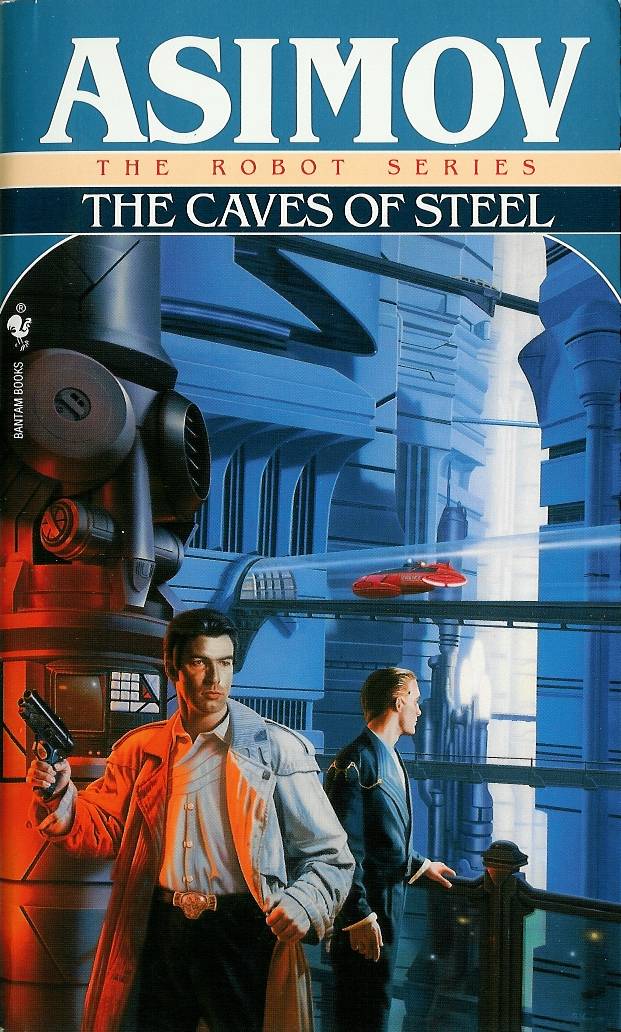
caves of steelIn 1953, Isaac Asimov combined the science fiction and mystery genres with a three-part serial. In The Caves of Steel, Asimov painted a bleak future for humanity that served as more than just the background of a murder investigation.

Earth became overpopulated and civilization had to adapt to the massive resource needs. Cities became densely populated collectives. Efficiency drove everything. Section units (one, two and three room apartments) rather than houses. Group eating areas, rather than individual kitchens. Common shower and bath units instead of one (or more) per family. Hundreds of miles of high-speed conveyer belts, rather than roads and cars. The ancient, underground roadways were used by official forces to fight fires, to move about to quell riots and such.

Towns and cities were absorbed by ever-growing CITIES. The huge Cities were roofed in by domes until “Outside” became a terrible place that city dwellers never went to: they stayed in their caves of steel, eating mass produced yeast and hydroponics. Direct sunlight was not experienced. As Asimov says, “There was no doubt about it: The City was the culmination of man’s mastery over the environment.”

Then the Spacers came. Man had colonized other planets but those inhabitants eventually rebelled and broke free. They then returned and easily defeated Earth’s defenses.

The Spacers lived on other planets in wide-open spaces, with many robot servants. Asimov essentially paints a picture of the rich, upper class, living indolently, and the poor, lower class, packed together like sardines.
Read More Read More

New Treasures: Tales from the Nightside by Simon R. Green

New Treasures: Tales from the Nightside by Simon R. Green

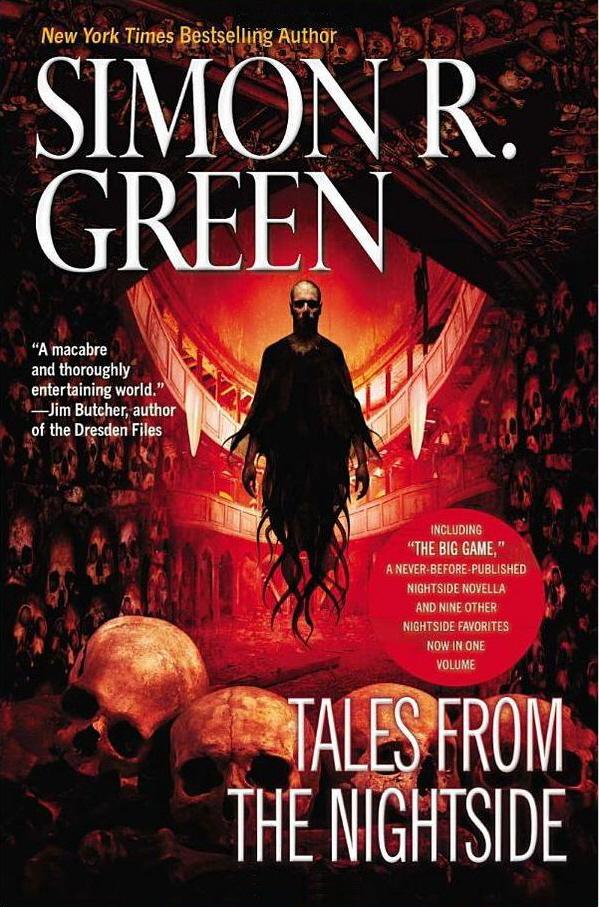
Tales From the Nightside-smallSimon R. Green’s first Nightside book, Something from the Nightside, was published a dozen years ago. Since then there have been eleven more; the most recent was The Bride Wore Black Leather (2012).

I always thought Nightside was a fascinating setting, but I’ve never had time to try one of the novels. But Tales from the Nightside, the first collection in the series, offers a chance to take a short trip to Nightside — just what I’ve been looking for. It includes ten stories, including “The Big Game,” a novella that has never before been published.

Welcome to the Nightside. It’s the secret heart of London, beating to its own rhythm, pumping lifeblood through the veins of its streets and alleys hidden in eternal darkness, where creatures of the night congregate and where the sun is afraid to shine. It’s the place to go if you’re looking to indulge the darker side of your nature — and to hell with the consequences.

Tales from the Nightside presents ten macabre mysteries that shine a dim beam into the neighborhood’s darkest corners to reveal things that should never come to light. Take a walk with such deadly and dangerous denizens of the Nightside as Razor Eddie, Dead Boy, and Larry Oblivion as they encounter things even more inhuman and inhumane than they are. And join John Taylor, the PI with a knack for finding lost things, as he confronts Sir Francis Varney, King of the Vampires, in a never-before-published novella-length adventure.

There may be nothing to be afraid of in the dark, but there’s plenty to be afraid of in the Nightside…

Tales from the Nightside includes the following stories.

Read More Read More

Vintage Treasures: Not Without Sorcery by Theodore Sturgeon

Vintage Treasures: Not Without Sorcery by Theodore Sturgeon

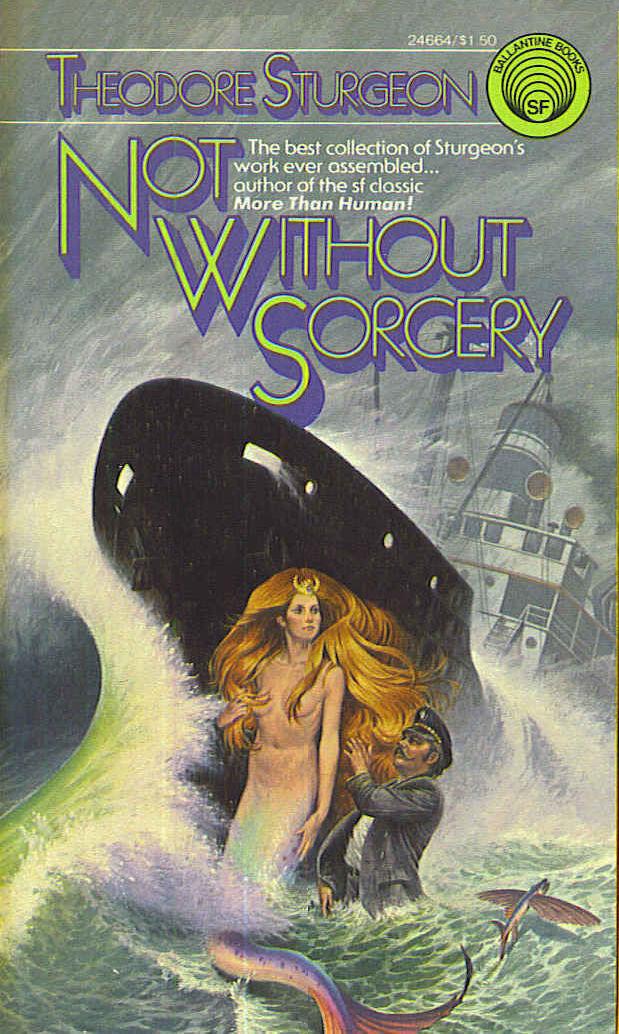
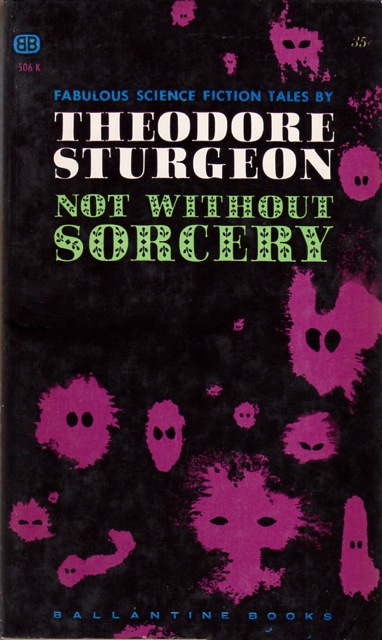
Not Without Sorcery 1961-small Not Without Sorcery-small

Theodore Sturgeon’s first short story collection was Without Sorcery, a handsome hardcover published in 1948 with an introduction by Ray Bradbury. As you can imagine, it’s a tough book to find these days, even for collectors.

The paperback edition, released 13 long years later, dropped five stories and the introduction, and was re-titled Not Without Sorcery. It became Sturgeon’s tenth collection and was released in two editions, from Ballantine (in 1961, with a rather drab cover by an unknown artist) and Del Rey (in 1975, with a far more interesting cover from artist Darrell K. Sweet.) 1975 was the last time the book saw a mass market edition; it remained out of print for 35 years, until Kessinger Publishing did a facsimile reprint edition in 2010.

Sturgeon was a Campbell writer through and through, and all eight stories in Not Without Sorcery appeared in the two pulp magazines John W. Campbell edited: Astounding Science Fiction, and its sister magazine Unknown Worlds. The stories were published over a two-year period, 1939-1941. I’ve assembled some of the original covers below, because I can never resist an excuse to showcase pulp magazines.

Read More Read More

The History Manifesto and Sweeping Histories

The History Manifesto and Sweeping Histories

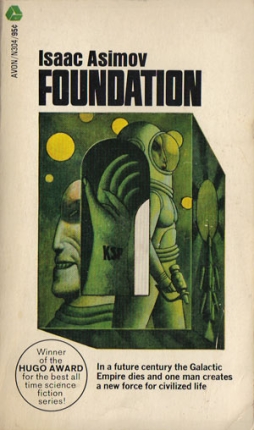
foundation
“History is the science of Science of Science Fiction”

If History is the science of Science of Science Fiction — who said that? — then History is the bedrock  of Fantasy.

In High Fantasy the characters make new history by engaging with the old; Frodo disposes of the ring and secures Middle Earth’s future, but the Ring Wraiths are ancient kings and the politics is grounded in the past. In Low Fantasy — what we mostly call Sword and Sorcery — the characters forage like ants in the debris of history; Conan loots ancient tombs, and loses his sweetheart to an antique monster.

In between, the heroes of Heroic Fantasy delve in the past in order to remake the present; the heroes in Michael J. Sullivan’s Riyria Chronicles actually resolve the geopolitical plot with an extended stint of dungeoneering.

And if Science Fiction is about future history, then it’s also often about future ancient history. We love our alien artefacts and lost forerunner civilisations. What is Aliens if not a Dungeons and Dragons story, but with more face huggers?

So we readers of Speculative Fiction also have an appetite for history, not just the down in the dirt tales of derring-do with William Marshal or Harald Hardrada, or the Rifle Brigade, carving out their personal histories with blade or bullet, but longer thrilling stories of the rise and fall of civilisations, or the evolution of a particular strand of human experience, whether it be war or sexuallity, or gender, or commerce.

Oddly, as noted by a pair of top historians, not a lot of these books are written by card carrying academic historians anymore…

Read More Read More

New Treasures: Old Man’s Ghosts by Tom Lloyd

New Treasures: Old Man’s Ghosts by Tom Lloyd

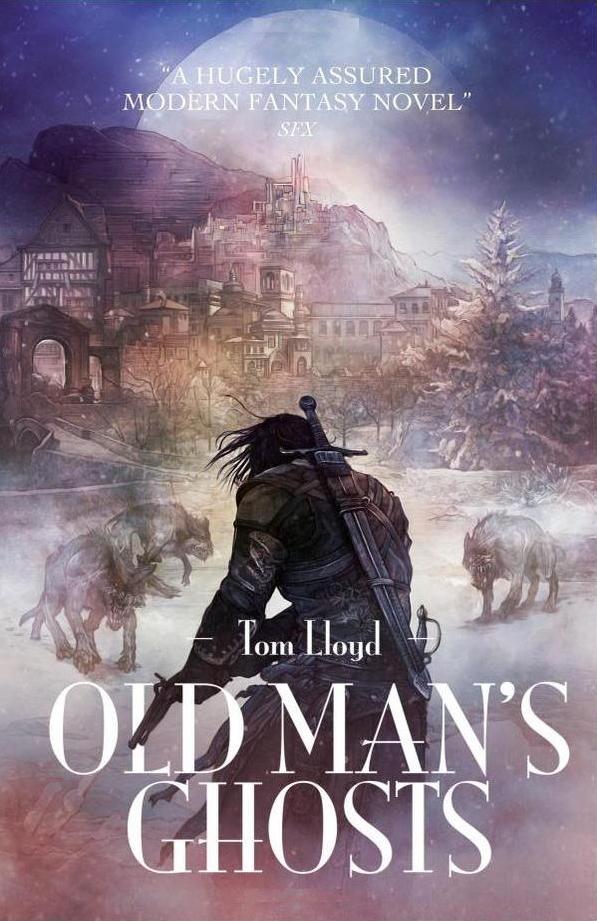
Old Man's Ghosts-smallI’ve gotten to know a lot of writers — and aspiring writers — through my association with Black Gate over the years. Which means I’ve had the pleasure of reading many fine novels well before they’re released. Sometimes in draft, sometimes as an advance galley, and sometimes just as a favor to folks hoping for an advance review or a quick cover blurb. For a while in fact, it seemed I didn’t even pick up a novel unless I knew the author personally.

Recently I’ve been trying to change that. To go far afield, and seek out new talent from all corners of the world. I don’t know a single thing about author Tom Lloyd, for example, but I know I like the cover of his new book, and the description. What more do I need?

Some men can never outrun their ghosts. Enchei thought he’d found a home at last — a life of quiet obscurity far removed from the horror of his military days. After a decade in the Imperial City his mistakes have been few, but one has now returned to haunt him. As Narin’s pregnant lover comes to term, life has never been so perilous. There couldn’t be a worse time for a nightmare to be unleashed on the Imperial City, but luck’s rarely been on Narin’s side. Once, Enchei swore he’d take his own life rather than let his past catch up with him, but now it’s not just his own in the balance. Demons, rogue mages and vengeful noblemen haunt the city – and a man’s ghosts are always watching and waiting..

Old Man’s Ghosts was published by Gollancz on March 19, 2015. It is 400 pages, priced at $16.95 in trade paperback, and $9.99 for the digital version.

See all of our recent New Treasures here.

Future Treasures: The Border by Robert McCammon

Future Treasures: The Border by Robert McCammon

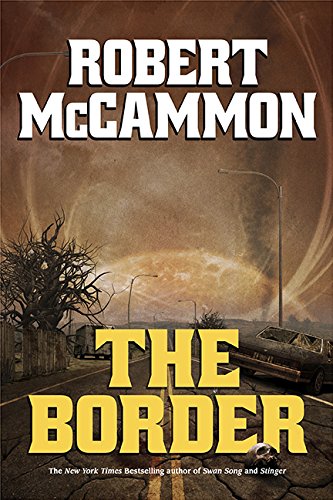
The Border Robert McCammon-smallBy 1991 Robert McCammon had no less than three New York Times bestsellers: The Wolf’s Hour, Stinger, and the post-apocalyptic horror novel Swan Song. He’s won the Bram Stoker Award for Best Novel twice (for Mine and Boy’s Life), and the World Fantasy Award (for Boy’s Life).

McCammon has a flair for epic, large-scale horror, as demonstrated by the alien invasion novel Stinger and the massive 864-page Swan Song. He returns to the genre with his upcoming novel The Border, the tale of an Earth torn apart by a vicious conflict between two marauding alien civilizations.

It is not just the living ships of the monstrous Gorgons or the motion-blurred shock troops of the armored Cyphers that endanger the holdouts in the human bastion of Panther Ridge. The world itself has turned against the handful of survivors, as one by one they succumb to despair and suicide or, even worse, are transformed by otherworldly pollution into hideous Gray Men, cannibalistic mutants driven by insatiable hunger. Into these desperate circumstances comes an amnesiac teenaged boy who names himself Ethan — a boy who must overcome mistrust and suspicion to master unknowable powers that may prove to be the last hope for humanity’s salvation. Those same powers make Ethan a threat to the warring aliens, long used to fearing only each other, and thrust him and his comrades into ever more perilous circumstances.

A major new novel from the unparalleled imagination of Robert McCammon, this dark epic of survival will both thrill readers and make them fall in love with his work all over again.

We last covered Robert McCammon with Bob Byrne’s review of Boy’s Life.

The Border will be published by Subterranean Press on May 31, 2015. It is 456 pages, priced at $26.95 in hardcover. No news on a digital edition yet.

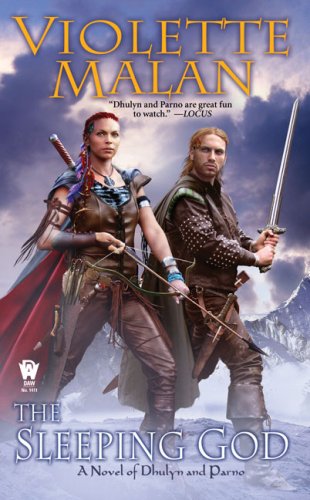
Witch Hunts and True Heroes: Reading Violette Malan’s The Sleeping God

Witch Hunts and True Heroes: Reading Violette Malan’s The Sleeping God

The Sleeping God Violette Malan-smallThe Odin’s Day Poul Anderson work scheduled for discussion this week is The High Crusade. But, since I find that I have very little to say about it, I’ll focus instead on Violette Malan’s The Sleeping God.

Last week Elizabeth Cady asked Black Gate readers what she should read next. I would never deign to give her an answer. As a reader and a scholar, in general I find that book recommendations more often curse than bless. Here is my simple reasoning for this: There simply is too much to read already. I don’t even want to think about accommodating every well-meaning aunt, mother-in-law (notice the gender bias here? I’ll let it stand: I infrequently receive recommendations from men in the family), neighbor or co-worker who says, “Oh, I see you like to read. Well, you absolutely must read FILL IN THE BLANK.” These recommendations are all the worse (I’m sure many Black Gate readers can testify) when the recommenders are pushing a book on you for no other reason than that they have noticed that you read at all in a culture wherein so many don’t. As such, they often don’t recognize the fine distinctions of what genres or periods in which one might prefer to read.

On many occasions I have thought about and discussed reading through food metaphors. The title of the lengthiest work from food thinker Michael Pollan frames this discussion perfectly. The title is The Omnivore’s Dilemma. In that work, Pollan argues that a modern Homo sapien in what are considered “developed” countries is confronted in the supermarket with a similar complexity of choice that his or her distant ancestor experienced. In a state of nature, the human must choose amongst a variety of foods that grow in the wild. What is nutritious? What will make you sick? What should be sampled in moderation? Now, Pollan argues, the food system has processed these foods into – in some cases – potentially lethal formulations. In the supermarket, Homo sapiens face similar challenges that their ancestors did: What is good for me? What will make me sick? What might cause cancer?

Read More Read More

Helpless in the Face of Your Enemy: Writers and Attack Novels

Helpless in the Face of Your Enemy: Writers and Attack Novels

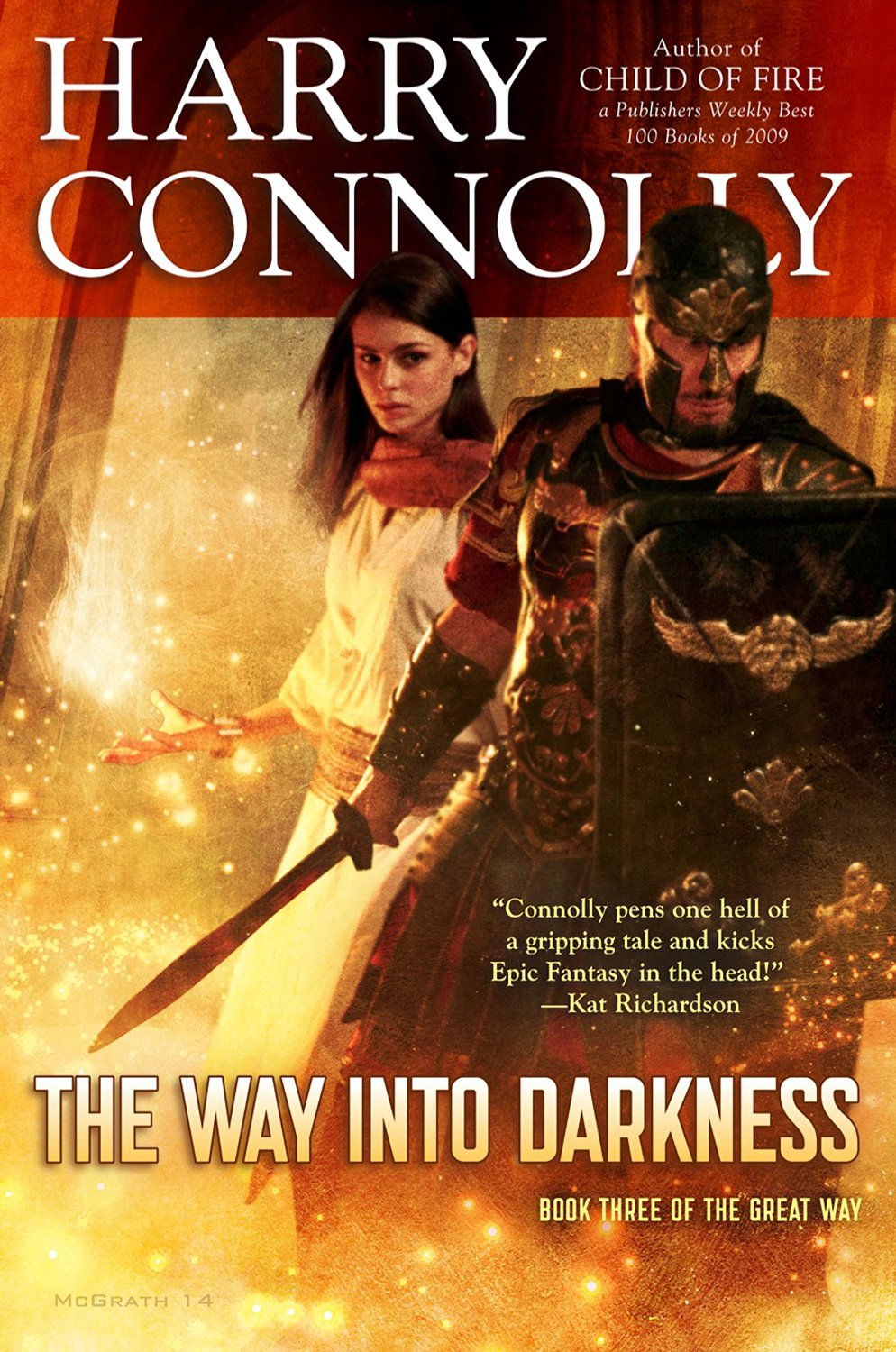
Great-Way-Final-Cover-eBook-3-copySome writers plan their careers.

They scan the top of the best seller lists, think Hmm… here’s a police procedural, this one’s steampunk, these two are zombie novels, and this one’s about angels. Great! I’ve been wanting to try steampunk. I’ll write a steampunk murder mystery about a pair of mismatched cops. One will be a zombie and the other will be an angel. No, a fallen angel who has lost his celestial whatsit.

Which is a silly example, obviously, but authors manage the non-silly version to great success. As I recall, John Scalzi has said that he wrote Old Man’s War because MilSF seemed to be selling well. There are others, too, but I hesitate to name them because writing to the market has a bit of a stigma attached to it, although it shouldn’t. More power to them, I say.*

Me, I can’t do it. Not that I haven’t tried, but I can’t make it work. I don’t read fast enough to sample the sales lists widely, I can’t make myself write a book without screwing around with the tropes of the genre, and I suffer from attack novels.

Attack novel: ( əˈtak ˈnävəl) n: a story idea that a writer can’t stop thinking about, even (especially) when they’re supposed to be working on something else.

The first book I ever sold was an attack novel. So was the first book I ever started and abandoned. They haven’t all been, but when they come on me, all I can do is put them off until I finish whatever’s on deadline.

At the beginning of March, I released an attack novel that I started five years ago, and in every way that matters, it was a book I shouldn’t have written.

Read More Read More

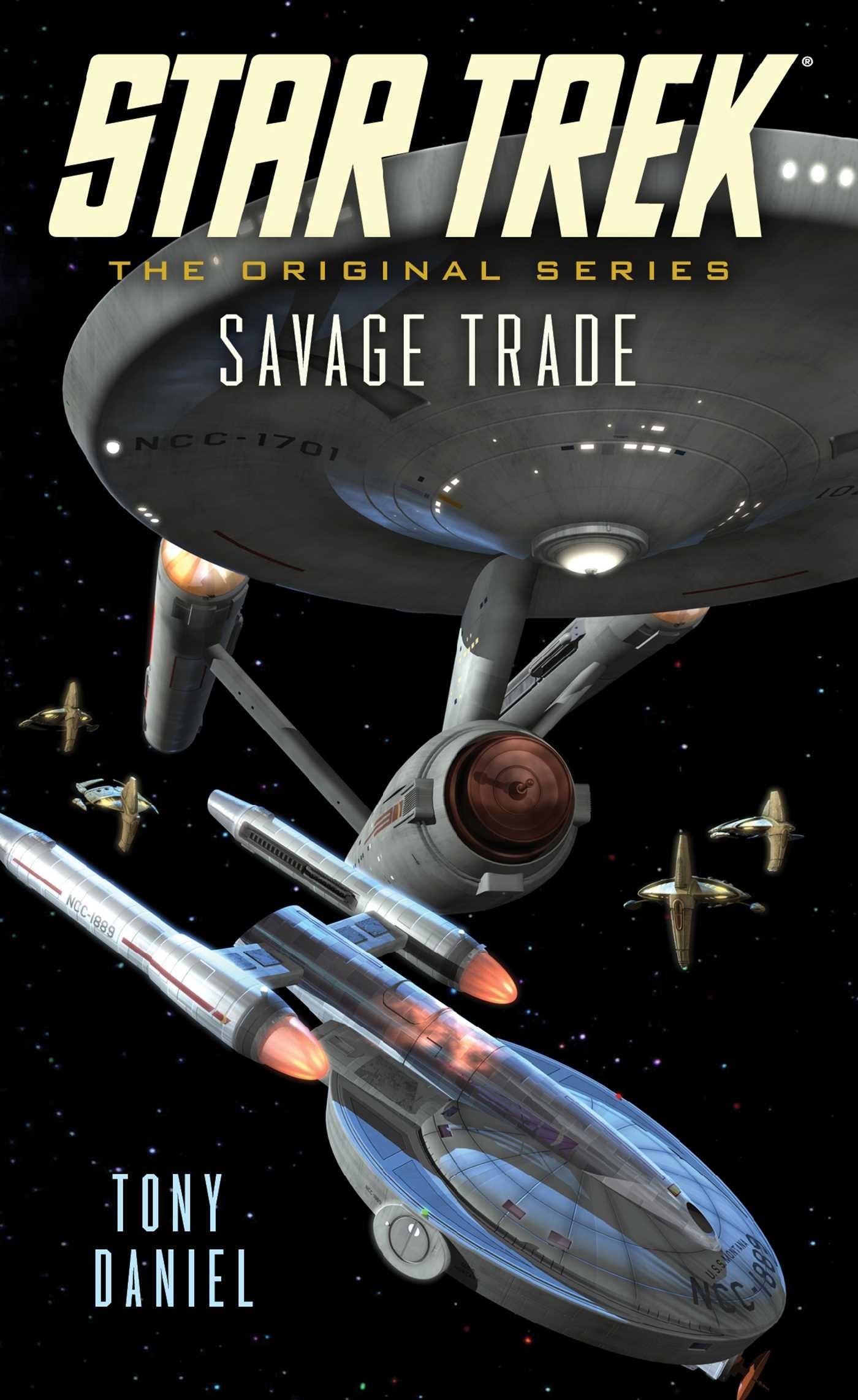
New Treasures: Star Trek: The Original Series: Savage Trade by Tony Daniel

New Treasures: Star Trek: The Original Series: Savage Trade by Tony Daniel

Star Trek Savage Trade-smallI’ve heard about many different ways that Star Trek fans have paid tribute to Leonard Nimoy over the last two weeks. For me, it was by watching Star Trek IV: The Voyage Home with my family. My kids have seen many of my favorite episodes over the years, but this was their first exposure to Nimoy as a director.

Of course, that just whet my appetite for more Star Trek. So while I’m waiting for the next episode of the excellent fan series Star Trek Continues, I thought I’d browse the latest licensed novels based on the original series. I was surprised and pleased to find Tony Daniel, author of Earthling, Metaplanetary, and the excellent The Robot’s Twilight Companion (which I reviewed for SF Site fifteen years ago), has penned a new novel, Savage Trade.

The U.S.S. Enterprise under the command of Captain James T. Kirk is en route to the extreme edge of the Alpha Quadrant, and to a region known as the Vara Nebula. Its mission: to investigate why science outpost Zeta Gibraltar is not answering all Federation hailing messages. When the Enterprise arrives, a scan shows no life forms in the science station. Kirk leads a landing party and quickly discovers the reason for the strange silence — signs of a violent firefight are everywhere. Zeta Gibraltar has been completely raided. Yet there are no bodies and the entire roster of station personnel is missing…

This is Daniel’s second Star Trek novel. The first, Devil’s Bargain (2013), is a sequel to my favorite episode, “Devil in the Dark,” and features the return of the bizarre and intelligent Horta. Savage Trade features the return of the mysterious rock creatures the Excalbians, from the season three episode “The Savage Curtain,” in which Kirk and Spock join Abraham Lincoln and the Vulcan Surak match wits against against four of the worst villains from history.

Star Trek: The Original Series: Savage Trade was published by Pocket Books on February 24, 2015. It is 384 pages, priced at $7.99 for both the paperback and digital edition. Read an interview with Tony Daniel about Savage Trade here, and an excerpt from the novel at Barnes & Noble.

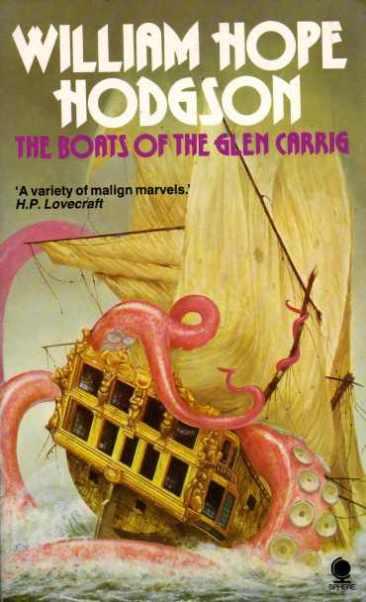
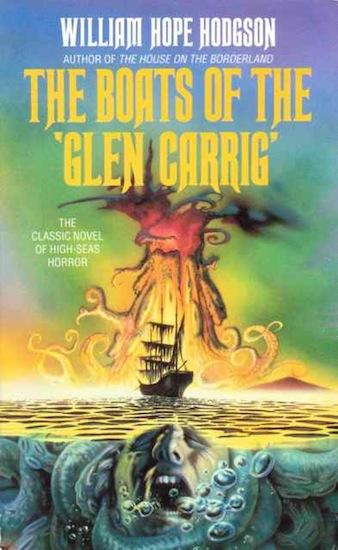
Vintage Treasures: The Boats of the Glen Carrig by William Hope Hodgson

Vintage Treasures: The Boats of the Glen Carrig by William Hope Hodgson

Famous Fantastic Mysteries June 1945-small The Boats of the Glen Carrig-small The Boats of the Glen Carrig Grafton-small

The Boats of the Glen Carrig was first published in 1907, and it has been reprinted countless times over the last hundred years. It is currently in print in no less than five separate editions, including multiple digital formats. In virtually every sense it is a classic horror novel, by one of the great 20th Century horror writers.

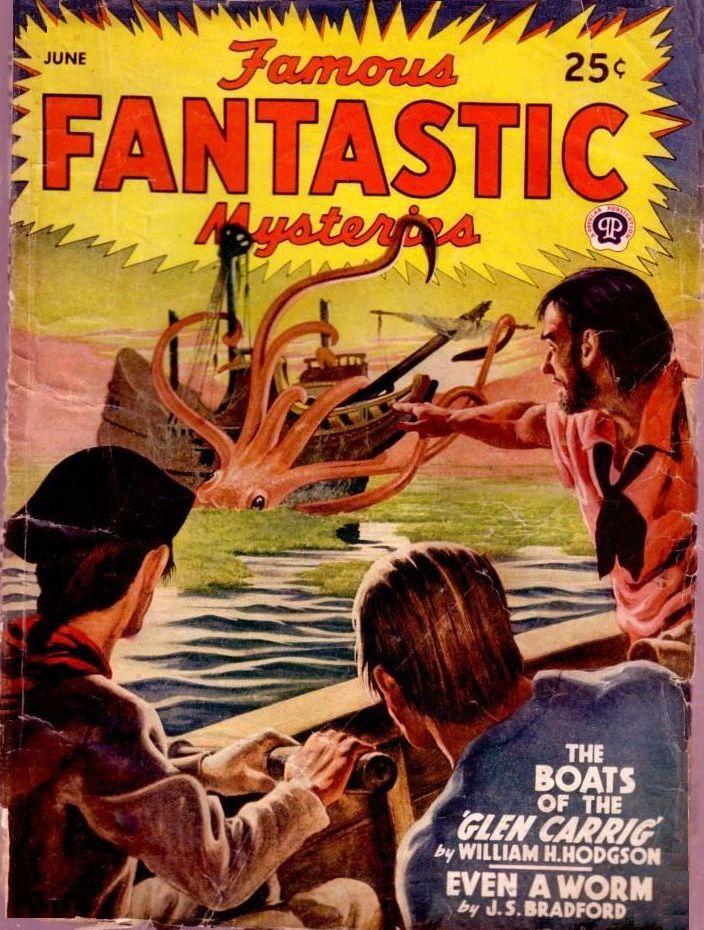
It wasn’t always recognized as such. In fact, after its first appearance, it languished for decades, before it was showcased in Famous Fantastic Mysteries in June 1945, with a terrific cover by Lawrence. It was reprinted in the seminal omnibus volume The House on the Borderland and Other Novels the following year, one of the most important and collectible volumes Arkham House ever published.

Read More Read More