Browsed by
Category: Books

True to the Specters of the Dead: The Big Book of Ghost Stories, edited by Otto Penzler

True to the Specters of the Dead: The Big Book of Ghost Stories, edited by Otto Penzler

The Big Book of Ghost Stories-small The Big Book of Ghost Stories-back-small

Two weeks ago I wrote a quick piece on Otto Penzler’s latest anthology, The Big Book of Rogues and Villains. I dashed off a list of the previous Penzler books we’d covered over the years… and I realized to my dismay that we’d somehow overlooked one of my favorites, The Big Book of Ghost Stories, an 836-page treasure trove released in 2012. I figured the time was right to rectify that oversight.

Michael Dirda gives a great summary in his Washington Post review.

Otto Penzler’s The Big Book of Ghost Stories largely focuses on classic tales. No one should go through life (let alone death) without experiencing W.W. Jacobs’s “The Monkey’s Paw,” Perceval Landon’s “Thurnley Abbey,” Ambrose Bierce’s “The Moonlit Road” and M.R. James’s “Oh, Whistle and I’ll Come to You My Lad.” But Penzler also includes many stories that should be equally well known. This year, for instance, I read for the first time Ellen Glasgow’s “The Shadowy Third,” a wonderfully ambiguous tale of a nurse hired by a charismatic doctor to care for his apparently demented wife. Yet Mrs. Maradick is strangely afraid of her handsome husband, and there is something odd about her silent young daughter. Glasgow’s narrative is deeply haunting, in more ways than one.

Penzler stresses that he has “tried to remain true to the notion that ghosts are spirits or specters of the dead. Some stories that frequently have appeared in other ghost story anthologies have nothing at all to do with ghosts. They may be trolls, or evil plants, vile fungi, monsters, or other creatures of that ilk. Rightly or not, I have attempted to be a bit of a narrow-minded purist about it all.” This means that there is nothing here by Arthur Machen, who specialized in ancient and malignant races lurking in the Welsh hills, while Algernon Blackwood is represented by “The Woman’s Ghost Story” instead of his masterpiece, “The Willows.”

The book contains tales by HP Lovecraft, Conrad Aiken, Rudyard Kipling, Ramsey Campbell, Nathaniel Hawthorne, Donald E. Westlake, Fritz Leiber, Albert E. Cowdrey, Wilkie Collins, Manly Wade Wellman, Saki, Edith Wharton, and many others. Here’s the complete Table of Contents.
Read More Read More

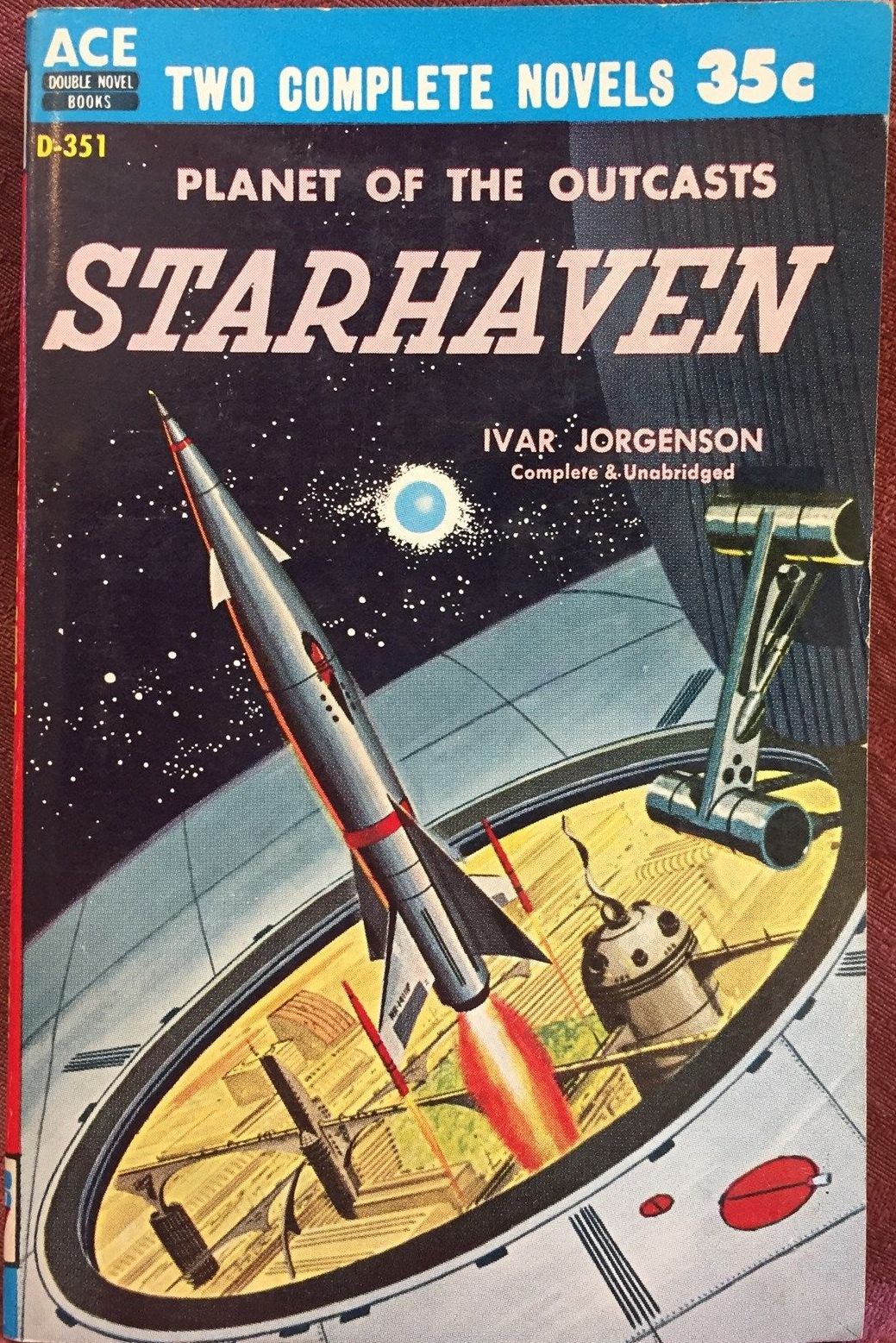
Old Empires and Armored Planets: Rich Horton on The Sun Smasher by Edmond Hamilton and Starhaven by Ivar Jorgenson

Old Empires and Armored Planets: Rich Horton on The Sun Smasher by Edmond Hamilton and Starhaven by Ivar Jorgenson

The Sun Smasher Edmond Hamilton-small Starhaven Ivar Jorgenson-small

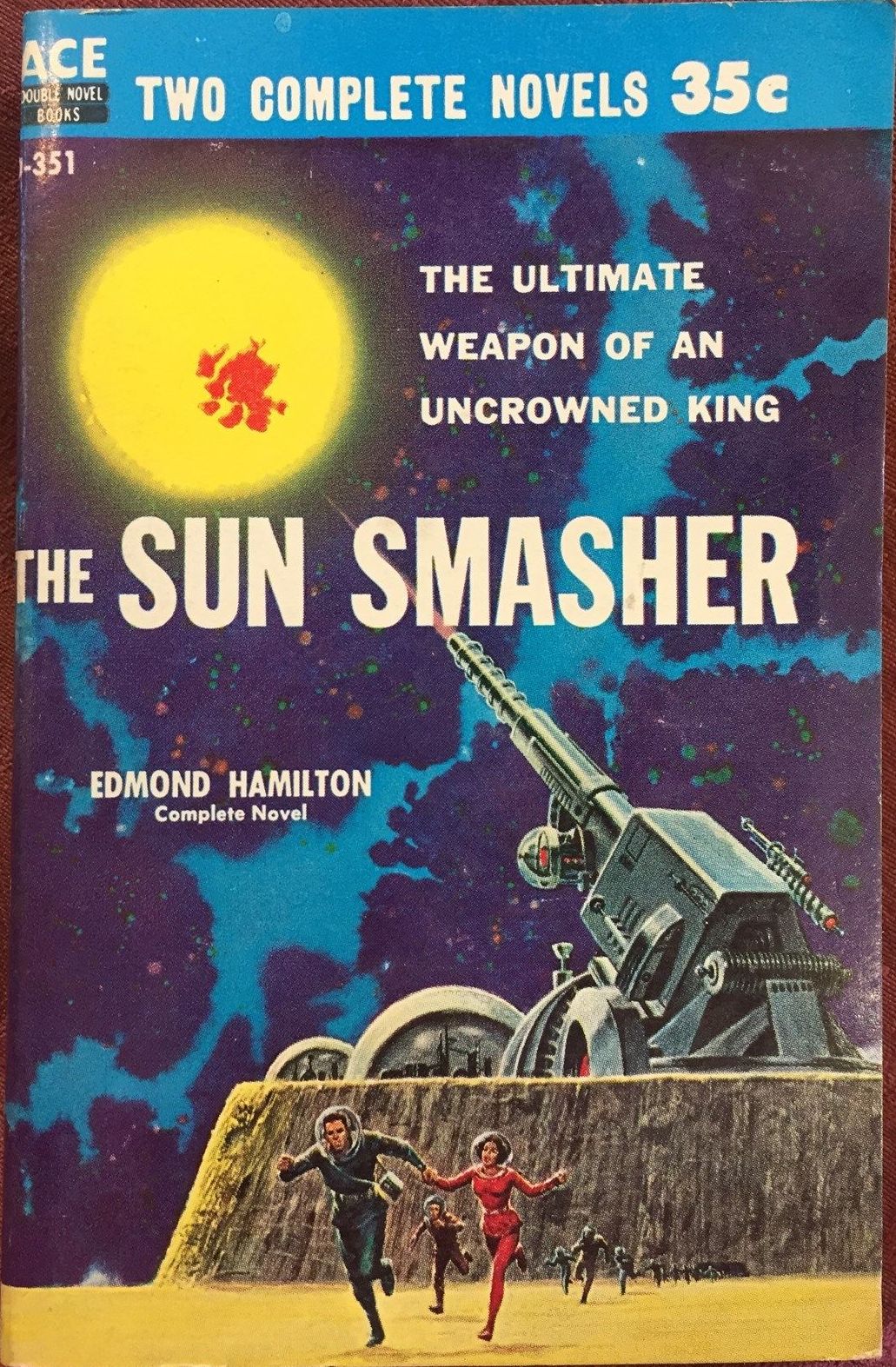
Rich Horton has been reading through the Ace Double library over at his blog Strange at Ecbatan. His last few selections have been duds, but I’m optimistic about Edmond Hamilton’s The Sun Smasher and Ivar Jorgenson’s Starhaven, Double #D351, published in 1959. Edmond Hamilton was my favorite pulp SF writer, and “Ivar Jorgenson” was a pen name for none other than Robert Silverberg.  Here’s Rich.

Each of these novels was published earlier in a single issue of a magazine, possibly (especially in the case of the Jorgenson novel) in shorter versions. The Sun Smasher appeared as “Starman Come Home” in the September 1954 Universe Science Fiction, while Starhaven appeared as “Thunder Over Starhaven” in Science Fiction Adventures for October 1957. (I suspect the Hamilton novel, which is the shorter of the two at about 30,000 words, probably is the same version as appeared in the magazine, but the “Jorgenson” story, some 40,000 words long or more, is expanded, as Silverberg discusses below.)

The covers of the magazine editions of these stories are something of a real delight, so I’ve reproduced them here.

I always enjoy Rich’s reviews of classic SF. But when he starts throwing in vintage magazine covers, you know he’s really speaking my language.

Read More Read More

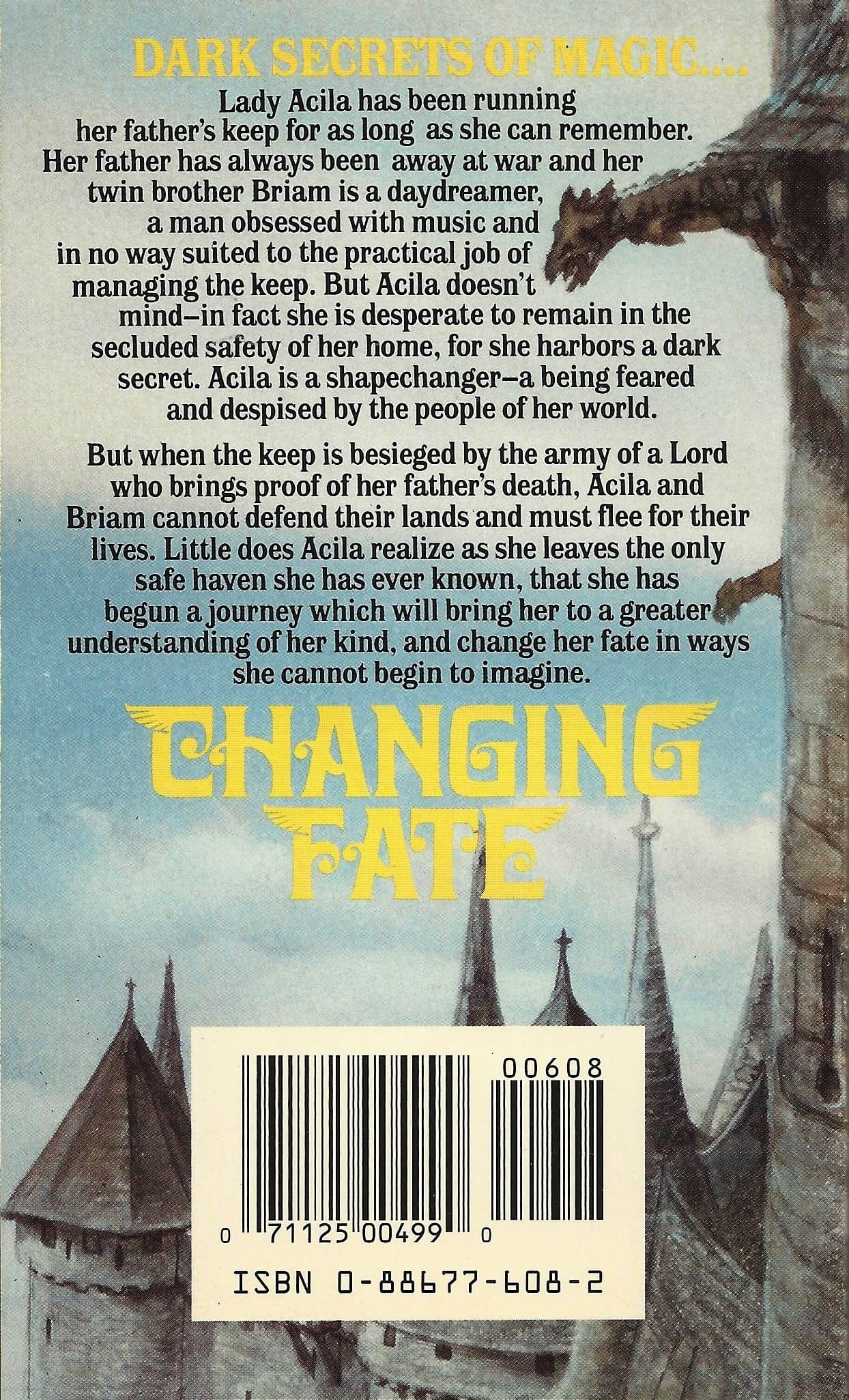
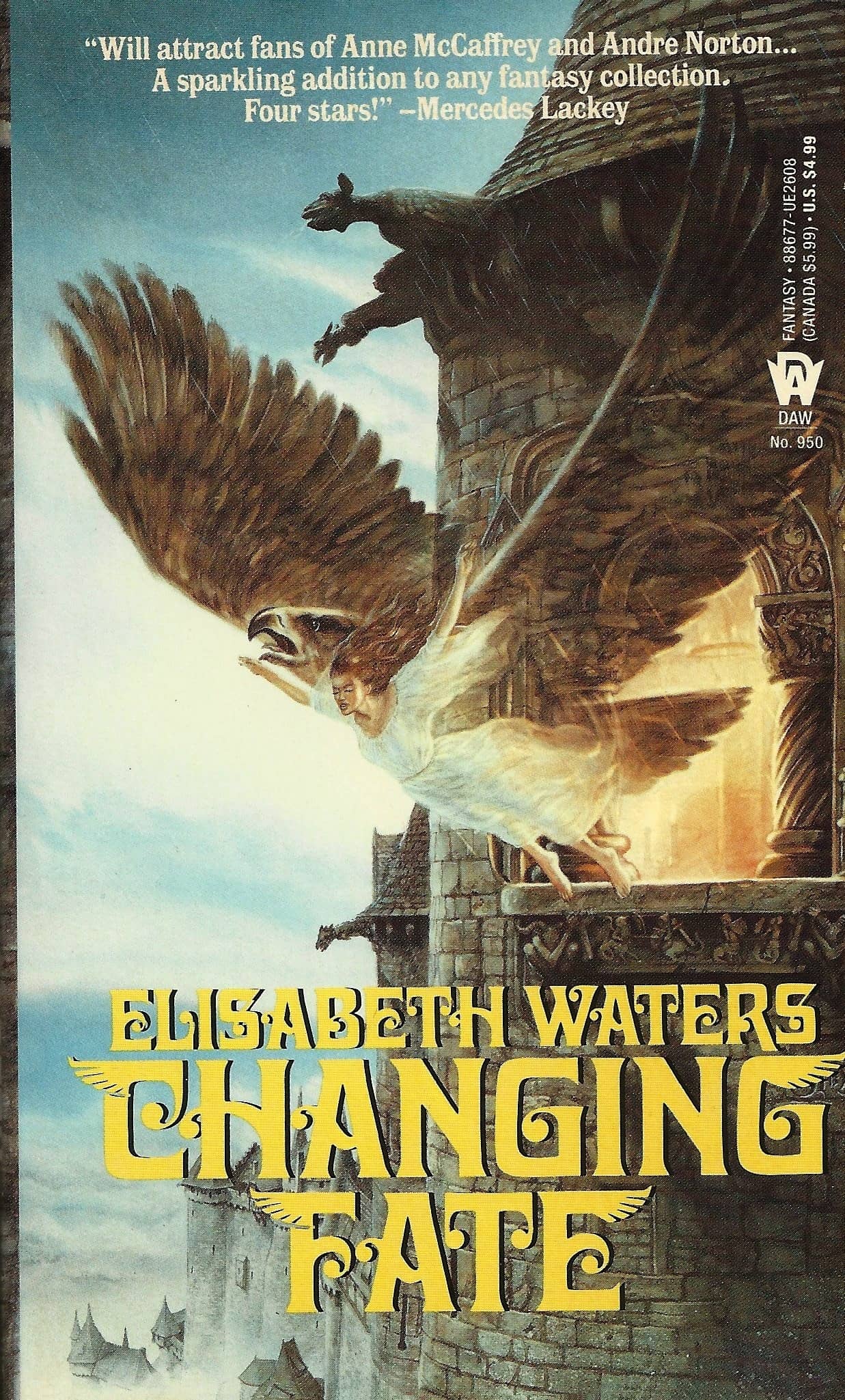
Vintage Treasures: Changing Fate by Elisabeth Waters

Vintage Treasures: Changing Fate by Elisabeth Waters

Elisabeth Waters Changing Fate-back-small Elisabeth Waters Changing Fate-small

Elisabeth Waters’ first publication, “The Keeper’s Price,” was co-authored with Marion Zimmer Bradley and appeared in Bradley’s 1980 Darkover anthology The Keeper’s Price and Other Stories. That launched a lengthy writing career that includes over 40 short stories and a novel in the Trillium series, also co-authored with Bradley. Since 2007 Waters has been the driving force behind the Sword and Sorceress anthology series, taking over with Volume XXII at Norilana Books. The most recent,  Volume 32, was released last month by the Marion Zimmer Bradley Literary Works Trust.

Waters published a single standalone novel, Changing Fate, in 1994, with a striking wraparound cover by Lord of the Rings artist John Howe. It grew out of the short story “A Woman’s Privilege” in Sword and Sorceress 3, published in 1986; it was nominated for the Locus Award for Best First Novel, and won Andre Norton’s Gryphon Award. A sequel, Mending Fate, finally appeared last year, 22 years after the first volume, from the Marion Zimmer Bradley Literary Works Trust.

Changing Fate was published by DAW Books in April 1994. It is 240 pages, priced at $4.99 in paperback. The cover is by John Howe. It was reprinted in trade paperback and digital formats in 2015. Read more at Elisabeth Waters’ website.

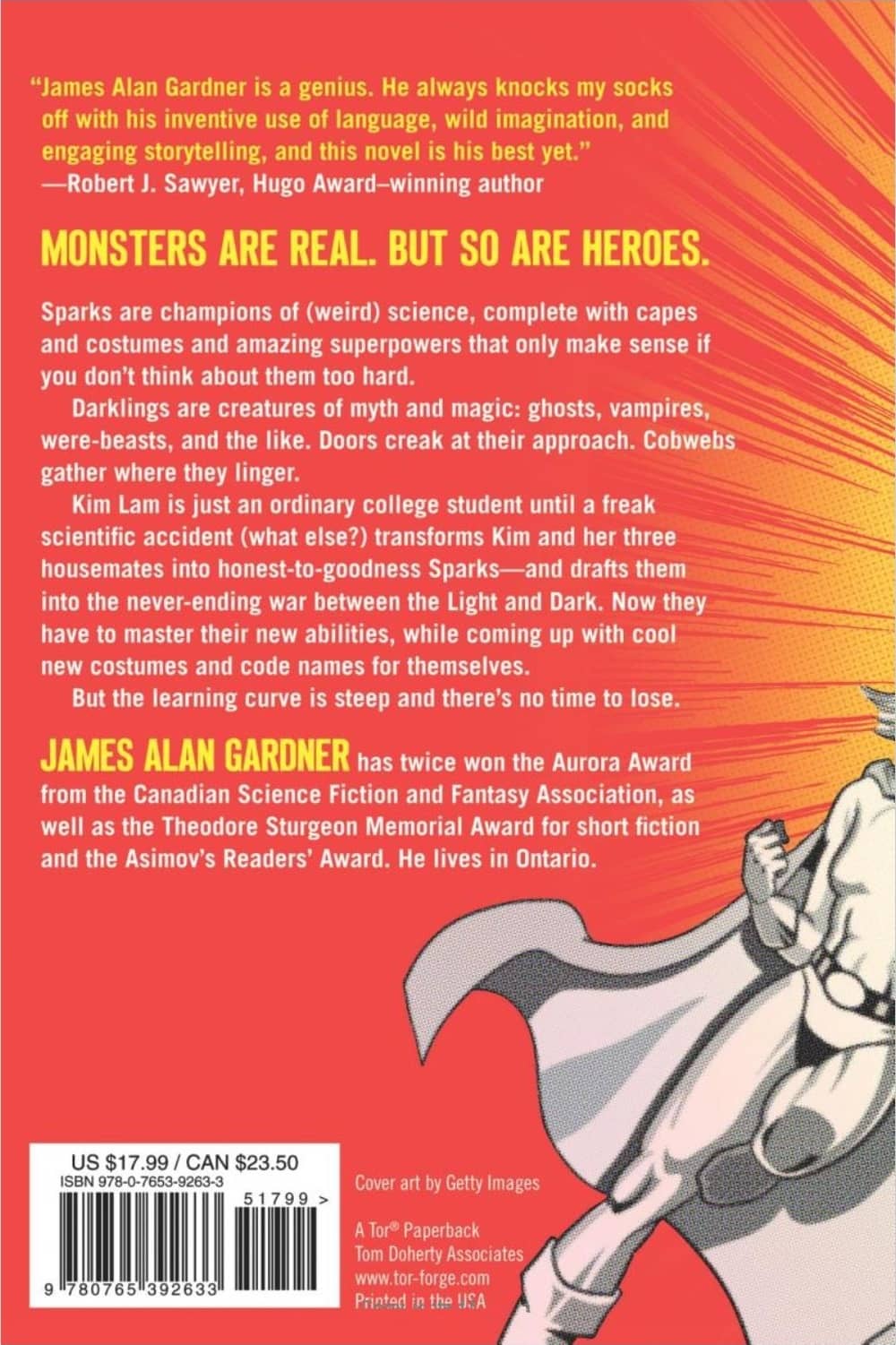
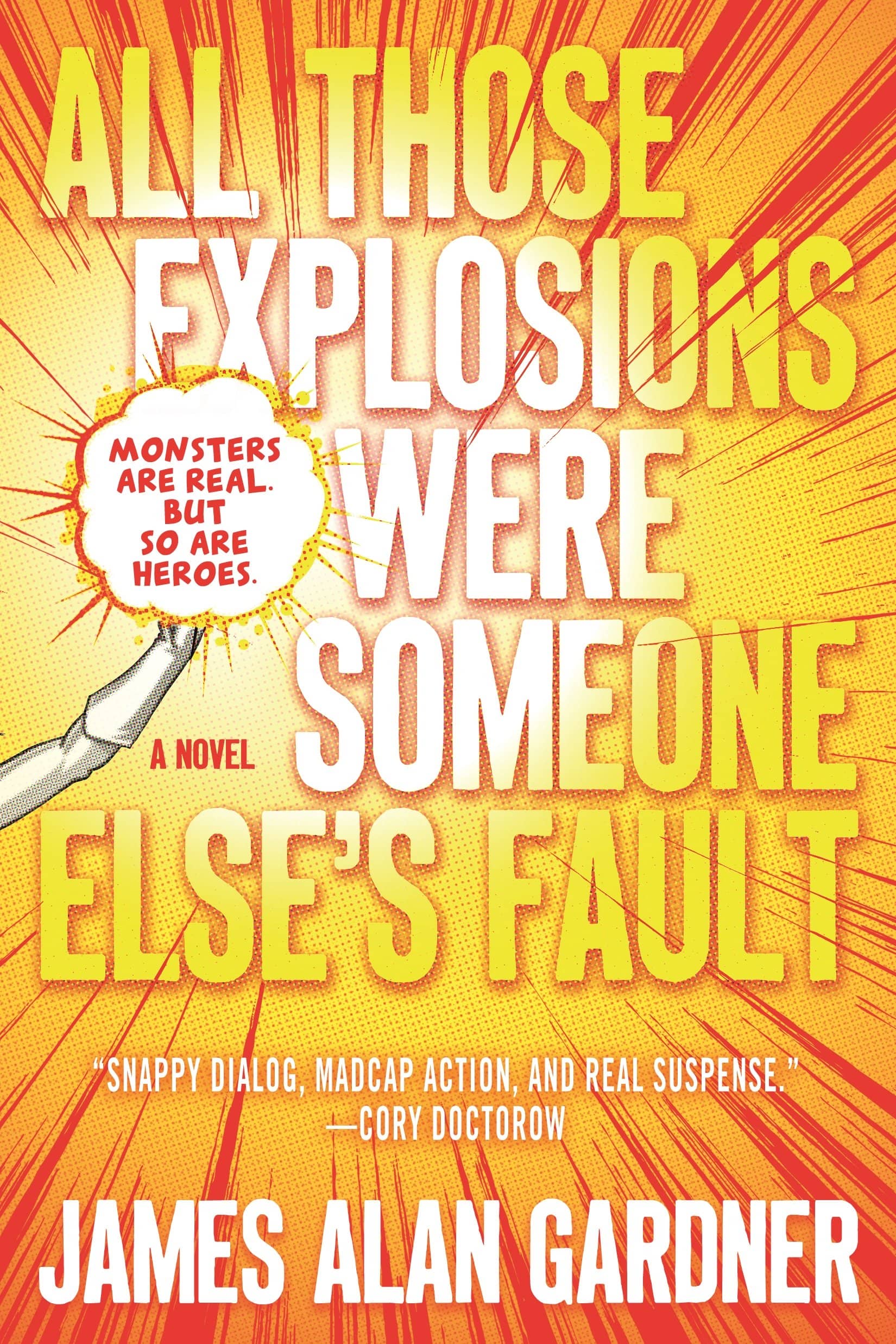
New Treasures: All Those Explosions Were Someone Else’s Fault by James Alan Gardner

New Treasures: All Those Explosions Were Someone Else’s Fault by James Alan Gardner

All Those Explosions Were Someone Else's Fault-back-small All Those Explosions Were Someone Else's Fault-small

Canadian SF writer James Alan Gardner published seven novels between 1997 and 2002, including Expendable, Commitment Hour, and Radiant. Then he switched almost entirely to short fiction, producing 17 short stories and one collection between 2005 and 2017 (with the exception of one media tie-in novel, Tomb Raider: The Man of Bronze).

There’s nothing wrong with short fiction, of course. But when you stop writing novels for a dozen years, people think you’ve vanished. So I was both pleased and surprised to tear open an envelope from Tor this week and find a review copy of Gardner’s first new novel since 2005. It’s good to have him back — especially with something that looks as fun as All Those Explosions Were Someone Else’s Fault. It’s the tale of Kim Lam and her three housemates who are transformed from ordinary college students into superheroes by “a freak scientific accident (what else?),” and find themselves caught up in a war between super-powered humans and sinister darkling creatures (vampires, ghosts, and worse things.) The sequel, They Promised Me the Gun Wasn’t Loaded, arrives next year.

All Those Explosions Were Someone Else’s Fault was published by Tor Books on November 7, 2017. It is 382 pages, priced at $17.99 in trade paperback and $9.99 for the digital edition. The cover art is by Getty images. Read an excerpt here.

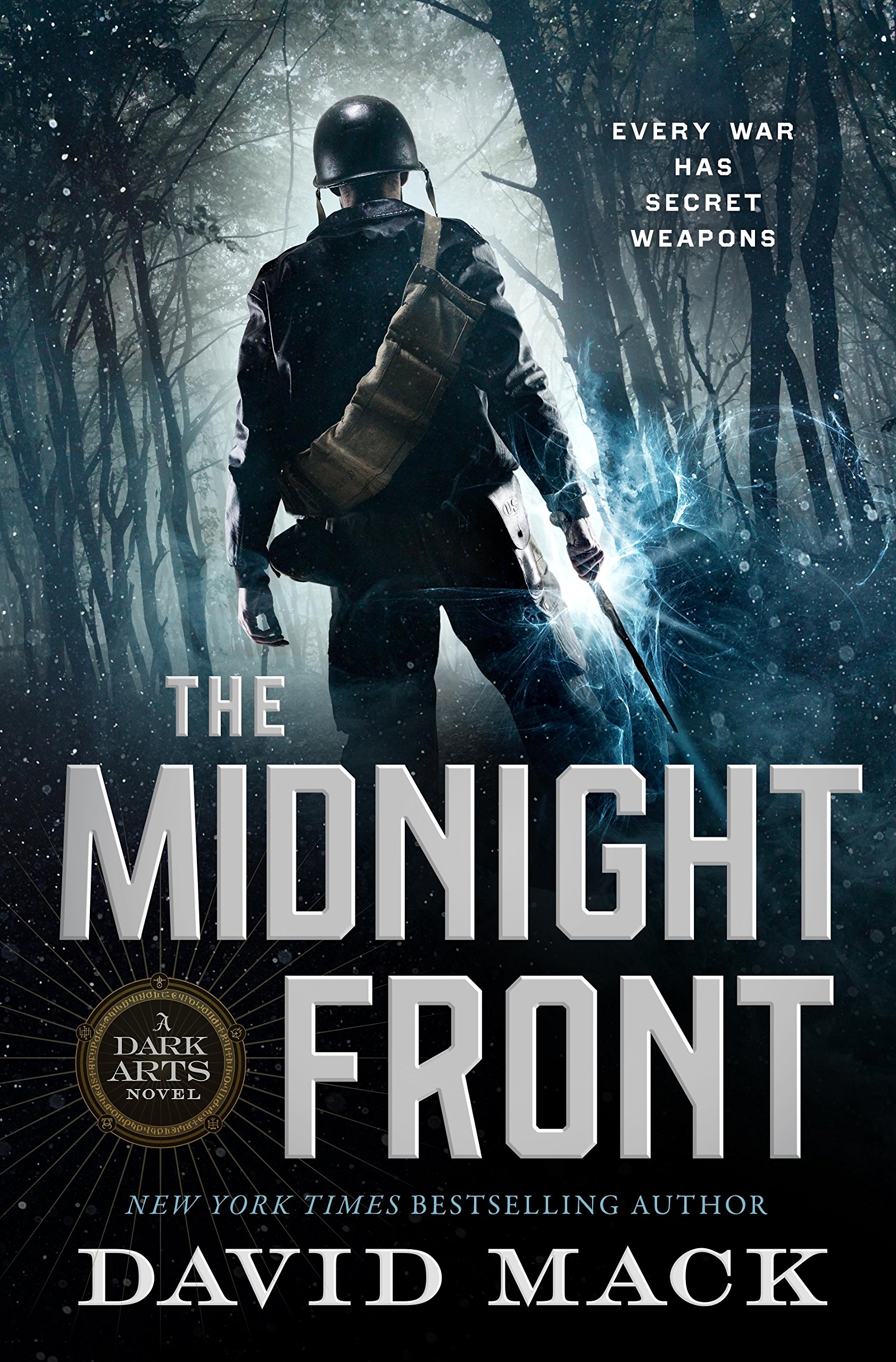
Future Treasures: The Midnight Front by David Mack

Future Treasures: The Midnight Front by David Mack

The Midnight Front-smallDavid Mack has built his rep chiefly on Star Trek novels, such as the Star Trek: Vanguard series, and the new Star Trek Discovery tie-in novel Desperate Hours (which Derek Kunsken reviewed for us here).

His latest is a World War II-era adventure in which an American soldier finds himself up against Nazi sorcerers. Kirkus Reviews calls it “Propulsive… Equal parts brimstone and gunpowder… an entertaining scenario that wouldn’t be out of place in a video game or a spirited match of Dungeons & Dragons.”

The Midnight Front is the opening novel in the Dark Arts series; it arrives simultaneously in hardcover and trade paperback from Tor in January. It will be followed by The Iron Codex, set in the 1950s; and Shadow Commission, set in the ’60s.

On the eve of World War Two, Nazi sorcerers come gunning for Cade but kill his family instead. His one path of vengeance is to become an apprentice of The Midnight Front ― the Allies’ top-secret magickal warfare program ― and become a sorcerer himself.

Unsure who will kill him first ― his allies, his enemies, or the demons he has to use to wield magick ― Cade fights his way through occupied Europe and enemy lines. But he learns too late the true price of revenge will be more terrible than just the loss of his soul ― and there’s no task harder than doing good with a power born of ultimate evil.

The Midnight Front will be published by Tor Books on January 30, 2018. It is 464 pages, priced at $27.99 in hardcover, $15.99 in trade paperback, and $9.99 for the digital edition. The cover is by Larry Rostant. Read an excerpt at Tor.com.

See all of our coverage of the best upcoming fantasy here.

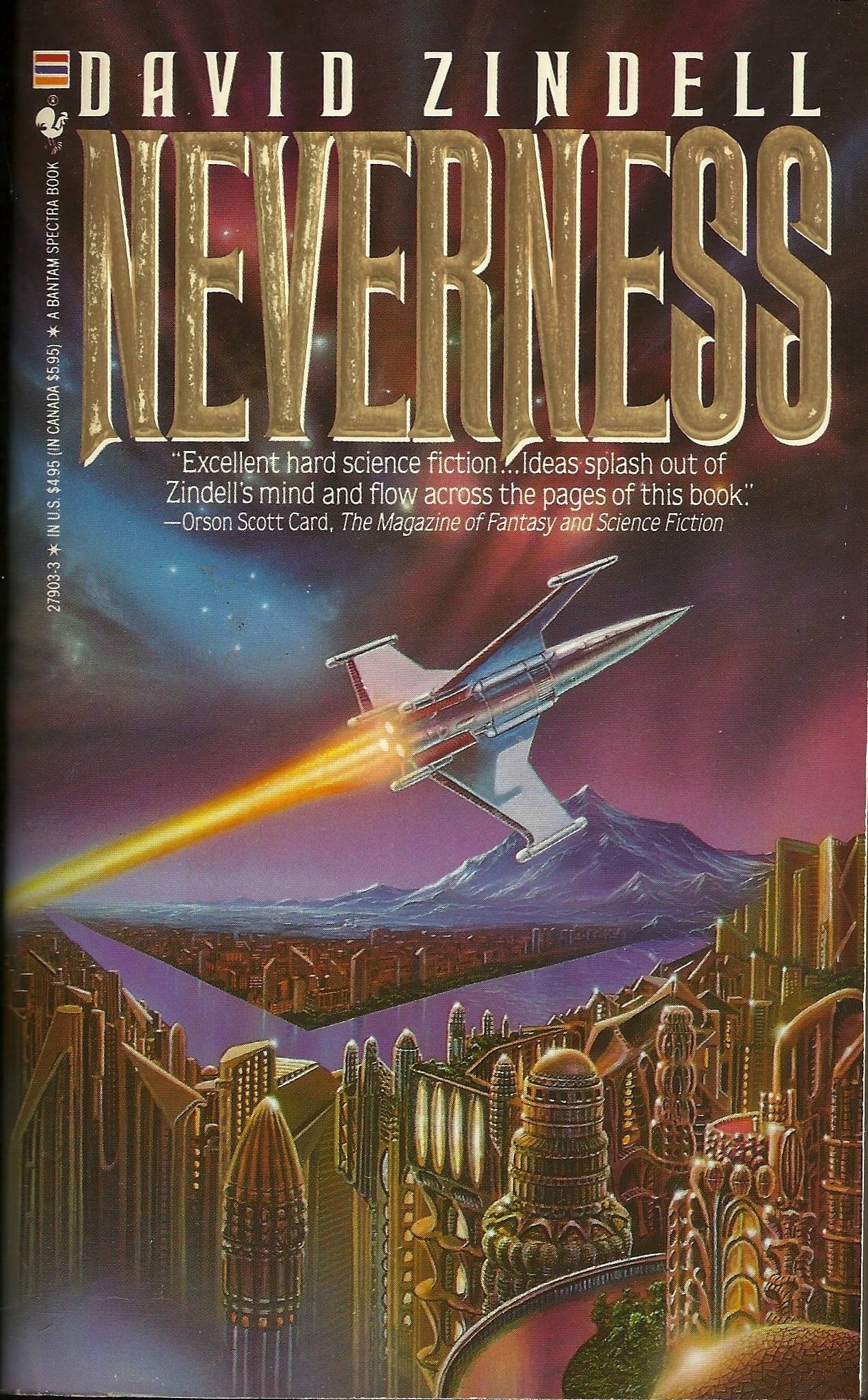
Vintage Treasures: Neverness by David Zindell

Vintage Treasures: Neverness by David Zindell

Neverness David Zindell-back-small Neverness David Zindell-small

David Zindell was nominated for the John W. Campbell Award for Best New Writer in 1986. His space opera trilogy A Requiem for Homo Sapiens (The Broken God, The Wild, and War in Heaven) received plenty of attention in the mid-90s, including a Clarke Award nomination for the opening novel. He also produced a six-book fantasy series, the EA Cycle, but it was not as well received, and only three volumes were ever released in the US.

Much of his reputation today, in fact, comes from his debut novel Neverness, which won instant and wide acclaim. Edward Bryant called it a “Feat of universe crafting [that] propels him instantly into the big leagues with the likes of Frank Herbert and Ursula K. Le Guin.” Kirkus Reviews said “Zindell succeeds brilliantly… in his convincing portrayal of what a super-intelligent being might be like…. Vastly promising work.” And on the basis of this single novel, Gene Wolfe proclaimed Zindell “One of the finest talents to appear since Kim Stanley Robinson and William Gibson — perhaps the finest.”

Zindell has not published a book in the US since The Silver Sword in 2007. His literary career has prospered far better in the UK, however, and his most recent novel, The Idiot Gods, was released across the pond by HarperVoyager in July 2017. It does not yet have a US release date.

Neverness was published by Bantam Spectra in July 1989. It is 552 pages, priced at $4.95. It was reprinted multiple times in the UK by Grafton and HarperCollins, but only once in the US, in a self-published edition in 2015. The wraparound cover of the Spectra version is by Don Dixon.

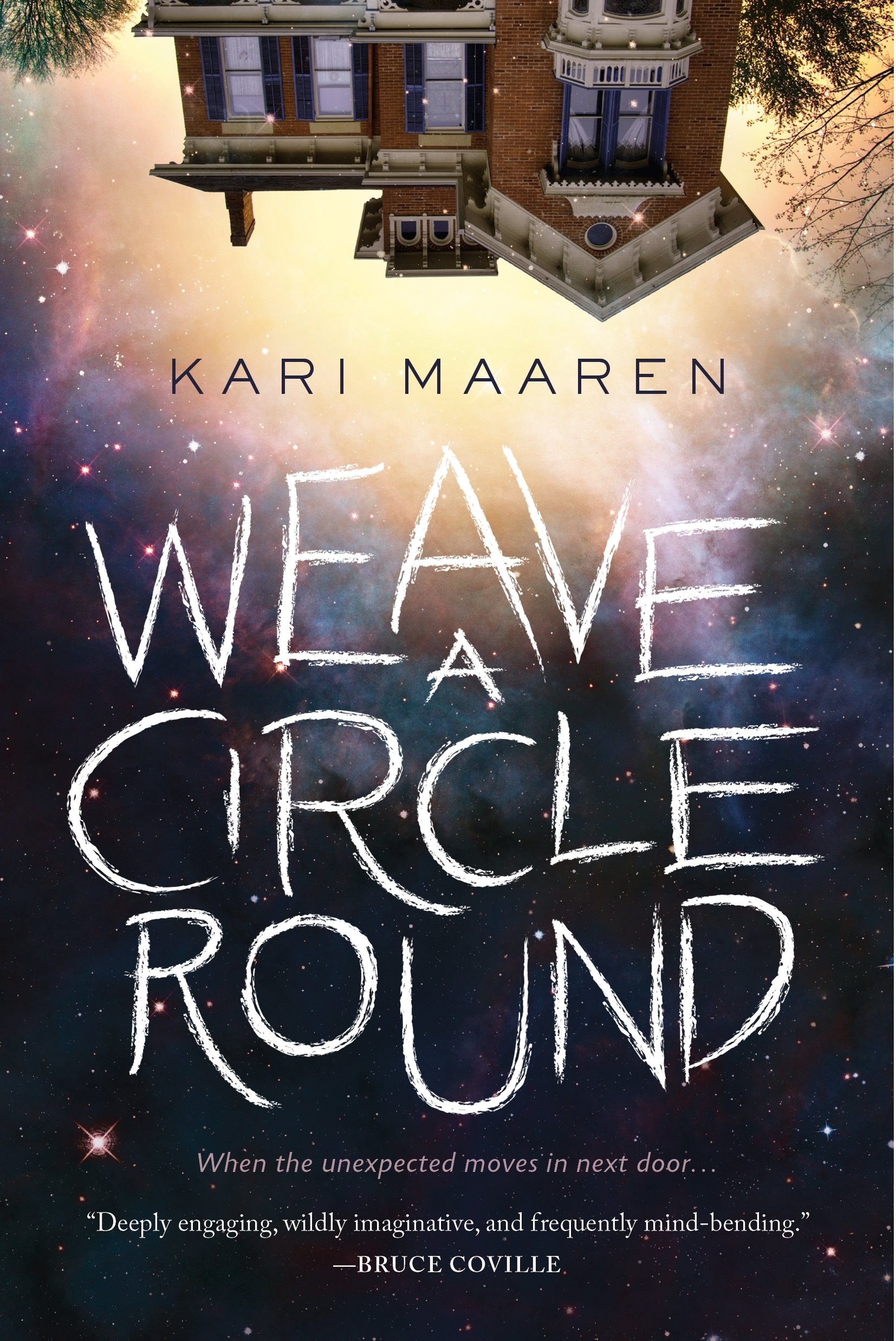
New Treasures: Weave a Circle Round by Kari Maaren

New Treasures: Weave a Circle Round by Kari Maaren

Weave a Circle Round-small Weave a Circle Round-back-small

We’re hurtling towards the end of the year, that time when Best of the Year lists are upon us. I try to cram in as many recommended reads as I can before the calendar turns over, at which time I inevitably give up in defeat, clear off my To Be Read pile, and start the year off with a fresh slate. Needless to say, I’m forced to be a lot more selective in my reading choices in the hectic weeks of December than I am the rest of the year. New releases usually suffer the most as I try to get caught up on the books everyone has been talking about.

But Kari Maaren’s Weave a Circle Round, published last week by Tor, has bucked that trend, and currently rests atop my To Be Read pile. Publishers Weekly calls it “Dazzling… an ambitious, intricate, joyful coming-of-age tale,” and Elizabeth Haydon says ” It rings many of the same chimes as The Phantom Tollbooth and A Wrinkle in Time, with a few notes charmingly reminiscent of Monty Python.” That’s exactly what I need right now.

Kari Maaren is a webcomic artist and writer; her previous publication was West of Bathurst, a complete 710-page collection of the webcomic which ran between 2006 and 2014. Weave a Circle Round is her debut novel. It was published by Tor Books on November 28, 2017. It is 367 pages, priced at $15.99 in trade paperback and $9.99 for the digital edition. The striking cover was designed by Jamie Stafford-Hill. Read the complete first chapter here., and see all of our recent New Treasures here.

Self-published Book Review: Dark Healer by Harry Leighton

Self-published Book Review: Dark Healer by Harry Leighton

There won’t be a review next month, due to the holidays, and most likely the month after that, since I’ll be reading for Mysterion, which will be opening to submissions in January. However, I’ll be happy to accept new book review submissions to review once I’m back.

Dark_Healer_Amazon_coverDark Healer by Harry Leighton is one of those novels about which I felt conflicted afterward. I really enjoyed the story, and thought it worked well at drawing me in and keeping me reading. But there were significant weaknesses in the prose that interfered with my enjoyment.  I’ll get to that, but first, let’s talk about the story.

Marlen, the titular Dark Healer, is a skilled surgeon and also a mage, mixing magic with the common healing arts in order to make his patients better. Better being the key word here—he can improve eyesight, enable quicker healing, make them stronger, even add extra arms.  He’s a regular medieval Mengele, but way more successful. When bounty hunters Jonas and Alia begin tracking him, it’s because he’s begun buying people at illegal slave auctions, specifically the sick and disabled. Some he makes well so that they can serve him, others he uses as spare parts.

Jonas has a history with Marlen. At one point, they were friends, but they had a falling out right at the beginning of Marlen’s turn to a darker path. Now, living with regret for his own actions during that desperate time, Jonas is determined to make things right by hunting Marlen down. His apprentice Alia doesn’t have a personal stake, but she’s utterly devoted to her mentor and father-figure, Jonas.

Daeholf, Trimas, and Zedek are on the run. Trimas is an exiled ex-General, Daeholf a former military scout and saboteur who had a falling out with his commanders, and Zedek is an elf, hated and feared everywhere in the Empire. Their goal is to keep their heads down and survive. But when they find that Daeholf’s cousin has gone missing, and discovered a farm where the farmers are the harvest, they are also set on the trail of the healer Marlen.

When the two groups team up to take down Marlen, they find themselves embroiled in an incipient civil war, and at its core, the monsters Marlen’s created.

Read More Read More

Witches, Privateers, and Enchanted Blades: Tales of the Thieftaker by D. B. Jackson

Witches, Privateers, and Enchanted Blades: Tales of the Thieftaker by D. B. Jackson

Tales of the Thieftaker-small Tales of the Thieftaker-back-small

Night of Two Moons,” the most popular story in Black Gate 4, was my introduction to the work of David B. Coe. Over the past two decades he’s produced eight novels in the same setting, the Forelands Universe (five in the Winds of the Forelands series, plus the Blood of the Southlands trilogy), and I’ve followed them avidly. His prior work included the LonTobyn Chronicle trilogy; more recently he’s turned his attention to contemporary fantasy with the Case Files of Justis Fearsson (Spell Blind, His Father’s Eyes, and Shadow’s Blade), featuring a magic-using private detective who faces off against dark sorcerers in Phoenix, Arizona. Starting in 2015 David became a semi-regular blogger for us; the most recent article in his Books and Craft series was World Building and the Importance of Setting.

In addition to that prodigious output, under the name ‘D. B. Jackson’ David’s also written four novels in the popular Thieftaker Chronicles, a historical urban fantasy series set in pre-Revolutionary Boston. The books have been widely acclaimed, and Kirkus Reviews calls them “Splendid… with [a] contemporary gumshoe-noir tone… An unusual series of great promise.” I’m very excited to see the next release, Tales of the Thieftaker, is a collection of new and previously published short stories — featuring a pre-dawn fire in colonial Boston, a young witch who harbors a terrible secret, a magick-laden blade, and the true story of the bloody mutiny aboard the privateering ship Ruby Blade.

Tales of the Thieftaker will be published by Lore Seekers Press on December 18, 2017. It is 275 pages, priced at $17.95 in trade paperback and $4.99 for he digital edition. The cover is by Chris McGrath. Read David’s interview (as D.B. Jackson) with his main character Ethan Kaille, the Thieftaker, in a funny and very insightful post here at Black Gate.

Vintage Treasures: The American Fantasy Tradition edited by Brian M. Thomsen

Vintage Treasures: The American Fantasy Tradition edited by Brian M. Thomsen

The American Fantasy Tradition Brian M Thomsen-small

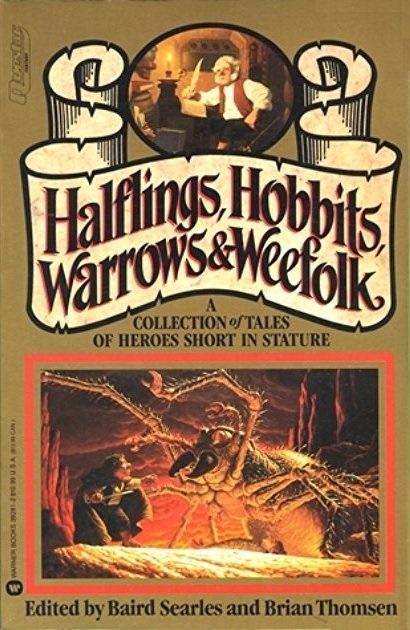
Brian Thomsen’s first anthology was Halflings, Hobbits, Warrows & Weefolk: A Collection of Tales of Heroes Short in Stature, a 1991 Questar paperback co-edited with Baird Searles. He followed that with more than a dozen more over the next 20 years — including The Reel Stuff (1998), Oceans of Magic (2001), and Masters of Fantasy (2004) — most co-edited with Martin H. Greenberg. He was the Senior Editor of SF and Fantasy at Warner Books and then Director of Books and Periodicals at TSR, where he wrote several Forgotten Realms novels, including Once Around the Realms (1995) and The Mage in the Iron Mask (1996).

He eventually became a Consulting Editor at Tor, where he produced in my opinion the most significant book of his career, and indeed one of the most important fantasy anthologies of the 90s: The American Fantasy Tradition, a massive 600-page hardcover surveying two centuries of American fantasy, containing stories by Washington Irving, Nathaniel Hawthorne, Mark Twain, Louisa May Alcott, Henry James, Ambrose Bierce, Kate Chopin, Stephen Vincent Benét, Edith Wharton, Robert W. Chambers, H. P. Lovecraft, Manly Wade Wellman, Charles Beaumont, Henry Kuttner, Theodore Sturgeon, Richard Matheson, Fredric Brown, Ray Bradbury, R. A. Lafferty, Alan Dean Foster, Shirley Jackson, Avram Davidson, Harlan Ellison, Stephen King, Gene Wolfe, Karl Edward Wagner, Ursula K. Le Guin, Michael Bishop, and many others.

The American Fantasy Tradition is one of the finest survey anthologies of Western fantasy ever assembled, and it would serve as a splendid textbook for any introductory course to modern fantasy. It stands with David Hartwell’s The Dark Descent, Gardner Dozois’s Modern Classics of Fantasy, and Jeff and Ann VanderMeer’s The Weird as one of the essential texts of the fantasy canon.

Read More Read More