Browsed by
Category: Blog Entry

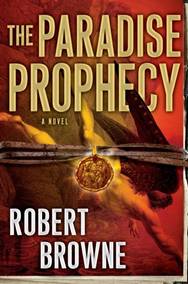
Goth Chick News: 13 Questions for Robert Browne, Author of The Paradise Prophecy
Goth Chick News: 13 Questions for Robert Browne, Author of The Paradise Prophecy

image0022In spite of it being a gorgeous, sunny couple of weeks in Chicago, I remain unnaturally pasty.

No, that’s not normal for me, but thanks for asking.

Even I occasionally venture out of the subterranean offices of the Black Gate headquarters for a little fresh air, some more salt for the margaritas, or to affix sticky notes with snarky comments on the paint-ball equipment posters of the boys in the upstairs staff room.

But for the last few days I have remained glued to my comfy chair and Robert Browne is to blame.

One of the joys of this job is the occasional pre-publication copy of a soon-to-be-released book. Even more joyful are those that turn out to be a decent read. But the pinnacle and rarest of joys is the book that is one-of-a-kind special.

The Paradise Prophecy is one of those.

Not that I wasn’t prepared to be skeptical (because frankly when am I not?). But almost literally from the first page I was hooked. And so there I sat in my comfy chair; bereft of vitamin D and not even bothering to reach over to press “crush” on the blender controls, totally enslaved by one of the most uniquely told tales I’ve come across in a very long time.


Read More Read More

Readercon 22: In Which the Pre-Raphaelite Sisterhood (well, some of them) Encounters Cannibal Towns, Dirty Limericks and Googly Eyeballs

Readercon 22: In Which the Pre-Raphaelite Sisterhood (well, some of them) Encounters Cannibal Towns, Dirty Limericks and Googly Eyeballs

Cannibal Country. (AKA Guilderland, New York)

The thought that preoccupies me is, “How the heck am I going to find enough pictures to go with this post?”

Unlike that one time when we crashed a Zeppelin into Madison, we did not document our epic journey across America with anything so practical as a camera. No!

Instead, we marked the miles in the bellowing of bawdy (need I say, alternate?) lyrics to “There’s a Hole in My Bucket, Dear Liza,” the scrawling of character notes, place names and plot devices for a story about a stolen moon, the counting of times the word “Beloit” was mentioned in the back seat (Brendan Detzner being an alum and S. Brackett Robertson, or “Brackett,” a current student), in Billy Joel sing-alongs and idle speculations about the nature of certain malevolently leaning shacks in Guilderland, New York.

The B-Train. (AKA, writer Brendan Detzner)

“Meth shed?” Patty postulated.

“Cannibals?” I countered.

“CANNIBAL METH SHEDS!” we roared together, with, perhaps, more delighted gusto than was strictly necessary.

“So… Do the cannibals eat the meth heads?” Brendan asked. “Or are the cannibals themselves meth heads?”

The conversation went on. I will not trouble you with further details. By this time we had been driving approximately ten hours and still had nine to go.

Read More Read More

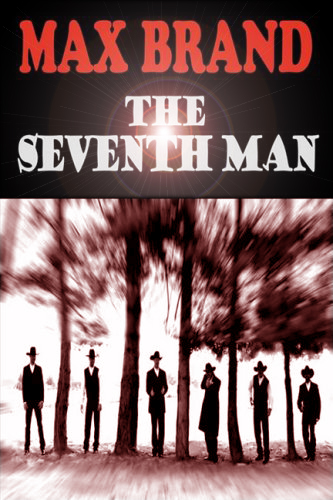
Masterpiece: The Seventh Man by Frederick Faust (Max Brand)

Masterpiece: The Seventh Man by Frederick Faust (Max Brand)

seventh-man-modern-coverPrelim: The Seventh Man is in the public domain and available for free from Project Gutenberg in a variety of e-book formats. If you want a hard copy, there is a paperback print-on-demand edition available from Phoenix Rider; I do not know what the text quality is on it, but it’s only $5.99. Bottom line: no excuse not to give the novel a try.
Last year, I posted three articles about Frederick Faust, a staggeringly prolific author of Western fiction and other genres for the pulp magazines. Writing under the pseudonym “Max Brand” and eighteen others pen names, Faust was a one-man writing army that dominated the Western fiction field from the end of World War I until his death as a journalist on the Italian front in World War II. Readers responded positively to the three articles, the first covering Brand’s general career, the next analyzing a collection of his early Western short fiction, and the third examining his rare foray into science fiction, The Smoking Land.

But the response that interested me the most was my own. Those are among my favorite posts I’ve put up on Black Gate in the three years I’ve held this Tuesday spot. It isn’t that I feel proud of the writing and research on them. It’s that they made me realize what an anchor Frederick Faust is in my own writing, and how much I learn from him every time I read one of his works. Reading Faust and researching his life and letters is like coming home to a place that I didn’t realize is “home” when I was away from it.

So I’ve returned to the topic, and I’ve brought one of Faust’s great novels with me, The Seventh Man (1921). So far, I’ve only examined the Western through his short stories, but Faust’s major impact on the genre is in his novels.

Read More Read More

Why I Love Harry Potter (and J.K. Rowling)

Why I Love Harry Potter (and J.K. Rowling)

hpteaserI remember walking through a movie theater and seeing a teaser poster for the first Harry Potter film. It showed an owl carrying a card addressed to Harry, in the cupboard under the stairs. There it is, to the right.
I was not a Harry Potter fan at the time, so I reacted to this much the same way I would react to a Living with the Kardasians film: annoyance and disgust.

See, being a fan of science fiction and fantasy is supposed to be outside the norm. I’d built my entire life around the idea that I was different from everyone else. (More on my crisis of geekdom in an upcoming essay.)

And here was this stinking boy wizard turning everyone into a fantasy geek. People who had never even heard of Narnia, Krynn, or Middle Earth, who wouldn’t know a Balrog from a Chromatic Dragon, rambled on and on about Hogwarts and He Who Must Not Be Named.

What about him so transfixed everyone?

Oh, I would learn.

Read More Read More

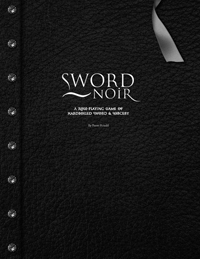
Sword Noir: A Role-playing Game of Hardboiled Sword & Sorcery

Sword Noir: A Role-playing Game of Hardboiled Sword & Sorcery

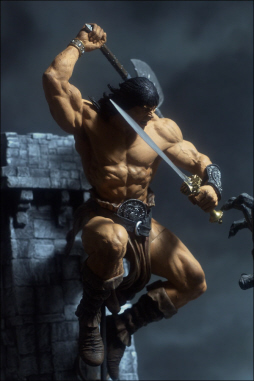
conan-cityImagine Conan in Shadizar, meeting with a beautiful woman calling herself Fortuna who pays him to find Thuris, the man who kidnapped her younger sister. Conan accepts the woman’s coin but finds himself in the middle of double and triple crosses as Fortuna — known as Brigid the Bold in the underworld — seeks for the Falcon of Maltus along with her betrayed confederates, Jubliex Cairo, Wilmer the Younger, and Gutmar.
Think of Fafhrd and the Grey Mouser hired by the powerful merchant Sternwood to scare ne’er-do-well Geiger away from the merchant’s daughter Carmen, only to be caught up in blackmail, murder, kidnapping, and family secrets.

Yes, those were the plots of The Maltese Falcon and The Big Sleep using three of the iconic characters of sword & sorcery. That’s what I’d call Sword Noir, and that’s what I called the role-playing game I just published, subtitled A Role-playing Game of Hardboiled Sword & Sorcery.

Sword Noir is a game now, but it started as something a little more than a conceit and little less than a genre. Basically, I attempted to give some kind of short-hand to the stories I wrote.

sword-noirAs usual, the kind of stories I was reading and writing bled into the kind of games I was playing, and this took me down a path I did not expect. I ended cobbling together a system that was purpose built to play “sword noir.” In order to do that, I had to define the term.
This is what I came up with: Characters’ morals are shifting at best and absent at worst. The atmosphere is dark and hope is frail or completely absent. Violence is deadly and fast.

The characters are good at what they do, but they are specialists. Trust is the most valued of commodities – life is the cheapest.

Grim leaders weave labyrinthine plots which entangle innocents. Magic exists and can be powerful, but it takes extreme dedication to learn, extorts a horrible price, and is slow to conjure.

Read More Read More

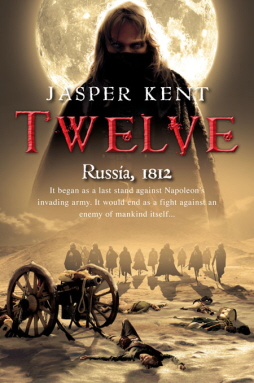
A Review of Twelve by Jasper Kent

A Review of Twelve by Jasper Kent

twelveTwelve
By Jasper Kent
Pyr (447 pages, $17.00, September 2010)

Twelve is set in Russia in the year 1812. While America was fighting a trans-Atlantic war against the British, Napoleon led a Grand Armee of 450,000 soldiers across the Niemen river into Russia. The outnumbered and undertrained Tsarist armies fought a series of retreating actions, and the French successfully occupied Moscow just as winter was setting in.

The novel is narrated by Aleksei Ivanovich Danilov, a soldier already weary from a lifetime of war and marked by the loss of two fingers in a Turkish dungeon. At the time of the French invasion he is assigned to a unit of three other soldiers tasked with undermining the French war effort via espionage and commando raids.

The opening line of chapter 1 introduces their strategy: “Dmitry Fetyukovich said he knew some people.” Dmitry knows, in fact, a group of mercenaries from the Danube river valley who fought with the Russians in an earlier conflict with the Turks. These mercenaries share a common interest with Aleksei and his comrades: They love nothing better than killing Frenchmen, and their efficacy is legendary.

As the mercenaries approach Moscow from the south, Aleksei hears of a series of unusual “plagues” breaking out in small towns along their route, giving him a faint feeling of unease. At last, late at night, twelve men arrive in Moscow under the leadership of a man who introduces himself as Zmyeevich — in Russian, “Son of the Serpent.”

Read More Read More

The Tiger’s Wife

The Tiger’s Wife

tigers_wife_coverThe Tiger’s Wife is an interlocking series of fabulist tales, set in an unnamed Balkan country that is obviously  Yugoslavia before and after its dissolution into ethnic political states, which unfolds the life and death of the narrator’s grandfather. It’s a meditation on grief, cultural blindness and bigotry, among other things, but overarchingly the constant effort to try to live a decent life and see the decency in others, even those who seemingly don’t possess it. Written by Téa Obreht, whom The New Yorker named one of the twenty best American fiction writers under forty and  the National Book Foundation’s “5 Under 35” list, it is, as you might expect given those accolades, considered a “literary” novel.  Which is perhaps why you haven’t seen much mention of it in genre circles, despite the fact that it is a fantasy.  However you want to classify it, it’s good and well-deserving of the hype it’s received.  One thing that struck me that I don’t think I’ve seen mentioned is the similarity between Obreht and Ray Bradbury in his prime, back in the days when Clifton Fadiman was trying to sell The Martian Chronicles to the literary mainstream.
I have to say that Obreht is the better writer, more in control of her fabricated folklore and less inclined to Bradburian whimsy, as well as much darker. Which is maybe why she is “literary.”  But, just for fun, here’s a test.  Which of these passages is written by Obreht, and which by Bradbury?  (All winners receive absolutely nothing besides smug self-satisfaction.)

Read More Read More

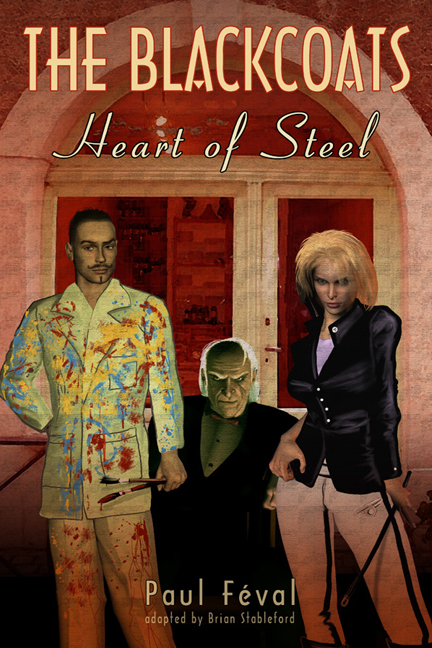
The Black Coats: An Introduction

The Black Coats: An Introduction

black-coats-1black-coats-21Les Habits Noirs is a series of seven landmark novels in pulp fiction history that have sadly been neglected outside of their native France. A fair degree of skepticism among modern readers is to be expected. Translations of obscure French novels can be a spotty affair and the verbose literary style of Victorian literature with its lengthy philosophical or historical passages are often wearying for a 21st Century audience. For every Fantomas that still captures modern imaginations, there are countless Dumas or Hugo pastiches whose only redeeming quality is their historical value to the avid student of fantastic fiction. Happily, Les Habits Noirs is one of those rare treasures that are as enthralling today as it was 140 years ago.

Paul Feval wrote all seven books in the series. He was an amazingly prolific author who turned out swashbucklers, vampire tales, crime fiction and religious works of vastly varying quality. Brian Stableford has spent much of the last decade translating his works into English for publication by Jean-Marc Lofficier’s Black Coat Press, a pulp specialty publisher who chose the English-language title for Les Habits Noirs for their imprint. Many critics have compared Les Habits Noirs to Mario Puzo’s Godfather series. My own best comparison would be to consider it the antecedent to Norbert Jacques’ Doctor Mabuse, the Gambler and especially the three films Fritz Lang made from that seminal work. Like Lang’s three masterpieces of crime, Les Habits Noirs bridges the gap between Pulp and Art.

The seven books in the series were published between 1863 and 1875 and concern members of a secret society headed by a crime family led by the patriarchal Colonel Bozzo-Corona. The first book, entitled Les Habits Noirs in France, was re-titled The Parisian Jungle by Black Coat Press for their English translation. The book introduces the criminal brotherhood, The Black Coats as a cross between the Mafia and the Illuminati. Modern readers weaned on Dan Brown’s intriguing if hopelessly hackneyed neo-pulp thrillers will marvel at what a true master of the conspiracy thriller sub-genre is capable of crafting. Colonel Bozzo-Corona is as beguiling a criminal mastermind as any in fiction. A feeble grandfather figure that can strike as quick as a cobra, Bozzo-Corona is always portrayed as displaying an uncommon brilliance. His fatal flaw is his borderline Messianic complex which promises to be his ultimate undoing.

Like his creation, Feval was possessed of a similar fatal flaw in his inability to maintain the high standard of quality that he demonstrated with this series. Too much of his non-series work was derivative and, after leaving his fiction works behind following a dramatic religious conversion, he doomed his reputation to be little more than a literary footnote. From that perspective, Black Coat Press and Brian Stableford’s work seems little short of evangelical in its mission to bring Les Habits Noirs to a wider audience who will appreciate this seminal work for its richness and mesmerizing tone.

Read More Read More

Game Review: Conquest of Nerath

Game Review: Conquest of Nerath

No matter if its the cover or the interior shots, this game's art is off the hook
No matter if its the cover or the interior shots, this game’s art is off the hook

In my lifetime I’ve played a lot of games, some more than others, but if any board game stands out above the rest as eating away massive chunks of my time it’s the WWII classic Axis and Allies. In the 80s, upon the game’s release, I fell in such deep infatuation with this game that I actually left it out on a table in my living room and played against myself for the length of an entire summer. Yeah, you know how you see ‘smart people’ in movies playing chess against themselves? Well, that was me and Axis and Allies.

I was so devoted to it, that I’ve actually only lost a single game in twenty-six years, and that was the first one I ever played [although I do have a draw in there someplace].

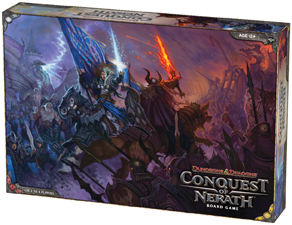
Now, you might be wondering why I’m bringing Axis and Allies up in a post concerning Wizard’s of the Coast’s new epic game Conquest of Nerath. Well, quite simply, because in all my years of gaming, and all the games I’ve played, I’d yet to find something in the same realm of awesome as A&A until I sat down to play Conquest.

Read More Read More

Goth Chick News: Kolchak Stalks Again

Goth Chick News: Kolchak Stalks Again

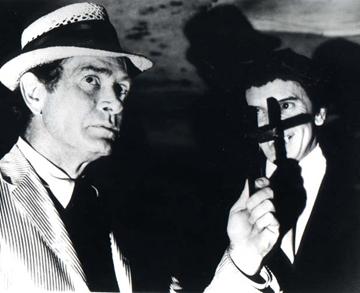
image0101You remember him, I know you do.

A wise-cracking, would-be-hard-bitten newsman in a battered seersucker suit and straw hat looking like he just stepped out of a 1940’s gumshoe flick — except for that slick, yellow Ford Mustang convertible he’s tooling around in.

But Carl Kolchak took a wrong turn somewhere and ended up in a couple of 1970’s TV movies and a short-lived TV show in which he kept stumbling across increasingly outrageous news stories that not only put his life in imminent danger, but inevitably involved horrific supernatural or paranormal beings.

Cue the distinctive, whistled theme music and pull up a 1970’s faux leatherette lounge chair (orange preferably); it’s time for The Night Stalker

Read More Read More