Black Static#24
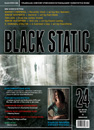 The new Black Static cover features Ben Baldwin‘s illustration for Ramsey Campbell’s “Recently Used”: here’s the opening paragraph:
Tunstall thought he hadn’t slept when the phone rang. He clutched it and sat up on the bed, which felt too bare and wide by half. On the bedside table the photograph of him with Gwyneth in the sunlit mountains far away was waiting to be seen once more, and beyond it the curtains framed a solitary feeble midnight star. He rubbed his aching eyes to help them focus on the mobile as he thumbed the keypad. “Hello?” he said before he’d finished lifting the phone to his face.
Other fiction includes “Dermot” by Simon Bestwick, “A Summer’s Day” by K. Harding Stalter, “Still Life” by Simon McCaffery and “How the Sixties Ended” by Tim Lees. Non-fiction columns by Stephen Volk, Christopher Fowler, Mike O’Driscoll and reviews by Tony Lee and Peter Tennant.
In related news, Mercurio D. Rivera’s “Tu Sufrimiento Shall Protect Us” from Black Static # 18 is up for the 2011 World Fantasy Short Story Award. Here’s the download.
You can subscribe to the print version here, or the electronic edition here; there’s also a special discounted rate for a joint subscription to both Interzone and Black Static. Also, the publishers are reintroducing lifetime subscriptions. What you’re buying, in essence, is a 10-year subscription at the current rate. If you think you’re going to live for at least another decade, and you think Black Static will also be around for as long, this could be a bargain for whatever time you and the magazine have after that. If that weren’t enough, you can also opt for joint lifetime sub that gets you sister publication Interzone for a slightly reduced rate. Sign your life away here.

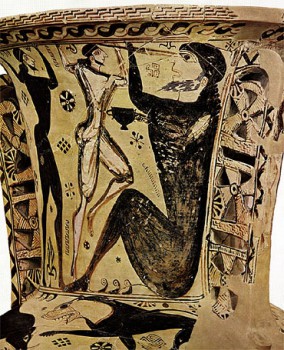
 “There was a man, Magnus’s son,
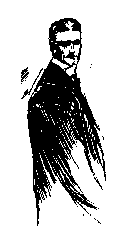 William Hope Hodgson’s Carnacki outlived his creator with a tenacity that Hodgson, a bantam rooster of a man, would have appreciated. Thomas Carnacki, resident of 472 Cheyne Walk, London, first appeared in a series of five stories (“Gateway of the Monster”, “The House Among the Laurels”, “The Whistling Room”, “The Horse of the Invisible”, and “The Searcher of the End House”) in The Idler Magazine in the January through April, as well as June, issues of 1910. But despite Hodgson’s death in World War I, Carnacki carried on in a further four stories (“The Thing Invisible”, “The Hog”, “The Haunted Jarvee” and “The Find”) retrieved from Hodgson’s papers by his wife.
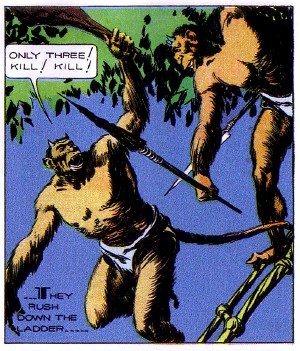
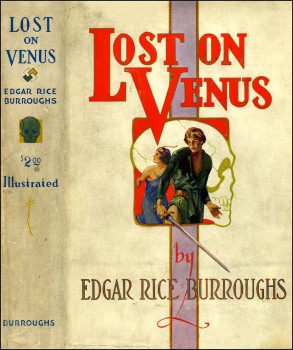 The parade on the second planet continues in Lost on Venus. This is one of the most controversial works that Edgar Rice Burroughs ever published, although it surprises me that enough readers managed to get through the lackluster first book, Pirates of Venus, to want to pick up the sequel and be able to argue about it. But here it is, so get out your anti-tharban gear and be ready to test your genetic purity!
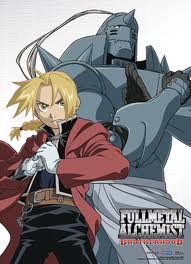 The show that so enthralled me is Fullmetal Alchemist: Brotherhood. The series is set in an alternate world in the 1900s, one very similar to our own, except that alchemy works. Those talented and diligent enough can transform matter from one state to another — fix a broken radio into one that works, or transform a metal bar into a sword. The story’s protagonists are a pair of young brothers of tremendous talent who used their powers to commit the ultimate alchemical taboo: they tried to bring their dead mother back to life. They paid a terrible price when the transmutation went horribly wrong, and spend much of the series trying to put things right.