Browsed by
Category: Blog Entry

What I’m Reading: May 2021
What I’m Reading: May 2021

I’ve been taking advantage of listening to some audio books throughout the day – I only listen to unabridged versions, unless it’s a book I’ve read before, and know well enough that leaving parts out is okay. I don’t really care for abridgments – in addition to the usual reading. Helps the day pass faster, and lets me get to more things.

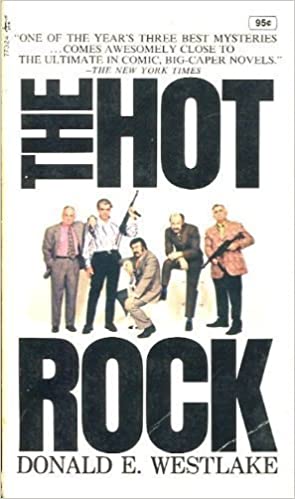
DORTMUNDER (Donald Westlake)

I think that Donald Westlake is one of those authors who is more respected than popular. He wrote a lot of good books, but he’s not generally well known. But people ‘who know’ like Westlake. I’m most a fan of his caper/heist books. I think he is to those what Ed McBain is to police procedurals.

Westlake can write over-the-top comedy, and understated funny. And he can mix the two in the same book. John Dortmunder appeared in fourteen books between 1970 and 2009, as well about a dozen short stories. Dortmunder is a pessimistic thief who continually runs into amusing (though not to him) obstacles. Exasperated, he continues forward, moving inexorably towards the next speed bump; or concrete wall in the road. The humor is not overtly screwball, but Dortmunder’s exasperation can be laugh out loud.

Dortmunder usually puts together a team, and the recurring characters add to the series. I love how Murch describes the route he is going to/did drive; even if it’s just coming from his house to a meeting. Dortmunder and group are after an emerald in the first book.
Read More Read More

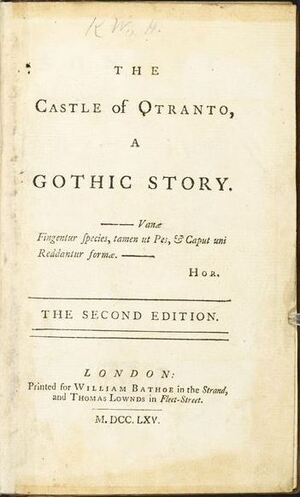
A Gothic Story: The Castle of Otranto by Horace Walpole

A Gothic Story: The Castle of Otranto by Horace Walpole

The history of the novel in the West is long, complex, and complicated. Suffice it to say, by the middle of the 18th century the novel was a popular form of entertainment no longer confined to aristocratic readers. The romances of the Middle Ages and Renaissance had been largely supplanted by more realistic tales, but with the advent of Gothic literature, romantic fiction rose again in popularity, proceeding directly from Horace Walpole’s 1764 novel, The Castle of Otranto.

Gothic fiction is defined in the Encyclopedia Britannica as “European Romantic pseudomedieval fiction having a prevailing atmosphere of mystery and terror.” The deliberate admixture of realistic and fantastic elements in Otranto was a huge success. While Gothic fiction’s popularity has ebbed and flowed over the years, it has never receded completely. Horror fiction, as well as certain strains of romance and thriller writing, all trace their roots to this era.

Walpole was the youngest son of Sir Robert Walpole, 1st Earl of Orford, the first real prime minister of England. His time at Cambridge led to skepticism of certain aspects of Christianity, a strong dislike for superstition, and, in turn, the Catholic Church. Walpole was elected to Parliament multiple times from assorted rotten boroughs (electoral districts that had lost most of their populations but still sent an MP to the House of Commons — and which he never visited) and his father secured several adequately remunerative sinecures for him over the years. A Whig, Walpole opposed efforts he saw as supportive of making the monarchy more powerful. On the death of his nephew in 1791, at the age of 74, he became the 4th and final Earl of Orford.

Read More Read More

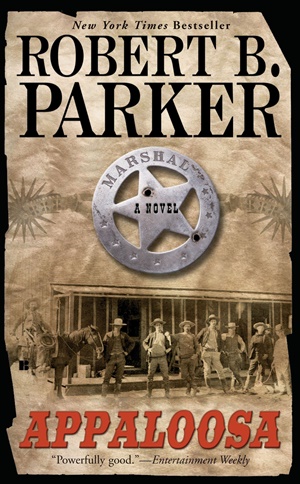
A (Black) Gat in the Hand: Appaloosa – Hardboiled Western

A (Black) Gat in the Hand: Appaloosa – Hardboiled Western

You’re the second guy I’ve met within hours who seems to think a gat in the hand means a world by the tail.” – Phillip Marlowe in Raymond Chandler’s The Big Sleep

(Gat — Prohibition Era term for a gun. Shortened version of Gatling Gun)

I enjoy a good Western on the screen. Tombstone is my favorite, with Rio Bravo not too far behind. And I usually watch at least a little if it’s got Randolph Scott or Joel McCrea in it. So you know that Ride the High Country, with its breathtaking cinematography, is in the mix. And be it Maverick or Support Your Local Sheriff, I love seeing James Garner in a cowboy hat. I wrote about one of my favorite TV shows, Hell on Wheels.

But I’ve not read too many Westerns. Looking over the two-thousandish books on my shelves, I only see Steven Hockensmith’s Holmes on the Range series – which is in the Sherlock Holmes section, of course. And a fine collection of short stories by my second-favorite author, Robert E. Howard. And neither would be there solely based on their genre. I do have a few more Westerns in ebook format, which I’ve transitioned to over the past decade.

I’ve meant to write about T. T. Flynn’s Westerns. Flynn authored the Bail Bond Dodd stories, about a fairly tough, but not really hardboiled, bail bondsman, for Dime Detective. But I was smart enough to get Duane Spurlock to contribute a piece to A (Black) Gat in the Hand, which you can read here. Regular readers of that series (assuming there are any) know that Norbert Davis is on my Hardboiled Mt. Rushmore, second only to ‘Dash.’ So it’s not surprising I wrote an essay on his story “A Gunsmoke Case for Major Cain.” Another Davis Western post is likely somewhere down the dusty trail.

This past weekend, I decided to revisit a Western movie from 2008 which I had seen once before; but the plot details were fuzzy. So, kinda familiar, kinda new. What I did remember was that I thought it was pretty good. And a second view drove that home like a sod buster splitting a fence rail (okay, okay, no more of that. Too much, anyways).

A friend of mine with a long list of IMDB credits has said several times that Hollywood just doesn’t like big budget Westerns. And it’s true that we do get one of them occasionally, but they’re never billed as summer blockbusters. And heaven for-fend a franchise develop! Of course, television is more friendly to the genre.

Read More Read More

No Time Like the Present

No Time Like the Present

“Do you know where you are, Mr. Starr?”

I snapped awake once more, realizing I’d dozed off again. The therapist sat back on her chair, her crisp white jacket and black pencil skirt the picture of professional cool. I moved my eyes left and right, trying to remind myself where, exactly, I was.

The evaluation vault was warm, bright white, and, if the monitor above the therapist’s head was to be believed, well over ninety-nine percent germ free. I blinked and squinted in the brightness, still recovering after my ejection from the the pressure sauna, which had left my skin a bright pink, save for the circles around my eyes from the protective goggles, and, under my white paper medical gown, a similarly protected region provided by the official Black Gate thong I’d been assigned to use while within, which had since been reclaimed.

The modern edition has more safety features, of course.

“Am I in the Black Gate medical wing?” I guessed, trying furiously to remember how I might have gotten there.

“That’s right,” the therapist said, her voice soothing. “Now, I want you to think back. What’s the last thing you remember? Before the incident?”

“I, um, well, I remember being brought to the medical wing because of a… paper cut?” That didn’t seem quite right.

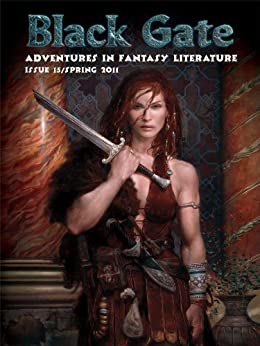
“Yes,” the therapist replied. “A paper cut. With all 384 pages of the print edition of Black Gate #15. Naturally, we couldn’t have you bleeding out on the contents of the archives, so you were brought here. While we managed to save your life – and most of your organs – we were forced to use an experimental rescue technique, and have you clinically frozen until technology was advanced enough to revive you.”

“Wait. Are you saying I’ve been… frozen?”

“That’s right. Welcome back, Mr. Starr! You’ve been gone a long time.”

Read More Read More

The Public Life of Sherlock Holmes: Another Radio Poirot

The Public Life of Sherlock Holmes: Another Radio Poirot

A few weeks ago, I wrote about John Moffatt’s outstanding radio show, in which he played Agatha Christie’s Hercule Poirot. I think it is, and will remain, unsurpassed. Today, we’re going to go back and look at the first radio series starring the fussy little Belgian detective.

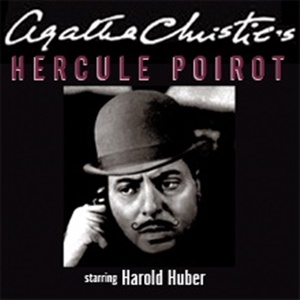
By 1944, there had been a few radio appearances featuring Poirot. Including a production by Orson Welles, starring Orson Welles, for Orson Welles’ radio show. (It’s all about Orson). I’ll write about that one later. Sam Spade, Sherlock Holmes, Charlie Chan, Ellery Queen, Philip Marlowe, The Falcon: detectives were popular radio fare. And an American actor and entertainment entrepreneur by the name of Harold Huber, set out to add Agatha Christie’s famous creation as a regular attraction of the airwaves.

Huber obtained the rights to Poirot for an American radio show. Agatha Christie’s Poirot debuted on February 2, 1945, featuring a live introduction from Christie, across the sea. Except, after about thirty seconds of silence, the announcer for the Mutual Broadcasting System explained that atmospheric conditions prevented the connection. MBS did have the foresight to record a short-wave transmission from Christie earlier that day, and played that in place of her live appearance. Having Christie explain that Poirot was busy, so she would introduce the series, was a pretty neat move in those times LONG before cell phones and podcasts.

Read More Read More

Vintage Treasures: Weird Shadows From Beyond, edited by John Carnell

Vintage Treasures: Weird Shadows From Beyond, edited by John Carnell

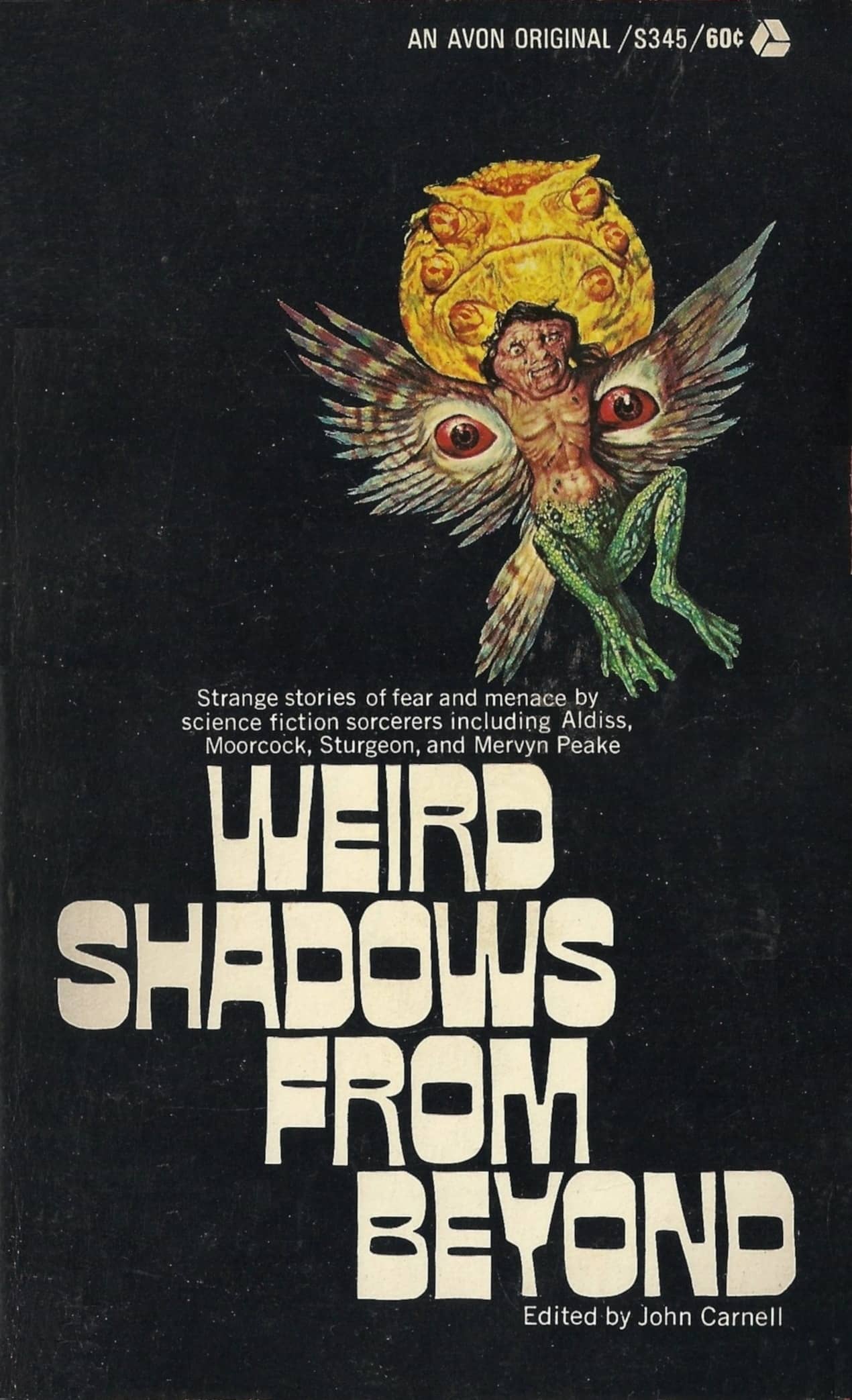
Weird Shadows From Beyond (Avon Books, August 1969). Cover by Josh Kirby

John Carnell edited the highly-regarded British SF magazines New Worlds (from 1946-64), Science Fantasy (1951-64), and Science Fiction Adventures (1958-63). In the US he’s probably best known an an anthologist, editor of the long-running New Writings in SF (21 volumes from 1964-72), and individual volumes like No Place Like Earth (1952), Gateway to Tomorrow (1954), and Lambda I and Other Stories (1964).

I found a copy of his slender 1969 anthology Weird Shadows From Beyond in a small collection I bought on eBay earlier this year. Carnell’s thoughtful introduction both intrigued me and nicely set the mood for the tales within:

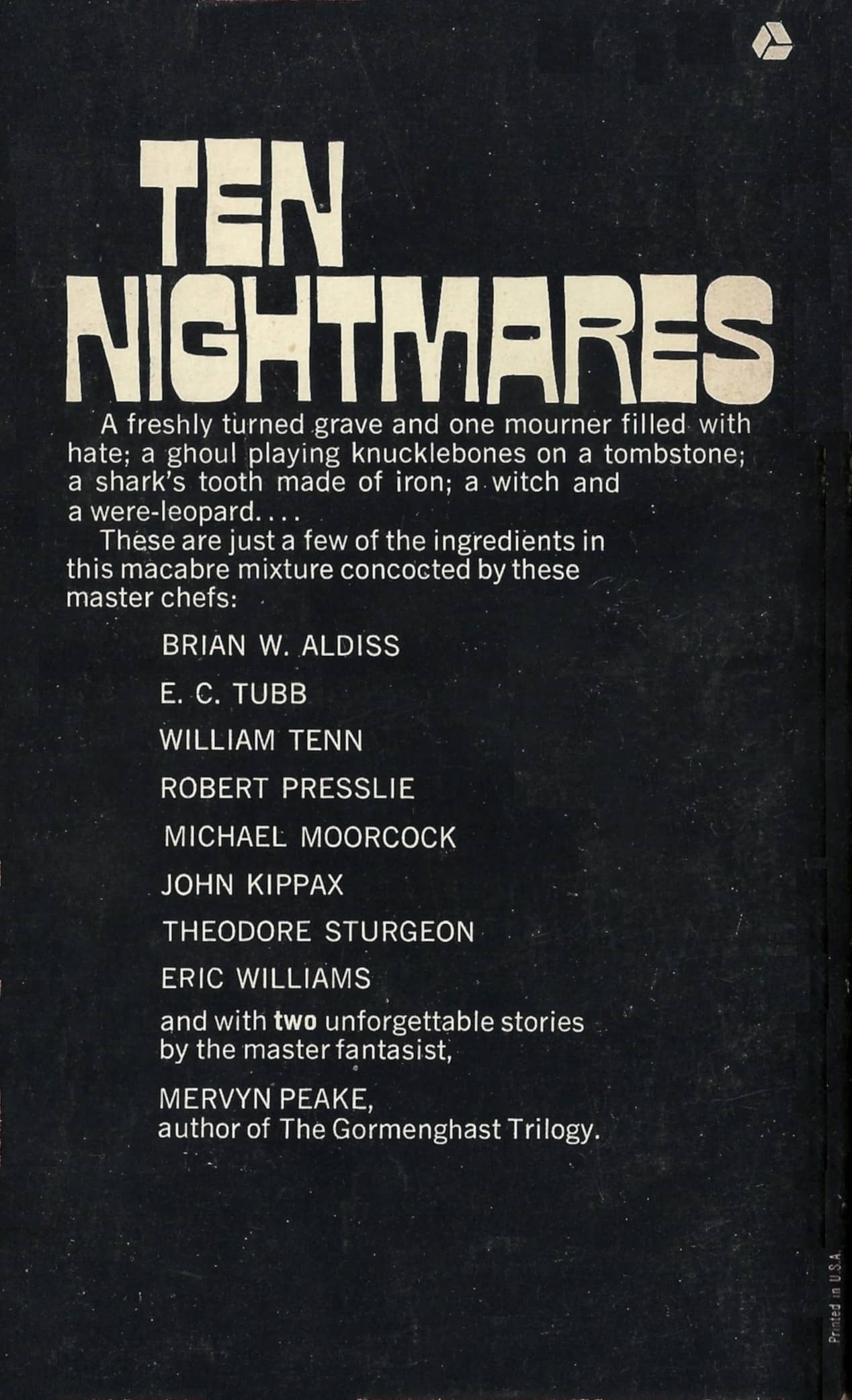
A freshly turned grave with one mourner filled with hate; a telephone kiosk at night with something outside trying to get in; a ghoul playing knucklebones on a tombstone; a bodiless evening dress suit dancing in a moonlit glade; an iron shark hook; a handful of perfect teeth; a witch and a were-leopard — these are but a few of the ingredients which are an integral part of some of the stories in this collection of bizarre stories. Stories told with the consummate skill of modern writers, for the tree of the macabre has come a long way since its roots spawned in the day of the Gothic novel.

Doubtless those giants of yesterday — Poe, Blackwood, Dunsany, Lovecraft, Bierce, Wakefield, and the many others — would be pleased with their foster-children and somewhat amazed by present-day techniques of story-telling, yet, while more than half a century separates the old from the new, both classes of writer have the same aim in view; to entertain and at the same time to cause an occasional shudder or an uneasy feeling at dead of night.

Weird Shadows From Beyond contains ten short stories published between 1956 and 1964, seven of which were drawn from Carnell’s Science Fantasy magazine. They include an Elric story by Michael Moorcock, a pair of stories by Mervyn Peake, and stories by William Tenn, Brian W. Aldiss, Theodore Sturgeon, E. C. Tubb, an original story by Eric C. Williams, and others. Here’s the complete table of contents.

Read More Read More

Viking Gods: Big battles on a small scale

Viking Gods: Big battles on a small scale

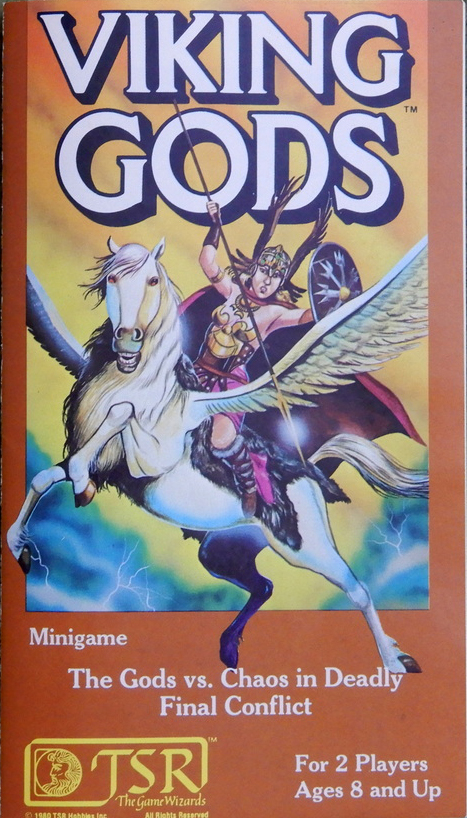
In many ways the early 1980s were the heyday of classic microgames, also called minigames, with the popularity of such games as Car Wars and Revolt on Antares, but those were far from the only games available. For instance, TSR Inc. made its fair share of microgames, including Viking Gods.

Published in 1982, Viking Gods allowed players to take part in the battle to end all battles, Ragnarok. A game for two players, one player took the side of the Forces of Chaos while the other player was in control of the Gods of Asgard. Each side in the battle had a mission. The job of the Forces of Chaos was to storm across the Rainbow Bridge and destroy Yggdrasil, the sacred tree. The side of the gods had the job of either killing Loki or destroying his army while defending the tree.

A somewhat simple war game, Viking Gods still packed lots of combat. All you needed were the included map, the game pieces, and a pair of six-sided dice. When it was their turn, players were allowed to move their cardboard pieces two spaces across a map until they came up against enemy forces. Then combat could begin. Using the combat chart at the bottom of the map, the dice were rolled to determine the outcome of battle. Depending upon that outcome, forces could be pushed back a space or they could be defeated, wiped out. Another option was the battle could lead to a draw.

Read More Read More

The Japanese Giant Monster Golden Era Ends: Space Amoeba (1970)

The Japanese Giant Monster Golden Era Ends: Space Amoeba (1970)

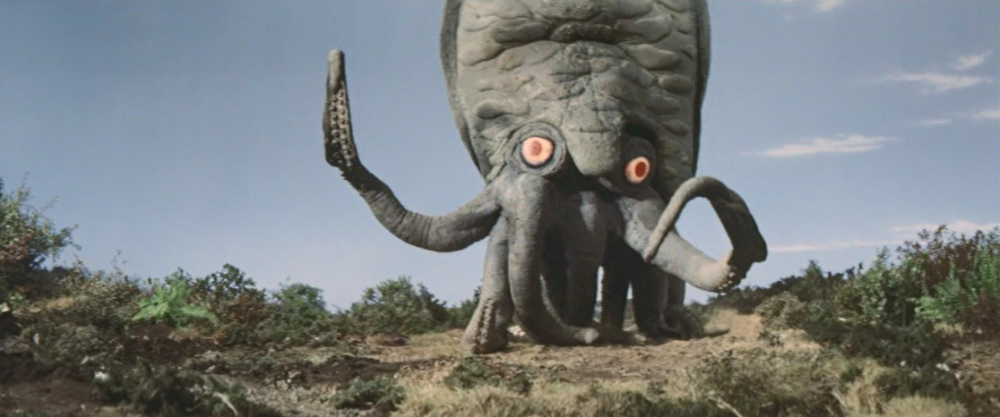
Earlier this week, while collating ideas for writing about the history of a particular giant monster who recently played a featured role in Godzilla vs. Kong (but who is neither Godzilla nor Kong), an alien sensation suddenly overpowered me. I had to go watch another giant monster movie, one I hadn’t given any attention to in fifteen years: Space Amoeba

Read More Read More

Goth Chick News: Save the Headstone and Go Out Like a Viking

Goth Chick News: Save the Headstone and Go Out Like a Viking

Creative disposal of earthly remains is nothing new. There have been countless examples, especially in the last ten years, as new generations seek ways to distinguish themselves from the mundane-ness of the past. We’ve seen furniture that converts to a coffin (“Chic design for life and death”), an option for turning your loved-one’s remains into a precious stone which is set into jewelry (“One-of-a-kind, just like them”), and organic burial “eggs” out of which grows an oak tree (“Life never stops”). And now there’s a way you can go out in a blaze of glory.

Literally.

The legislative assembly of Maine is currently contemplating a bill which would allow Viking-style funerals.

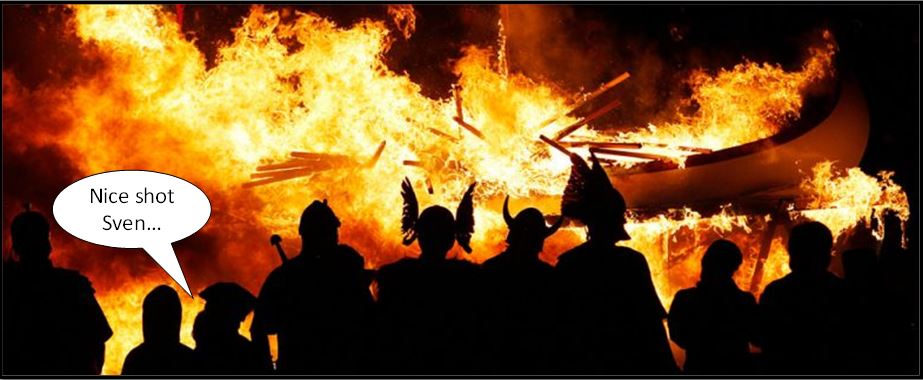
History tells us that in the days of Viking warriors, dead heroes were laid out in a wooden boat along with their belongings. The vessel was also filled with hay and other flammables, and then put to sea. An archer (whom you hoped had infallable aim) then lobbed a burning arrow at the boat causing it to go up into an impressive pyre which consumed everything, before the charred remains were taken by the sea. An non-profit undertaker service organization in Maine called Good Ground Great Beyond, which is sponsoring said bill, owns 63 acres of property in the state, upon which they hope to offer “open air cremations” including a Viking-style funeral service.

Read More Read More

How Sword and Sorcery Brings Us To Life

How Sword and Sorcery Brings Us To Life

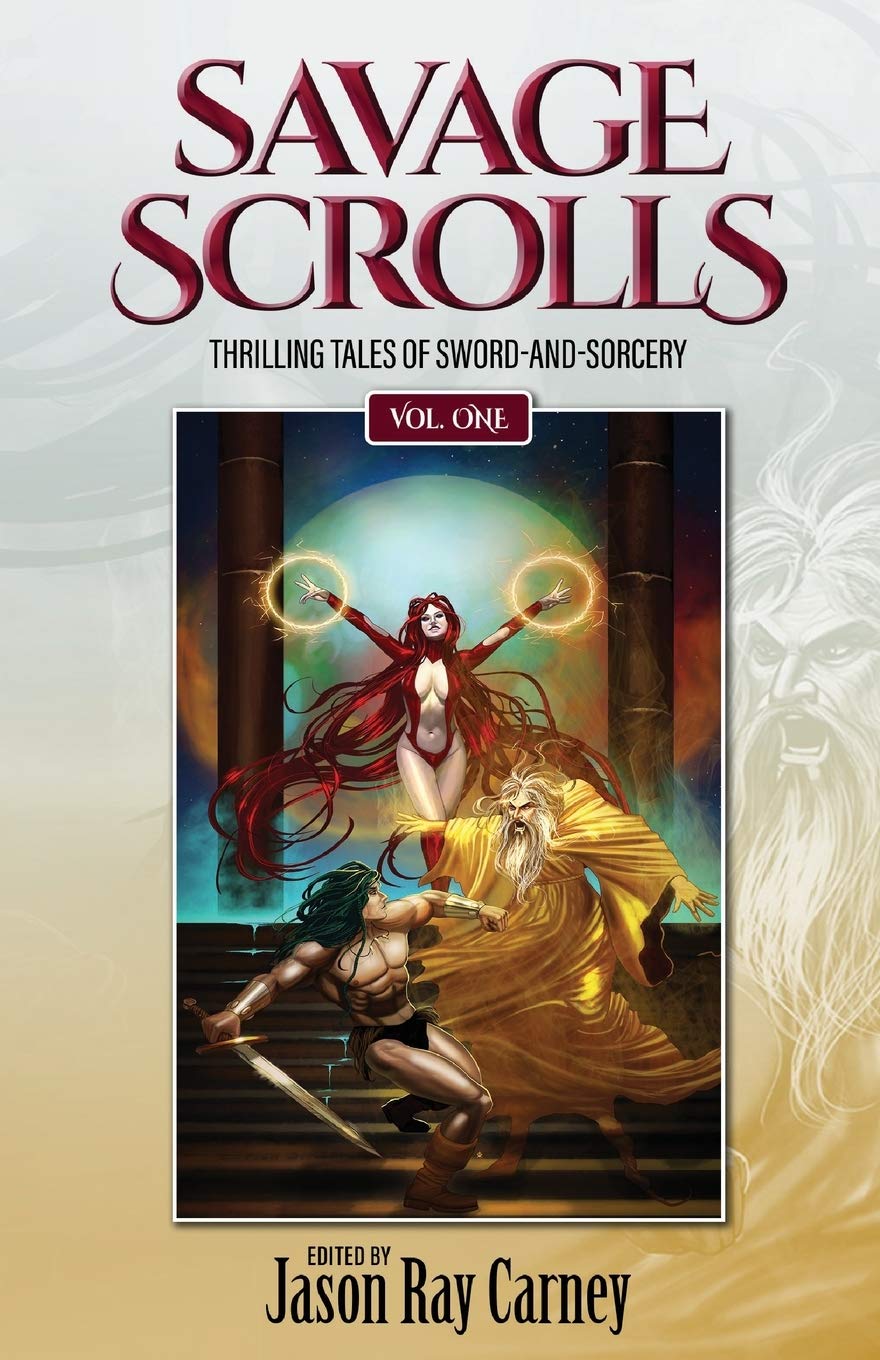
Savage Scrolls, Volume One, edited by Jason Ray Carney (Pulp Hero Press, 2020). Cover by Jesus Lopez

When I was working on the introduction to Savage Scrolls, I re-read all of Lin Carter’s Flashing Swords introductions. Something caught my attention: Carter starts Flashing Swords 1 with an epigraph, a stanza from William Morris’s six-stanza poem, “Prologue of the Earthly Paradise.” It is a beautiful apologia of fantasy literature. The speaker, Morris, attempts to comfort his reader, a weary, disenchanted worker, by celebrating the transformative nature of the heroic poetry of premodernity. But Morris does so hesitantly:

The heavy trouble, the bewildering care
That weighs us down who live and earn our bread,
These idle verses have no power to bear.

Morris is not making hyperbolic claims for the power of literature here; he is no Percy Shelley, claiming “Poets are the unacknowledged legislators of the world.”

No. Morris is comparably modest. Do you have bills to pay? Taxes to file? Mouths to feed? Alas, admits Morris, imaginative literature will not help you bear these miserable burdens. But it might help in other, nuanced ways.

Read More Read More