A year ago, a global pandemic forced me into quarantine. I don’t know what these last twelve months would’ve looked like without my subscription to the Criterion Channel. It wouldn’t be a catastrophe, of course — no worse than the actual catastrophe occurring outside my apartment walls. But the grind of dullness would’ve been far worse. I wouldn’t have the cinematic delights of dog revolutionaries, noir Westerns, a spiritual debate resolved in a gory barroom brawl, or a quality Christmas stalker film.
So, last year, as the Pandemic settled in like an unwanted relative who just came for a week and is still tying up the bathroom, I did a series of posts for the FB Page of the Nero Wolfe fan club, The Wolfe Pack. I speculated on what Stay at Home would be like for Archie, living in the Brownstone with Nero Wolfe, Fritz Brenner, and Theodore Hortsmann. I have already re-posted days one through twenty-seven. Here are days twenty-eight (April 17) and twenty-nine (April 18). It helps if you read the series in order, so I’ve included links to the earlier entries.
DAY TWENTY EIGHT – 2020 Stay at Home
“Good morning, Archie. I trust you slept well.”
It was Nero Wolfe’s standard greeting to me when he came down from his morning session with the orchids. Pinning to the floor the only chair in the world built for him, he continued his verbosity. Yes, I learn a lot of big words working for Wolfe.
“That was a well-done article in the Gazette today. It should provide at least a temporary increase in business.”
He was referring to the Gazette’s piece on three high-end restaurants which were trying to keep afloat. Rusterman’s got the lion’s share of quotes and coverage. Lon had certainly come through aces. “I assume we will be having Mister Cohen over for dinner when that is once again an option?”
“You may assume that, yes. You may also invite the reporter, as well. It was a thoughtful piece, not the kind of sentimental drivel a female would have written.”
I grinned. “She’ll be happy to hear you liked it. Though I’ll leave out that last sentence.”
Throughout the 1970s and very early 1980s, Simulations Publications, Inc. (SPI) was a company known for its board war games. Then in 1980 it took a stab at the growing popularity of Dungeons & Dragons and other popular tabletop role-playing games. SPI came up with a different style of fantasy RPG known as DragonQuest(DQ), published in a boxed set with multiple books.
Eventually there would be three versions of DQ. SPI published a second edition in 1982 in a single book, but soon after the company was purchased by TSR, the developers of D&D. Eventually in 1989 TSR would produce the final, third edition of DQ, this one also in a single book, but since then they have done next to nothing with the property though they did release a few gaming modules for the system. Fortunately a few other companies also released DQ-related material and to this day there is a somewhat active DQcommunity online. As for the three versions of the game, they are pretty much compatible with few differences between them, especially between the second and third editions.
Created by Eric Goldberg, later known for his role in the publication of the tabletop RPG Paranoiaand numerous other games both at the table and online, DragonQuest separated itself from D&D and its imitators by not focusing so much upon a class system for character creation and advancement. Instead, characters in DQ were mostly based upon growth in skill rankings.
So, last year, as the Pandemic settled in like an unwanted relative who just came for a week and is still tying up the bathroom, I did a series of posts for the FB Page of the Nero Wolfe fan club, The Wolfe Pack. I speculated on what Stay at Home would be like for Archie, living in the Brownstone with Nero Wolfe, Fritz Brenner, and Theodore Hortsmann. I have already re-posted days one through twenty-five. Here is day twenty-six (April 16). It helps if you read the series in order, so I’ve included links to the earlier entries. You really need to read Day Twenty-Six before this one. Trust me – I wrote it!
DAY TWENTY-SEVEN– 2020 Stay at Home
“Dammit Goodwin, let me in.” Inspector Cramer was standing outside the front room window through which I’d conversed with Doc Vollmer earlier. I had refused to the open the door for him after the body had been removed and the area decontaminated by the professionals.
“No sir. Somebody with the virus died on our stoop. He touched the front door, which I’ll be cleaning later. You examined the scene. Yes, you had gloves on, and that mask, which, by the way, looks terrific on you. But the answer is still ‘No.’”
“I am a police official and this is a crime scene. Open the goddamn door.”
Wolfe had been sitting in a chair, though none of the ones in that room are comfortable for him. He arose and came over to the window, and I moved away.
“Nonsense, Mister Cramer. That man was never in this house. The front stoop is certainly a crime scene; do with it what you will.”
Purley Stebbins had been over near the stoop, talking with a cop in uniform, but he came over.
“Hi, Purley. That’s not proper social distancing.”
Stebbins has a pained ‘You’re not funny expression’ which I think he only uses for me. Like he did right then.
Wolfe went on. “You may ask your questions from there. That man did not come inside, or in any way communicate with Mister Goodwin or I.”
“So, you’re saying you have no idea why a man, stabbed and carrying the virus, desperately wanted to see you before he died?”
Wolfe sighed, though he didn’t really mean it. “Really, Mister Cramer, how many times have we done this before? Perhaps the man was passing by on the sidewalk, was assaulted, and ours was the closest doorbell to ring. Confound it. Even during this lockdown, must you badger me and assume that I am concealing material relevant to a homicide?”
I bet Cramer wished he had a cigar instead of a mask right now. He pulled his mask down and I saw that his face was flushed. “Like I haven’t had good reason in the past, Wolfe.”
I’ve continued reading the Oz series by videoconferencing with my niece a few times a week. We’re having a lot of fun. Not long ago, we finished L. Frank Baum’s fourth entry in the series he really didn’t want to write, but as they say…. “if you back up a dump truck full of money…”
Dorothy is going to rejoin her Uncle Henry in California where he’s visiting his brother. She’s picked up at the train by Jeb and his horse and buggy. On the way to the ranch, a terrible earthquake opens the ground and swallows them up!
Imaginary Worlds (Ballantine Books, June 1973). Cover by Gervasio Gallardo
I’m the age Proust was when he died, and Lin Carter books are my Madeleine cake.
The covers transport me to the sunny afternoon garage sales of my teens. Picking up one — they’re tiny compared to today’s paperbacks — and riffling the yellowing pages, and I’m thirteen years old, on a hill-walking holiday in Wales, rummaging in a small town charity shop while the rain rattles the dirty glass window. And later, playing Dungeons and Dragons (AD&D was my edition!) in a stuffy teenage bedroom in a Victorian house where the hundred-year-old window slammed down and nearly took off the DM’s leg as he was smoking a roll-up while perched on the ledge…
And like the D&D games of my mid teens, Lin Carter’s books never quite lived up to the potential of the promised exoticism. In our case, we were teenagers with limited life experience. We did very well, as far as it went, and our DMs were patient and I argued too much. Lin Carter, several times married, a Korean war veteran — the Vietnam sequence that kicks off the Callisto books reads very authentically — cosmopolitan New Yorker, experienced editor, has less excuse.
You’re the second guy I’ve met within hours who seems to think a gat in the hand means a world by the tail.” – Phillip Marlowe in Raymond Chandler’s The Big Sleep
(Gat — Prohibition Era term for a gun. Shortened version of Gatling Gun)
And I take a break from the world of Nero Wolfe to bring A (Black) Gat in the Hand back to Black Gate.
The first image graven onto my Hardboiled Mt. Rushmore is Dashiell Hammett’s. The Continental Op and Red Harvest, The Maltese Falcon, The Glass Key – I think he did the genre better than anyone. Very narrowly going up second is Frederick Nebel’s. I’m a fan of Cardigan, MacBride and Kennedy, Gales and McGill, and much of his other pulp stuff. Steeger Books has made a plethora of his material available, and I’ve got most of it.
My third choice isn’t one of the expected names, like Raymond Chandler (it’s taken me a couple decades to warm up to his stuff), Erle Stanley Gardner (I do LOVE Cool and Lam), or Carroll John Daly (Race Williams has grown on me a bit over the years). Or a worthy name like T.T. Flynn, W.T. Ballard, Paul Cain, Roger Torrey, or Stewart Sterling. Nope – it’s Norbert Davis.
And Davis is right up there with Nebel, but there is much more of the latter’s work available, and I think he produced a greater amount of ‘better’ writings. But the five Max Latin stories rank among my favorites in the genre. And I’m a big Bail Bond Dodd fan. In the longer format, the Doan and Carstairs novels are arguably the best in the comedic-hardboiled school. I believe that Davis is probably the most under-appreciated pulpster of them all. And I think that with the Jo Gar stories, Raoul Whitfield may well be able to press that claim as well.
Davis grew up in rural Illinois. Good ol’ Abe Lincoln, at 6’4”, towered over his contemporaries. Davis was 6’-5”, and that would have been almost a foot taller than the average American male around him back then. That’s a significant difference. He moved to the West Coast and enrolled at Stanford’s Law School: Davis was no dummy. While a student, he began writing pulp stories, and he was selling them. By the time he graduated in 1934, he was an established pulpster – which of course, wasn’t exactly as lucrative as a successful law career. He had appeared in Black Mask for the first time two years earlier, with “Reform Racket.”
Erle Stanley Gardner was a practicing lawyer as he built his writing career; finally giving up law. Davis took a different approach. An AB (the Latin designation for a BA) and LLD in hand, he never took the bar. Lawyering was not to be Davis’ career path. He would be a professional writer – though, sadly, for not nearly long enough.
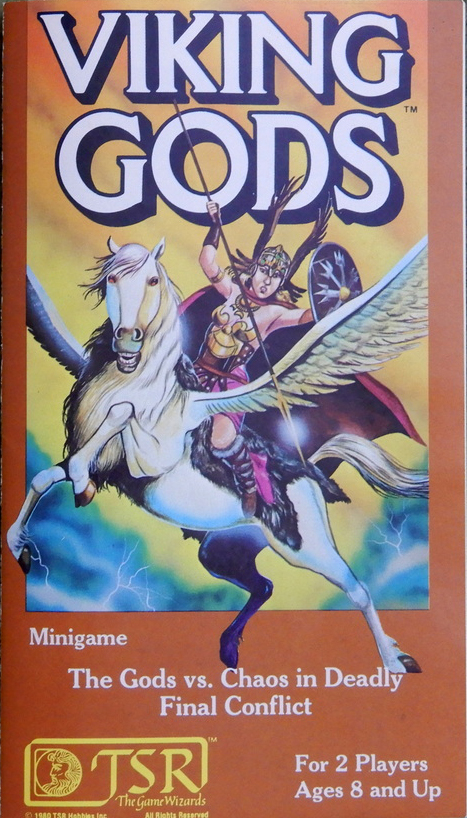
A couple of weeks ago I wrote about the old TSR minigame Revolt on Antares, and that got me thinking about other microgames which were popular back in ye olden days, and that brought to mind one of my favorites, Car Wars from Steve Jackson Games, published in 1981, a vehicle combat game.
If you ever wanted to take part in the fast-driving, hard-hitting action of the Mad Max universe where guns and cars ruled the roads, and the plains and the deserts and the … etc., then you would do well to buckle in and pick up one of the versions of Car Wars which has been made available over the years.
But my first love was the original Car Wars which came in a small, black plastic box, though there were copies of the game which came in just a plastic bag (but who would want that when you could get your hands on a cool plastic pocket box, as they were called?).
The action came in various scenarios from arena battles to highway combat against marauders and the like, and that original pocket box included everything needed to get you on the road to war. Included were the six-sided dice needed for the game, a rules book, maps, vehicle sheets, and cardboard counter pieces of vehicles, road hazards, and more.
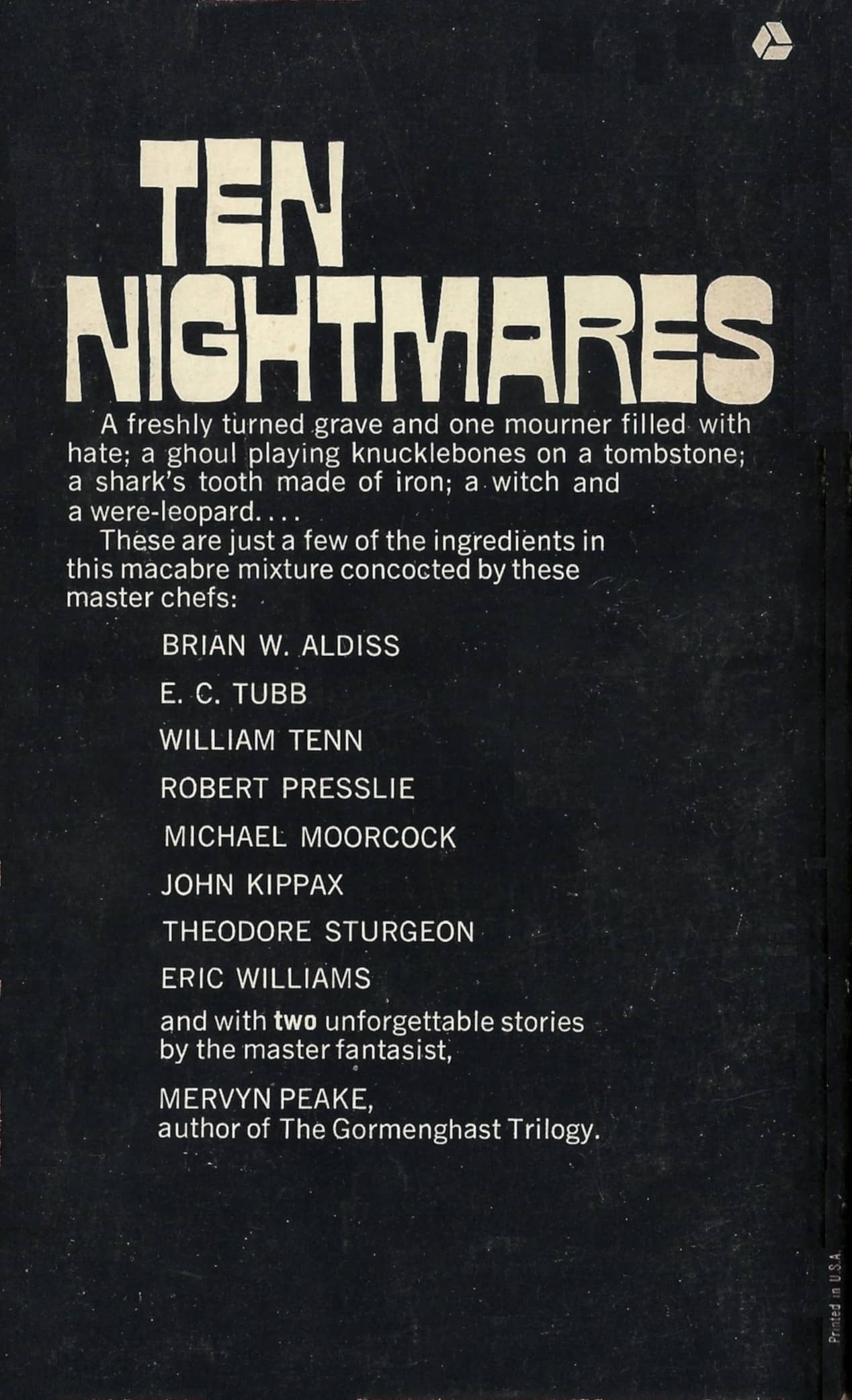
Mervyn Peake‘s 1946 novel, Titus Groan, was intended as the first in a series that would follow the life of Titus Groan, Seventy-seventh Earl of Gormenghast, a vast, city-like castle set in a land of indeterminate latitude and longitude. Unfortunately, Peake was afflicted with what is believed to have been Parkinson’s Disease, and so finished only two other volumes, Gormenghast (1950) and Titus Alone (1959), and a novella, Boy in Darkness (1956). He succumbed to his illness in 1968, leaving only a few paragraphs and ideas for proposed future volumes. From those elements, his wife, Maeve Gilmore, completed a final book, Titus Awakes, which wasn’t published until 2009. By his son Sebastian’s account, it isn’t really a continuation of the series, but an attempt by Gilmore to address the loss of Peake.
Graham Greene helped edit Titus Groan into publishable form. Elizabeth Bowen and Anthony Burgess both thought highly of the book and Harold Bloom considered the Gormenghast trilogy the most accomplished fantasy work of the twentieth century. Michael Moorcock, a friend of Peake’s, has written several times about Peake’s artistry, and his own novel, Glorianna, is dedicated to Peake. Despite the support of so many writers, the books weren’t published for a second time until the late sixties by Penguin, and then as part of Lin Carter’s Ballantine Adult Fantasy line.
A satire of manners and a critique of blind adherence to dead tradition, despite having few clear fantastic elements it is easily one of the great literary works of fantasy. It might not match the success of The Lord of the Rings, but in its richness of imagination it does, and outpaces it in the depth and human variety of its characters.
Titus Groan opens on the day of the birth of its titular character and ends a year later when he is made Earl of Gormenghast. The story, while it revolves around his birth and accession, is not his, but that of several other characters, primarily Steerpike, a kitchen boy intent on forcing his way upward to a position of power in the castle.
Steerpike by Peake
Escaping the horrid Great Kitchen ruled by the even more horrid cook, Abiatha Swelter, Steerpike quickly realizes that the weight of Gormenghast’s customs and codes cannot be overcome, but might be subverted to his aims. Slowly, by charisma, guile, and plotting, he begins to do so. Subversion, arson, and murder are all relentlessly and remorselessly employed toward his ends.
Simultaneous to Steerpike’s ascent, Mr. Flay, servant to the current Earl, Lord Sepulchrave, is engaged in a war of wills with the cook, Swelter. Though the conflict plays out outside of everyone else’s observation, its conclusion has great ramifications in the second book.
Like a Dickens novel, the book is filled with numerous digressions and tangential side plots as well as a large assortment of minor characters. On their own, each may seem to do little to further Titus Groan‘s larger story, but taken together they deepen and enrich everything else in the novel.
Titus Groan is one of the great achievements of literary worldbuilding. Peake spent his childhood in China, the son of British missionaries. The segregated community he grew up in, as well as the model of the Forbidden City of the Chinese emperor, itself ruled by tradition and ritual, must have informed his conception of Gormenghast. From those raw elements, Peake created a world that is vast yet strictly confined, and limited by more than just walls.
Welcome to another installment of 3 Reasons. With a goal of eventually tackling every tale of the Corpus, I’ll give three reasons why the particular story at hand is the best Nero Wolfe of them all. Since I’d be writing over seventy ‘Best Story’ essays, the point isn’t actually to pick one – just to point out some of what is good in every adventure featuring Wolfe and Archie. And I’ll toss in one reason it’s not the best story. Now – These essays will contain SPOILERS. You have been warned!
The Story
Today’s story is “Booby Trap,” from Not Quite Dead Enough. As in the title story, Archie is in the US Army, a major in uniform. He and Wolfe are assisting Military Intelligence in New York City. Archie had recovered some stolen experimental grenades, and Colonel Ryder let him keep one as a souvenir. Wolfe will not let it remain in his house, so Archie returns it to Ryder. Who is shortly thereafter, obliterated by said grenade. Wolfe and Archie solve two military murders and play a role in a third death.
3 GOOD REASONS
ONE – Chapter Endings
I can’t immediately recall another story in which chapters end so strongly. In that regard, Stout was at his best in this one.
Chapter one ends with Wolfe telling a general, two colonels, a lieutenant, a major (Archie), and a US Congressman, that Colonel Cross had been murdered. The last line of the chapters sums it up well: