 What’s interesting about a collection of “interfictions,” aka “interstitial fictions,” is that this isn’t just another descriptor (e.g., new wave fabulism, new weird, slipstream, paraspheres, fill-in-the-blank) made up by an editor or a marketing department or critic that subsequently becomes blogosphere fodder about how inaccurate and/or stupid it is. Rather, interfictions is the self-proclaimed terminology of an actual organization that sponsors not only this second volume of what presumably is an ongoing anthology series, but promotes all kinds of “interstitial” literary, musical, visual and performance arts.
So just what is an interfiction? Henry Jenkins’s introduction opens with the famous quote from Groucho Marx about not wanting to be a member of any club that would have him as a member. While it may be true that interfictions don’t fit neatly into traditional categories, there’s considerable irony, if not the essence of interstitiality, about the idea of an organization in which membership is earned by virtue of failing to belong anywhere else.
I don’t want to spend a lot of time on defining interfiction (if you’re interested, see my review of the first Interfictions for further deliberation), though it is interesting that the authors themselves, as well as co-editors, Delia Sherman and Christopher Barzak, aren’t always quite sure, other than to note what it isn’t.
Sherman, for example, says that one rule of thumb for considering what to accept for Interfictions 2 was that if a story more than likely could be something you’d see in a genre magazine, say, Fantasy and Science Fiction, then it probably wasn’t an interfiction (adhering to the “if it belongs to some other club, it can’t be in ours” rubric). It is particularly ironical, then, that Amazon has named Interfictions 2 as one of the top ten science fiction and fantasy books of 2009!
…
Read More Read More
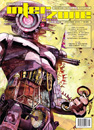 The January/February Interzone features a very cool, magna-like cover by Warwick Fraser-Coombe; he’ll be doing the cover art for all six issues in 2010, which are intended to be put together to form a larger image. Collect them all and assemble the collage to see exactly what’s up with this. As far as I can tell, it has nothing to do with the contents of the magazine, which, by the way, has returned to a color interior; it’s a very attractive package, as you’d expect from the folks at TTA Press.
 I just stumbled upon this spin on a subscription plan to support
  This past week I saw both
  might be struck by the special effects of the latter (I particularly like the scene where Tom Waits as the devil unfurls his umbrella and casually steps off a cliff, at which point little white clouds appear to support each of his steps so he doesn’t plummet to the ground), except now it (and maybe everything else) pales in comparison to Avatar, which is as visually stunning as all the hype suggests, assuming all you expect from going to a movie is a cool light show. Not that there’s anything wrong with that. But, for my money, the better movie, even with its flaws is The Imaginarium of Doctor Parnassus. Why?
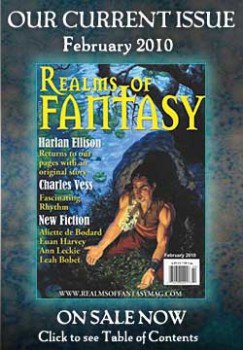 The new Realms of Fantasy coincides with the relaunch (as of December 11, 2009) of an actually informative
 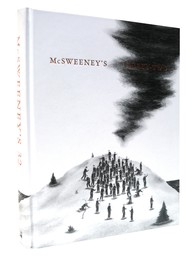 McSweeney’s is a quirky quarterly that breaks conventional publishing boundaries with each issue devoted to a unique theme, both in terms of editorial content and physical packaging. For
 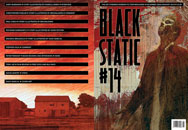 Well, entering the year (both in terms of typing the title and having lived to see
 it) was a little weird to write. The first chapter of The Martian Chronicles is January 1999, which from the vantage point of the middle of the 20th century, when the German V-rockets had landed not on another planet, but London, that seemed about right for when humanity might be “reaching for the stars” as it was called. The book ends in April 2026 which, with luck, proper diet and exercise, and health care reform I might actually still be alive to see. And which more than likely humankind, assuming it hasn’t blown itself up, will remain earthbound.
 Here in Central Virginia, we’re having one of those once in a decade or so storms in which you fill up your bathtubs with water and just hope the electricity stays on. So far it has (or otherwise I wouldn’t be able to post this).
 Talebones, a so-called semi-prozine published twice a year, is calling it quits with issue #39 , some 14 years from its debut in 1995. Details as to why editor/owner Patrick Swenson is ending publication are scant, other than this terse