Fantasia 2019, Day 11, Part 4: Things That Go Bump in the East
 My last screening of July 21 brought me back to the De Sève Theatre for a showcase of animated short genre films from China, Taiwan, Korea, and Japan, a grouping titled “Things That Go Bump In the East.” 11 films in a range of visual styles promised variety. I’d been having good luck with short films at the festival so far, and settled in eager to see what would come now.
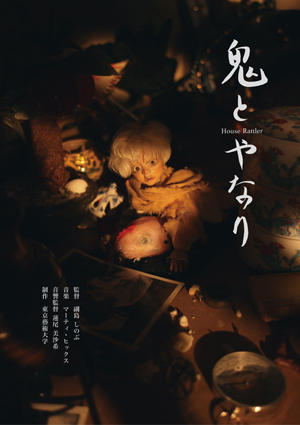
First was a 6-minute stop-motion story from Japan’s Shinobu Soejima, “The House Rattler” (“鬼とやなり”). It’s based on Japanese folklore, telling a tale of a spirit who makes the mysterious sounds with no obvious source that you sometimes hear in an old house. In this case, the little demon comes into conflict with the modern world in a surprising fashion. The film makes strong use of sound cues, as you might expect, and the setting of the house haunted by the tiny dweller-in-wainscots is a wondrous mix of shadows and rich gold-brown hues. It has the feel of age and of a place lived-in, and that helps bring out the modern twist at the end.
Next was “The Girl and the Serpent,” directed and written by Wan Jinyue and Du Jinzhi. It’s also 6 minutes long, but has a much faster pace than the atmospheric “The House Rattler.” A snake-demon demands a village produce a maiden sacrifice, but ends up with an unexpected fight. The story’s a striking mix of 2D and 3D animation, with colour being used as a major element in the storytelling. The imagery’s fluid, shifting swiftly as the demon works against the girl both physically and psychically. Nevertheless, she finds the strength to resist. It’s a stunningly designed battle, and an entertaining short.
“Rainy Season” (“장마”), by writer-director Kim Se-yoon, brought a noirish horror-inflected feel to seemingly hand-drawn animation. It’s an intensely atmospheric 4-minute piece about a woman in an apartment during a storm. She’s shooting up, but is interrupted by a flash of lightning and something eerie in the tall building across from her. Alone in her apartment, she grows increasingly paranoid — but then, just because you’re paranoid doesn’t mean something isn’t out to get you. It’s a well-done piece of suspense.
The 17-minute “Gold Fish” (“Kim-hi,” 金魚), written and directed by Taiwan’s Fish Wang, is the story of a boy in a weird dystopia, slightly steampunk and more than slightly supernatural. The inhuman masters of a a sprawling, bleak city are drinking the dreams of children. Elderly adults are all but immobile, enslaved to inhuman masters. Except one boy has a chance to fight back, and topple the whole of the corrupt society. It’s an expressionistic story with some deliberately crude designs and some excellent colour work. Cool, dark tones contrast strongly with unexpected moments of eye-popping colour. It’s not a complex story, but the scenes that illustrate the different movements of the tale are very well-done, and the tale builds nicely through a series of increasingly surreal images. I felt the ending lacked a little, but it was on the whole a solid and surprising short.
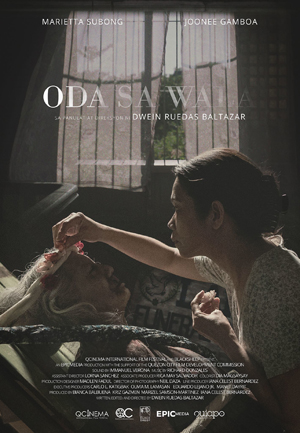 For my third movie of July 21 I wandered back to the Fantasia screening room. There, I settled in with a movie from the Philippines: Ode To Nothing. Written and directed by Dwein Ruedas Baltazar, it follows Sonya (Marietta Subong), a woman no longer young who owns her own funeral home in an unnamed town. Alone except for her father, Rudy (Joonee Gamboa), Sonya tries to keep the funeral home going despite debts to local loan shark Theodore (Dido Dela Paz). Then a body is brought to her for burial under suspicious circumstances. Rather than bury the corpse, though, Sonya begins to speak to it, and comes to think that the body of the old woman is bringing her luck — even to treat the body as her surrogate mother. Is the corpse responsible for the sudden influx of business to the funeral home? And even if it is, can you trust the gifts of the dead?
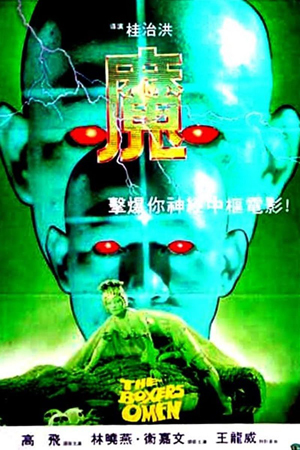 For my second film of July 21 I stayed at the De Sève Theatre to watch one of my more anticipated movies of the festival. Each year Fantasia plays a Shaw Brothers film on 35mm — not one of the Shaw classics, usually, but one of their stranger works. The past few years I’ve seen
 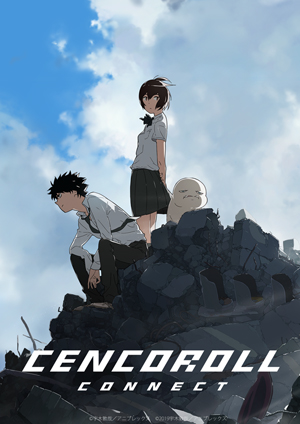 My first film at Fantasia on July 21 was actually two films put together. In 2009 Atsuya Uki released a 25-minute short he’d written and directed, called “Cencoroll,” based on a one-shot manga he’d written and illustrated. The short was well-received, and over the last decade he’s created a 50-minute follow-up. The two movies have now been released as one, Cencoroll Connect (Senkorōru, センコロール コネクト). They work together as one story, but I wonder, never having seen the original “Cencoroll” on its own, whether the first short would have left more room for an audience’s imagination to work.
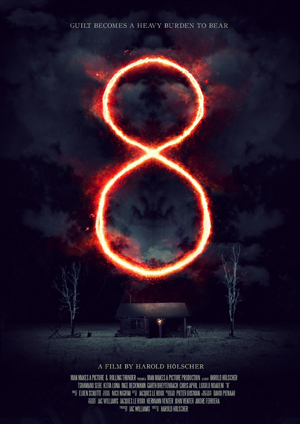 My last movie of July 20 was a horror film from South Africa. Written and directed by Harold Holscher, 8 has elements of the classical ghost story embedded in a larger tale of folklore and tragedy. It’s a period tale, set in 1977, and is set in a farm named Hemel op Aarde: Heaven on Earth.
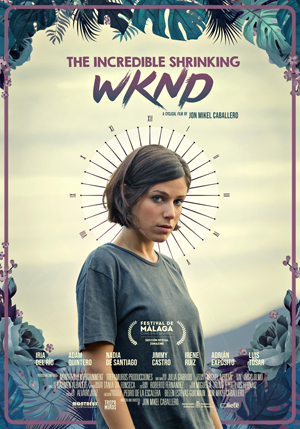 The evening of July 20 saw me stay at the De Sève Theatre after the Born of Woman showcase for a feature film written and directed by Jon Mikel Caballero: The Incredible Shrinking Wknd. It’s a time-loop story, a subgenre that strikes me as having increased in popularity significantly over the past few years. We’re at the point, then, that a time-loop story has to do something different to stand out. So what does Wknd do?
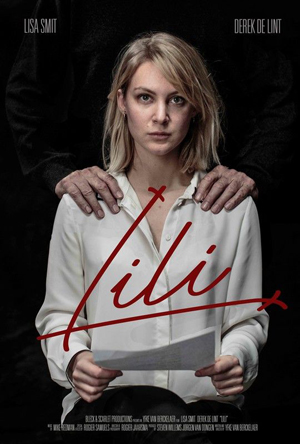 On the afternoon of Saturday, July 20, I passed by the De Sève Theatre for the Born of Woman 2019 series of short genre films directed by women. It was the fourth iteration of the showcase, and in four years it’s become a hot ticket; I nearly didn’t get in. But there was just space enough in the end, and so I was able to see the collection of 9 films representing half-a-dozen countries.
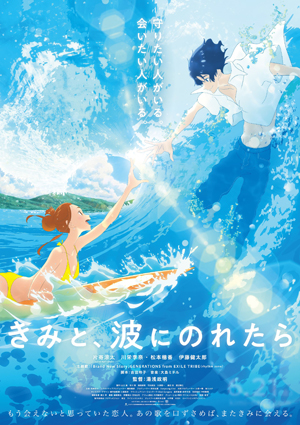 On Saturday, July 20, I was down at the Hall Theatre bright and early — relatively speaking — for an 11 AM showing of Ride Your Wave (Kimi to, nami ni noretara, きみと、波にのれたら), an animated feature from director Masaaki Yuasa. I’d seen two of Yuasa’s previous works,
  My second and last movie on July 19 was a documentary named for its subject: J.R. “Bob” Dobbs and the Church of the Subgenius (a film known in some quarters as Slacking Towards Bethlehem). Directed by Sandy K. Boone, it’s a history of a mock religion which got started more than 40 years ago, and still goes strong today.
 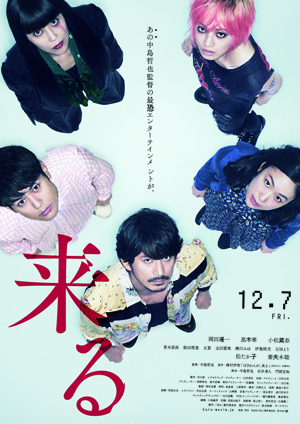 On the evening of July 19 I sat down in the Hall Theatre for a screening of It Comes (Kuru, 来る), a Japanese horror film. Directed by Tetsuya Nakashima, it’s based on the novel Bogiwan ga kuru, by Ichi Sawamura, with a screenplay by Nakashima, Hideto Iwai, and Nobuhiro Monma. It’s clever and colourful, and at two and a half hours it’s also a sprawling film that justifies its length by twisting in ways you don’t expect. It’s also a success, an entertaining and occasionally chilling movie that builds a universe without being too detailed about the supernatural horror lurking beyond consensus reality.