The Nightmare Men: “The Phantom Fighter”
 ‘He was…rather under medium height, but with military erectness of carriage that made him seem several inches taller than he actually was. His light blue eyes were small and exceedingly deep set and would have been humorous had it not been for the curiously cold directness of their gaze. With his blonde moustache waxed at the ends in two perfectly horizontal points and those twinkling, stock taking eyes, he reminded me of an alert tom-cat.’
Such is the stout Dr. Trowbridge’s description of Jules de Grandin, late of Paris, the Surete, and the Sorbonne, upon first meeting the irascible little French physician in the 1925 story, “Terror on the Links”. Cat-eyed and ebullient, de Grandin is the epitome of the phrase ‘it’s not the size of the dog in the fight, but the size of the fight in the dog.’ He defends Harrisonville, New Jersey, and by extension, all of mankind, against the spawn of Satan, using forbidden knowledge and firearms alike.
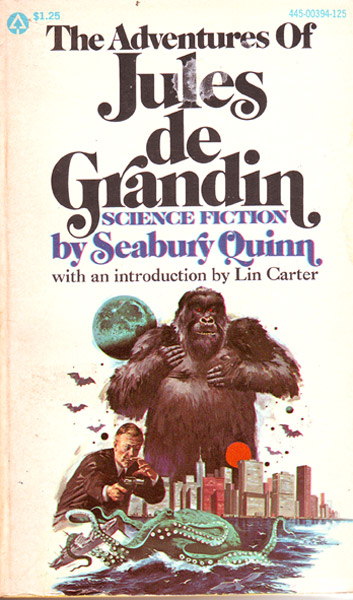
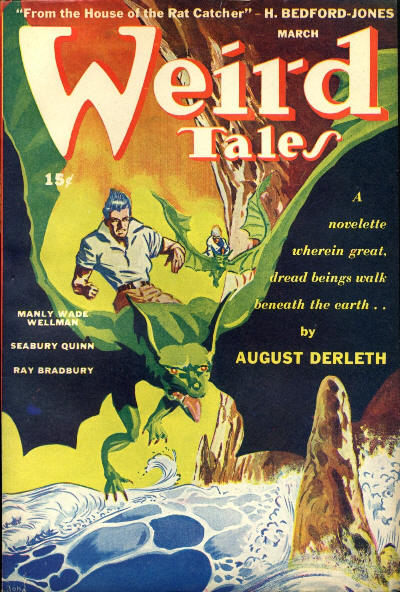
Jules de Grandin and his ever-present companion, Dr. Trowbridge, were created in 1925 by Seabury Quinn for Weird Tales and went on to feature in close to a hundred stories, with the last, “The Ring of Bastet”, appearing in 1951. Quinn, in the introduction to the 1976 Popular Library collection, The Adventures of Jules de Grandin, says that de Grandin is ‘…a sort of literary combination of Topsy and Minerva, that is, he just growed.’
It’s hard to imagine it being otherwise, given the sheer vibrancy of de Grandin from the start. De Grandin, like his more passive predecessor Dr. Hesselius, is a physician, and approaches the supernatural as an illness to be confronted. Unlike the kindly Hesselius, however, de Grandin is no amiable general practitioner, but a surgeon — flamboyant, precise, and ruthless.
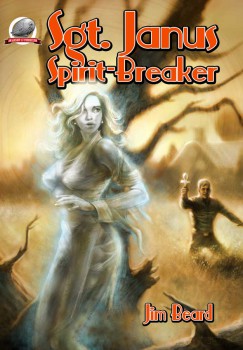 ‘His eyes were icy verdigris, but warm also, and piercing — in a kind way. He was dressed smartly in a long coat of an almost military cut and dark pants with gold piping.’ So writes the narrator of the 2012 story, “The Portobello Cetacean” as she first lays eyes on her host, Sgt. Roman Janus, late of Mount Airy, the man known as the ‘spirit-breaker’.
 Titus Crow first appeared in Lumley’s 1971 story, “The Caller of the Black”. Crow’s credentials as a psychic sleuth and occult investigator are impressively vetted in the story, as he defeats both mortal and immortal enemies through the cunning application of the standard Lovecraftian eldritch lore, a shower faucet and a window pole. From the outset, it is clear that Crow inhabits the same deadly universe as
 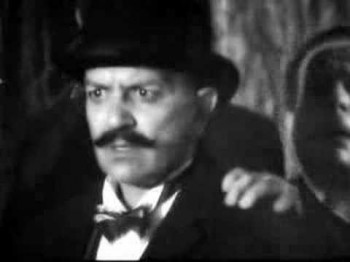 Like Van Helsing before him, Inspector John Raymond Legrasse has only had one canonical appearance: HP Lovecraft’s seminal
 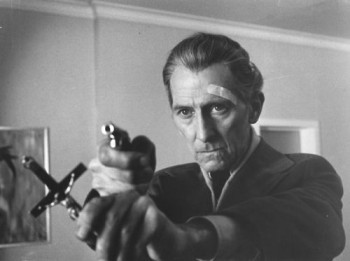 Abraham Van Helsing only had one truly canonical appearance, arriving as he did mid-way through Bram Stoker’s Dracula. However, so strong was the Dutch professor’s hold on the public imagination, and so fierce his rivalry with the Lord of the Undead, that he has followed his nightmare enemy into the Twentieth Century like a gin-drinking Fury.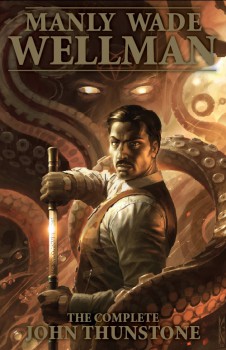
 While
While 
 A man of great height and greater girth, Judge Keith Hilary Pursuivant, after retiring from the bench, devoted his golden years to investigating the occult in the works of North Carolina author,