Browsed by
Author: John ONeill

World Fantasy Award Nominations Announced

World Fantasy Award Nominations Announced

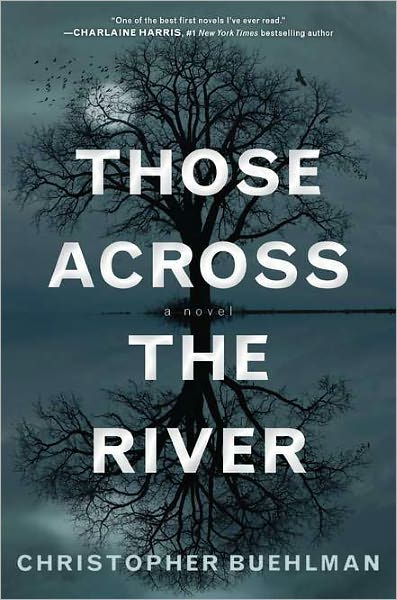
those-across-the-river2The nominations for the 2012 World Fantasy Awards have been announced. They are:

Novel

  • Those Across the River, Christopher Buehlman (Ace)
  • 11/22/63, Stephen King (Scribner)
  • A Dance with Dragons, George R.R. Martin (Bantam)
  • Osama, Lavie Tidhar (PS Publishing)
  • Among Others, Jo Walton (Tor)

Novella

  • “Near Zennor”, Elizabeth Hand (A Book of Horrors)
  • “A Small Price to Pay for Birdsong”, K.J. Parker (Subterranean, Winter 2011)
  • “Alice Through the Plastic Sheet”, Robert Shearman (A Book of Horrors)
  • “Rose Street Attractors”, Lucius Shepard (Ghosts by Gaslight)
  • Silently and Very Fast, Catherynne M. Valente (WSFA Press and Clarkesworld)

Short Story

  • “X for Demetrious,” Steve Duffy (Blood and Other Cravings)
  • “Younger Women,” Karen Joy Fowler (Subterranean, Summer 2011)
  • “The Paper Menagerie,” Ken Liu (F&SF, March-April 2011)
  • “A Journey of Only Two Paces,” Tim Powers (The Bible Repairman and Other Stories)
  • “The Cartographer Wasps and the Anarchist Bees,” E. Lily Yu (Clarkesworld April 2011)

Read More Read More

Enjoying Vintage Comics with The Toon Treasury of Classic Children’s Comics

Enjoying Vintage Comics with The Toon Treasury of Classic Children’s Comics

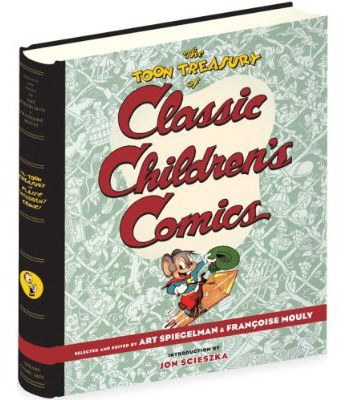
toon-treasure-of-classic-childrens-comics2One of the great things about the 21st Century? Cheap comic reprints (I know, that’s top of your list too, right?)

Seriously. When I was growing up, if you wanted to know what happened in Amazing Spider-Man #65, you had to find someone five years older than you and pester the hell outta them until they told you. As comic archival systems went, it was crude and had little to recommend it.

Not today. Now you have an embarrassment of choices. Want the color reprints of Amazing Spider-Man? The cheap black-and-white? Hardcover or paperback? Digital or paper? Paper or plastic? Bah. All these choices make me grumpy. I miss nagging all the teenagers in my neighborhood. Yelling at them to get off my lawn isn’t the same.

And here’s the other thing. If you want to read premium reprints of superhero, sci-fi, or horror comics from the 50s through the 90s, life is grand. Just browse the graphic novel section at Barnes & Noble or Amazon and you’ll see what I mean — the choices are staggering. Marvel, DC, Gold Key, Charlton, EC… they’re all there, and in quantity.

But if you’re interested in children’s comics from the same era? Good luck.

There are a few intrepid publishers bucking the trend. Fantagraphics has one of the most ambitious publishing ventures in the history of comics with The Complete Peanuts, collecting all 17,897 daily and Sunday strips by Charles M. Schulz (18 hardcover volumes, so far). And let’s not forget Pogo: The Complete Daily & Sunday Comic Strips by Walt Kelly, or the extensive Disney comics of Carl Barks — especially his Donald Duck and Uncle Scrooge — published by Gladstone and Boom! Studios over the years.

But these publishing projects assume you’re already a dedicated fan, and willing to shell out $30 (or more) per book for archival quality hardcovers. What if you just want to sample some of the best from the golden age of kid’s comics? For that, I heartily recommend Art Spiegelman and Francoise Mouly’s wonderful volume, The Toon Treasury of Classic Children’s Comics.

Read More Read More

New Treasures: Sherwood Smith’s The Spy Princess

New Treasures: Sherwood Smith’s The Spy Princess

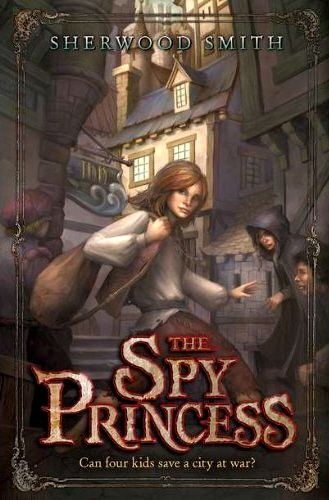
the-spy-princess2If you’re not reading Sherwood Smith, you’re missing out on one of the most gifted and versatile fantasy authors at work today.

Sherwood’d first novel, Wren to the Rescue (1990), kicked off the popular 6-volume Wren fantasy series, including Wren’s Quest (1993), Wren’s War (1995) and A Posse of Princesses (2008). I first took notice of her with the Court and Crown Duet, published as two YA novels, Crown Duel and Court Duel, in 1997/98.

Sherwood effortlessly transitioned to adult fantasy with the major novel Inda (2006), the first installment in an ambitious fantasy quartet which continued with The Fox (2007), King’s Shield (2008), and Treason’s Shore (2009). To science fiction fans Sherwood is the author of the beloved Exordium series, co-written with Dave Trowbridge, which began with The Phoenix in Flight (1993), as well as two novels in Andre Norton’s Solar Queen universe (co-written with Andre Norton), and two books in Norton’s Time Traders universe.

With The Spy Princess Sherwood offers up a treat for the numerous fans of her YA books: the tale of four intrepid children who are the only thing that stand between a city and destruction.

When twelve-year-old Lady Lilah decides to disguise herself and sneak out of the palace one night, she has more of an adventure than she expected — for she learns very quickly that the country is on the edge of revolution. When she sneaks back in, she learns something even more surprising: her older brother Peitar is one of the forces behind it all. The revolution happens before all of his plans are in place, and brings unexpected chaos and violence. Lilah and her friends, leaving their old lives behind, are determined to help however they can. But what can four kids do? Become spies, of course!

The Spy Princess is 400 pages in hardcover from Viking Juvenile. The hardcover is $17.99, and the digital version is $10.99. It was published on August 2.

Dean Wesley Smith and Kristine Kathryn Rusch Announce Fiction River

Dean Wesley Smith and Kristine Kathryn Rusch Announce Fiction River

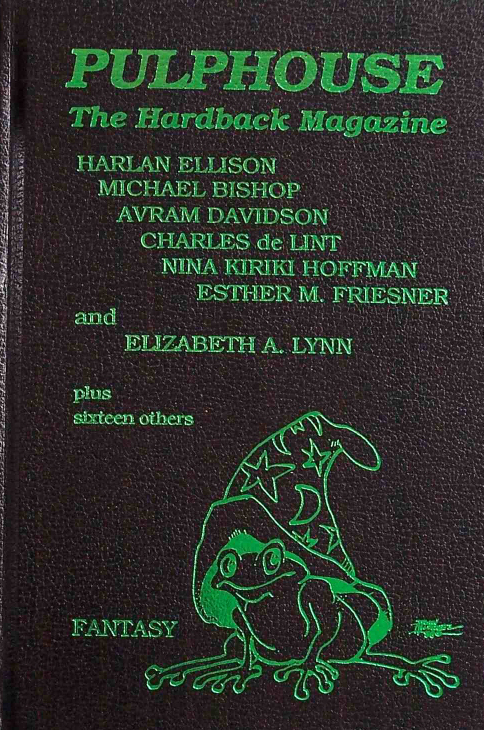
pulphouse-fantasyPulphouse publishers Dean Wesley Smith and Kristine Kathryn have announced a new genre market, Fiction River:

Fiction River will be a bimonthly anthology series starting in April next year. Each anthology will be theme-focused and cross-genre containing all original fiction written by some of the top writers in fiction, including big names and names you might have never heard of.

Each anthology will be published in an electronic edition, a trade paper edition, and a very limited and numbered and signed hardback edition. (Signed by all authors and editors.) Readers will be able to buy each anthology individually or subscribe to the anthology series like a magazine.

As many of you know, Kris and I, in 1987, started Pulphouse Publishing with Pulphouse: The Hardback Magazine. We published those anthologies every three months. Fiction River will be like Pulphouse and Orbit and Universe and other major original fiction anthology series of the past. It will focus on top quality short fiction of all types, in a themed-anthology format.

Pulphouse was one of the most respected fantasy and science fiction markets of the 80s and 90s. They published twelve thick issues of Pulphouse: The Hardback Magazine from 1988 through 1993, and 19 issues of a weekly fiction magazine, also called Pulphouse (which was never quite weekly). They were nominated for a Hugo three times, and won the World Fantasy Award in 1989. After closing down Pulphouse Kristine Kathryn Rusch was the editor of The Magazine of Fantasy and Science Fiction for six years (1991 to 1997), and Dean Wesley Smith edited the anthology series Star Trek: Strange New Worlds.

To fund the project Smith and Rusch announced a Kickstarter project. By August 7, with 20 days still to go, they have surpassed their original $6,000 goal, with nearly $9,300 pledged.

You can read more about Fiction River here.

The Golden Age of Science Fiction is Twelve

The Golden Age of Science Fiction is Twelve

universe-3I continue to find marvelous treasures in the four boxes I purchased from the Martin H. Greenberg collection.

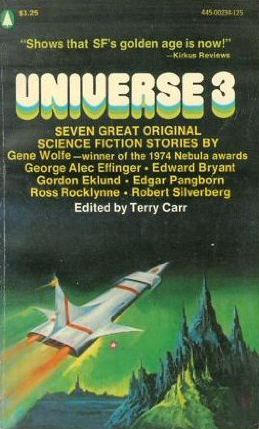
Take, for example, Universe 3, the 1973 original anthology edited by Terry Carr. I haggled with Doug Ellis until he sold me both Universe 3 and 4 for 51 cents (all the change I had left in my pocket), mostly because of the mysterious and cool notes I found scrawled on the Table of Contents, presumably by Martin H. Greenberg himself.

But it was in Carr’s introduction that I found the real treasure this time, a quote I’ve heard time and time again since I started reading science fiction and fantasy in my early teens:

When aficionados of this field get together, that’s a standard topic of discussion. When was science fiction’s golden age? Some say the early forties, when John W. Campbell and a host of new writers like Heinlein, Sturgeon and van Vogt were transforming the entire field; others point to the early fifties, to [editors] H.L. Gold and Anthony Boucher and to such writers as Damon Knight, Alfred Bester and Ray Bradbury. Some will lay claims for the late sixties, when the new wave passed and names like Ballard, Disch and Aldiss came forward.

There are still people around, too, who’ll tell you about 1929 and David H. Keller, E.E. Smith and Ray Cummings.

The clue in most cases is when the person talking first began to read science fiction. When it was all new, all of it was exciting. Years ago a friend of mine, Pete Graham, tersely answered the question “When was the golden age of science fiction?” by saying “Twelve.” He didn’t have to explain further; we knew what he meant.

I was surprised and pleased to discover the origins of that famous phrase (although, by the time it reached me, it had morphed into “The golden age of science fiction is fourteen.”)

Either way, there’s fundamental truth in Pete Graham’s observation. Between the ages of 12 and 14 I devoured countless volumes of fantasy and science fiction, including a great many reprints from the pulp era. For me, the Golden Age of Science Fiction lies between 1932 and 1942, when everything was new in the genre, and authors sought, above all, to deliver a sense of wonder to their readers.

There’s a great deal more to recommend Universe 3 besides Carr’s famous introduction, by the way. It contains fiction by Edward Bryant, George Alec Effinger, Edgar Pangborn, Robert Silverberg, Gordon Eklund, pulp writer Ross Rocklynne — and Gene Wolfe’s famous tale “The Death of Doctor Island.” If you can find a copy, I highly recommend it.

Just don’t expect to pay 51 cents for it. Leave that to the experts.
New Treasures: Clockwork and Cthulhu

New Treasures: Clockwork and Cthulhu

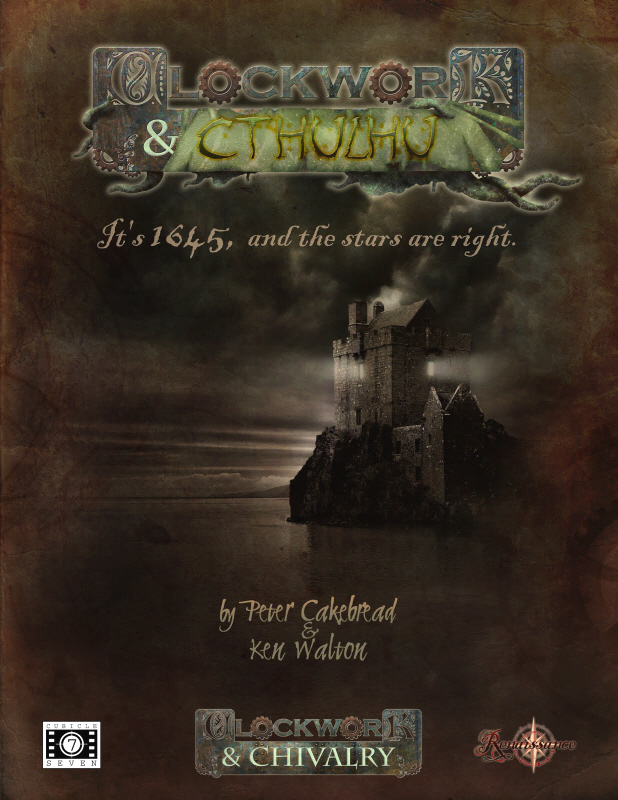
clockwork-cthulhu-smallI don’t know much about this little artifact; but the moment I laid eyes on it, I knew I had to blog about it. It combines two of my favorite things: Cthulhu and Clocks.

Okay, not really. Would you believe Cthulhu and role-playing games? How about Cthulhu and giant clockwork war machines that lumber across the land?

Clockwork and Cthulhu is a supplement for the 17th century alternate historical fantasy world Clockwork & Chivalry, one of the most innovative settings ever produced for RuneQuest 2. And yes, I realize that if you don’t play RPGs, that sentence will not parse no matter how hard you mess with it. Just go with it.

England has descended into civil war. The earth is tainted by alchemical magick. Giant clockwork war machines lumber across the land. In the remote countryside, witches terrorise entire villages, while in the hallowed halls of great universities, natural philosophers uncover the secrets of nature.

War, plague and religious division make people’s lives a constant misery. But even greater threats exist. Witches whisper of the old gods. Royalist alchemists pore over John Dee’s forbidden translation of the Necronomicon, dreaming of powers that will allow them to win the war. Parliamentarian engineers consult with creatures from beyond the crystal spheres and build blasphemous mechanisms, unholy monuments to their alien overlords. Vast inter-dimensional beings seek entry into the world, while their human servants, corrupted, crazed and enslaved, follow the eldritch agendas of their hidden masters.

Clockwork & Cthulhu brings the horror of H.P. Lovecraft’s Cthulhu Mythos to the 17th century alternate historical fantasy world of Clockwork & Chivalry.

You have to admit that sounds cool. Don’t you wish you played role-playing games now?

Clockwork and Cthulhu was written and designed by Peter Cakebread and Ken Walton, authors of Clockwork & Chivalry. It is 156 pages, and sells for $29.99. It is published by Cubicle 7 Entertainment; you can find more information here.

All Eyes on Mars as Curiosity Prepares to Land

All Eyes on Mars as Curiosity Prepares to Land

marsAs I type this, the one-ton Curiosity, the largest rover ever sent to another planet, is nearing an historic landing on Mars. It is scheduled to land at 1:31 a.m. Eastern Standard Time tomorrow morning, in slightly more than two hours.

Curiosity is already famous for several reasons. The $2.6 billion atomic-powered robot carries perhaps the most sophisticated mobile lab ever built — including 17 cameras, a laser, instruments that can analyze soil and rock samples, and a telecommunications system that can beam the results hundreds of millions of miles back to Earth.

It’s also famous for a series of videos depicting the “Seven Minutes of Terror,” the almost impossibly complex landing sequence — involving the world’s largest supersonic parachute, a sky crane, and no less than 76 precisely timed explosive charges — that will decelerate the rover from 13,000 miles an hour to zero in just seven minutes, delicately depositing it on the Martian surface. At 1,986 pounds, Curiosity is much too large for any previously-designed landing sequence to work.

I cannot do justice to the amazing scheme JPL has cooked up to slow the rover. I leave that to William Shatner, who narrates a 4-minute summary of the planned landing here. No, he’s not kidding. It really is that crazy.

I am very, very excited about this landing tonight. But like the entire staff of NASA, and much of the rest of the world, I’m also very concerned about all the things that could go wrong. I will spend much of the next two hours with my fingers crossed. CNN will be broadcasting live coverage of the landing, starting at 11:30 p.m. Eastern tonight.

I’m rooting for you Curiosity. Make it down in one piece, buddy.

Update: NASA reports that the SUV-sized Curiosity touched down safely on Mars, transmitting black and white images back to Earth. Higher resolution color images are expected later in the week. Way to go, Curiosity!

Vintage Treasures: The Prince of Morning Bells by Nancy Kress

Vintage Treasures: The Prince of Morning Bells by Nancy Kress

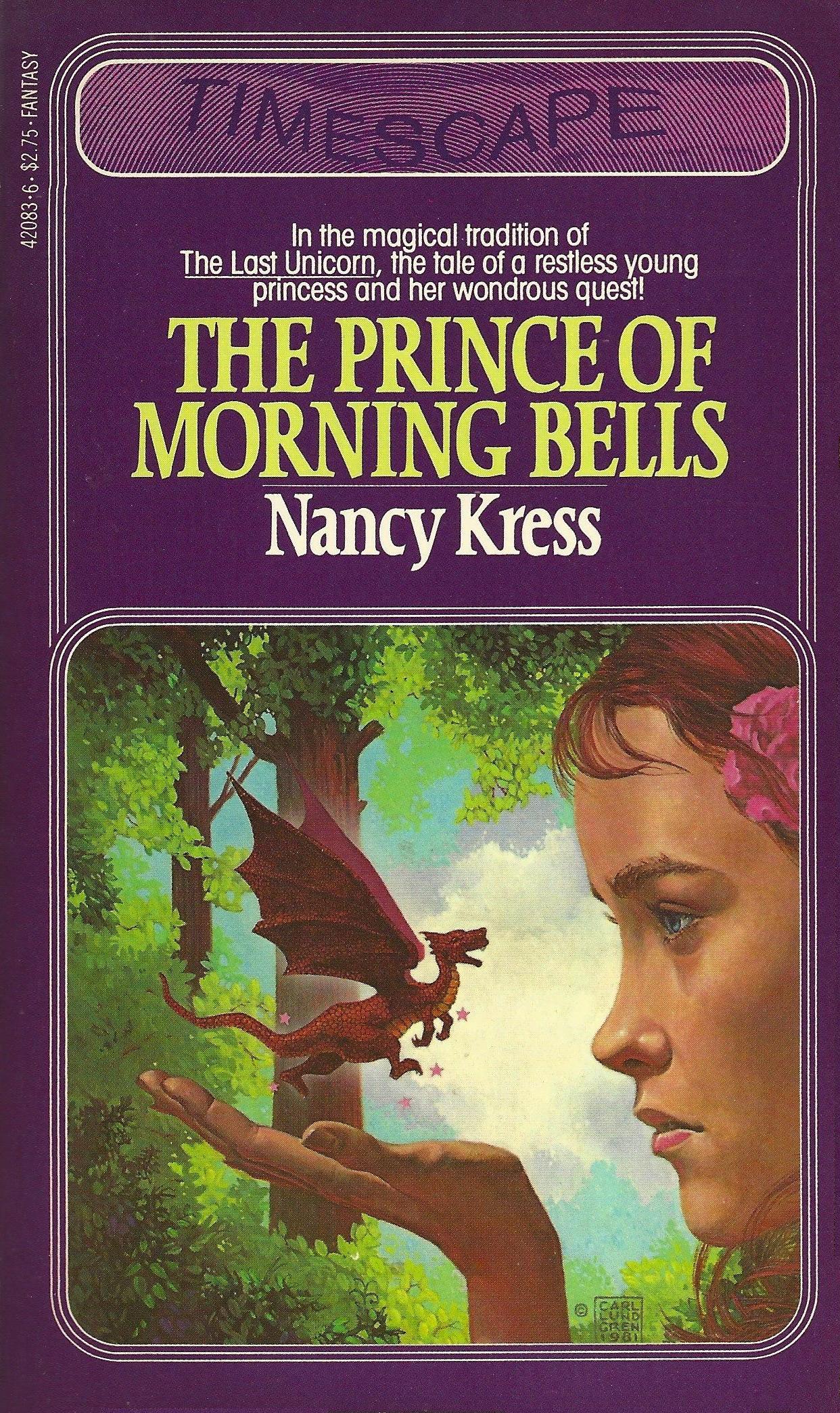
prince-of-morning-bellsI first discovered Nancy Kress through her brilliant SF short stories, like the Hugo- and Nebula-Award winning  “Beggars in Spain.” But she has an impressive fantasy resume as well, including her early novels, The Golden Grove (1984) and The White Pipes (1985) — which we cover here.

The Prince of Morning Bells (1981) was her first novel, and I’m embarrassed to say I’d never heard of it. Until I found a copy in Martin Harry Greenberg’s vast paperback collection.

Only yesterday, when marvels and mystery blessed the Universe…

Lovely Princess Kirila rejected royal traditions to seek wisdom and truth at the Tents of Omnium at the Heart of the World. With her protector and savior, the enchanted purple dog, Chessie, she reaches the kingdom of the Quirks — but their rational society cannot help in her hazardous quest. Nor can the people of Ruor, whose mystic religion threatens to enslave her. It is only at the Castle of Reyndak that a handsome young prince succeeds in interrupting her journey…

But years later, Kirila will again take up her quest with faithful Chessie, to reach the fabled tents, and discover the amazing secret at the heart of every woman’s world.

You’ve got to hand it to any book summary that includes the words “enchanted purple dog.” That’s some serious book blurbing chutzpah right there.

The original Timescape paperback is pretty hard to find (and no, you can’t have mine.) But we live in the era of digital books, and if you’ve got an e-reader, then The Prince of Morning Bells can be all yours for just $5.99 in a revised edition with a new afterword by the author.

The Prince of Morning Bells is 236 pages. It was originally published by Pocket Books, as part of their Timescape line, and released in a revised edition in trade paperback by FoxAcre Press in 2000 (still in print). It is currently available in digital format for the Nook and Kindle.

The Top 30 Black Gate Posts in June

The Top 30 Black Gate Posts in June

June was a terrific month for the Black Gate blog. Traffic has been steadily increasing for the past two years, and in June we reached a total of 2,300 blog posts. The top article for the month was “Selling Philip K Dick” from June 11, and the most popular link on the website was to the collected “New Treasures” columns.

The complete list of the Top 30 blog posts in June at Black Gate follows.
the-simulacra-philip-k-dick

  1. New Treasures
  2. Selling Philip K Dick
  3. Black-Gate-goes-to-the-summer-movies-Snow-White-and-the-Huntsman
  4. Vintage-Treasures-George-RR-Martin’s-Nightflyers
  5. The-best-of-modern-arabian-fantasy-Saladin-Ahmed
  6. Drinking-atlantis-no-chaser-Conan-the-Barbarian-2011
  7. Black-Gate-goes-to-the-summer-movies-Prometheus
  8. TSR’s-Amazing-science-fiction-anthologies
  9. The-best-of-modern-arabian-fantasy-CA-Suleiman
  10. Cerebus
  11. Art-of-the-genre-the-art-of-a-future-fallen
  12. Brave
  13. Fall-from-Earth-a-review
  14. Thank-you-Martin-H-Greenberg-and-Doug-Ellis
  15. New-Treasures-the-sword-sorcery-anthology
  16. Read More Read More

New Treasures: The Black Opera by Mary Gentle

New Treasures: The Black Opera by Mary Gentle

the-black-operaI don’t know if British fantasy author Mary Gentle is all that well known here in the US. But in my native Canada — and especially among the fantasy fans I circulated among in Ottawa — she is highly respected indeed.

Her first novel was Hawk in Silver, published in 1977 when she was only eighteen. But it was her two linked science fiction novels Golden Witchbreed (1983) and Ancient Light (1987) that really put her in the map. Her first major fantasy novel was Rats and Gargoyles (1990), the first volume of the White Crow sequence; perhaps her most acclaimed recent work has been Ash: A Secret History (2000, published in four volumes in the US) and Ilario (2007).

She’s also well known for Grunts! (1992), an action-packed send-up of epic fantasy, which follows Orc Captain Ashnak and his war-band as they take arms against the insufferable forces of Light — including murderous halflings and racist elves — who slaughter his orc brothers by the thousands in their path to inevitable victory.

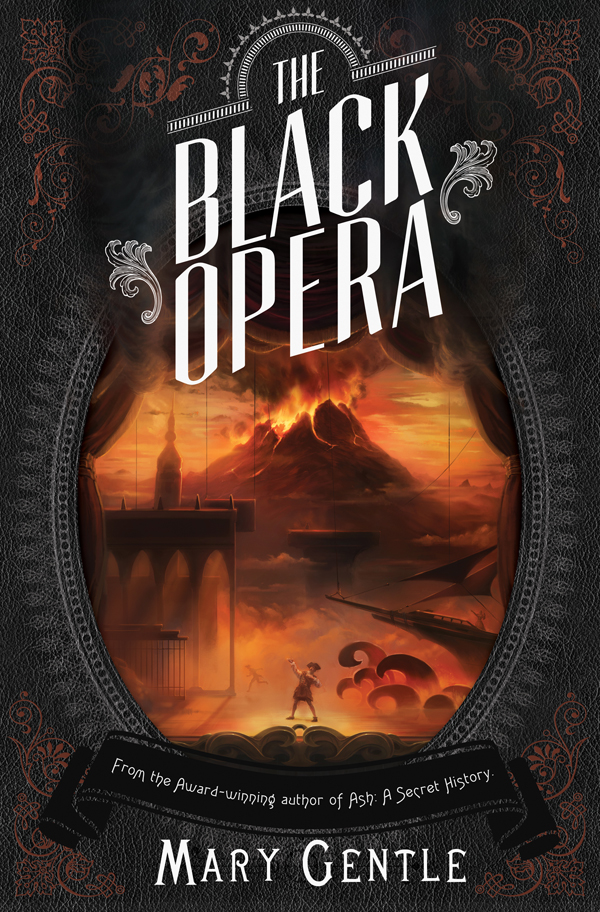
Her newest novel is The Black Opera, and it has all the hallmarks of Gentle’s original and thought-provoking fantasy:

Naples, the 19th Century. In the Kingdom of the Two Sicilies, holy music has power. Under the auspices of the Church, the Sung Mass can bring about actual miracles like healing the sick or raising the dead. But some believe that the musicodramma of grand opera can also work magic by channeling powerful emotions into something sublime. Now the Prince’s Men, a secret society, hope to stage their own black opera to empower the Devil himself – and change Creation for the better! Conrad Scalese is a struggling librettist whose latest opera has landed him in trouble with the Holy Office of the Inquisition. Rescued by King Ferdinand II, Conrad finds himself recruited to write and stage a counter opera that will, hopefully, cancel out the apocalyptic threat of the black opera, provided the Prince’s Men, and their spies and saboteurs, don’t get to him first. And he only has six weeks to do it…

The Black Opera was published in May by Night Shade Press. It is 515 pages (including a one-page appendix, “Rude Italian for Beginners,”) and is available for $15.99 in trade paperback and $9.99 in various digital formats.