Browsed by
Author: John ONeill

New Treasures: The Haunted Land of Carcosa
New Treasures: The Haunted Land of Carcosa

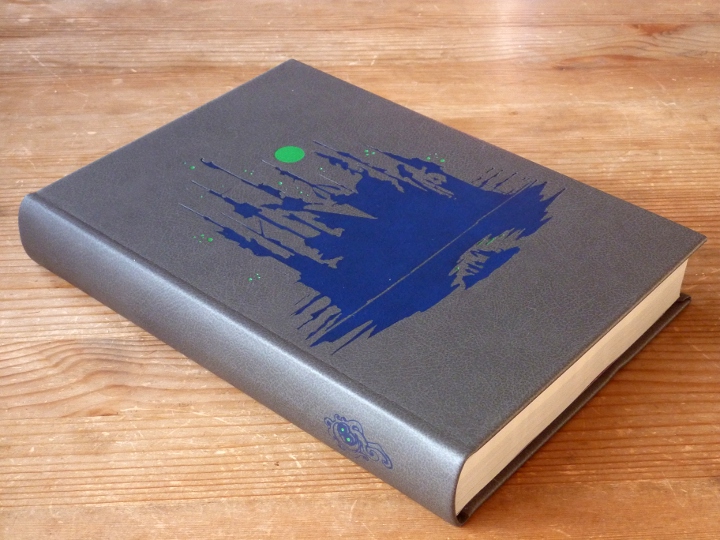
Carcosa-smallI’ve been enjoying the recent renaissance in retro-D&D gaming. For one thing, it’s brought back great memories of the adrenalin-filled dungeon crawls of my youth, without all the trouble and expense of getting a bunch of middle-aged gamers scattered across two countries back together around a table.

The first role-playing adventures, from Blackmoor to Descent Into the Depths of the Earth, were many and varied, but in large part they followed a similar theme: you crawled into a hole in the ground and killed stuff.

Sure, there were thrills and surprises aplenty — strange subterranean civilizations, weird magic and weirder creatures, and magical treasures of all kinds — but in general the concept wasn’t much different from the piñata. You hit things, and goodies fell out. To get a sense of those early dungeons, imagine wandering through an underground J.C. Penny’s where every cashmere sweater, discount steak knife, and toaster is enchanted and the floor staff have spears and a surly attitude, and you pretty much get the idea.

We thrilled to those early adventures, and at the same time we yearned for something closer to the fantasy novels we were reading. Gradually, the industry responded by producing more sophisticated products with cohesive storylines, real characters, and dungeons that made some kind of functional sense, and the old adventures — with their frog temples, endless magical fountains, and chatty vorpal blades — went the way of the dinosaur.

Of course, no sooner did that happen than we started yearning for the simple games of our youth. Go figure.

That in a nutshell is the story of the resurgence of OE (Original Edition) Dungeons and Dragons games like Astonishing Swordsmen & Sorcerers of Hyperborea, Dungeon Crawl Classics, Labyrinth Lord, and even the recent first edition AD&D reprints. And now that they have arrived — and the marketplace has embraced them — compatible adventure modules have started to pop up as well. I’ve rarely seen any as ambitious and as well thought-out as Geoffrey McKinney’s Carcosa.
Read More Read More

Monsters and the Apocalypse: Enormous from Image Comics

Monsters and the Apocalypse: Enormous from Image Comics

Enormous-smallOne thing I like about comics: they’re all about the impulse buy.

I can’t afford to impulse buy books, or my house would be full of them (well, more full than it already is). But comics are a different story. My weekly trip to the comic shop is all about buying whatever catches my eye.

Sure, there are titles I follow regularly — Ultimate Spider-Man, Fables, the brilliant Atomic Robo — but the comic shop is one of the few places I can still afford to experiment, and pick up a book just because it looks intriguing.

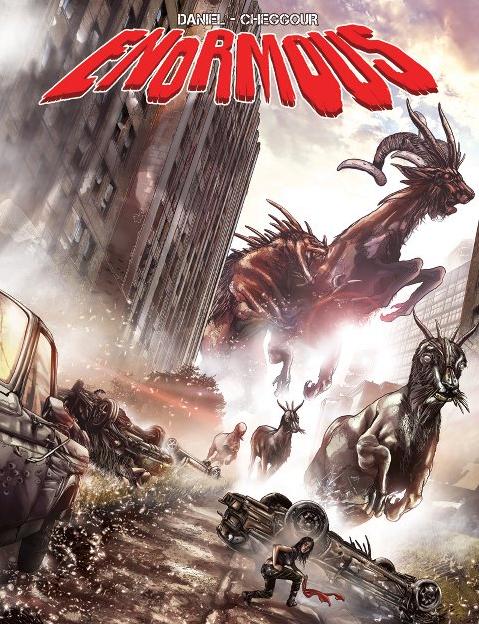
Some experiments work out better than others. Last week I found an odd artifact on the racks: an oversize graphic novel from Image Comics called Enormous. The artwork by Mehdi Cheggour looked spectacular, and Tim Daniel’s story — something about a planet-wide ecological catastrophe, desperate search-and-recovery efforts run out of an abandoned missile silo, and gigantic monsters towering over the ruins of America’s once-great cities — was precisely the kind of thing comics were invented for. I added it to my weekly selection without another thought.

Unfortunately I still don’t know much about Enormous, even after reading it. Yes, Cheggour’s artwork is spectacular, and Daniel’s story is something about an extinction level event and a desperate search for survivors. With giant monsters. The individual panels are marvelous, but the story is pretty much incomprehensible.

Read More Read More

Throne of the Crescent Moon: “The Best Fantasy Swashbuckler of the Year”

Throne of the Crescent Moon: “The Best Fantasy Swashbuckler of the Year”

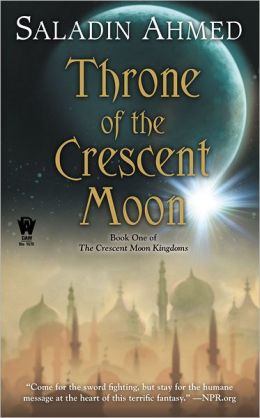
Throne of the Crescent MoonLong before I heard about Saladin Ahmed’s first novel Throne of the Crescent Moon, I heard great things about its author.

In 2009-2010, Saladin was busy making a name for himself with a series of very well-received short stories, published in such places as Apex Magazine, Beneath Ceaseless Skies, and Strange Horizons. His “Hooves and the Hovel of Abdel Jameela,” which originally appeared in Mike Allen’s Clockwork Phoenix 2, was a finalist for the 2010 Nebula Award for Best Short Story. By the time I met him at the World Fantasy Convention in Columbus, Ohio in 2010, the buzz was unmistakable. This was a writer who was going places.

Our Managing Editor Howard Andrew Jones spoke enthusiastically about Saladin’s upcoming novel on a panel on Arabian Fantasy at WFC, saying he was a writer who brought a genuine love of Arabian history and a natural storyteller’s talent to adventure fantasy.

When you’ve been in the industry as long as I have, you get used to young writers getting talked up at conventions. But when Throne of the Crescent Moon arrived last February, it exceeded all expectations. The Magazine of Fantasy & Science Fiction called it “A delight in every imaginable way,” and io9 said it was “The best fantasy swashbuckler of the year so far.” Howard was right: with a single novel, Saladin Ahmed has vaulted to the front rank of modern adventure fantasy writers.

Throne of the Crescent Moon follows the exploits of Doctor Adoulla Makhslood, “The last real ghul hunter in the great city of Dhamsawaat,” who’s more interested in a quiet cup of tea than adventure. But the Crescent Moon Kingdoms are on a knife’s edge as a power struggle between the iron-fisted Khalif and the master thief known as the Falcon Prince reaches a boiling point. As the city begins to slide into open rebellion, a series of mysterious and brutal supernatural murders strike even greater fear into the populace. When Adoulla and his companions learn the murders are somehow connected to the rebellion, they’re swept up in a plot that threatens to destroy their city.

Throne of the Crescent Moon is the first volume in The Crescent Moon Kingdoms trilogy. It was released in hardcover in February 2012, and finally arrived in paperback on December 31. It is 367 pages in paperback, priced at $7.99 for the print and digital versions. The mass market edition is sure to reach an even wider audience and grow Saladin’s already vast legion of fans. Don’t be one of the last to catch on.

New Treasures: Circus: Fantasy Under the Big Top, edited by Ekaterina Sedia

New Treasures: Circus: Fantasy Under the Big Top, edited by Ekaterina Sedia

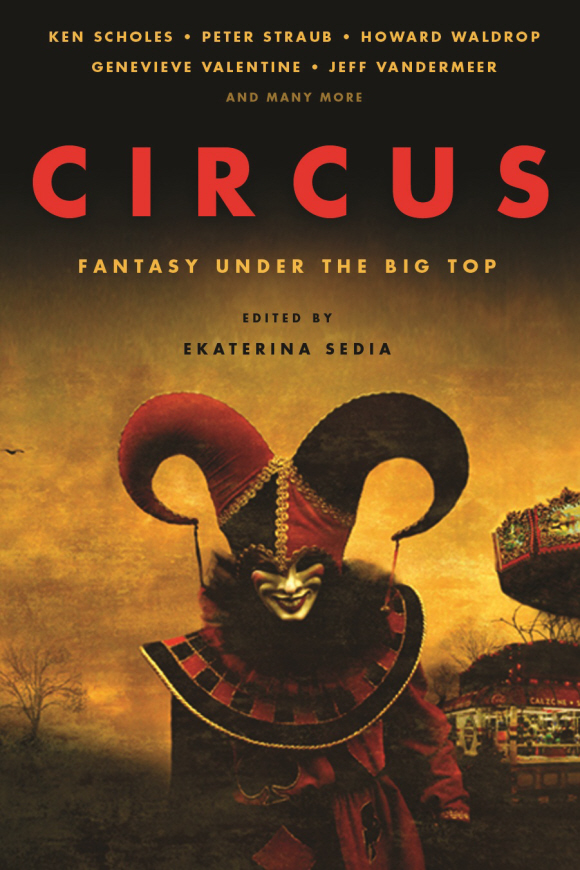
Circus-smallSeems like I’ve done an awful lot of New Treasures posts this week. So I guess one more won’t matter.

Good thing too, because I’m dying to tell you about Circus: Fantasy Under the Big Top, a new anthology from Ekaterina Sedia and Prime Books.

Have you ever seen a book and wanted it immediately? I mean, you just got the concept instantly, and knew it was what you were looking for?  What am I talking about — of course you have.

Well, that’s what happened with me and Circus. I was innocently browsing on Amazon, shopping for… well, I forget exactly. Anyway, there it was, displayed in 76-pixel glory in the Customers Who Bought This Item Also Bought widget (and man, the anonymous software engineer who invented that damn thing has cost me a fortune, lemme tell you.)

And I got it: a reprint anthology featuring classic fantasy tales of circuses light and dark. I was sold the moment I laid eyes on the terrific cover by Malgorzata Jasinska (click on the image at right for the full-sized version). Here’s Ekaterina Sedia from her introduction:

We have collected tales of children running away to join the circus and circuses doing the same, stories of circuses not of this world (in all senses of the word), circuses futuristic, nostalgic, filled with existential dread and/or joy. Acts mundane, and spectacular, and incomprehensible. Clowns and extinct animals. Magicians and werewolves. Acrobats and living musical instruments… Because we cannot help but love them — for the sake of the children we once were, or for the sake of the better adults we long to become.

Circus: Fantasy Under the Big Top includes tales by Peter Straub, Jeff VanderMeer, Genevieve Valentine, Barry B. Longyear, Howard Waldrop, Neal Barrett Jr, Kij Johnson and many more. Complete Table of Contents after the jump.

Read More Read More

Vintage Treasures: The Fox Woman & Other Stories by A. Merritt

Vintage Treasures: The Fox Woman & Other Stories by A. Merritt

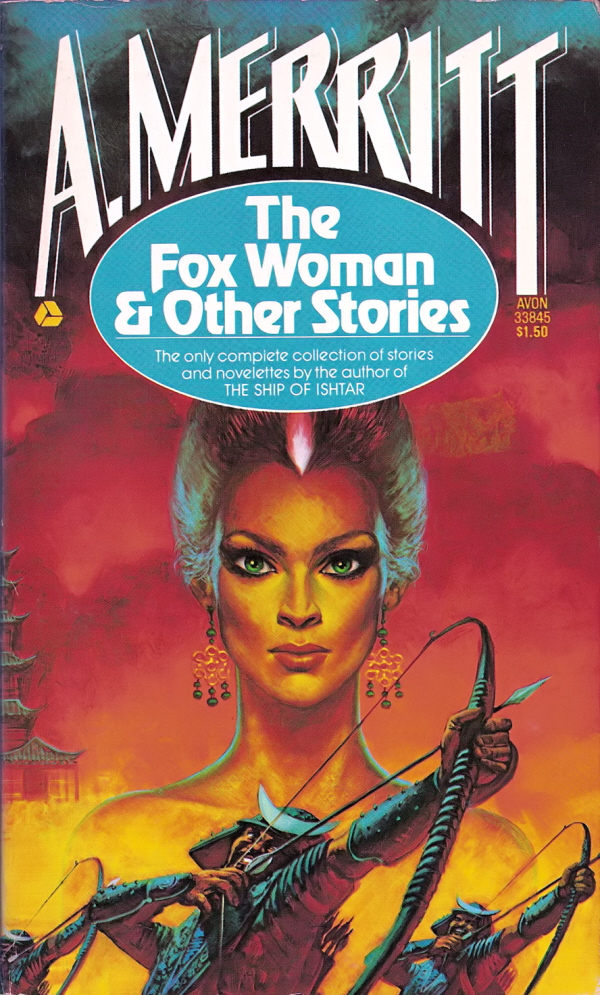
The Fox Woman-smallI’m a pulp fan, and I have been for decades. The next time I’m marooned on a desert island, I’m taking as many magazines from the 1930s and ’40s as I can cram in the life raft.

Pulp novels though… you know, that’s another story. Ask me to name the great fantasy novels of the pulp era, and I run out of air pretty quickly. The fast action and colorful settings of great pulp fiction seem to work best at short length, which maybe explains why the era’s biggest names — H.P. Lovecraft, Robert E. Howard, Clark Ashton Smith — wrote almost exclusively at that length.

Perhaps that also explains why the years have not been kind to the most popular fantasy novelists of the pulp era — Otis Adelbert Kline, Ray Cummings, John Taine, L. Ron Hubbard, Ralph Milne Farley. All were prolific novelists before the end of World War II and virtually all are long out of print.

That’s especially true of the man who was perhaps the biggest name in pulp fantasy: A. Merritt. For decades, his name on the cover of a pulp magazine guaranteed sales in the hundreds of thousands and his novels remained in print late into the ’70s.

I first tried Merritt at the age of fourteen — already a pulp fan, I’d read more than a few breathless reviews of his work from several sources. I found a copy of his 1931 novel, The Face in the Abyss, in the spinning racks of a used book store in Ottawa and snatched it up with considerable excitement… which quickly turned to disappointment.

Read More Read More

New Treasures: The Aylesford Skull by James P. Blaylock

New Treasures: The Aylesford Skull by James P. Blaylock

The Aylesford Skull-smallJames P. Blaylock is something of a hero to Steampunk fans. We don’t go so far as to say he invented the genre single-handed, but he was definitely in the laboratory when Igor threw the switch and it took its first lumbering steps.

I first encountered Blaylock in the late 80s, when he was making a name for himself with brilliant short fiction like “Paper Dragons” (1986), which won the World Fantasy Award, and novels like The Elfin Ship (1982) and The Digging Leviathan (1984).

But his steampunk pedigree dates back to his Langdon St. Ives novels, starting with Homunculus (1986) and Lord Kelvin’s Machine (1992) — collected in The Adventures of Langdon St. Ives, a handsome omnibus edition that also included four related short stories, published by Subterranean Press in 2008.

So you can understand the excitement when Titan Books recently announced the first full-length Langdon St. Ives novel in two decades: The Aylesford Skull, a rollicking new steampunk adventure, from one of the genre’s pioneers, that takes us into the dangerous underworld of 19th Century England, through the foggy depths of the Cliffe Marches and the lairs of smugglers and pirates, and into the sewers, lost rivers, and sorcerous underworld of London:

It is the summer of 1883 and Professor Langdon St. Ives — brilliant but eccentric scientist and explorer — is at home in Aylesford with his family. However, a few miles to the north a steam launch has been taken by pirates above Egypt Bay; the crew murdered and pitched overboard. In Aylesford itself a grave is opened and possibly robbed of the skull. The suspected grave robber, the infamous Dr. Ignacio Narbondo, is an old nemesis of Langdon St. Ives.

When Dr. Narbondo returns to kidnap his four-year-old son Eddie and then vanishes into the night, St. Ives and his factotum Hasbro race to London in pursuit…

The Aylesford Skull will be published January 15th by Titan Books. It is 425 pages in trade paperback, priced at $14.95 for both the print and digital versions.

You can see all of our recent New Treasures here.

Seize Control of the Galaxy with Eclipse

Seize Control of the Galaxy with Eclipse

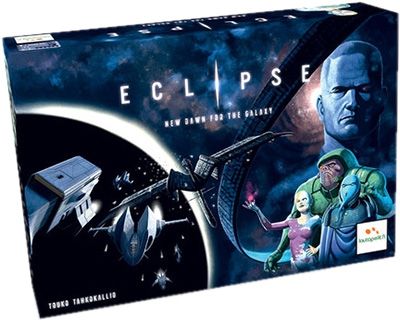
Eclipse by AsmodeeI spent the better part of last year trying to track down this game. I first heard about it via the excited chatter at BoardGameGeek, where it bubbled near the top of their Board Game Rank, displacing such beloved games as Settlers of Catan, War of the Ring, and Civilization.

And, of course, it was no longer available. Released in 2011, the first printing sold out in record time and what few copies were still in the channel were commanding $200 or more. Publisher Asmodee announced it would not be available again until the second edition (which fixed some minor gameplay and production issues) was ready in late 2012.

It was a long wait. And the temptation to spring for one of those rapidly vanishing first edition copies was strong – especially as the year rolled on and there was no sign of the new edition. But patience is its own reward, or something. Anyway, it finally arrived, and I now have a copy in my hot little hands.

Eclipse is a game of interstellar conquest and intrigue, meaning you move starships around a colorful board and blow stuff up. That’s really all I needed to know to want a copy more than life itself. But we have a little room left, so I’ll pad this out by copying some stuff from the back of the box.

Apparently you can play as one of several races. I’m guessing the chubby green guy, blue alien, and bald supermodel on the cover are just a few of the choices. I picture my race of supermodels conquering the galaxy in slender battlecruisers, crushing all opposition beneath their stiletto heels, and suddenly I understand why copies were going for $200. I mean, damn. Now I want two copies.

Read More Read More

New Treasures: A Memory of Light, The Final Volume of The Wheel of Time

New Treasures: A Memory of Light, The Final Volume of The Wheel of Time

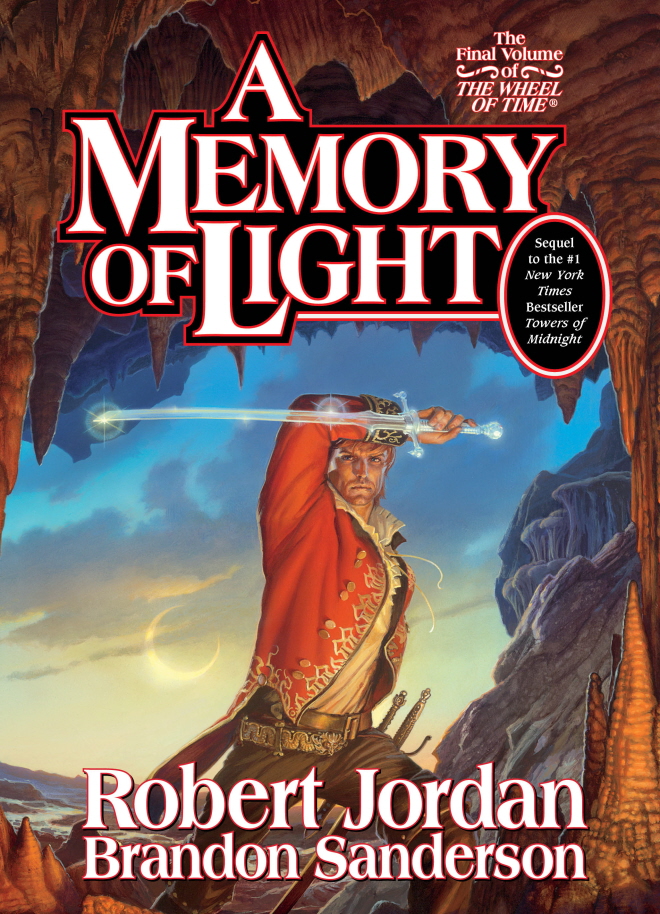
A Memory of Light-smallWell, this has been a long time coming.

The first volume of The Wheel of Time, possibly the defining epic fantasy series of our generation, was published over two decades ago in 1990. The Eye of the World was an immediate success, and the dozen volumes that followed have sold over forty million copies — 25 million more than its only true competitor at the top of the charts, the five existing novels in George R.R. Martin’s A Song of Ice and Fire.

When Robert Jordan died in 2007, fans around the world mourned his loss and were justifiably concerned that the series would be left incomplete. But rising star Brandon Sanderson, working from notes and partial texts by Jordan, finished Jordan’s masterwork. Sanderson delivered The Gathering Storm (Book 12) in 2009, and Towers of Midnight (Book 13) in 2010, both of which became # 1 New York Times hardcover bestsellers, and today Tor Books released the 14th and final volume of The Wheel of Time: A Memory of Light, by Robert Jordan and Brandon Sanderson.

In the Field of Merrilor the rulers of the nations gather to join behind Rand al’Thor, or to stop him from his plan to break the seals on the Dark One’s prison – which may be a sign of his madness, or the last hope of humankind. Egwene, the Amyrlin Seat, leans toward the former.

In Andor, the Trollocs seize Caemlyn.

In the wolf dream, Perrin Aybara battles Slayer.

Approaching Ebou Dar, Mat Cauthon plans to visit his wife Tuon, now Fortuona, Empress of the Seanchan.

All humanity is in peril – and the outcome will be decided in Shayol Ghul itself. The Wheel is turning, and the Age is coming to its end. The Last Battle will determine the fate of the world…

A Memory of Light, like every volume in the series, was edited by Jordan’s widow, Tor editor Harriet McDougal, who owns The Wheel of Time copyright and controls the rights to the series. Brandon Sanderson recently revealed that she is working on a comprehensive Wheel of Time encyclopedia, to be published next year.

A Memory of Light was published by Tor Books on January 8, 2013. It is 911 pages in hardcover (which, incidentally, brings the total for all 14 hardcover volumes to a staggering 10,037 pages). It is $34.99; an audio version is also available. There is no digital version. The striking cover art is by Michael Whelan.

Locus Online on the Best SF & Fantasy Short Fiction of the 20th and 21st Centuries

Locus Online on the Best SF & Fantasy Short Fiction of the 20th and 21st Centuries

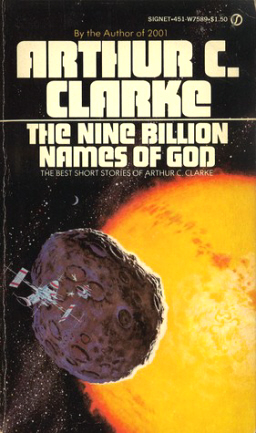
The Nine Billion Names of GodTwo weeks ago, we reported that Locus Online, the web-based offshoot of the newspaper of the science fiction and fantasy field, had announced the results of their ambitious poll to determine the best science fiction and fantasy novels of the 20th and 21st centuries.

The complete poll had three additional categories: novella, novelette, and short story. Since all votes were write-ins, compiling the short fiction results took a while longer, but LO‘s diligent editor Mark R. Kelly finally published them Saturday, January 5th. Here are the Top 10 vote-getters in the short fiction categories:

20th Century Short Story

  1. Clarke, Arthur C.: “The Nine Billion Names of God” (1953)
  2. Le Guin, Ursula K.: “The Ones Who Walk Away from Omelas” (1973)
  3. Ellison, Harlan: “‘Repent, Harlequin!’ said the Ticktockman” (1965)
  4. Ellison, Harlan: “I Have No Mouth, and I Must Scream” (1967)
  5. Clarke, Arthur C.: “The Star” (1955)
  6. Bradbury, Ray: “A Sound of Thunder” (1952)
  7. Heinlein, Robert A.: “All You Zombies–” (1959)
  8. Gibson, William: “Johnny Mnemonic” (1981)
  9. Tiptree, James, Jr.: “The Screwfly Solution” (1977)
  10. Jackson, Shirley: “The Lottery” (1948)

Read More Read More

Black Gate Online Fiction: “When the Glimmer Faire Came to the City of the Lonely Eye” by John R. Fultz

Black Gate Online Fiction: “When the Glimmer Faire Came to the City of the Lonely Eye” by John R. Fultz

John R FultzThe great playwright Artifice the Quill, who freed the city of Narr from the grip of the dread Sorcerer Kings with but a single performance in “Return of the Quill” (Black Gate 13), returns in a tale of magic, mystery, and the power of performance:

The haunted city lay sleeping at the feet of the mountains, a gray collection of antique architecture encircled by a granite wall. A monolith rose from its central plaza, crowned by a crimson orb that refracted starlight, painting the streets with bloody shadow. Pale ghosts wandered along the avenues, silver phantasms gliding through vermilion, while the living stayed locked inside their shuttered houses.

Three brightly canopied wagons descended the ancient road to Mornitetra. Artifice sat on the driver’s bench of the lead wagon. As the confining walls of the mountain pass fell behind, he looked down upon the shunned city at last. He watched spectral shapes swim through the avenues.

What would the ghosts think of his play?

John’s first first story for Black Gate was “Oblivion is the Sweetest Wine” in Black Gate 12, a classic sword-and-sorcery tale of spider-haunted towers and a terrifying secret. His contributions to our pages also include “Return of the Quill” (in BG 13) and “The Vintages of Dream” (BG 15).

His epic fantasy novel Seven Princes is available from Orbit Books. Seven Kings, the second book of the Shaper Trilogy, will be released on Jan. 15, with the concluding volume, Seven Sorcerers, coming in Jan. 2014. Read an exclusive chapter from Seven Kings here.

You can see the complete catalog of Black Gate Online Fiction, including stories by Mark Rigney, C.S.E. Cooney, Donald S. Crankshaw, Aaron Bradford Starr, Sean McLachlan, Judith Berman, Howard Andrew Jones, Harry Connolly, and Jason E. Thummel, here.

“When the Glimmer Faire Came to the City of the Lonely Eye” is a complete 6,800-word novelette of heroic fantasy offered at no cost.

Read the complete story here.