Browsed by
Author: John ONeill

Future Treasures: A Big Ship at the Edge of the Universe by Alex White

Future Treasures: A Big Ship at the Edge of the Universe by Alex White

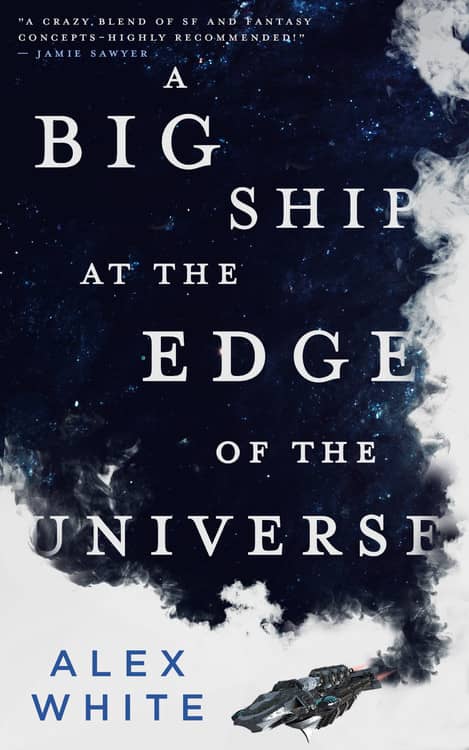
A Big Ship at the Edge of the Universe-smallAlex White is the author of the ghostly mystery Every Mountain Made Low (Solaris, 2016) and Alien: The Cold Forge (Titan, 2018). His latest is a space opera romp that sounds like it might appeal to the role players in the audience. Publishers Weekly called it,

An entertaining throwback with some fun worldbuilding and two great lead characters. In the distant future, well after space has been colonized, almost all humans have magic powers, conveniently divided into RPG-like classes (machinists are great with tech, fatalists are perfect shots, etc.)

Here’s the description.

Furious and fun, the first book in this bold, new science fiction adventure series follows a crew of outcasts as they try to find a legendary ship that just might be the key to saving themselves — and the universe.

Boots Elsworth was a famous treasure hunter in another life, but now she’s washed up. She makes her meager living faking salvage legends and selling them to the highest bidder, but this time she got something real — the story of the Harrow, a famous warship, capable of untold destruction.

Nilah Brio is the top driver in the Pan Galactic Racing Federation and the darling of the racing world — until she witnesses Mother murder a fellow racer. Framed for the murder and on the hunt to clear her name, Nilah has only one lead: the killer also hunts Boots.

On the wrong side of the law, the two women board a smuggler’s ship that will take them on a quest for fame, for riches, and for justice.

A Big Ship at the Edge of the Universe is Book 1 of The Salvagers series. Book 2, A Bad Deal For the Whole Galaxy, has already been announced; it arrives on December 11th, 2018. Book 3 will be titled The Worst of All Possible Worlds.

A Big Ship at the Edge of the Universe will be published by Orbit on June 26, 2018. It is 480 pages, priced at $15.99 in trade paperback and $9.99 for the digital edition. Read Chapter One at Quiet Earth.

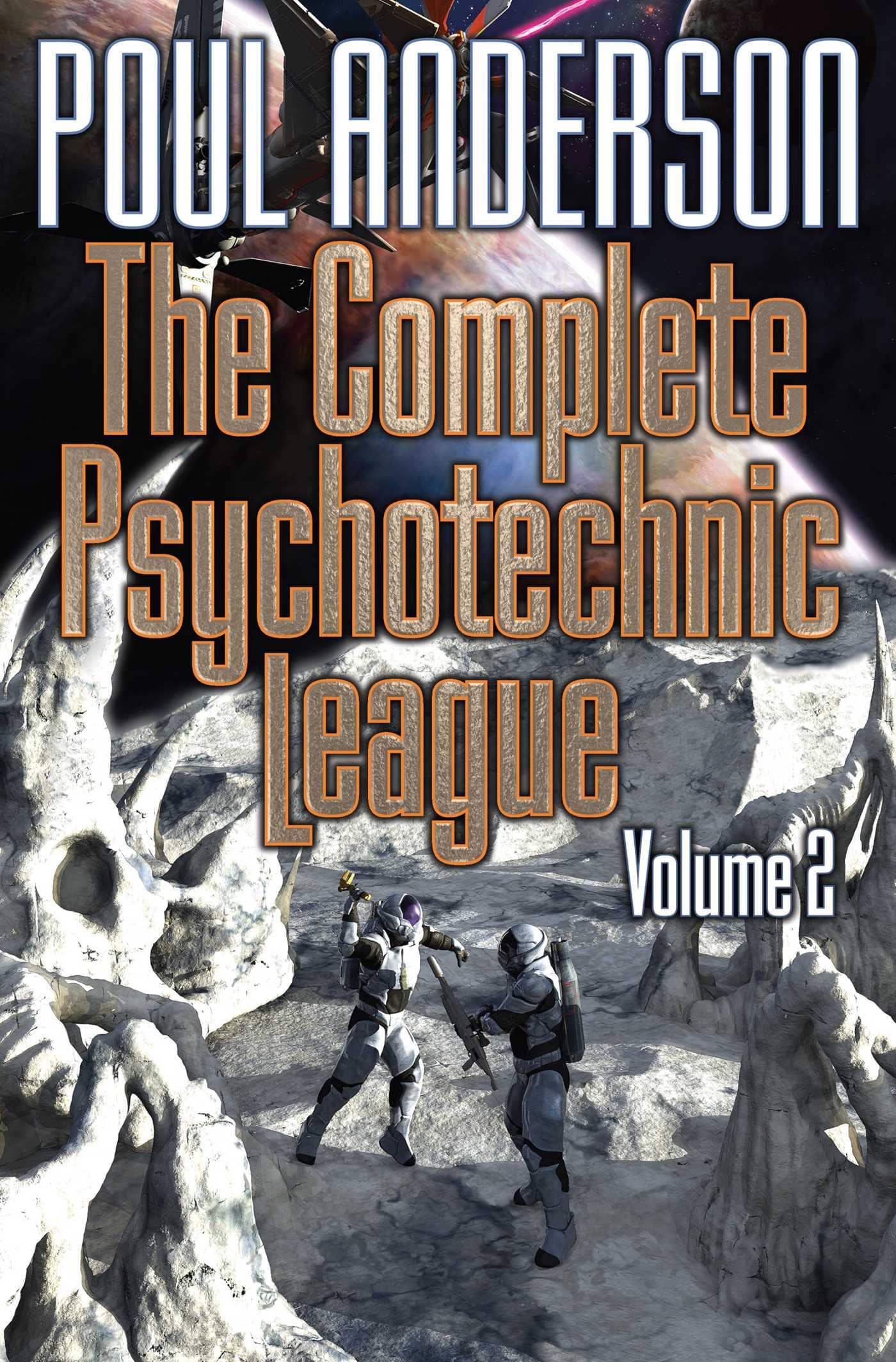
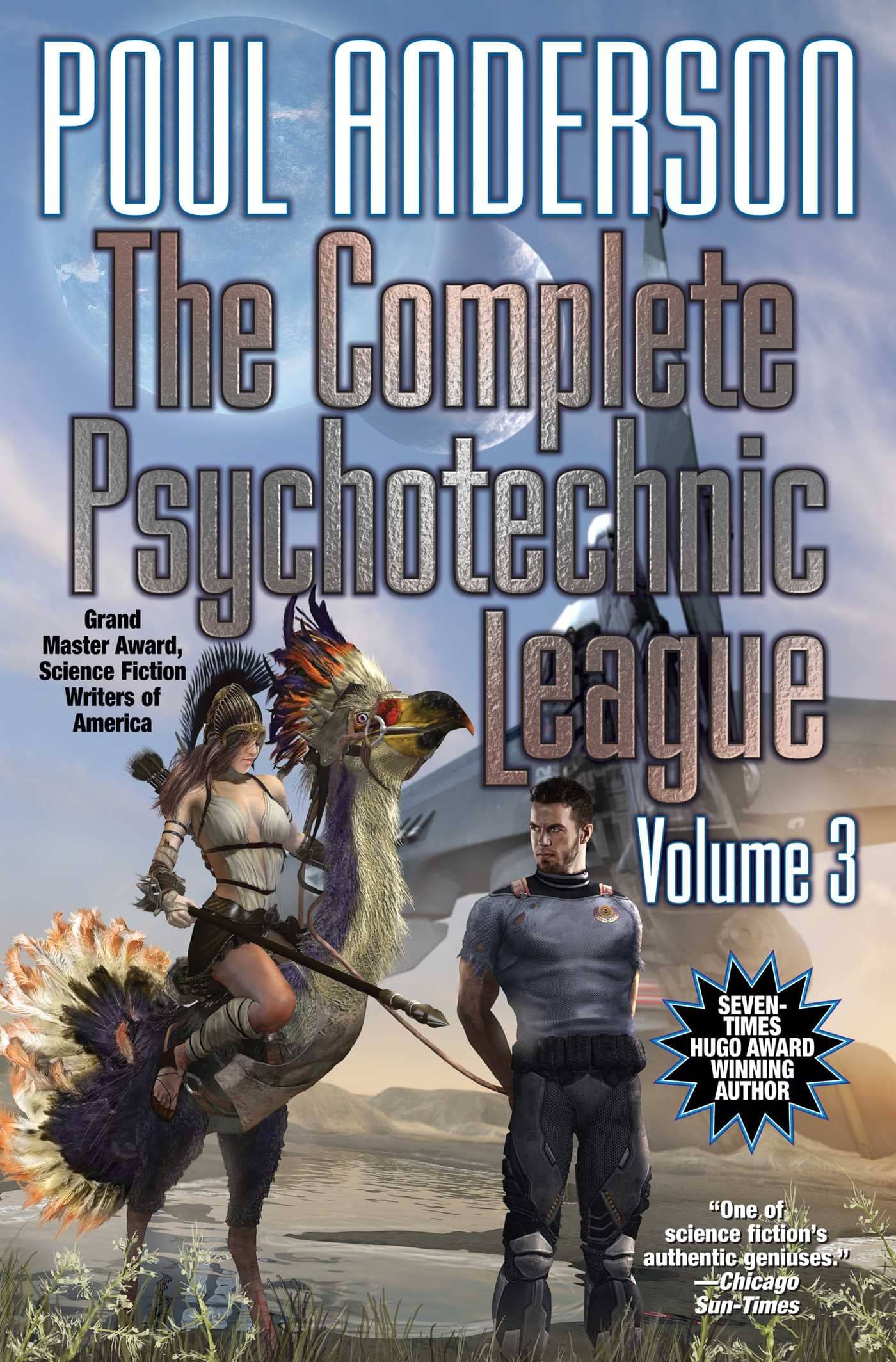
Experience Poul Anderson’s Complete Psychotechnic League from Baen Books

Experience Poul Anderson’s Complete Psychotechnic League from Baen Books

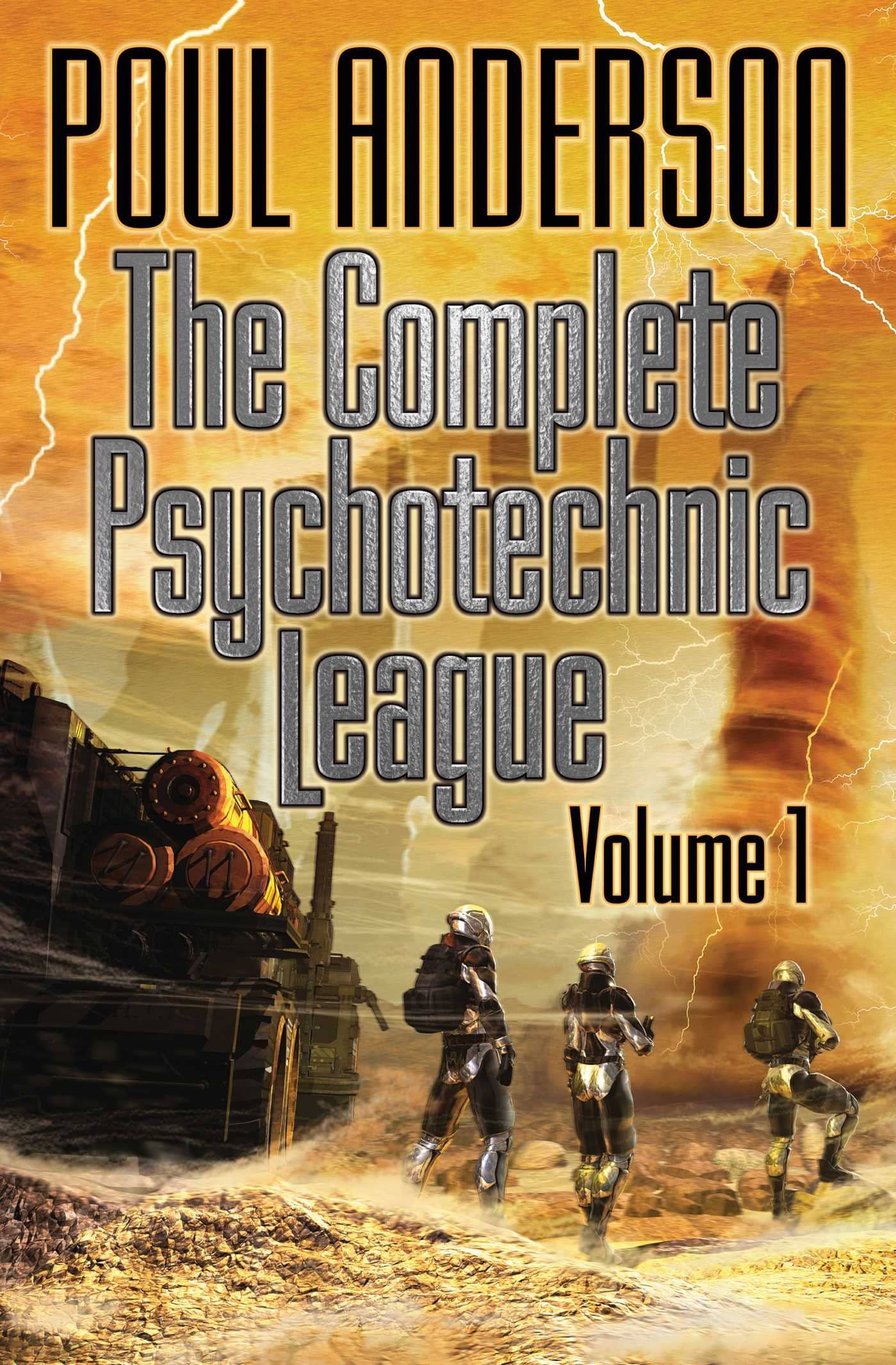
The Complete Psychotechnic League Volume 1-small The Complete Psychotechnic League Volume 2-small The Complete Psychotechnic League Volume 3-small

Art by Kurt Miller

When I learned last September that Baen Books was reprinting Poul Anderson’s classic Psychotechnic League stories, I wrote a brief history of the series. Here’s what I said, in part.

The Psychotechnic League began as a Future History, a popular beast among short SF writers of the 40s and 50s. Anderson published the first story, “Entity,” in the June 1949 issue of Astounding Science Fiction, and set the opening of his series a decade in the future. The series continued for the next two decades, (appearing in Astounding, Planet Stories, Worlds Beyond, Science Fiction Quarterly, Cosmos, Fantastic Universe, and other fine magazines), eventually extending into the 60s. In the process, his “Future History” gradually became an “Alternate History,” as actual history trampled all over his carefully constructed fictional timeline.

That didn’t seem to bother readers though, and the tales of the Psychotechnic League remained popular well into the 80s. The series included some 21 stories, including three short novels: The Snows of Ganymede (1955), Star Ways (1956), and Virgin Planet (1957). The short stories and one of the novels were collected in a trilogy of handsome Tor paperbacks in 1981/82, with covers by Vincent DiFate. Now Baen books is reprinting the entire sequence in a series of deluxe trade paperbacks, starting with The Complete Psychotechnic League, Volume 1, on sale next month.

Volume 1 was released right on schedule last October, and Volume 2 followed in February. The third and final book will be released next month.

Read More Read More

Future Treasures: The Thousand Year Beach by TOBI Hirotaka

Future Treasures: The Thousand Year Beach by TOBI Hirotaka

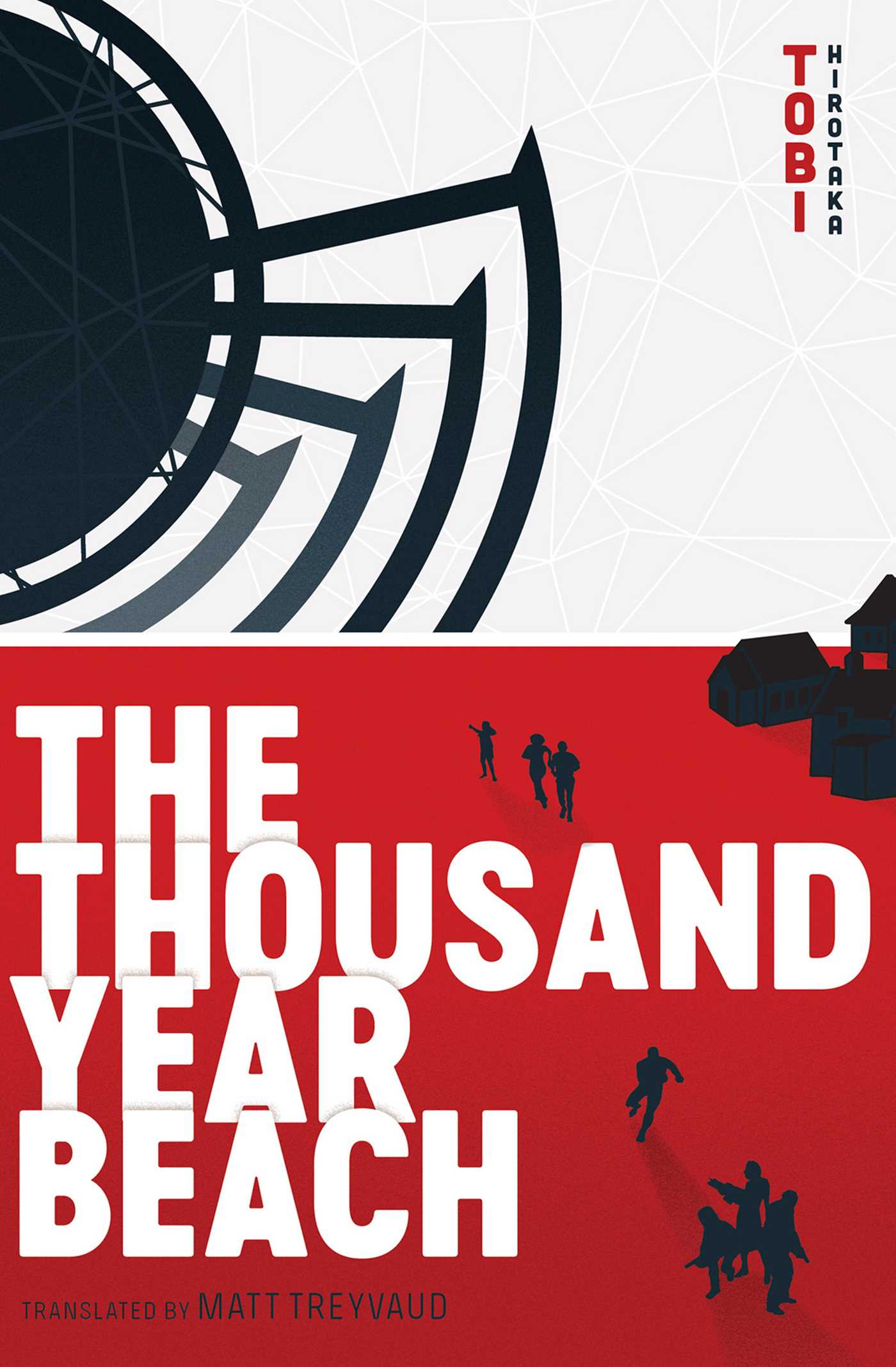
The Thousand Year Beach-smallJim Killen, the science fiction and fantasy book buyer for Barnes & Noble, shares his curated list of the month’s best science fiction & fantasy books at Tor.com and the Barnes & Noble Sci-Fi & Fantasy Blog.

There’s several things on his June list that caught my eye — starting with The Thousand Year Beach, by Tobi Hirotaka, a novel that contains virtual reality, a far future resort, and an apocalyptic battle between killer arachnids and a small band of artificial intelligences. It’s not your usual SF adventure, that’s for sure.

The Thousand Year Beach is book one of the Angel of the Ruins series. Here’s Jim’s take.

The first novel in translation from Japan’s Tobi Hirotaka, a three-time winner of the Seiun Award (often referred to as “the Japanese Hugo”). Costa del Número is a virtual resort, divided into several zones, including the Realm of Summer. Humanity used to find release and rest from a chaotic world among the artificial intelligences in the Realm, but no human has visited in a thousand years. The AIs there have continued to exist in their endless summer, however — until one day, an army of hungry spiders arrives and decimates the Realm in short order. As night falls, the few surviving AIs prepare for a final, hopeless battle against the invaders, uncertain of what’s happening in the real world beyond their virtual one.

Nick Mamatas (I Am Providence) is the editor of Tradebooks, Viz’s line of non-manga titles. His main focus is Haikasoru, a new imprint of Japanese science fiction, fantasy, and horror novels and stories in translation.

Nick tells us “The Thousand Year Beach presents an idyllic virtual world, still running long after having been abandoned by humans, that suddenly finds itself invaded by an impossible force.”

The Thousand Year Beach will be published by Haikasoru on June 19, 2018. It is 336 pages, priced at $16.99 in trade paperback and $9.99 for the digital edition. Read more details at The Outerhaven.

Vintage Treasures: The Ends of the Earth by Lucius Shepard

Vintage Treasures: The Ends of the Earth by Lucius Shepard

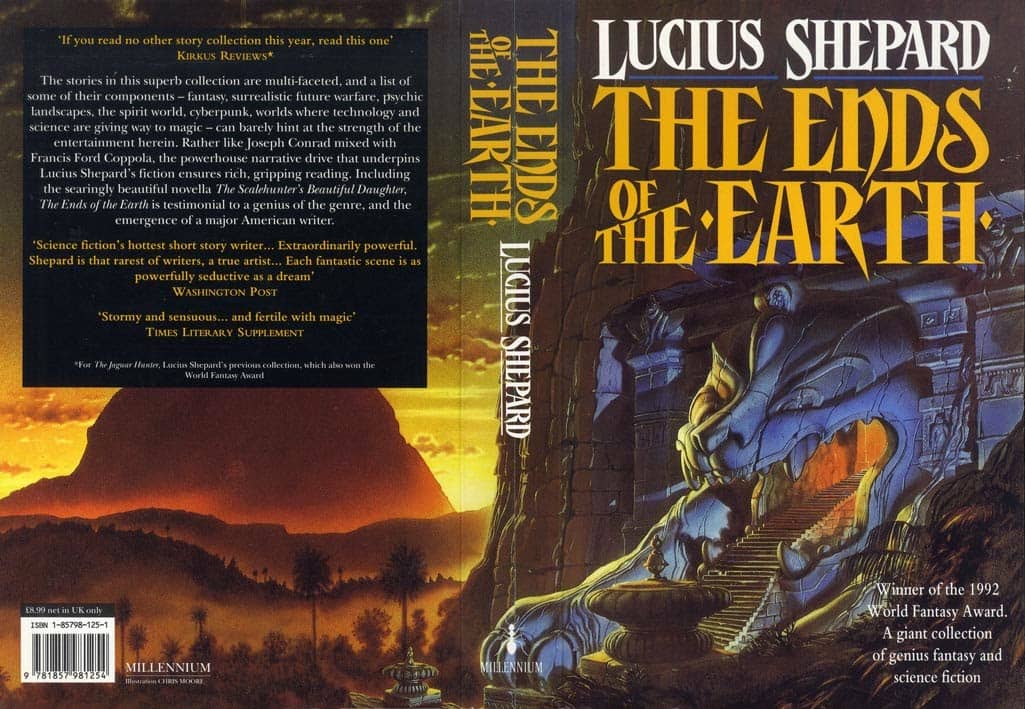
Lucius Shepard The Ends of the Earth-small

When he died in 2014, it was my unfortunate duty to write an obituary for Lucius Shepard. I considered him one of the finest short fiction writers in the genre in the 80s and 90, and tried to explain why in three short paragraphs. Here’s the core of what I wrote.

I first encountered him in the pages of Omni magazine in 1988, with his novelette “Life of Buddha.” I remember being astounded with the natural realism of his dialog, which captured the flow of modern speech in a way I’d never seen before. I read his brilliant Nebula Award-winning novella “R&R” — which opens with an artillery specialist in Central America getting a glimpse of a war map and wondering if he’s somehow caught up in a war between primary colors — and the novel it turned into, Life During Wartime (1987). His dark visions of the near future frequently involved inexplicable wars, and he wrote extensively about Central America, where he lived briefly.

Four years after his death, Shepard is in danger of being forgotten. Virtually all of his work is out of print, and his finest work — his award-winning short stories — is getting harder to find. Fortunately, it’s not getting more expensive. Those who know what to look for can snap up his best collections are bargain prices. In April I was the only bidder on eBay for a brand new copy of his World Fantasy Award-winning The Ends of the Earth (1991), and won it for the criminally low price of $7.99. It’s one of the finest fantasy collections of the last 30 years.

Read More Read More

The Verge on 13 Enthralling Science Fiction and Fantasy Books You Need to Check Out This June

The Verge on 13 Enthralling Science Fiction and Fantasy Books You Need to Check Out This June

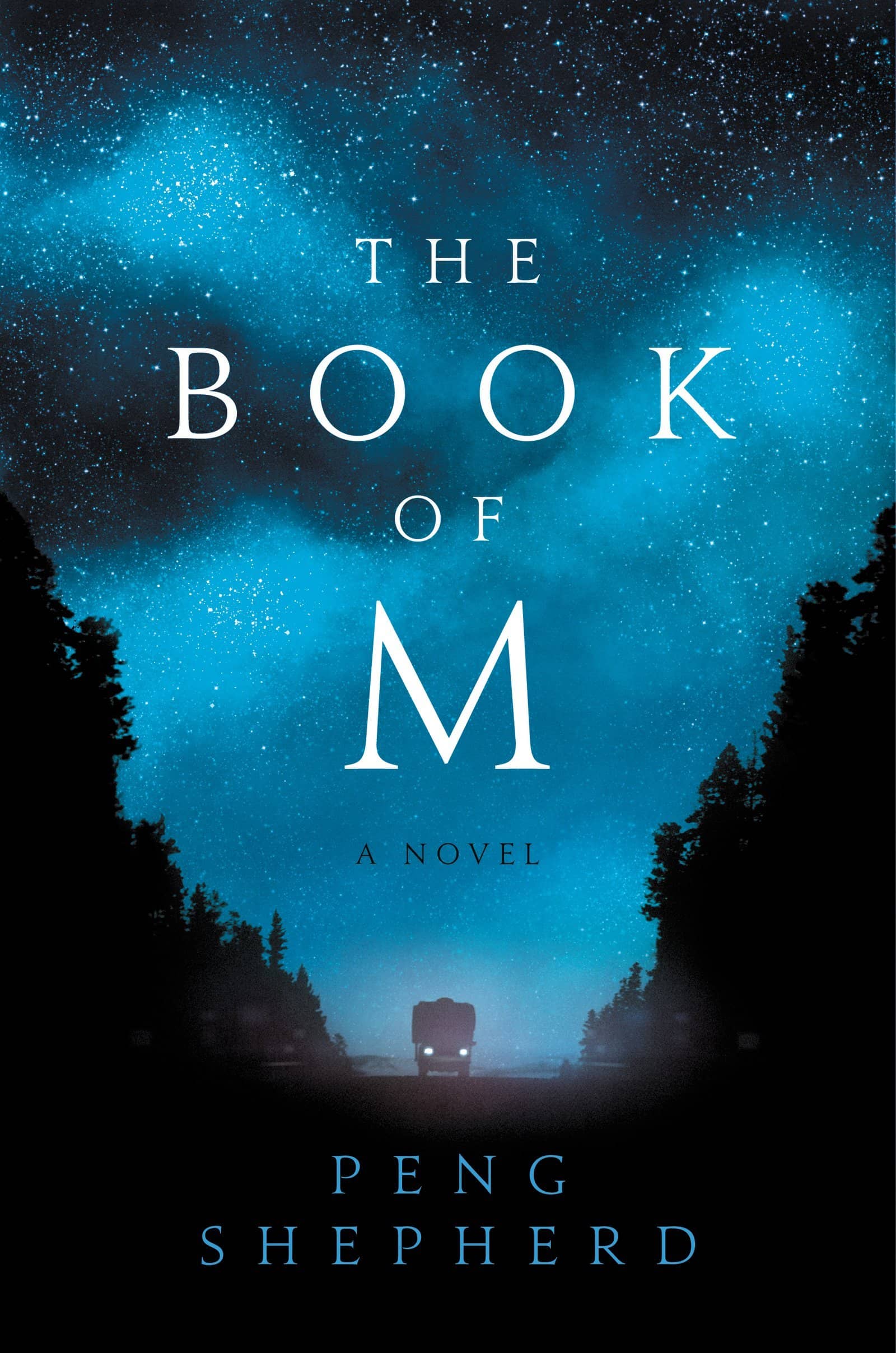
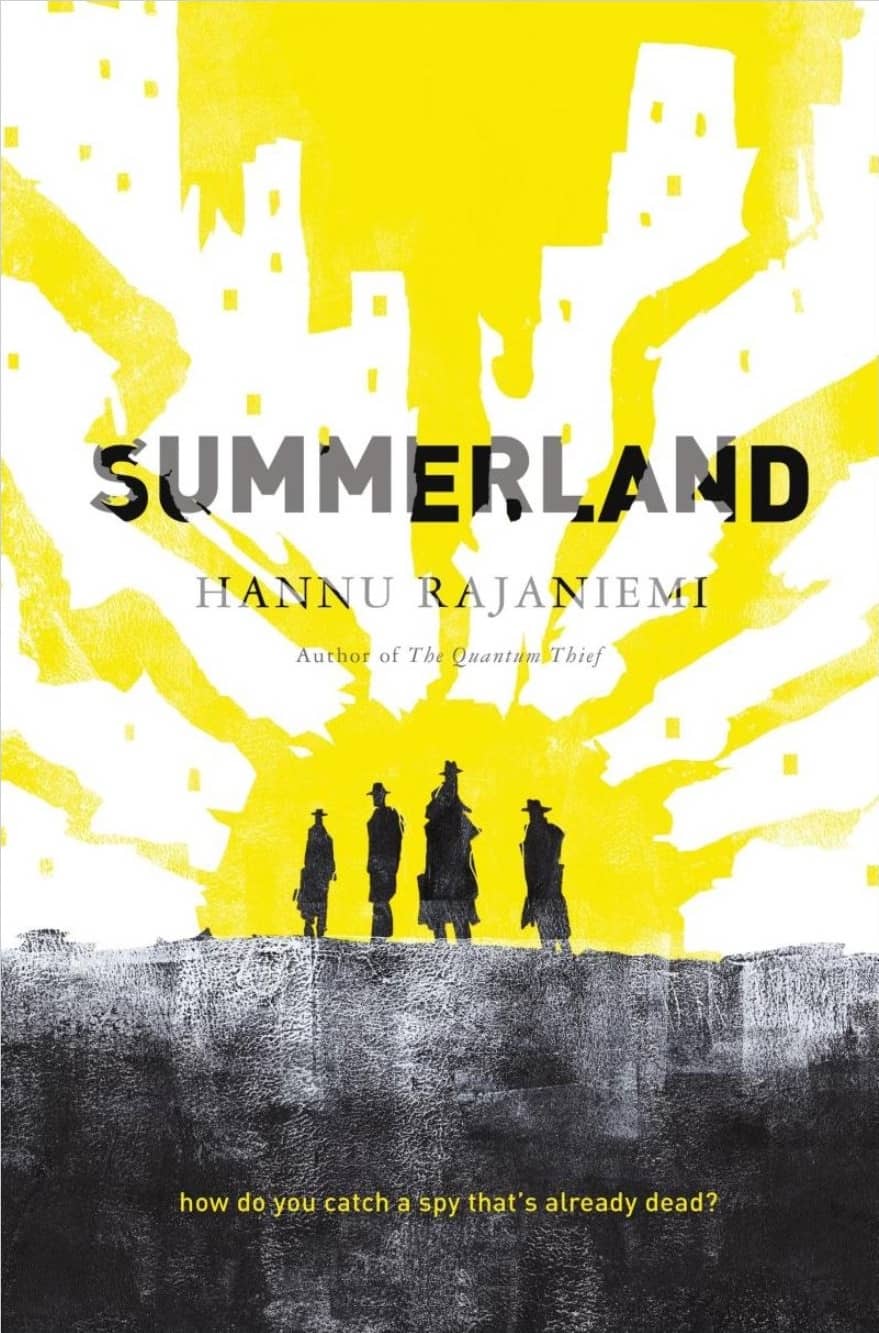
The Robots of Gotham McAulty-small The Book of M-small Summerland Hannu Rajaniemi-small

Andrew Liptak at The Verge has dipped into the thundering production pipelines at America’s publishing houses for the month of June, and returned with a secret list of the 13 very best science fiction and fantasy books — including novels by Paul Tremblay, Yoon Ha Lee, Peter Watts, Katie Williams, Alex White, Rob Boffard, Melissa F. Olson, and Black Gate‘s own Todd McAuty. Many bothans died to bring us this information. Use it wisely.

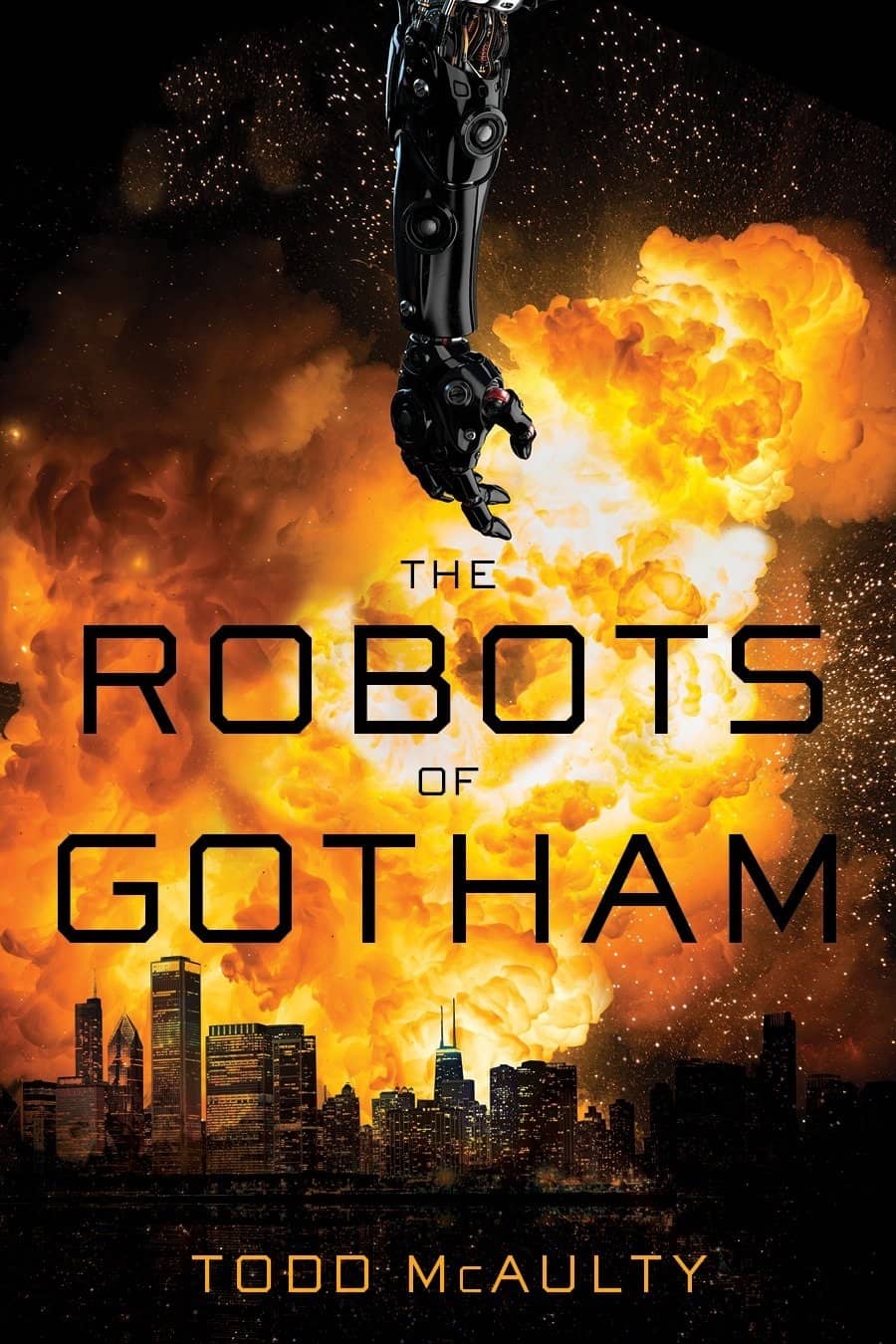
The Robots of Gotham by Todd McAulty (John Joseph Adams/Houghton Mifflin Harcourt, 676 pages, $26 in hardcover/$12.99 digital, June 19, 2018)

In this future, the United States waged — and lost — a war against a coalition of machines, and it’s now under robotic occupation. A businessman named Barry Simcoe meets a Russian medic working with the occupying armies after his hotel is attacked. Together, they learn of a plot to unleash a plague that could wipe out humanity once and for all. Publishers Weekly gave the book a starred review, saying that the book has a “breathless momentum,” and that McAulty “extrapolates a scary AI-overrun 2083 that’s only a few steps removed from today’s reality.”

Todd McAulty was the most popular writer in the print version of Black Gate. His stories included “There’s a Hole in October” in Black Gate 5, which Locus labeled “magnificent storytelling, begging expansion into a novel,” and Tangent Online called “one of my favorite stories so far this year.” It was reprinted this month in Lightspeed.

Read More Read More

Rise to the Throne in Ethnos

Rise to the Throne in Ethnos

Ethnos-small

We’re definitely living in a golden age of fantasy board games.

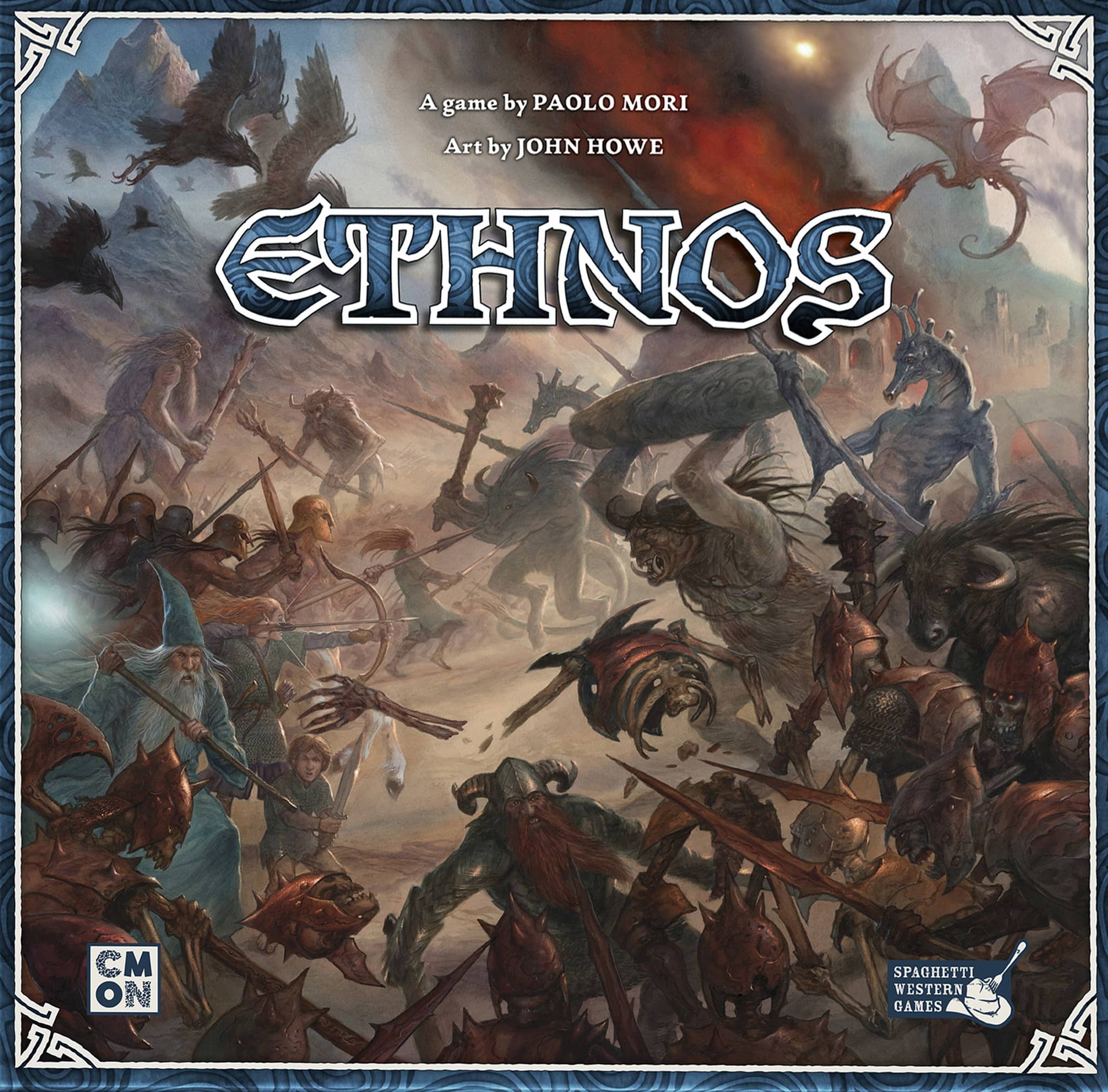
How can you tell? Well, for one thing, a generation ago a relatively modest game such CMON’s Ethnos would have been a pocket game, like Star Fleet Battles or Valkenburg Castle, with a two-color map and paper tokens, crammed into your back pocket to play at lunch. Today it gets the deluxe treatment, with quality components, full color cards, and art by the great John Howe. Times are good for fantasy gamers, and no mistake.

Whatever form it takes, part of the charm of Ethos is its simplicity. It’s a fairly straightforward game of conquest, with a 45-60 minute play time and virtually no set up time — a far cry from the more massive games I’ve been writing about recently, like Axis & Allies and Chaos in the Old World, let me tell you. Plus, this is definitely old-school, with wizards, giants, and skeleton armies. You barely need to look at the rule book. Beer and pretzels, some glory tokens, and a lust for conquest on your lunch hour is all you need to carry you to victory.

Read More Read More

Vintage Treasures: The Healer’s War by Elizabeth Ann Scarborough

Vintage Treasures: The Healer’s War by Elizabeth Ann Scarborough

The Healer's War-small The Healer's War-back-small

Elizabeth Ann Scarborough has had a long and fruitful career that stretches back to her first novel, Song of Sorcery, in 1982. Over the next 34 years she produced a virtually book every year, writing over 40 novels and 4 collections, including The Songkiller Saga trilogy, the Godmother trilogy, Nothing Sacred and Last Refuge, and over a dozen novels co-authored with Anne McCaffrey, many in the Acorna series.

Scarborough earned a reputation for dependable and often playful light fantasy, with such novels as The Harem of Aman Akbar (1984), The Drastic Dragon of Draco, Texas (1986), and her cats-in-space series Tales of the Barque Cats. But she was capable of more than that. Scarborough spent five years as an nurse with the US Army, including one year in Da Nang, Vietnam during the war, and in 1988 she turned that experience into The Healer’s War, which became her most acclaimed and celebrated novel. It won the Nebula Award the following year. Kirkus Reviews wrote “Scarborough writes powerfully and convincingly of the war,” and Publisher’s Weekly said,

Army nurse Kathleen McCulley’s… tour of duty at China Beach puts the young woman from Kansas through the usual mixture of empathy for the Vietnamese and anger at the indifference or outright racism of army personnel. The unanticipated twist is a hallucinatory journey through the jungle with a one-legged Vietnamese boy, a battle-seasoned but crazy soldier and a magic amulet given her by a dying holy man. Although its moralizing invites comparison with TV’s MASH and Twilight Zone, Scarborough’s light, fluid storytelling and the authentic, pungent background keep this novel interesting.

The Healer’s War was published in hardcover by Doubleday Foundation in November 1988, and reprinted in paperback by Bantam Spectra 12 months later. It is 313 pages, priced at $4.99 in paperback. The cover is by Braldt Bralds. It is currently available in print and digital formats from Open Road Media. See all our recent Vintage Treasures here.

Future Treasures: Space Pioneers, edited by Hank Davis and Christopher Ruocchio

Future Treasures: Space Pioneers, edited by Hank Davis and Christopher Ruocchio

Space Pioneers Hank Davis-smallIt’s been too long since we’ve checked in with Hank Davis, the mad genius editor at Baen behind the anthologies Things From Outer Space and In Space No One Can Hear You Scream. I figured he had to have something interesting cooking and, sure enough, when I asked him to comment, here’s what he told me.

Coming in December this year, looking for stockings to stuff, is Space Pioneers, a rough of whose cover is now on Baen.com, though the author lineup thereon may be modified…

After that, still in the works is Overruled!, an anthology of stories about courtrooms, lawyers, and other low-lifes. In the future beyond that will be an anthology of military sf stories involving time travel, whose working title is Time Troopers, but that may change. I was going to handle the Psychotechnic League stories by Poul Anderson, but was felled by health problems at a crucial juncture, so it’s in other hands. (The timing of those problems is also why the first volume of The Best of Gordon R. Dickson came out without my usual tedious introductions and notes, but I’ll try to give better value in the next volume).

I do hope that Space Pioneers does well, since I could do a *series* of anthologies on this theme without breaking sweat. My hat’s off (dangerous move for a bald geezer) to my co-ed, Christopher Ruocchio, who did much of the busy work (contracts, nudging agents, etc.) while I was still recovering, and who also talked me into using two Poul Anderson yarns, a suggestion I had absolutely no problem with (and I have a third in mind if there’s a Volume II). And that’s the current state of the pipeline. I should remind everyone that these will all be mass market paperbacks.

Sounds like a great line-up! Space Pioneers in particular looks like a terrific book, and a splendid addition to Hank’s catalog of top-notch anthologies. I’ll definitely be keeping an eye out for it, and making some more noise about it here as we get closer to the release date.

Read More Read More

New Treasures: The Rise of the Terran Federation, edited by John F. Carr

New Treasures: The Rise of the Terran Federation, edited by John F. Carr

The Rise of the Terran Federation-back-small The Rise of the Terran Federation-small

H. Beam Piper was one of my earliest discoveries, and he quickly became one of my favorite SF writers. I snapped up every book with his name on it in the mid-70s, all Ace paperback editions with gorgeous Michael Whelan covers.

Piper committed suicide a few months after I was born, in November 1964. But his work has endured, and as recently as 2011 John Scalzi published Fuzzy Nation, a retelling of Piper’s most famous novel Little Fuzzy. Last year editor John F. Carr assembled an anthology of a handful of Piper’s Federation and Paratime Police tales, and invited Wolfgang Diehr, David Johnson, and Jonathan Crocker to contribute fiction set in Piper’s universe. He added a pair of essays by John A. Anderson, The Early History of the Terran Federation and Chartered Companies of the Terran Federation, and his own preface, The Terro-human Future History, and the result was The Rise of the Terran Federation, published in hardcover by Pequod Press. Here’s the description.

The Rise of the Terran Federation is new collection of new and old stories chronicling the rise of H. Beam Piper’s Terran Federation. With story introductions and essays on the establishment of the Federation, this book is the ultimate overview of the beginning of Piper’s crowning creation, the Terro-Human Future History. This collection will include some of Piper’s early Federation stories, like “Edge of the Knife” and Omnilingual.”

This collection also contains new stories about the aftermath of the Third and Fourth World Wars, the Thorans and life on Baldur. The Rise of the Terran Federation is an essential work for fans of Piper’s future history and his unique view of what lies ahead for mankind.

There are precious few SF writers whose work has endured five decades. Piper didn’t live long enough to see it, but his stories have entertained three generations of SF fans, and I expect them to still be in print 50 years from today.

Read More Read More

Visit a Post-Apocalyptic South in Christopher Rowe’s Telling the Map

Visit a Post-Apocalyptic South in Christopher Rowe’s Telling the Map

Telling the Map Christopher Rowe-small Telling the Map Christopher Rowe back-small

I use a lot of resources — blogs, reviews, online bookstores, and more — to help me identify the books I should pay attention to every month. Most of them focus on novels though, and more and more often I’m finding that podcasts are the most reliable way to discover everything else. Case in point: last week, while re-listening the Gary Wolfe and Jonathan Strahan’s 2017 end-of-the-year wrap-up for the Coode Street Podcast, I learned I’ve somehow overlooked Christopher Rowe’s Telling the Map, which both Gary and Jonathan selected as the best collection of the year. I ordered a copy immediately, and I hope to dig into it this week. Here’s what they said.

Gary Wolfe: These are terrific stories. It’s a kind of southern, post-apocalyptic south, a part of the country that we don’t see often represented often in fiction at all. They’re very interesting, subtle fictions, and there was a major new long story… I discovered things in it that I didn’t know about.

Jonathan Strahan: I think there were two great collections this year, absolute stone cold classics… My favorite collection of the year as well, because it seems like we are clones, is Telling the Map: Stories by Christoper Rowe from Small Beer. Rowe has a wonderful writing voice, this sort of southern Kentuckian kind of writing voice that he brings to his stories, and he has a very localized, community kind of storytelling. His stories are very intimate, and they deal with average-seeming people dealing with average-seeming experiences in extraordinary circumstances… The major new novella that’s in the book, “The Border State,” which is the sequel to “The Voluntary State,” is without a doubt one of the finest novellas of the year… I loved that book very much.

“The Voluntary State,” which appeared in Sci Fiction in May 2004, was nominated for the Sturgeon, Hugo, Locus, and Nebula awards for Best Novelette. Listen to the complete podcast — which is crammed with tons of great recs for best novel, novella, anthology, and non-fiction book of 2017 — here.