Fantasia 2020, Part VI: The Jesters: The Game Changers
 I had a light schedule on the third day of Fantasia, as I tried to finish off some other business. But at 4 PM I sat down to watch the presentation of the festival’s Lifetime Achievement Award to John Carpenter. The ceremony was necessarily less than what it usually was, but the question-and-answer session that followed was rich and generous. I was particularly intrigued when Carpenter was asked about projects he regretted being unable to make, and he said that he’d tried to get Alfred Bester’s The Stars My Destination to screen but had been unable to get the script structure to work — and now suspects the book’s unfilmable. You can find the entire discussion here.
That evening I sat down to watch a Korean movie called Jesters: The Game Changers. Bundled with it was a short, “Yonorang” (작은 뼈), a visually stylish film directed by Kim Sangdong and written by Lee Sohyun. It’s a mostly dialogue-free story told in 8 minutes, incorporating monsters and swordfights and betrayal. The chronology’s fractured, too, and I found the relationship of the various scenes difficult to parse at one viewing. This is too bad, as it looks lovely (a little like Samurai Jack, but more stylised), and moment-by-moment the drama was palpable. I just couldn’t fit the pieces of the story together.
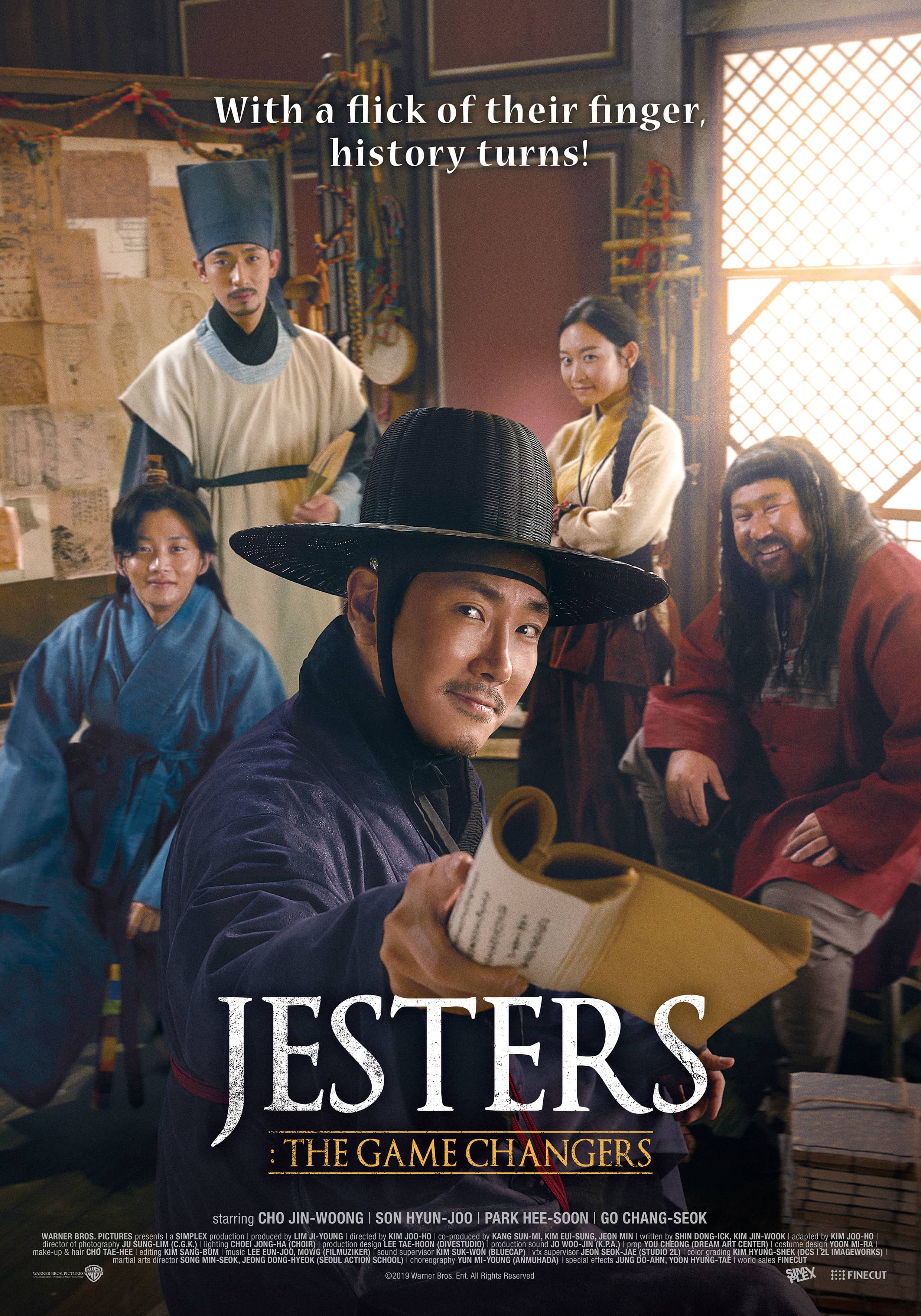
Jesters: The Game Changers (Gwang-dae-deul: Poong-moon-jo-jak-dan, 광대들: 풍문조작단) was directed by Kim Joo-ho from a script by Kim Jin-wook and Shin Jin-wook. It’s a somewhat-comic historical adventure story with fantasy touches set in the fifteenth century. King Sejo has usurped the country from his nephew and as the movie opens, all across the land jesters — wandering actors — are staging a popular play about the usurpation and the execution of six loyal ministers. Sejo orders the execution of the treasonous jesters, while his chief minister, Han Myung-Hee (Son Hyun-Joo) recruits a team of jesters of his own to present alternative facts and make the people believe that Sejo is the true anointed ruler.
The film follows the troupe as they alternatively propagandise for Sejo and then are alienated from the tyrannical monarch. The leader of the troupe, and the central character of the film, is Deok-ho (Cho Jin-woong, from, among other places, Kundo and Assassination), whose group includes an exiled painter (Yoon Park), a failed fortuneteller (Kim Seul-Gi), an acrobat (Kim Min-Suk), and a puppeteer (Ko Chang-Seok). They concoct incredible stage effects to simulate miracles, sometimes on vast scales, and the set-pieces the film gives us are structured around the inventive if improbable use of period technology to create these illusions. It’s not exactly clockpunk, in that the technology’s a step earlier than clockwork, but they do use things like magic lanterns — in devices that look surprisingly like modern movie projectors.
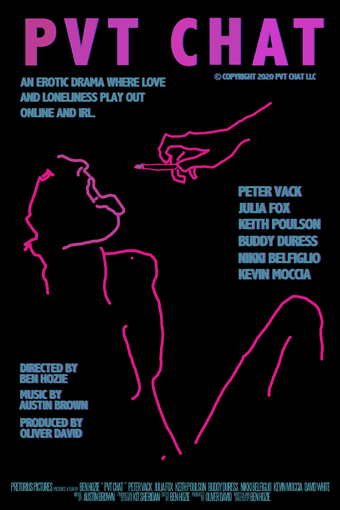 One of the new wrinkles to Fantasia this year is the existence of a Discord where filmmakers and critics and audiences can chat with each other about the movies playing the festival. It’s already proved quite useful to me, as seeing other people discussing films has helped draw my attention to a few titles I’d originally dismissed as uninteresting or out of step with this web site’s focus. A case in point was the movie I watched late on Fantasia’s second day, writer-director Ben Hozie’s PVT Chat.
 As part of the unusual nature of this year’s Fantasia, the festival organisers set up many more non-film special events than usual. Each day boasts a presentation, panel discussion, or other streamed activity, all of them to be archived on the festival’s YouTube page (in fact the organisers have just announced they’ll host
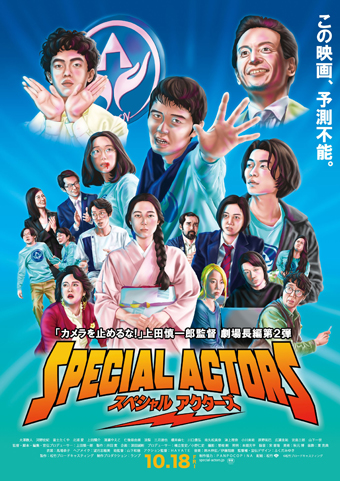 My first scheduled film at Fantasia 2020 was Special Actors (Supesharu Akutâzu, スペシャルアクターズ), written and directed by Shinichiro Ueda. I loved Ueda’s previous film, 2018’s One Cut of the Dead (Kamera wo tomeruna!, カメラを止めるな!), and this is his first solo feature since; he co-directed 2019’s Aesop’s Game (Isoppu no Omou Tsubo, イソップの思うツボ), and this year