Talking Tolkien: A Tolkenian Defense of Monsters by James McGlothlin
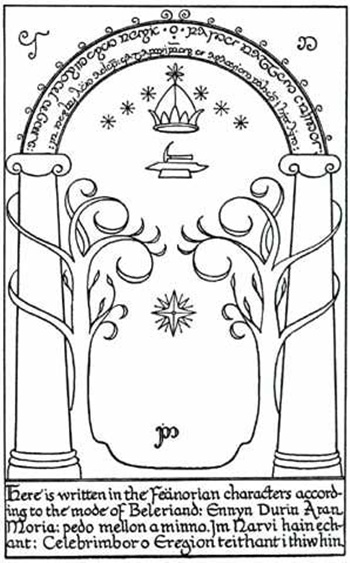 Up this week is another of my fellow Black Gaters. James most recently took us through those classic The Year’s Best Horror Stories anthologies. Back in May, Fletcher Vredenburgh wrote about Tolkien’s Beowulf. While Middle Earth and The Lord of the Rings are Tolkien’s most famous works, Beowulf is a classic of English literature. So, as we start July, James also talks about that epic saga. And if you’ve never actually read Beowulf (or only seen The Thirteenth Warrior), maybe you’ll want to after reading James’ and Fletcher’s essays.
_____________________________________________________________
In 1936 J. R. R. Tolkien gave the annual Sir Israel Gollancz Memorial Lecture to the British Academy. This talk was later published as the essay “Beowulf: The Monsters and the Critics,” in the book The Monsters and Critics. The primary point of this lecture was to offer a defense for studying the Anglo-Saxon poem Beowulf as, primarily, a poetic work. That proposition may sound obvious; but Tolkien was convinced that it needed to be re-emphasized because the way Beowulf had been largely studied in his day seemed to forget or obscure the point. Tolkien memorably characterizes the situation in what he called the “whole industry” of Beowulf criticism with the following allegory:
A man inherited a field in which was an accumulation of old stone, part of an older hall. Of the old stone some had already been used in building the house in which he actually lived, not far from the old house of his fathers. Of the rest he took some and built a tower. But his friends perceived at once (without troubling to climb the steps) that these stones had formerly belonged to a more ancient building. So they pushed the tower over, with no little labour, in order to look for hidden carvings and inscriptions, or to discover whence the man’s distant forefathers had obtained their building material. Some suspecting a deposit of coal under the soil began to dig for it, and forgot even the stones. They all said: ‘This tower is most interesting.’ And even the man’s own descendants, who might have been expected to consider what he had been about, were heard to murmur: ‘He is such an odd fellow! Imagine his using these old stones just to build a nonsensical tower! Why did not he restore the old house? He had no sense of proportion.’ But from the top of that tower the man had been able to look out upon the sea. (pgs. 7–8, The Monsters and the Critics).