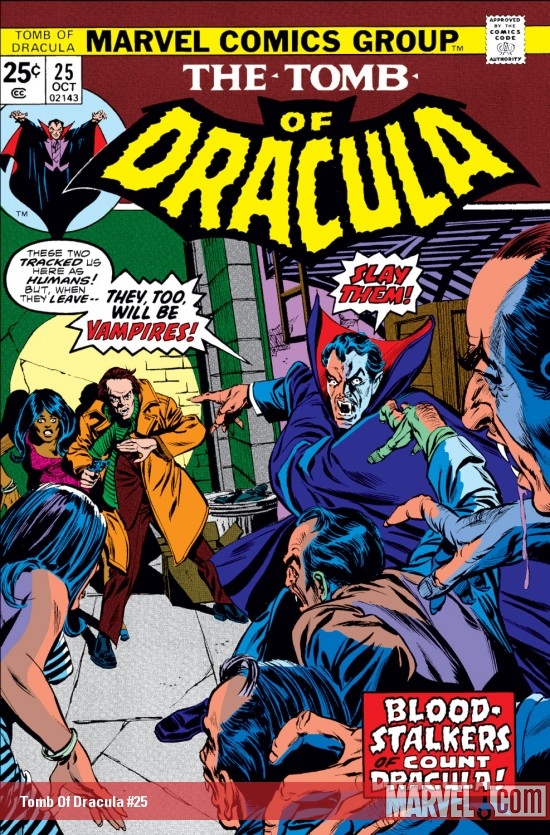
Blogging Marvel’s Dracula Lives – Part One
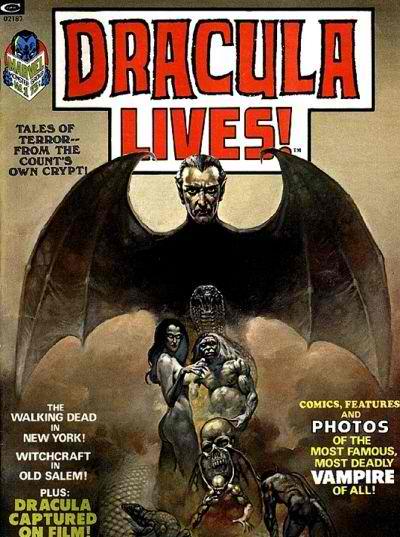 Dracula Lives was Marvel’s black and white companion title to the award-winning Tomb of Dracula monthly comic. As a magazine, Dracula Lives was exempt from the strictures of the Comic Code Authority, allowing for more violence and adult themes than would have been possible in the comic at the time. From the magazine’s launch in 1973 with a stunning Boris Vallejo cover displaying voodoo imagery and undead nudes, readers knew they were in for something decidedly different.
Issue #1 gets underway with the excellent “A Poison in the Blood.” Gerry Conway’s contemporary tale of Dracula in New York, suffering from withdrawal after drinking the tainted blood of junkies easily measured up to the high standard set by Marv Wolfman in the monthly comic series. Assigning the monthly’s art team of Gene Colan and Tom Palmer the artistic chores for the story only reinforced the fact that what was to follow would be every bit as good as the award-winning parent series. More importantly, “A Poison in the Blood” began the Cagliostro story arc which would weave its way through history in subsequent issues.
Roy Thomas’s “Suffer Not a Witch” is the first historical tale and also the first Dracula story to team Thomas with artist Dick Giordano. The pair would later embark on a celebrated adaptation of the original Stoker novel. “Suffer Not a Witch” steers the series into Nathaniel Hawthorne territory with the Lord of Vampires visiting 17th Century America and becoming embroiled in the conflict between hypocritical Puritans and the persecuted witches.
The first issue concludes with Steve Gerber’s “To Walk Again in Daylight,” illustrated by Pablo Marcos. This 18th Century tale set in Vienna is well done, but the central concept (Dracula is seeking an alchemical cure from vampirism) contradicts the established continuity for the series and flies in the face of Marvel’s portrayal of the Lord of the Vampires as a truly Satanic unrepentant figure who embraces evil for his own sake.