New Treasures: Slavemakers by Joseph Wallace
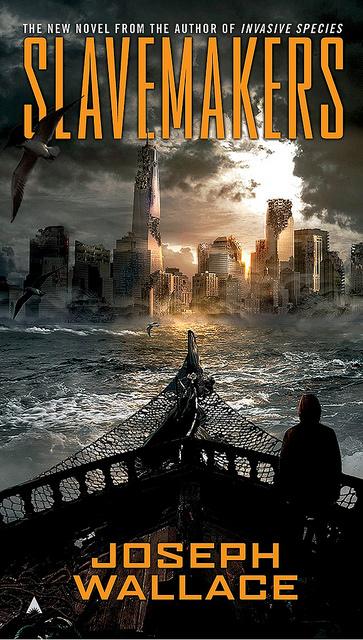
New Treasures: Slavemakers by Joseph Wallace

Slavemakers Joseph Wallace-smallJack McDevitt called Joseph Wallace’s 2013 novel Invasive Species, the tale of an explorer who stumbles on a new species of wasp in an African rainforest, “Brilliant.” His newest thriller is a sequel to that book, and it opens with humans on the verge of extinction.

If you like postapocalyptic adventure tales, this one looks original and intriguing. Check it out.

It’s Their Territory Now

Twenty years ago, venomous parasitic wasps known as “thieves” staged a massive, apocalyptic attack on another species — Homo sapiens — putting them on the brink of extinction.

But some humans did survive. The colony called Refugia is home to a population of 281, including scientists, a pilot, and a tough young woman named Kait. In the African wilderness, there’s Aisha Rose, nearly feral, born at the end of the old world. And in the ruins of New York City, there’s a mysterious, powerful boy, a skilled hunter, isolated and living by his wits.

As the survivors journey through the wastelands, they will find that they are not the only humans left on earth. Not by a long shot.

But they may be the only ones left who are not under the thieves’ control…

Slavemakers was published by Ace Books on December 1, 2015. It is 384 pages, priced at $9.99 for both the paperback and digital editions.
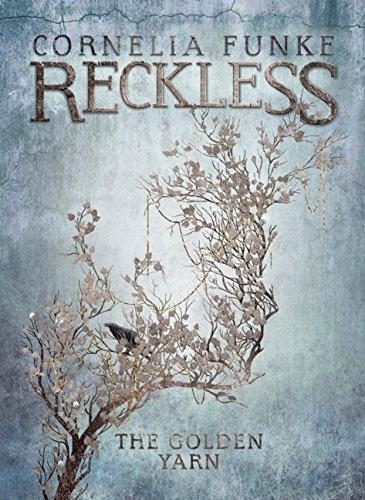
Cornelia Funke Founds Her Own Publishing Company to Release Reckless: The Golden Yarn

Cornelia Funke Founds Her Own Publishing Company to Release Reckless: The Golden Yarn

Reckless Cornelia Funke-smallCornelia Funke is the international bestselling author of the Inkheart trilogy and more than a dozen other novels. Her latest to arrive on American shores is the third book in the popular MirrorWorld trilogy, which began with Reckless (2010) and Fearless (2013). It didn’t arrive without some bumps on the way, however. According to Publisher’s Weekly, Funke was so upset by her publisher’s suggested changes to the book that she formed her own company to release it.

At issue was a request by Funke’s publisher Little, Brown, to move the first chapter… to a different place in the book. After returning from a book tour in Germany where her publisher had released The Golden Yarn this February, Funke says she was “stunned” by the email she received from her editor at Little, Brown in the U.S., who she says was also speaking on behalf of the author’s U.K. editor. “It said, ‘We love the book, Cornelia, but could you please change the first chapter? It’s a birth scene. That’s a little drastic for our audience. Could you please put that somewhere else?’”

The opening chapter describes a dark faerie watching a princess give birth. “It’s about love,” says Funke, from her Beverly Hills home. “And it’s about what love does to you, and it’s about the fruit of love – a baby. The golden yarn is the yarn that binds us to people with love.” Her publishers also objected to the “open ending” of the book and asked Funke to turn it into an epilogue instead. “And I love that ending,” says Funke. After discussing these issues with her agents, Andrew Nurnberg and Oliver Latsch, Funke made the decision to part ways with her publishers and launch her own publishing house for markets in the U.S. and likely the U.K.

Well, it’s not every author who can walk away from a lucrative publishing contract midway through a series, and more power to her. Still, there are good reasons to partner with a major publisher — and one of them is that they understand the American market. I’d love to see Funke succeed, but the packaging for this book isn’t going to help readers at all. I received an advance copy of the book, and the completed hardcover, and several photocopied articles and releases explaining what it was, and honestly I was still confused about what book I’d received.

Read More Read More

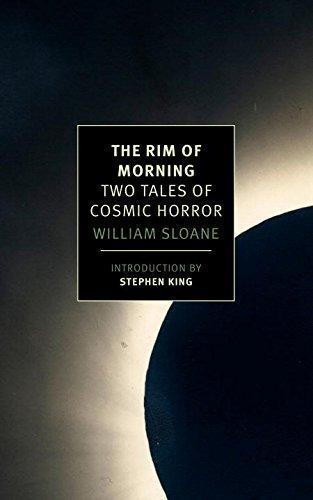
Beyond the Immediate Shiver: The Rim of Morning by William Sloane

Beyond the Immediate Shiver: The Rim of Morning by William Sloane

The Rim of Morning-smallAccording to either Google or Oz the Great and Powerful (I forget which, and for God’s sake, don’t look behind that curtain!), over 300,000 books are published in the United States every year. That’s over 800 a day, every day, day in and day out.

Most, of course, are utterly worthless and are destined to vanish without a trace almost immediately (see Sturgeon’s Law), and given the magnitude of this never-ceasing flood of words, even worthy books by fine writers will inevitably go out of print sooner or later — most likely sooner.

But here’s the thing — even when they drop out of print, books that are good enough are remembered, and sooner or later, like Marely’s Ghost or that particularly embarrassing anecdote that your mother loves telling at every family gathering (especially when a new significant other is present), the good ones come back.

Hence The Rim of Morning: Two Tales of Cosmic Horror, an omnibus volume reprinting two novels that William Sloane wrote a long time ago: To Walk the Night (1937) and The Edge of Running Water (1939). The books have been reprinted a few times, mostly in paperback, over the more than seventy five years since their first appearance, but the last editions were over thirty years ago under the Del Rey imprint (see the hardcover and paperback editions in a previous BG post here.)

Sloane was not exactly prolific; the two novels collected here are the only ones he ever wrote (or are at least the only ones that were ever published; I for one am hoping that there’s a big trunk somewhere, stuffed with manuscripts that he never bothered to mail in.) Shortly after writing them, Sloane launched a literary career of impressive solidity, especially coming from a man who had mostly given up writing himself. He started his own publishing house, edited a pair of science fiction anthologies, taught at the prestigious Bread Loaf Writer’s Conference for over twenty five years, and eventually became the managing director of Rutgers University Press, a position he held until his death in 1974.

Read More Read More

Apex Magazine #79 Now on Sale

Apex Magazine #79 Now on Sale

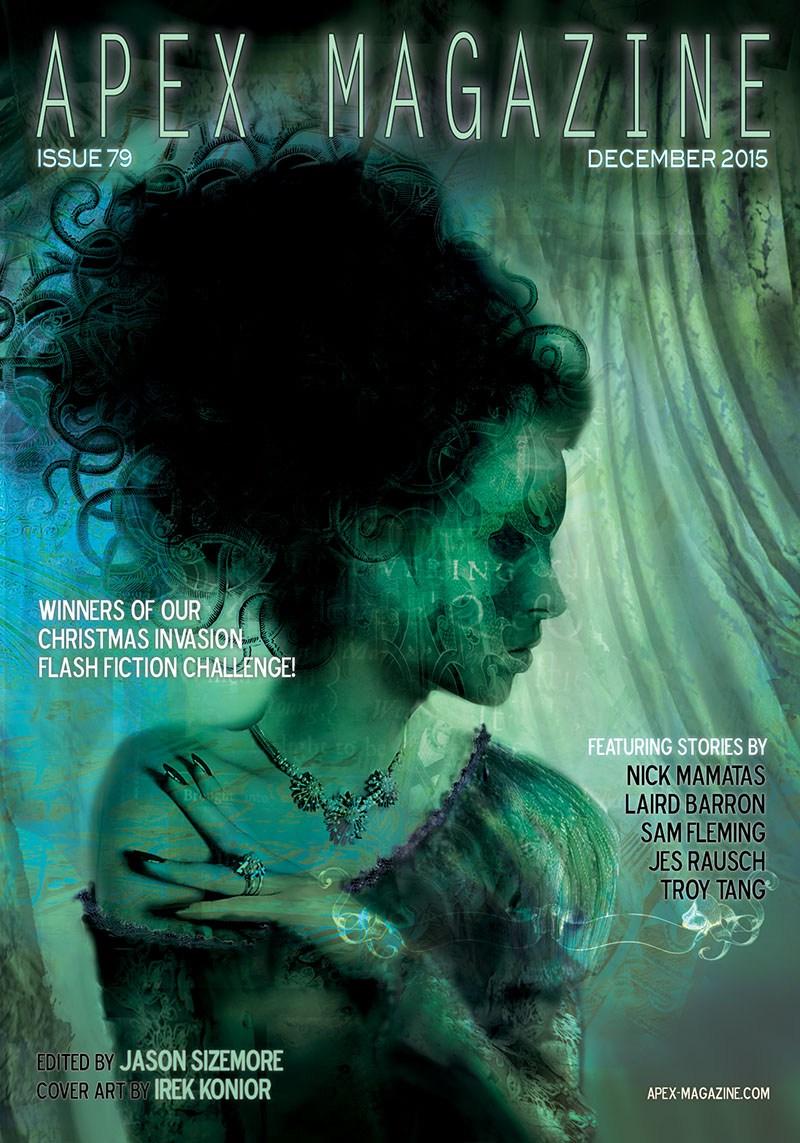
Apex Magazine Issue 79-smallIn his editorial this month, Jason Sizemore gives us the usual lowdown on the issue.

This month we bring you original fiction from old and new. We welcome Troy Tang to our pages with the evocative “Aishiteru Means I Love You.” The story, his first professional sale, explores the feedback loop of self-loathing and shame of a teen who is bullied online. Nick Mamatas makes a return to speculative fiction with “The Phylactery.” Jes Rausch’s “Memory Tree” uses an unconventional structure to examine life after death. Finally, Sam Fleming’s story “She Gave Her Heart, He Took Her Marrow” is a vivid character piece that, at 6,500 words, ends all too quickly.

We offer two poems this month: “Grotesque” by J.J. Hunter and “Myrrh, and the Sun” by Lara Ek. Jennie Goloboy provides insight into historical fiction with “Shiny Boots and Corinthians: Writing Historical Fiction without Clichés.” Andrea Johnson interviews Sam Fleming and Russell Dickerson interviews our cover artist Irek Konior.

Our reprint this month is a doozy: “Nemesis” by the great Laird Barron.

Here’s the complete TOC.

Read More Read More

Cover Reveal: The Forgetting Moon by Brian Lee Durfee

Cover Reveal: The Forgetting Moon by Brian Lee Durfee

The Forgetting Moon-small

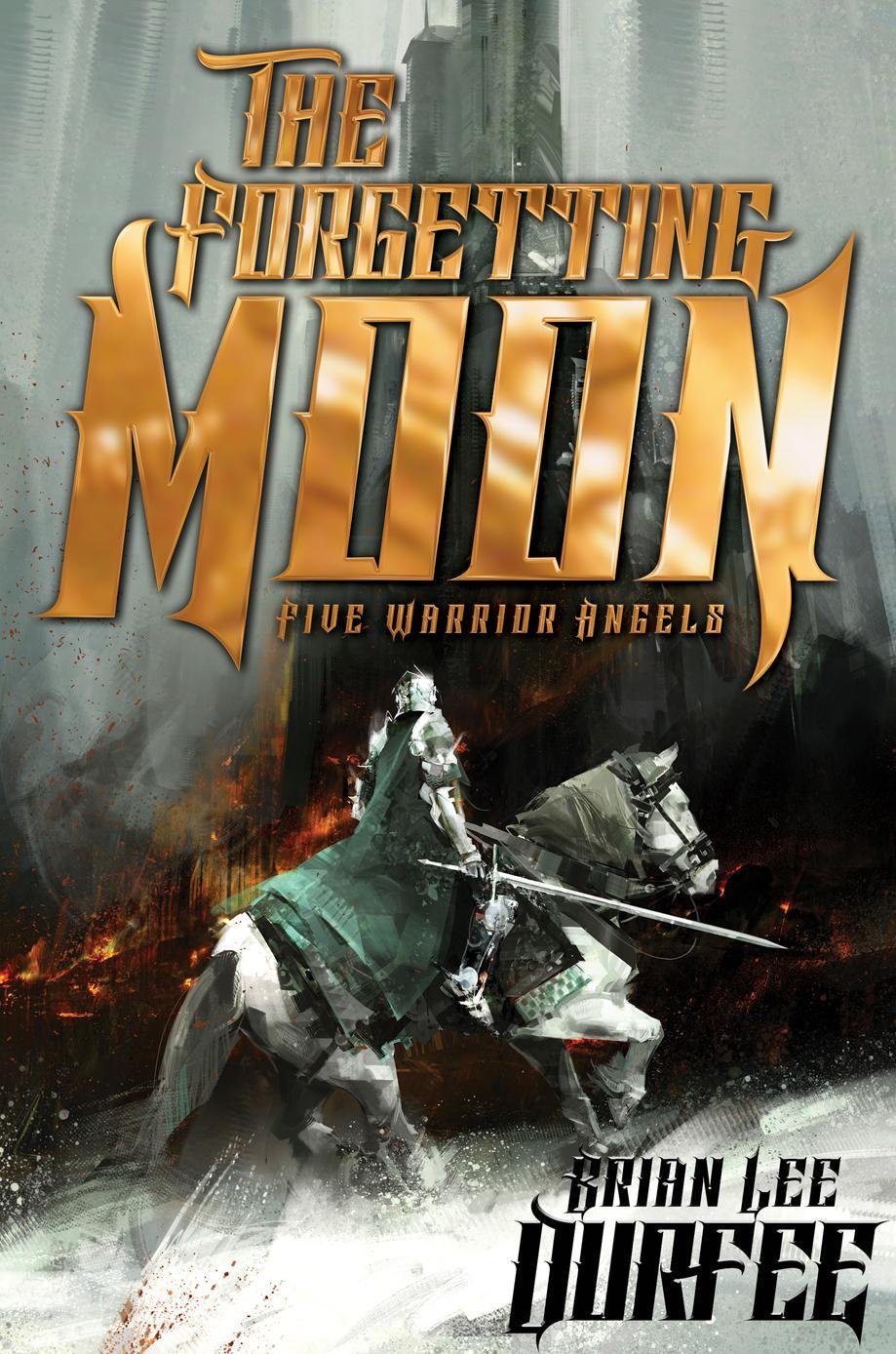
Saga Press’ 2016 line up promises to be stellar, with titles from Kat Howard, A. Lee Martinez, Genevieve Valentine, and many others. In the past few weeks we’ve given you peeks at upcoming books such as Mike Brooks’ “Firefly-like” space opera Dark Run, Joe Zieja’s military SF novel Mechanical Failure, and Black Gate author Frederic S. Durbin’s A Green and Ancient Light.

This week we take a look at Brian Lee Durfee’s debut fantasy novel The Forgetting Moon, the opening book in The Five Warrior Angels series, on sale from Saga Press July 5, 2016.

Read More Read More

Future Treasures: First and Last Sorcerer by Barb and J.C. Hendee

Future Treasures: First and Last Sorcerer by Barb and J.C. Hendee

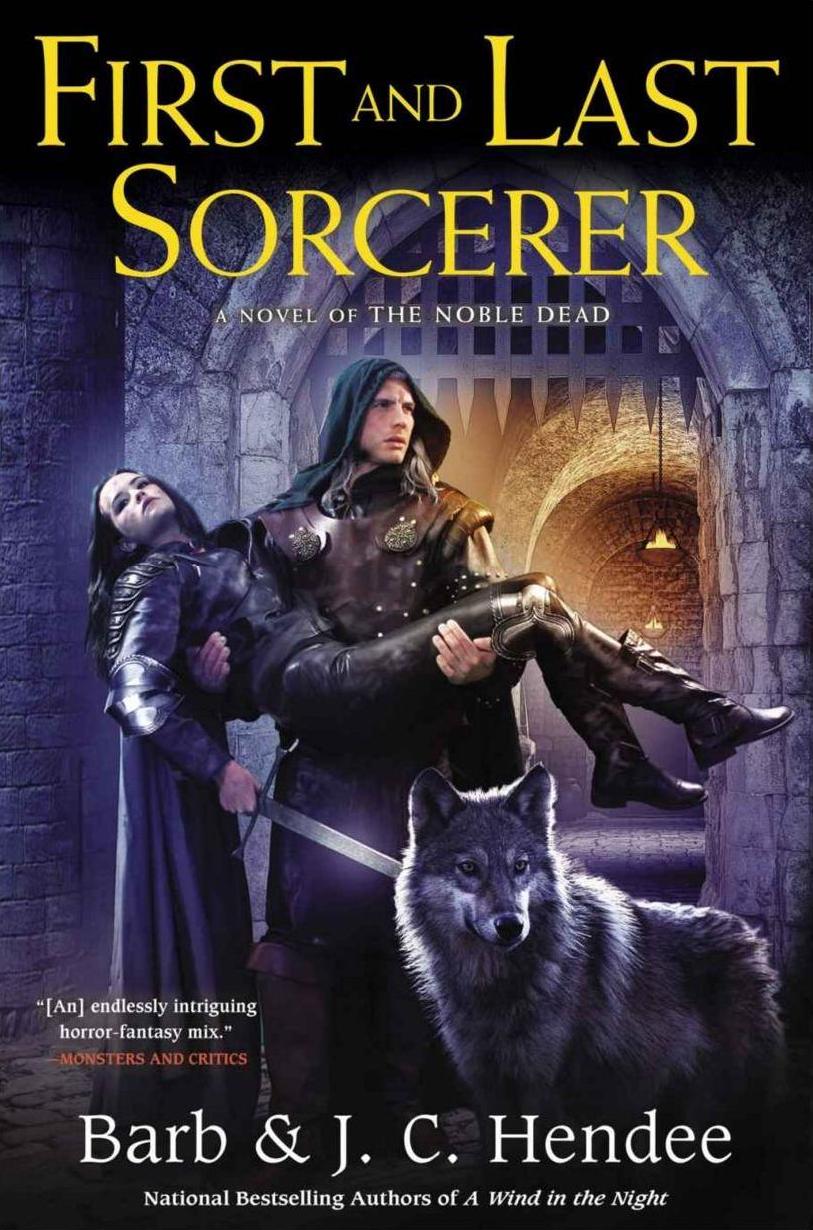
First and Last Sorcerer-smallBarb and J.C. Hendee began The Noble Dead series with Dhampir way back in January 2003. Since then they’ve released a dozen additional books in the series, and the fourteenth and final volume, The Night Voice, is scheduled to arrive in hardcover on January 6th.

The same day, Roc will release the penultimate book, First and Last Sorcerer, in paperback for the first time. For those pragmatists who wait until an entire series is in print before they pick up the first volume, your day has finally come. Check out one of the most popular series on the market, which Publishers Weekly calls “A crowd-pleasing mix of intrigue, epic fantasy, and horror.”

Waylaid in their quest for the orb of the Air, Magiere, Leesil, Chap, and Wayfarer have all been wrongly imprisoned. But it is Magiere, the dhampir, who suffers the most at the hands of a cloaked interrogator employing telepathic torture.

Arriving at the Suman port city in search of Magiere, Wynn Hygeorht and her companions — including vampire Chane Andraso — seek out the Domin Ghassan il’Sänke for assistance, which proves no easy task. The domin is embroiled in a secret hunt for a spectral undead with the power to invade anyone living and take the body as its host.

Even if Wynn manages to free her friends from prison, battling this entirely new kind of hidden undead may be a challenge none of them can survive…

First and Last Sorcerer was published in hardcover by ROC on January 6, 2015, and will be reprinted in mass market paperback on January 5, 2016. It is 395 pages, priced at $7.99, or $12.99 for the digital version. The cover artist is uncredited.

John DeNardo’s The Best of the Best of 2015’s Science-Fiction and Fantasy Books

John DeNardo’s The Best of the Best of 2015’s Science-Fiction and Fantasy Books

Three Moments of an Explosion China Miéville-smallAh, the end of the year. It comes with all those fascinating Best-of-the-Year lists, written by people who read waaaay more than I do. I always tell myself I’ll at least mention them all here at Black Gate, because damn it would be cool if I were that on top of things. But then there’s all those Christmas parties, and my kids want me to watch Big Hero 6 with them (again), and really, that’s such an awesome movie. So, uh, yeah. Didn’t get to it. Maybe next year.

Fortunately, the tireless John DeNardo works much harder than me. He doesn’t go to Christmas parties, or watch movies. Ever. Or sleep, apparently. No, he read every single one of those Best SF & Fantasy of the Year lists. The ones that matter anyway:

Amazon
Barnes and Noble
Los Angeles Times
NPR
Publishers Weekly
The Guardian
The Washington Post
Kirkus Reviews

But then — because he has to show off — he did, like, math and stuff on those lists. (Well, addition, which counts as math.) He added up how many times each book appeared. And then he constructed a SUPER LIST, of the Best of the Best of 2015’s Science-Fiction and Fantasy Books. Just like those scientist guys who built Robocop.

Read More Read More

R. J. Myers and the Crucifixion of Mary Shelley

R. J. Myers and the Crucifixion of Mary Shelley

NOTE: The following article was first published on May 16, 2010. Thank you to John O’Neill for agreeing to reprint these early articles, so they are archived at Black Gate which has been my home for over 5 years and 250 articles now. Thank you to Deuce Richardson without whom I never would have found my way. Minor editorial changes have been made in some cases to the original text.

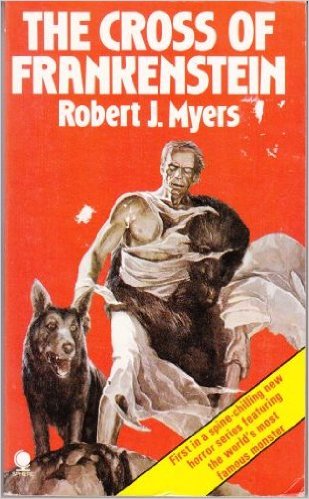
Myers Cross 2Myers Cross 1Robert J. Myers is a study in contradictions. A veteran CIA operative, he became the publisher of The New Republic. In the mid-1970s, Myers authored two sequels to Mary Shelley’s classic, Frankenstein or: The Modern Prometheus (1818). Having a longstanding interest in literary pastiches, I tracked down these two long out-of-print titles and read the first, The Cross of Frankenstein (1975). The prolific nature of the Universal and Hammer Frankenstein movies was understandable, but the original novel has always seemed more challenging to extend – even more so than Bram Stoker’s Dracula (1897). Neither story demands literary sequels, nor did their authors choose to pursue them – a fact that makes the ambitions of prospective continuation authors all the more difficult to realize with any degree of success.

Mary Shelley’s original reads like a modern fable. The scientist who transgresses nature’s laws is destroyed by the abomination he brought into existence with his own hand. It is the same fable Michael Crichton fashioned nearly 200 years later into Jurassic Park. Shelley’s alternate title for the book, The Modern Prometheus is frequently forgotten, but it is critical to an understanding of how the novel differs from the 1931 Universal horror classic that imbued itself in the public consciousness. The monster of Shelley’s novel may be lacking a flat head and neck bolts, but he makes up for it in spades with his philosophical yearning for his own place in the universe and with the father/creator who abandoned him.

Read More Read More

December 2015 Nightmare Magazine Now on Sale

December 2015 Nightmare Magazine Now on Sale

Nightmare Magazine December 2015-smallThe December issue of the online magazine Nightmare contains original short stories from Damien Angelica Walters and Caspian Gray, and reprints from Tim Lebbon and Nancy Etchemendy.

Original Stories

The Judas Child” by Damien Angelica Walters
A kid in a baseball cap and a Ninja Turtles t-shirt is sitting on the park bench, swinging his legs. The boy stands off to the side until he’s sure there are no grown-ups nearby, and then he flops down on the bench, hiding his misshapen left hand while pretending to pick a scab from his knee with the other. Turtle leans forward, the hat’s brim turning his eyes to shadow. The boy guesses he’s eight, maybe, or close enough. Not too skinny either. The monster doesn’t like it when they’re skinny.

The King of Ashland County” by Caspian Gray
Uncle Reggie couldn’t afford to fly to Ireland to find a selkie wife, so instead he drove across the country to Carmel-by-the-Sea and came back with a selkie queer. I was fifteen then, and so ready to get out of Perrysville that California sounded like paradise.

Read More Read More

Doctor Who at its Zenith: Tom Baker’s The Talons of Weng-Chiang

Doctor Who at its Zenith: Tom Baker’s The Talons of Weng-Chiang

Doctor Who The Talons of Weng-Chiang-smallI want to espouse the virtues of a story written by Robert Holmes for Tom Baker’s Doctor Who: The Talons of Weng-Chiang. This story has got to be counted as one of the high points of (original series) Doctor Who concept and scripting.

John Bennett’s portrayal of the stage magician Li H’sen Chang, sometimes criticized because Bennett was an English actor playing a Chinese character, takes on a new light when one supposes (this is my theory) that Robert Holmes was alluding to the real-life Chung Ling Soo, the stage name of American magician William Ellsworth Robinson.

Like many stories in that period of Doctor Who under the production hand of Philip Hinchcliffe, many of the stories were pastiches or developments from old horror story tropes. Hinchcliffe and Holmes shared an enthusiasm for those old story ideas, like Frankenstein (The Brain of Morbius), Egyptian occult stories (The Pyramids of Mars), King Kong (Robot), The Day of the Triffids (The Seeds of Doom), and locked room mysteries (The Robots of Death).

But it reaches a zenith in The Talons of Weng-Chiang: we not only have an allusion to real-life ‘fake’ stage-magicians, we have subtexts or suggestions of:

The Phantom of the Opera
Sherlock Holmes
Pygmalion
Fu-Manchu (or any ‘Yellow Peril’ tales)

…along with much music hall colour, giant rats in the sewers, and maybe even a hint of the Elephant Man?

Pardon my enthusiasm, but I really do feel there are excellent old series stories, and Talons is one of them.