John DeNardo on the Best of the Best: The Definitive List of 2016’s Best Science Fiction and Fantasy

John DeNardo on the Best of the Best: The Definitive List of 2016’s Best Science Fiction and Fantasy

all-the-birds-in-the-sky-small Ninefox Gambit-small Central-Station-Lavie-Tidhar-small

We wrap up our look at the best books of 2016 with one final stop: John DeNardo’s annual end-of-the-year project, in which he assembles the most prestigious Best of the Year lists and distills them down into one mega-list of the very best of 2016. He drew from seven Best of the Year lists, produced by:

Amazon
Barnes and Noble
Publishers Weekly
Washington Post
The Guardian
NPR
Kirkus Reviews

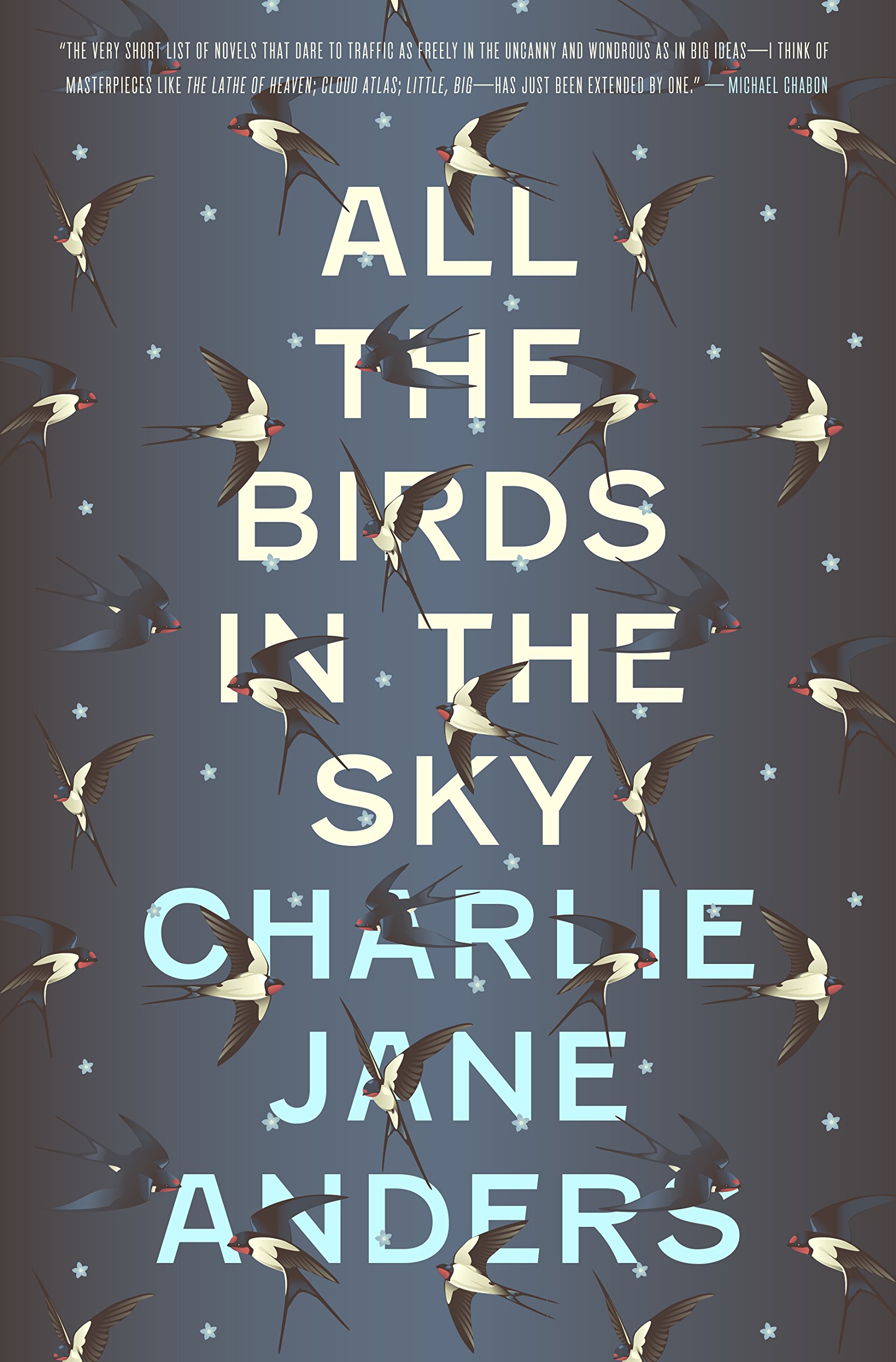
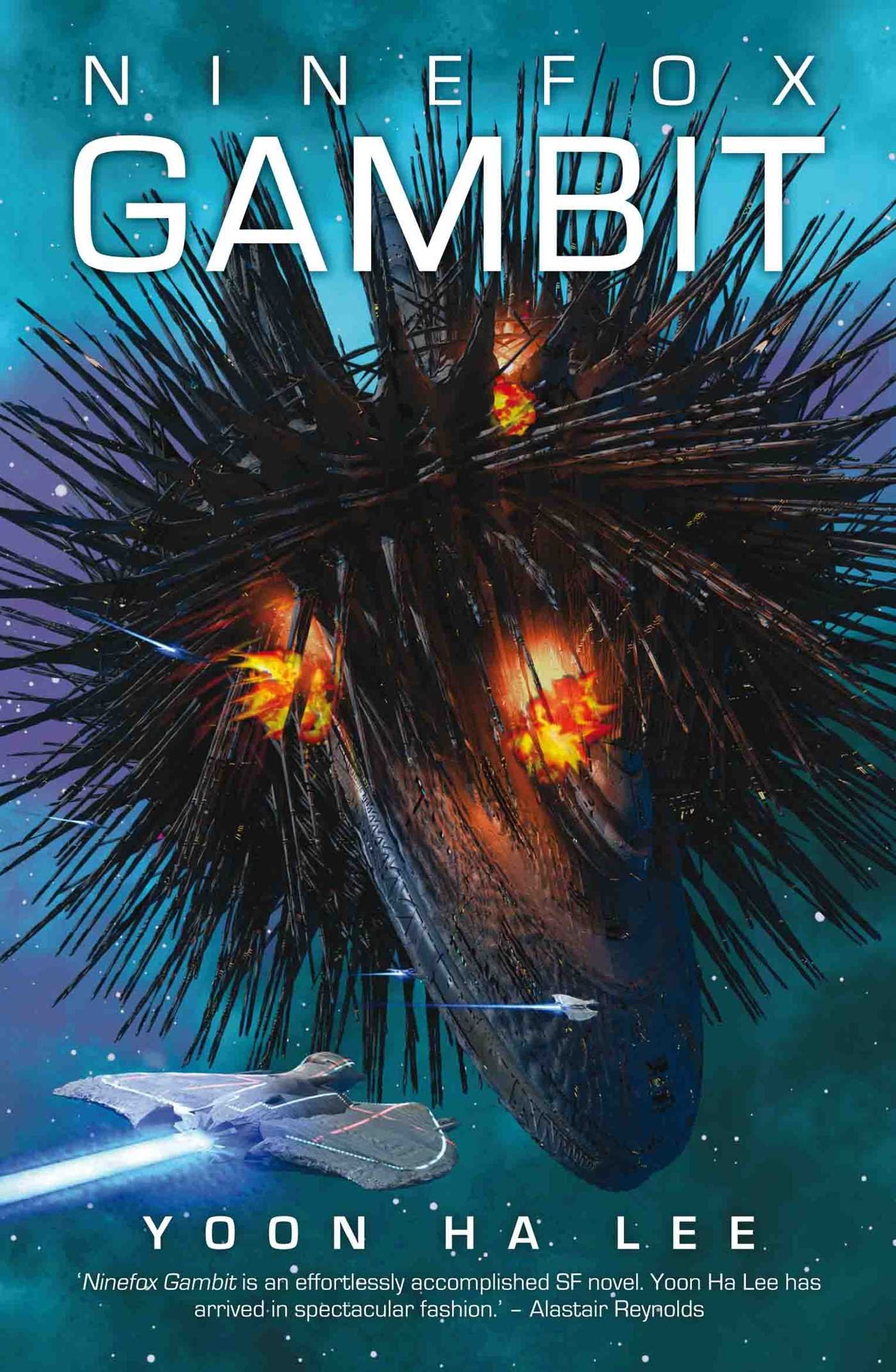
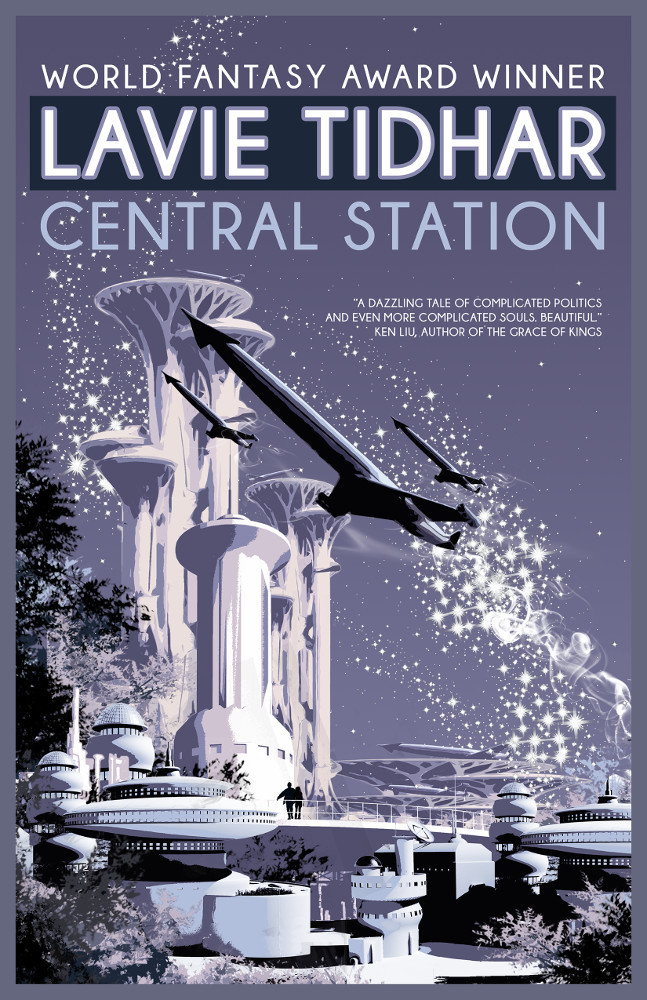
The result is a list of the six most acclaimed SF & Fantasy books of the year (plus thirteen honorable mentions). John’s ultra-list contains no less than three debut novels — including Charlie Jane Anders’ All the Birds in the Sky, and Yoon Ha Lee’s Ninefox Gambit — and a linked collection of stories from Lavie Tidhar, Central Station.

Read More Read More

Etruscan Treasures in Bologna

Etruscan Treasures in Bologna

dsc_2059

The two stone boxes are Etruscan ossuaries

On a recent trip to Bologna in northern Italy, I got to admire the city’s famous medieval towers and beautiful churches. The city’s medieval and Renaissance history is everywhere. What is less apparent is that it was a major center for Etruscan civilization. No Etruscan monuments survive in the city itself, so it’s fortunate that the Museo Civico Archeologico has an excellent Etruscan collection. This is thanks to several pioneering archaeologists in the 19th and early 20th century who excavated numerous Etruscan buildings and tombs and carefully preserved their findings.

Read More Read More

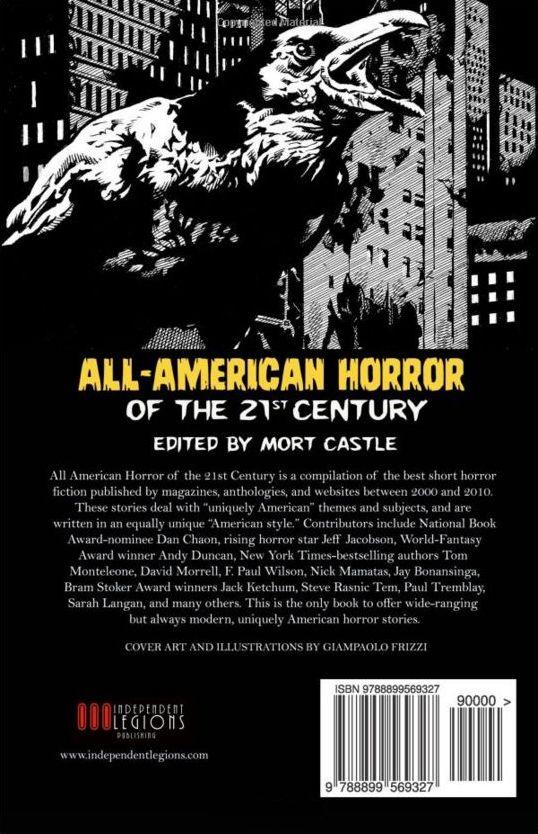
New Treasures: All-American Horror of the 21st Century: The First Decade (2000-2010), edited by Mort Castle

New Treasures: All-American Horror of the 21st Century: The First Decade (2000-2010), edited by Mort Castle

all-american-horror-of-the-21st-century-the-first-decade-small all-american-horror-of-the-21st-century-the-first-decade-back-small

Mort Castle is the author of seven novels, including the horror novel Cursed Be the Child (1990), and four collections. But his reputation today rests just as much on his considerable accomplishments as an editor, including stints as editor of two magazines (Horror: The Illustrated Book of Fears, and Doorways Magazine), and the 2012 anthology Shadow Show: All New Stories in Celebration of Ray Bradbury.

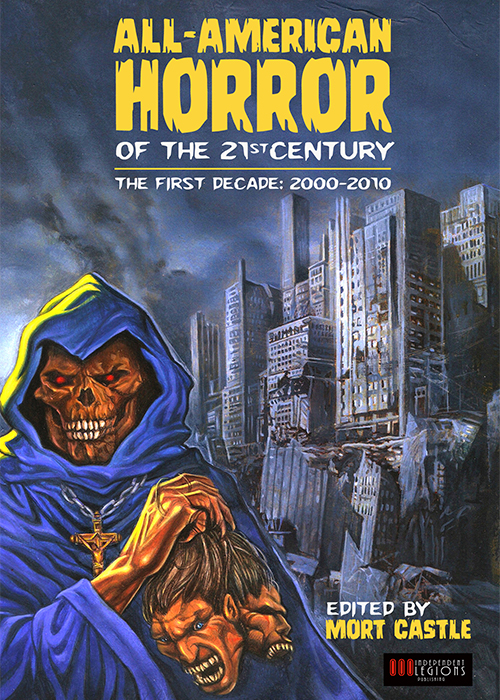
More recently, Mort was the editor of the ambitious volume All-American Horror of the 21st Century: The First Decade (2000-2010), released as a limited edition hardcover from Wicker Park Press in 2013. Independent Legions Publishing has finally released a trade paperback edition of the 412-page volume, which collects the best short horror fiction published by magazines, anthologies, and websites between 2000 and 2010, including tales from Andy Duncan, Tom Monteleone, David Morrell, F. Paul Wilson, Nick Mamatas, Jay Bonansinga, Jack Ketchum, Steve Rasnic Tem, Paul Tremblay, Sarah Langan, and many others. It also includes an introduction and a new Afterword by Mort Castle. It’s an impressive volume that belongs on every serious horror collector’s bookshelf.

All-American Horror of the 21st Century: The First Decade (2000-2010) was published by Independent Legions Publishing on November 27, 2016. It is 412 pages, priced at $19.90 in trade paperback and $4.99 for the digital edition. The cover art and interior illustrations are by Giampaolo Frizzi. Click the covers above for bigger versions.

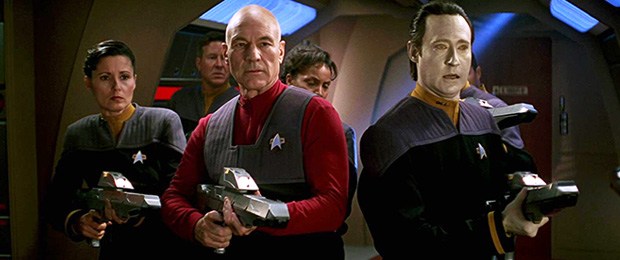
Star Trek Movie Rewatch: Star Trek: First Contact (1996)

Star Trek Movie Rewatch: Star Trek: First Contact (1996)

star-trek-first-contact

As a TOS fan who came to the other Star Trek series relatively recently, I have to admit that The Next Generation, although entertaining, didn’t grab me as much as its predecessor. Nor did the first entry in the TNG run of movies — Generations.

Fortunately, First Contact fares quite a bit better than that installment.

Part of the appeal this time around, in this the eighth of the Star Trek movies, is that it centers on the Borg. Who were the most effective of all Star Trek villains, in my opinion. They first appeared in Star Trek: Next Generation and then in each of the TV series after that. They turned up very frequently in Voyager, which featured Seven of Nine, a “recovering” Borg/human, as a regular member of the cast.

Read More Read More

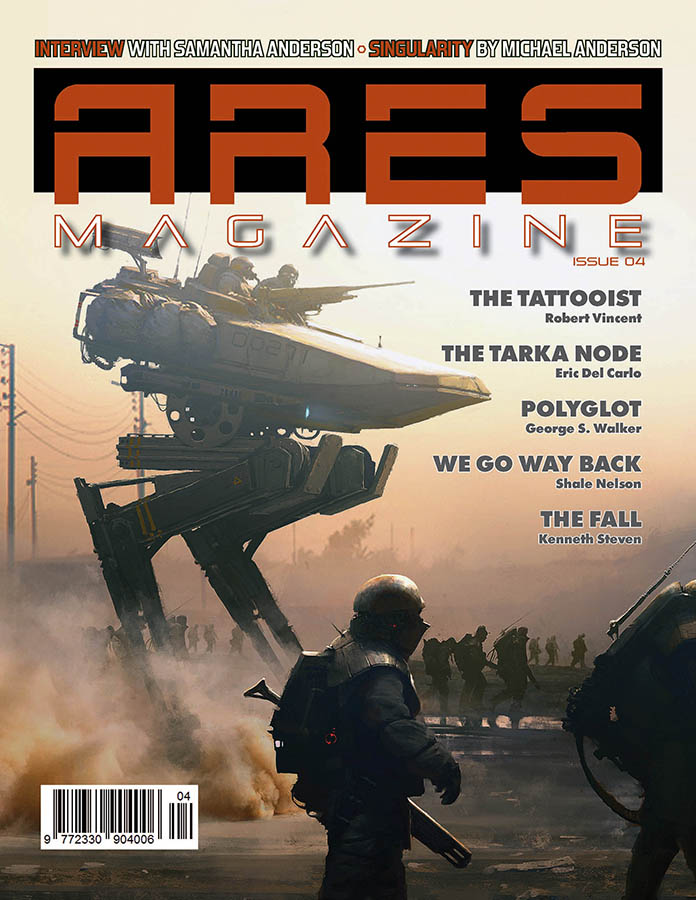
Ares Magazine 4 Now Available

Ares Magazine 4 Now Available

ares-4-smallAres magazines, the Kickstarter-funded gaming publication that ships with a complete game in every issue, is now out with its fourth issue. The game this time is Extractors!, a 2-player game of mining and mech combat on a far-distant alien planet, designed by Karoly Szigetvari and Claudio De Pra.

Doriana, a Sol-like star system in the Sagittarius arm. Doriana-5, a medium sized planet barely suitable to life, is inhabited by bipedal intelligent creatures, organized in “hives.” Not as curious as us, their evolution has been slow, but they have now reached a technology level high enough to put a halt on the centuries-aged wars between hives. Dorians became aware that continuing these wars with weapons more and more deadly would lead to mutual extinction….

5 light-years away, the Avronians develop the ability to send non-living materials through space at effective speed faster than light. Carbophosphate composites, the main organic energy source on Avronia, has now become very scarce but, according to recent probe reports, it is common on Doriana-5.

Whilst most of the Avronian masters are still debating the best way to negotiate their energy crisis, groups of desperate peoples decide to send armed forces (huge semi-autonomous machines) to secure large extraction perimeters on Doriana-5….

Extractors! is a two-player game of medium complexity and medium solitaire suitability. One player controls a company of the Dorian Cellular Forces, consisting of Augmented Infantry Sections organized in cells and support vehicles. They face Avronian Machines whose AI is represented by the second player.

As always, there’s more to Ares magazine than just a game. Issue #4 comes packed with loads of original fiction and features.

Read More Read More

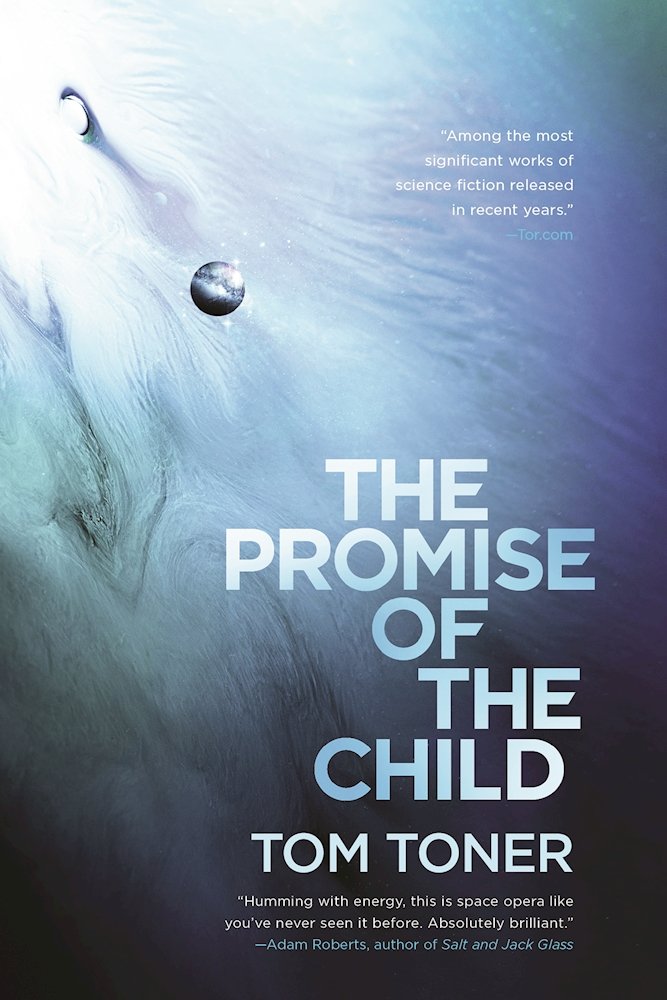
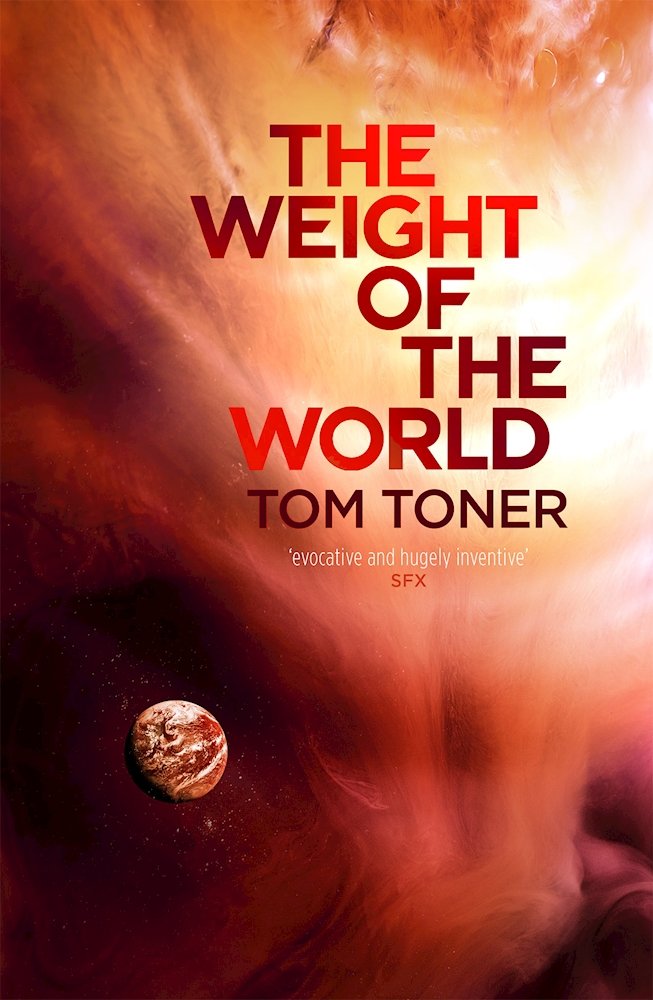
Future Treasures: The Weight of the World, Book 2 of the Amaranthine Spectrum, by Tom Toner

Future Treasures: The Weight of the World, Book 2 of the Amaranthine Spectrum, by Tom Toner

the-promise-of-the-child-small the-weight-of-the-world-small

In this business you get used to seeing breathless blurbs on everything, from the latest fat fantasy to the newest stack of midlist paperbacks. But if you’re not completely jaded, you can still detect genuine buzz.

That’s what I’m sensing with the debut novel from Tom Toner, The Promise of the Child, a space opera set in the far-distant 147th Century. Tor.com said it’s “Among the most significant works of science fiction released in recent years,” and Adam Roberts called it “Absolutely brilliant… space opera like you’ve never seen it before.” Karl Schroeder proclaimed it “Utterly absorbing; a tremendous adventure… One of the most ambitious and epic-scale pieces of worldbuilding I’ve read,” and Booklist said “This is the kind of novel that could develop a cult following.”

The Promise of the Child was published in hardcover by Night Shade Books in September of 2015, and reprinted in trade paperback last October. On January 24th the second novel in the Amaranthine Spectrum, The Weight of the World, finally arrives in hardcover and digital formats from Night Shade.

Read More Read More

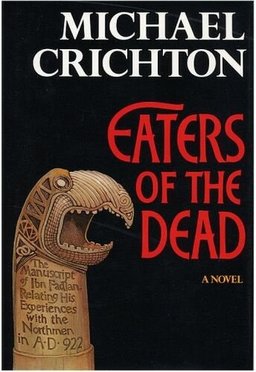
Eaters of the Dead by Michael Crichton

Eaters of the Dead by Michael Crichton

oie_8192953ghlqmqv0-1In 921 AD, Aḥmad ibn Faḍlān ibn al-ʿAbbās ibn Rāšid ibn Ḥammād was sent from Baghdad as ambassador to the Volga Bulgars (who lived in the boundaries of modern Russia) to help establish Islamic law for the newly converted nation. The short journal he kept of his travels is famous for its descriptions of the Volga Vikings, in particular the death rites of one of their chietains.

In Eaters of the Dead (1976), the fourth novel published under his own name (he’d previously released ten under pseudonyms), Michael Crichton asked two important questions: What if ibn Fadlan, during his sojourn among the Vikings, met a certain hero named Buliwyf? And what if there was a historical basis for the legend of Beowulf? His answer is a fun mix of travelogue and bloody adventure tale. Years later, it went on to serve as the basis for the The 13th Warrior, starring Antonio Banderas.

The first three chapters of Eaters of the Dead are mostly lifted straight from ibn Fadlan’s manuscript. Instead of a trusted and willing diplomat, though, Crichton recasts ibn Fadlan as reluctant traveler, forced to join the mission as punishment for his dalliance with the wife of a merchant friendly with the Caliph.

The greatest change to ibn Fadlan’s story is, of course, his fateful meeting with Buliwyf. In Crichton’s story, the Geatish Viking is present at the funeral for the chieftain. Before he can reach the Bulgars, ibn Fadlan is forced to join Buliwyf and his band. King Rothgar’s realm has been attacked by an ancient horror and he has sent one of his sons to ask the great hero for aid. Terror has come out of the mist — something so evil that the name can’t be mentioned lest it be summoned up. Later, ibn Fadlan learns they are called the wendol.

At this the old man said that I was a foreigner, and he would consent to enlighten me, and he told me this: the name of “wendol,” or “windon,” is a very ancient name, as old as any of the peoples of the North country, and it means “the black mist.” To the Northmen, this means a mist that brings, under cover of night, black fiends who murder and kill and eat the flesh of human beings.* The fiends are hairy and loathsome to touch and smell; they are fierce and cunning; they speak no language of any man and yet converse among themselves; they come with the night fog, and disappear by day — to where, no man durst follow.

Read More Read More

Silent Screen Swashbucklers, Part 1 of 2: Zorro Makes his Mark!

Silent Screen Swashbucklers, Part 1 of 2: Zorro Makes his Mark!

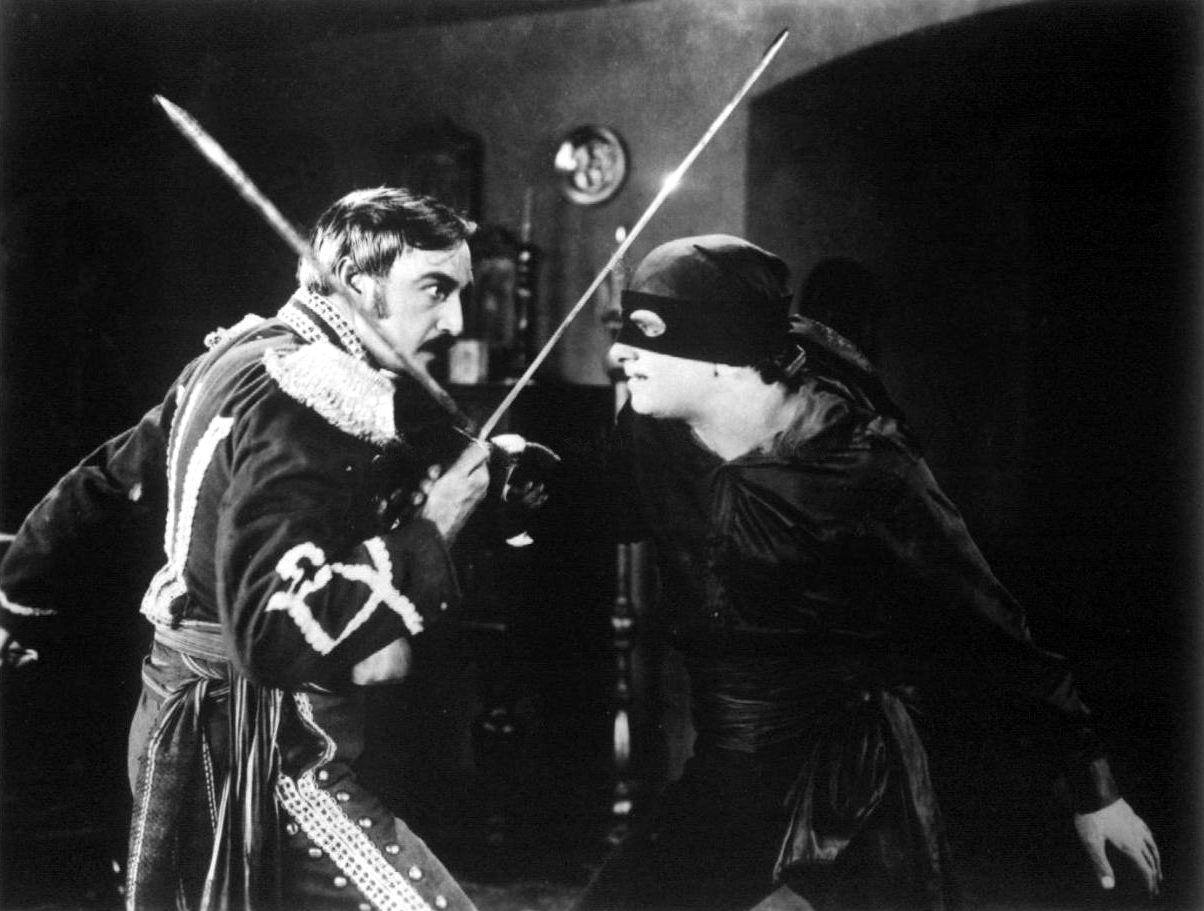
the-mark-of-zorro-1920-top-small

The Mark of Zorro (1920)

The swashbuckler tradition was born out of legends like those of the Knights of the Round Table and of Robin Hood, revived in the early 19th century by Romantic movement authors such as Sir Walter Scott. The genre really caught hold with the publication of Alexandre Dumas’ The Three Musketeers in 1844, and for the next century it was arguably the world’s leading form of adventure fiction, challenged only by the American Western.

The action and visual flair of the swashbucklers were perfect for the movie screen, and Hollywood brought them to life with brio and panache, starting most successfully with lavish productions of The Mark of Zorro (1920) and The Three Musketeers (1921), both starring Douglas Fairbanks, Sr. The 1920s through 1950s were the heyday of the Hollywood swashbuckler, but they continue to find favor with moviegoers right up to the present, notably in the recent Pirates of the Caribbean series. So it’s worth going back to see how those visual tropes around the hero-with-a-sword were first established during the silent film era, because much of what you see on the screen today had its roots almost a hundred years ago with those early cinematic pioneers.

I had a good time surveying these early swashbucklers, and I hope you’ll enjoy this overview. With luck, it’ll even inspire you to dip into this rich source of adventure film tradition yourself.

Read More Read More

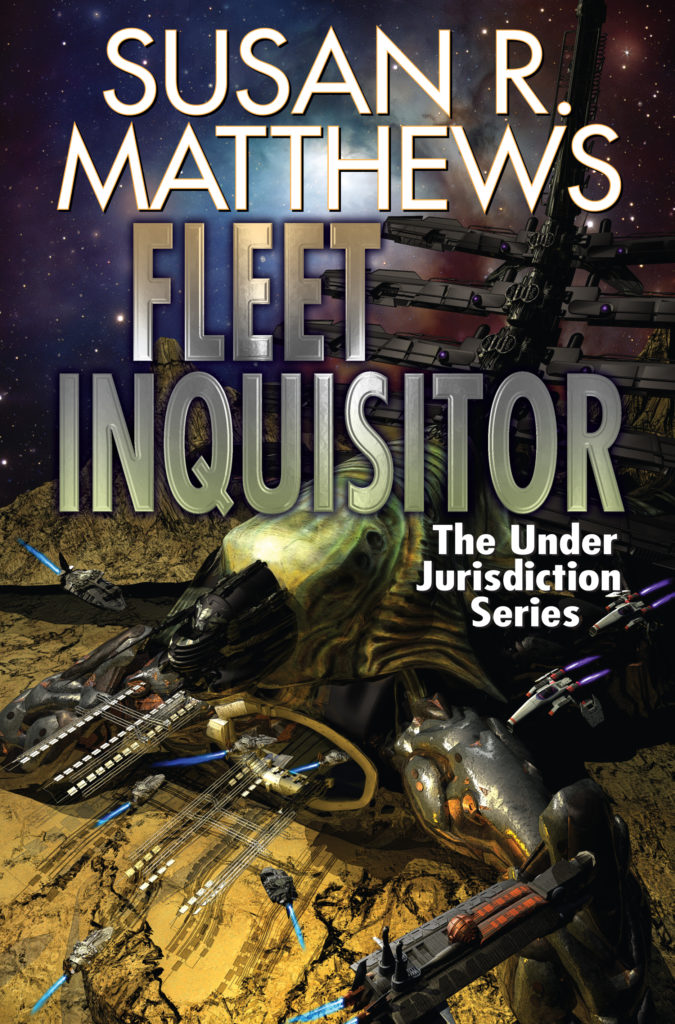
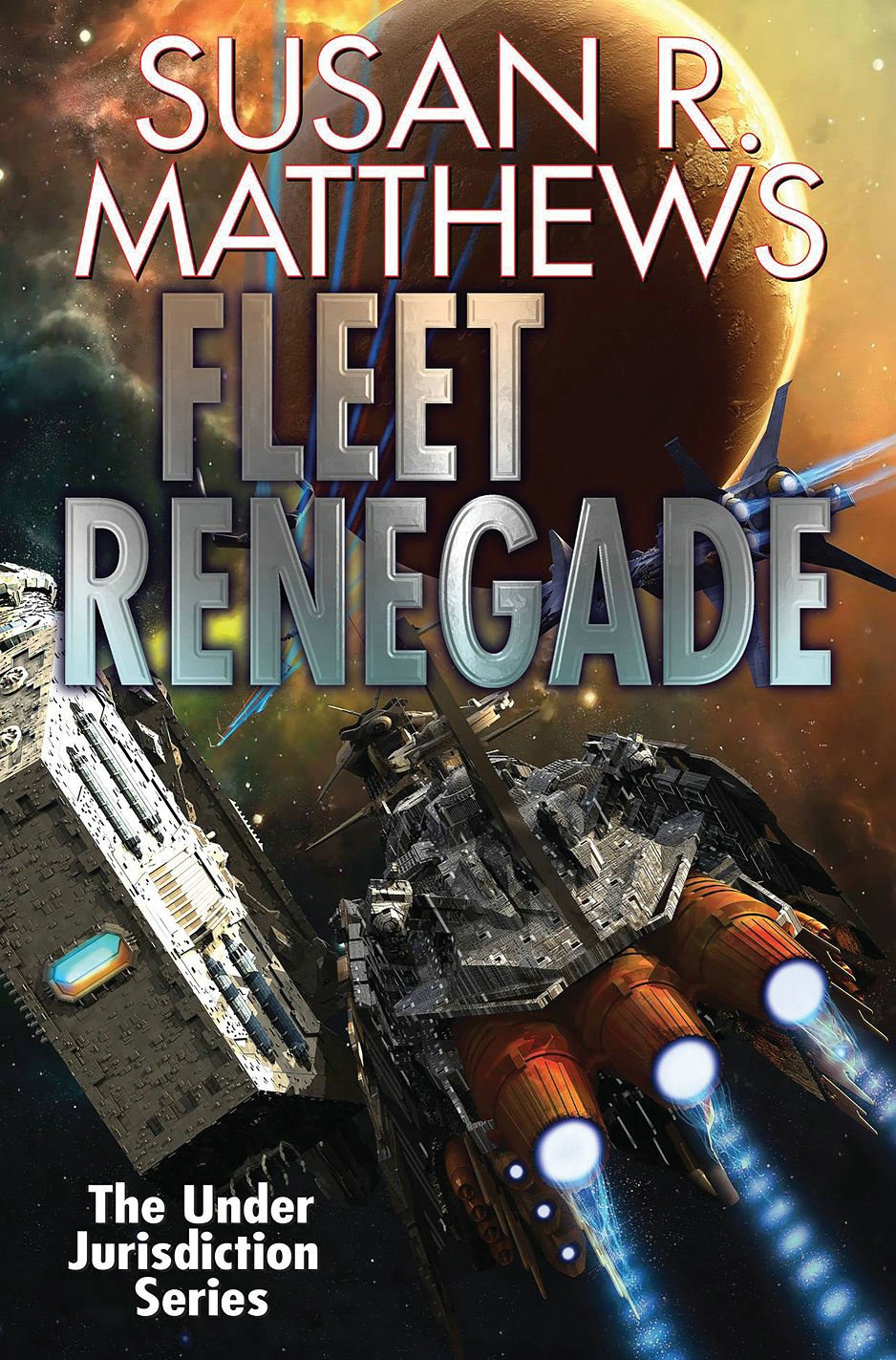
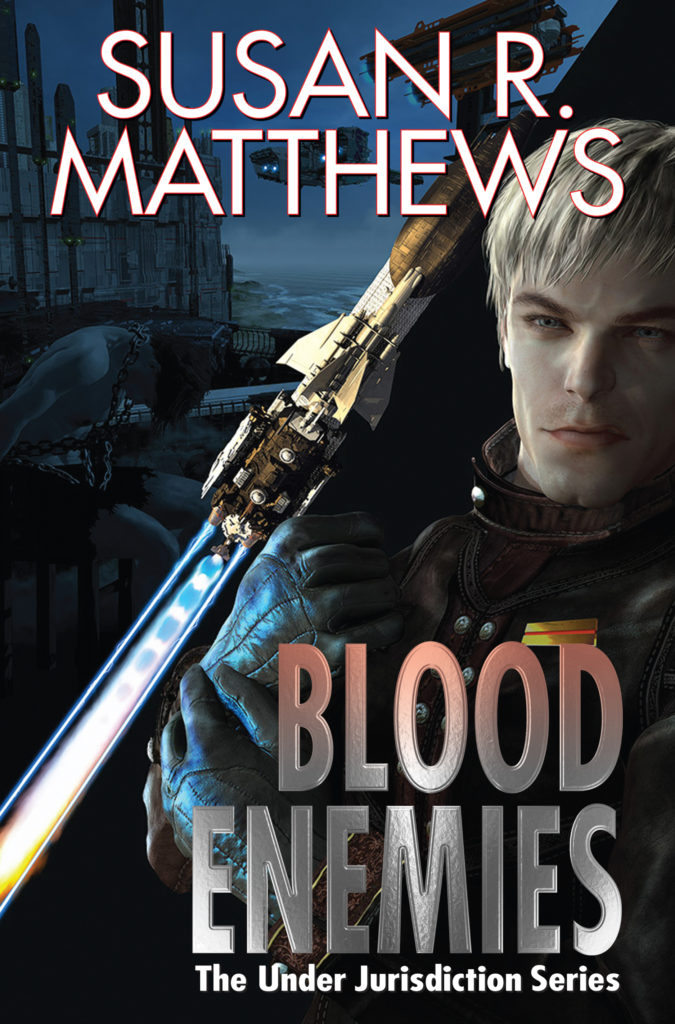
A Doctor in a Torture State: Susan R. Matthews’ Under Jurisdiction Novels

A Doctor in a Torture State: Susan R. Matthews’ Under Jurisdiction Novels

Fleet Inquisitor-small fleet-renegade-small Blood Enemies Susan Matthews-small

Baen Books continues its fine tradition of attractive, inexpensive omnibus editions of top-notch science fiction. Most recently they’ve turned their attention to the Under Jurisdiction novels of Susan R. Matthews, the tales of a doctor of conscience who is a faithful servant of the Bench, where institutionalized torture is an instrument of State. This is a grim (and often controversial) series, as Lisa DuMond noted in her SF Site review of the first two novels:

Andrej Koscuisko wants nothing more than to be a doctor: a surgeon. His father wants him to carry on the family honour by enlisting with the Fleet in its glorious fight to basically control everything. Andrej manages to resist his father’s will for a time, finally giving in only with grudging obedience and quiet resistance. Because, in his position with Fleet, he will indeed be a ship’s chief medical officer — and, incidentally, Ship’s Inquisitor… How can a person dedicated to preserving life and obliterating suffering combine the two functions of the position?

With relish. Amid the blood and screams and seared flesh of the workroom, Andrej Koscuisko will meet his personal monster. A man of honour, compassion, and empathy will find a sexual passion such as he has never known in the agony of his helpless captives. Even as he uses his wits and the amazing skills he has developed to save the lives of others.

Facing this chilling dichotomy is the first step in a life that will tear away at his sanity and self-worth… Throughout the two books, the greatest miracles are pulled off by Matthews herself… More miraculous is the sleight of hand Matthews manages with the character of Andrej. Time and again he enters the workroom to become something we can’t even let ourselves dream about. He emerges, blood-stained and aroused, only to crash into self-loathing.

The opening novel, An Exchange of Hostages, was published by Avon Books in 1997 and nominated for both the Philip K. Dick Award and the John W. Campbell Award, and came in fourth in the poll for the Locus Award for Best First Novel.

Read More Read More

The Public Life of Sherlock Holmes: Sherlock is Back With “The Six Thatchers”

The Public Life of Sherlock Holmes: Sherlock is Back With “The Six Thatchers”

thatchers_babySeason three of BBC’s Sherlock was an absolute train wreck, destroying what had been a great show. Then The Abominable Bride took the long-awaited Victorian-Era Cumberbatch/Freeman episode and turned it into some stupid psychological modern day shlock involving the dead, giggling Moriarty.

So, season four finally arrived, just shy of three years since season three ended. And you know what? The Six Thatchers wasn’t a disaster. It wasn’t up to the standards of the first two seasons, but it was better than season three.

In a recent interview, Steven Moffat said, “Mark Gatiss and I do not have the delusion that we know better than Sir Arthur Conan Doyle. That’s how the show works and always will. We reset to the most traditional and famous version of the format.”

And it was exactly when those two thought they knew better than Doyle: when they wrote episodes that alternately pandered to new generation fans and saying ‘look at how smart and clever we are’ (I’m talking about you, season three) that a great show turned to crap. Season three was all about the creators patting themselves on the back and showing how much they didn’t need Doyle to make a Sherlock show. And they lost a huge part of the original fan base in doing so.

Read More Read More