Browsed by
Category: Reviews

Caspak Victorious: The Land That Time Forgot

Caspak Victorious: The Land That Time Forgot

First Edition Cover“You have read the opening paragraph, and if you are an imaginative idiot like myself, you will want to read the rest of it; so I shall give it to you here…”

I often refer to Edgar Rice Burroughs as an “excuse” author. It seems readers or critics can’t discuss him without qualifiers to excuse reading him. A typical statement: “Edgar Rice Burroughs wasn’t a good writer but he had a vast imagination.”

I not-so-respectfully object to the assessment of Burroughs as a poor writer. In his best works, he pulls me along and engrosses me far more than most bestselling “thriller” authors published today. I can pick apart objective deficiencies in his style, criticize his dips into awkward phrasing, but this ultimately doesn’t matter in his overall style, which reads fast, involving, and exciting. His prose style matches the types and tones of the stories he wants to tell, fits them so well that I can’t imagine another style that would work with them. That, in my reader’s eyes, makes Edgar Rice Burroughs a great writer.

Read More Read More

Hundra

Hundra

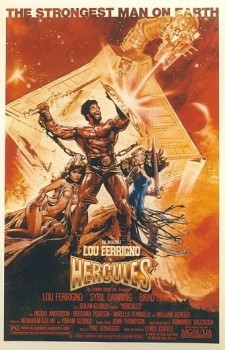
Sword and Sorcery enjoyed a brief, mostly-unhappy revival in the 1980s.  Much of it came in the wake of John Milius’s Conan The Barbarian (1982).  Some were downright awful (Ator the Invincible 2), some had their moments (the disappointing Conan the Destroyer), some I really like despite their flaws (The Sword and the Sorcerer).

While I was of an age and inclination to see pretty much anything S&S related in the early 80s, somehow I missed Hundra (1983).  Thanks to DVD I came across this cubic zirconium-in-the-rough by accident. What I said “in the wake of Conan” above goes doubly for this — Hundra isn’t so much in the wake as it is being towed by Milius’s epic.  The plot arc follow’s Conan’s sandaled footsteps, it was filmed in Spain not only using similar locations but Conan’s leftover sets and what I suspect are bits of the costumes as well.

That being said, it’s a well-done picture.  Usually low-budget movies look low-budget, but this one manages to rise above the dollars spent into something bigger-and-better looking.

Read More Read More

On DVD: Journey to the Center of the Earth (2008)

On DVD: Journey to the Center of the Earth (2008)

Theatrical PosterJourney to the Center of the Earth (2008)
Directed by Eric Brevig. Starring Brendan Fraser, Josh Hutcherson, Anita Briem

Arguing whether Jules Verne is the Father of Science Fiction seems useless now. Regardless of who may deserve the title more—Cyrano de Bergerac, Mary Shelley, Jules Verne, H. G. Wells, Hugo Gernsback, John W. Campbell, etc.—Verne’s effect on literature of the imagination is so enormous and continually influential that he’s clearly the Father of Something Really Big. However, in the U.S. he still suffers from poor, outdated translations (often with cuts that remove almost a fourth of the originals) and the perception that he’s only an author for children. Better translations are now available, but the awful ones still remain in print, perching on bookshelves like croaking ravens to scare new readers away. New translations of his non-scientific-themed novels have started to broaden the author’s reputation (see my reviews of Michael Strogoff and The Lighthouse at the End of the World to get a sense of the other sort of novels that the distinguished Frenchman wrote), but Verne still remains “that guy we read in fifth grade” for many adults.

I’m a Verne fanatic, unabashedly, and I love him even more now than I did when I was an eager “young adult” reader. Discovering new books and new versions of books I thought I knew—the recent translations and restorations of Twenty Thousand Leagues under the Sea are nothing short of revelatory—makes each Verne read a thrilling exploration. My favorite of his novels is Voyage au centre de la Terre, published in 1864 as the author’s career was starting to ascend. It was translated into English as Journey to the Center of the Earth, and sometimes Journey to the Interior of the Earth. On a deep personal level, I respond to the romance of a subterranean sojourn and discovering the mysteries hiding in the great caverns beneath a volcano in Iceland. Verne’s sense of wonder here is simply breathtaking.

Read More Read More

The Return of the King (1980)

The Return of the King (1980)

Barad-dûrThe Return of the King (ABC TV, 1980)

Directed by Jules Bass and Arthur Rankin Jr. Featuring the Voices of John Huston, Roddy McDowall, Orson Bean, William Conrad, Casey Casem, Theodore Gottlieb, Theodore Bikel, Glenn Yarbrough, Paul Frees

“Listen as we speak of the fall of the Lord of Darkness, and the return of a King of Light.”

The novel The Lord of the Rings has had an important place in my life even before I actually read it in ninth grade. As a young child, I already loved monsters and tales of fantasy, and my parents were glad to feed my monster obsession. They both knew about the books The Hobbit and The Lord of the Rings (although neither had read them) and told me their pages were filled with dragons and trolls and all sorts of wonderful beasties; they showed me the Greg and Tim Hildebrandt calendars to whet my appetite. At age five, I had my first “Tolkien” experience with the television broadcast of the animated movie The Hobbit from Rankin/Bass. My mother then read the book to me. The moment I was old enough, I read it for myself. The enormity of The Lord of the Rings was still too far off, but there were movie versions to fill the gap. I was confused but somewhat dazzled by the odd, unfinished The Lord of the Rings film by Ralph Bakshi when it premiered on cable, but it was the 1980 animated television movie The Return of the King that really gave me a sense of what the epic novel was about.

Read More Read More

A Look at Planet Hulk

A Look at Planet Hulk

I’m not what you’d call a comics guy — I don’t have a set of first editions in acid-free bags in the closet, I couldn’t tell you who the Fantastic Four are, or even distinguish between Marvel and DC (though I’m pretty sure Spiderman is in one camp, and Batman in the other). But I’ve always liked and respected the medium, and the rise of the graphic novel has made sampling the best of what comics has to offer convenient for casual fans like me. So, when I spotted a recommendation in an online forum for Planet Hulk, a graphic novel in which the big green superhero takes on the role of John Carter in a sword and planet epic, I was intrigued, and made an impulse purchase. I’m glad I did.

Planet Hulk is a compilation of Hulk #92-105, with further material from other special releases, and a wealth of supplemental art and background info rounding out a hefty hardcover. Lifted straight from the comic, Planet Hulk is clearly a slice of the ongoing story of the Hulk; a story of which I was wholly ignorant before jumping into this graphic novel. But that didn’t prove to be a problem.

Read More Read More

On DVD: The Mummy: Tomb of the Dragon Emperor

On DVD: The Mummy: Tomb of the Dragon Emperor

First things first: Happy Birthday, Clark Ashton Smith!

The Mummy: Tomb of the Dragon Emperor (2008)
Directed by Rob Cohen
Starring Brendan Fraser, Jet Li, Maria Bello, John Hannah, Michelle Yeoh, Luke Ford, Isabella Leong, Anthony Wong Chau-Sang

On my own blog, I’ve done a set of weekly reviews surveying all the movies in Universal’s classic Mummy franchise. Just as I finished up this lengthy project, the most recent entry in the second Universal Mummy franchise, The Mummy: Tomb of the Dragon Emperor, arrived on DVD, so it seemed an ideal time to take a look at it.

Except… no mummies appear in this “Mummy movie.” The film earns the first part of its title because it features ongoing characters from the two legitimate Mummy flicks that proceeded it, The Mummy (1999) and The Mummy Returns (2001). But there’s no Egypt aside from a bar called “Imhotep’s,” and no mummified anything. We instead have an immortal Chinese Emperor/Wizard who breaks free from a terracotta shell, but that isn’t a mummy in my definition. The visual effects try to give him a mummified appearance when he’s still in his clay-like form, but sorry, still not a mummy.

But then, the second series of Universal mummy movies were never about the particulars of the classic horror-movie undead Egyptian, but about copying Indiana Jones, old adventure serials, pulp magazines, and adding wiseacre humor to attract the widest audience possible. Tomb of the Dragon Emperor is perhaps the most pulpish of the four films in the series (I’m including the 2002 sword-and-sorcery spin-off The Scorpion King), and fans of pulp fantasy will find it interesting.

Read More Read More

Short Fiction Review: Fast Forward 2 edited by Lou Anders

Short Fiction Review: Fast Forward 2 edited by Lou Anders

Fast Forward 2 cover“So just what is science fiction?” asks editor Lou Anders in the preamble to his second and latest volume of Fast Forward, an annual collection of original genre stories (you can find my review of the first edition here). Theodore Sturgeon, whose definition Anders includes in the epigraph, used to seem to say it best: “…a story about human beings with a human problem, and a human solution, that would not have happened at all without its science content.” Maybe back when Sturgeon was writing, that covered all the bases. What, then, would you call this anthology’s “True Names” by Benjamin Rosenbaum and Cory Doctrow, in which nary a human can be discerned in a computer generated simulacrum? And while Paul McCauley’s “Adventure” does take place off-world, this would be an example of where you could take the science out of it and still have a story in which the protagonist attempts to confront his illusions, with disappointing results.

Another reason for continually posing the question is to distinguish science fiction even while mainstream literature adopts conventions of the genre that dare not be named by publicists and marketing programs. Another, related, part of the challenge is that we live in science fictional times. Used to be, a character accessing a globally connected computer network to get directions to the nearest sushi bar could only be taken seriously in the funny pages of Dick Tracy wrist communicators. These days, it’s merely another mundane background detail.

Anders’s definition has multiple aspects, but the one notable criterion is that, “To my mind, science fiction is first and foremost entertainment and must be entertainment if it is to function effectively…” (15). While he goes on to say that it should be more than just entertainment, I think the reason most people start reading science fiction in the first place is that it is great fun, something that frequently gets overlooked in the sometimes ponderous discussions about what is, or is not, science fictional. If Fast Forward 2 has an overriding theme, it is that the fourteen stories here are highly entertaining (though, as it happens, the stories I found the most intriguing were actually the least purely escapist).

Read More Read More

Read Planet: Kline’s The Swordsman of Mars

Read Planet: Kline’s The Swordsman of Mars


I read The Swordsman of Mars out of a sense of obligation, which is probably the worst way to read anything, and with the firm conviction that it would suck. That’s the word on the virtual street about Otis Adelbert Kline: he’s a poor man’s Edgar Rice Burroughs. So I was thinking: ERB, without that mellifluous prose style and brilliant plotting. Urk.

Well, I was completely wrong. I enjoyed the book enormously, but that’s not all. You can enjoy almost any piece of writing if you approach it with the lowest possible expectations (and, yes, I am thinking of Lin Carter‘s multifarious pastiches here). I came away from it with considerable respect for Otis Adelbert Kline as a writer of fantastic fiction.

Read More Read More

The Spider Revival Part 2: City of Doom

The Spider Revival Part 2: City of Doom

Spider-CityOfDoomLast week, I reviewed the first volume in Baen’s trade paperback reprints of the adventures of Norvell Page’s grisly pulp hero, The Spider. Now, I plunge into the violent maelstrom of … The Spider: City of Doom!

The three novels reprinted in this volume are The City Destroyer, The Faceless One, and The Council of Evil. The City Destroyer, which Page submitted under the title Crumbling Doom, is the earliest of Baen’s reprinted Spider stories, published originally in the January 1935 issue of The Spider. It also appeared in Pocket Books’ reformatted (with pointless modernizing) series in the ‘70s. It ranks as one of the Norvell Page’s best-written works, but it has an ugly timeliness that dulls the edge of the absurdist fantasy and may unsettle some readers. In the opening chapter the villain, decked out with the bland handle “The Master,” steals the secret for a metal-corroding dust. Richard Wentworth thinks the Master plans to use the chemical invention to break into bank vaults, but he should know that his adversaries don’t think that small. Instead of wasting time with piddling safes, the Master uses the chemical to knock down entire New York skyscrapers, killing thousands of people. His first target is New York’s newest, tallest building, and the writing dwells for a few pages on a gruesome depiction of the skyscraper’s collapse and the gory aftermath, complete with fleeing crowds, a dust cloud pluming over the Manhattan skyline, and trapped people trying to escape certain death in a crumbling tower.

Uhm … not a pleasant memory. At times, our world and that of the pulps share tragic similarities. Amidst the Great Depression and staring toward an oncoming second world war, pulp authors occasionally tapped into an insecurity not far removed from our own. The City Destroyer delivers more fear and tension than any thriller you’ll find on the recent bestseller lists, but new readers should be prepared for moments of queasy familiarity. It isn’t much of a nostalgia trip, and even the Spider’s heroics can’t halt an obscene death toll. I would conservatively estimate that seven thousand people perish during this story.

Read More Read More

Forgive Me, Steven, For I Have Sinned . . .

Forgive Me, Steven, For I Have Sinned . . .

“Man, you have got to read this book!”  The words came in a breathless rush, from a friend whose opinion I trusted.  “It’s better than Gates of Fire!” he said, thrusting a rather thick volume into my hands.

Now, most everyone who knows me understands that I have two literary idols, one dead and one living: Robert E. Howard and Steven Pressfield.  They are the prophets of my personal pantheon; their words, their stories, have no equal.  Thus, for him to come up to me and say he’d found a book better than Pressfield’s Gates of Fire was pure heresy, like taking a tinkle on the Bible.  “Impossible!” I replied, holding the book away from my body as though its touch was enough to cause spiritual pollution.

“Read it! You’ll see!”

Color me skeptical . . . and more than a little eager to prove my friend wrong. I accepted his challenge and dug into it that very afternoon, expecting I’d call him up in an hour or so and curse him for taking Pressfield’s name in vain. But I couldn’t. That book had sucked me in.

Read More Read More