Join the Corps! The Colonial Marines Operations Manual for Alien: The Roleplaying Game
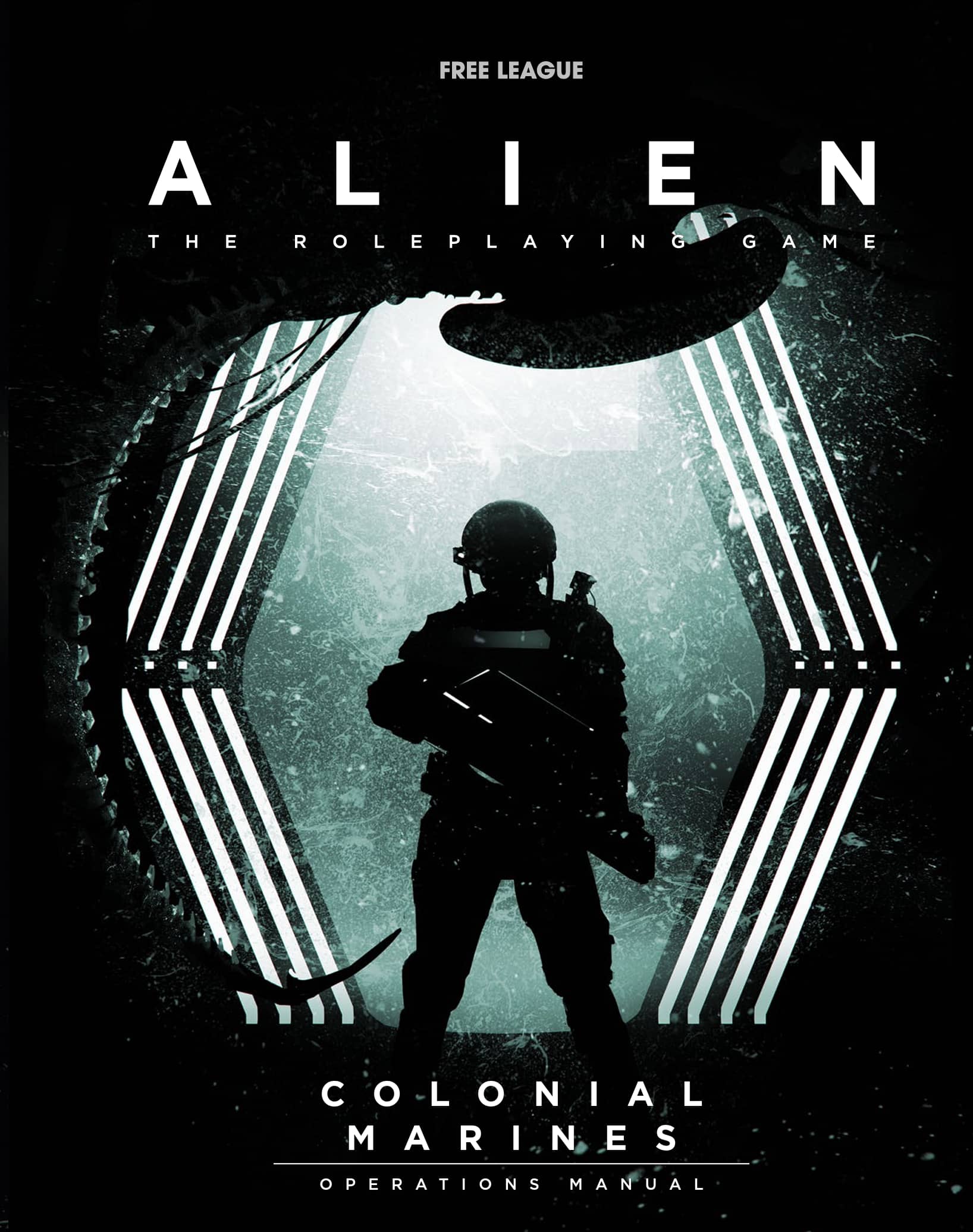
When Free League Publishing released the ALIEN Roleplaying Game, the obvious next supplement (beyond adventures) was a book about the Colonial Marines, featured so prominently in the film ALIENS and subsequent comics and books. The ALIEN Roleplaying Game core rulebook has proven to be very successful, coming in as one of the top five bestselling RPGs in 2021. Black Gate’s own E.E. Knight reviewed that book, which you can read here.
This author’s personal take on the core rules is that they are superb. They capture the cosmic-slasher-horror and cyberpunk-ish setting of the ALIEN universe as we’ve come to understand it. Combat is deadly and the stress mechanic is brutal, particularly when fighting the titular xenomorphs. Characters quickly succumb to all sorts of panic as they witness their human allies impaled by spiked tails, dragged away to become home to the alien implanted larvae, see humans metamorphose into something else as they encounter black goo or corporate experiments with it, and many more. The game is intentionally unfair and unbalanced against players (which they need to understand upfront). When all the players accept this and engage in the store, this results are exciting and memorable roleplaying. Players generally know their character are likely doomed and still work to find their way out. A sliver of hope.