Goth Chick News: Dracula the Un-Dead by Dacre Stoker
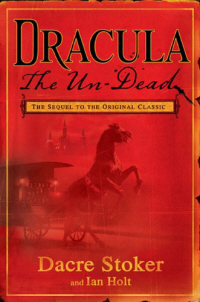 As far as I’m concerned, Christmas just came early.
Let’s be honest. In my house, Christmas always comes early; usually on October 31st to be exact, and everything after that is just commercial fall-out. However, I truly got a horror-movie-opening-night, new-season-of-True-Blood-sized surprise to find that on October 13th the literary event of the century had slipped past me. But I’m sure it’s because I was busy installing my life-sized, automated Specter of Death in the front yard to scare the crap out of the neighbor kids. One can only multi-task so much.
One-hundred and twelve years after the original novel, Dracula the Un-Dead, just released in the United States, is a sequel to Bram Stoker’s 1897 classic. Written by Dacre Stoker, the original author’s great-grandnephew, and co-written by Dracula historian Ian Holt, the book picks up 25 years after the Victorian-era monster was supposedly killed in the original.
Dracula the Un-Dead is based in part on 125 pages of handwritten notes left by Bram Stoker. Of all the books, movies and other tales to use Dracula’s name throughout the decades, this is the first since the 1931 Bela Lugosi movie to have the Stoker family’s endorsement and input.
Needless to say, I violated several traffic laws and took out a couple of skate boarders getting to my local book store. It was a bit anti-climatic to find there was no Dracula the Un-Dead display up front, but it was prominently displayed in the horror section, and like Golem with his “precious” I clutched it in one hand (and clutched the steering wheel in the other) to get back here.
And I thought the tickets I just bought to Adams Family – the Musical were going to be the pinnacle of the holiday season. Oh please, PLEASE let it live up to the hype!
Stay tuned!
 If there is a watch, then there must be a watchmaker. That’s the crux of the argument for intelligent design, that existence, and specifically you and me, are the result of some conscious creator. My main problem with this is the adjective “intelligent.” If I was designing existence, there’s a lot I’d leave out, like cancer or maggots or flatulence or Glenn Beck. Or that for certain kinds of life to continue and thrive, other life forms must suffer. Besides, this all begs the question of, if there is a designer (intelligent or otherwise), who created the designer?
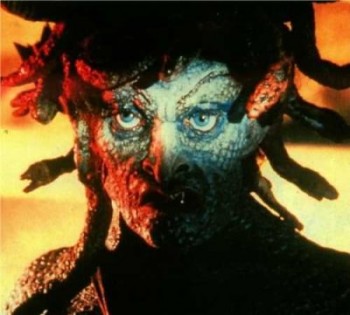 I’m not going to say anything about how Hollywood hasn’t had an original thought since 1997. Or the absurdity of remaking films when they are going to be rewritten or re-imagined anyway. Or how most remakes turn into hyper-kinetic kaleidoscopes of eye-candy and dumb dialogue.
 From Jason Sizemore of Apex Magazine:
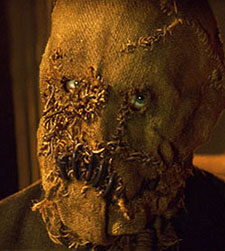 My novel-writing continues apace. Therefore, I shall be brief today. Or as brief as I possibly can.
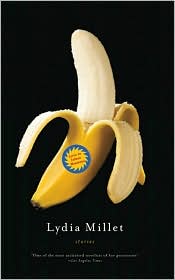 While her work sometimes hints at the fantastic, Lydia Millet isn’t strictly speaking a fantasy writer, certainly not in the sense of questing elves or weird alternate universes, and certainly not as evidenced in her new short story collection, Love in Infant Monkeys. Yet Millet’s work is frequently mentioned in genre venues; indeed, one of the stories collected here, “Thomas Edison and Vasil Golakov,” (in which the famed inventor of light bulbs and power generation attains metaphysical illumination by continually re-running a film of a circus elephant’s seemingly Christ-like electrocution)previously appeared in
 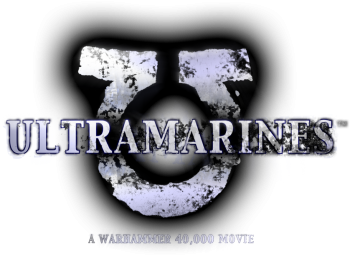 Chances are if you are at all interested in fantasy or science fiction books or games, you’ve at least brushed against Games Workshop’s ubiquitous Warhammer franchise. Warhammer comes in roughly two flavors, the fantasy version which is a Tolkien, D&D, and Moorcock mash-up, and the space opera version, called Warhammer 40,000. Taking place in the bleak world of the 41st millennium, with the tagline “In the grim darkness of the future there is only war,” Warhammer 40k is a violent world of warring factions, lost technology, dark and corrupting forces, fanaticism, and a medieval Gothic aesthetic. It is a universe where power armored soldiers charge into battle with chainsaw swords screaming religious oaths, millennia-old spaceships a mile long look more like Notre Dame Cathedral than the starship Enterprise, and daemonic forces and hostile races in the form of orks, ‘elves,’ and H.R. Geiger aliens erode the power of a moribund human civilization presided over by a nearly-dead God Emperor.
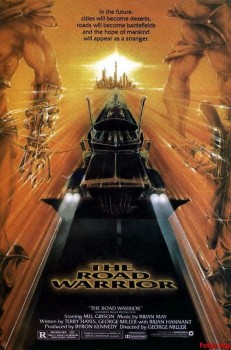 Right before I begin writing any major-length work, I do some important “stretching” exercises. No, not writing exercises; I do those nearly every day of the year regardless of what other projects I’m working on. This exercise is picking some DVDs off my shelves and queuing up a few key scenes that get me in the mood to tackle writing a novel. I don’t watch the whole movie (I usually don’t have the time), only a specific scene that does something to the synapses in my brain and makes me want to charge at the word processor and start slugging.