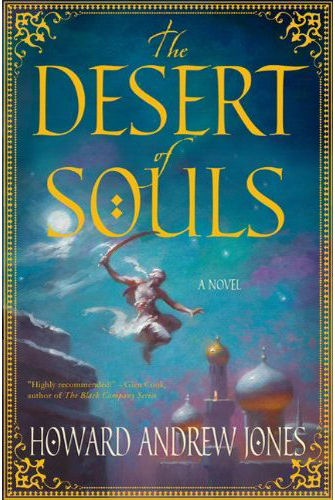
Art of the Genre: Rise of the Runelords
There’s something nice about being in L.A. Sure, it has a bad rap, but when the snow is thick in Chicago, and the wind is blowing off the lake, it didn’t take much for Ryan Harvey and I to jump at John O’Neill’s offer to spearhead a Los Angeles satellite office of BG. Ryan picked a great spot, a six story complex right off the Redondo Pier, the view of the Pacific and the strand of beach below a perfect change from the snow and riveted metal of the BG Tower, my old office view completely obstructed by the zeppelin docking gangway.
 Anyway, I digress, what I was saying is that it’s nice to be in sunny southern California, and when O’Neill sent a telegraph that I had to fly to Seattle for an interview I wasn’t all smiles, that is until I discovered the person and the subject matter of the interview. [Note: He probably did this to drum up business for Howard Andrew Jones’s first Pathfinder novel Plague of Shadows, but I’ll take it… oh, and READ the book, it is awesome!]
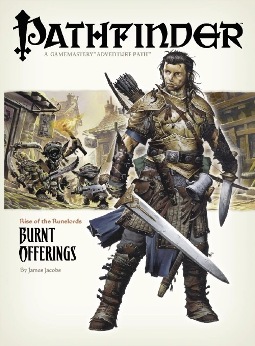
The place, the new Paizo HQ in Redmond Washington, just outside of Seattle. On an aside here, after playing Shadowrun till my eyes bled in college, I pretty much knew Seattle like I was born and raised there so Redmond for me was old hat. The person, Editor-in-Chief James Jacobs, and the subject Paizo’s first Pathfinder series, the 2007 classic, Rise of the Runelords.
After devoting the appropriate time to rubbing the assignment in Ryan’s face, I jumped a flight to Seattle and the rain and gloom of the northwest. While airborne, I contacted Wayne Reynolds who was featured in Burnt Offerings and the rest of the Rise of the Runelords series. I figured if I was going to do this, I better include some never before seen art, and as Wayne did the Iconics, why not see what he could come up with from his files. Note: Wayne did a Pathfinder Iconic for Black Gate that can be found here.


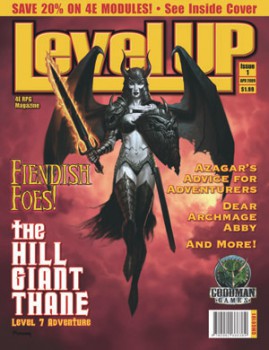 Gaming magazines can be a great asset to planning a roleplaying game, but I’ve often considered them to not be worth the cost. This one, reviewed by our very own Howard Andrew Jones, looks like it gives quite a bit of bang for the buck (or, in this case, 2 bucks). The publisher,
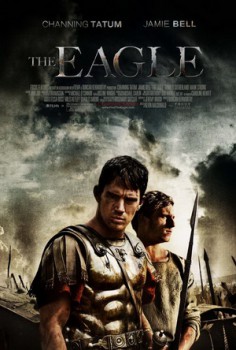 The Eagle (2011)

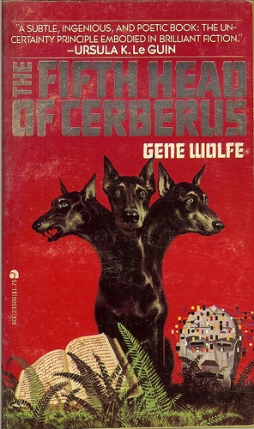 Reading The Fifth Head of Cerberus, I was struck by the way the book seemed eminently suited to the internet age. Never mind that it was written in the early 1970s. Like many of Gene Wolfe’s fictions, it’s a text whose nature is in harmony with the way the internet allows a text to be scrutinised; its depths, its meanings, its allusions — or at least some of them — can produce multiple readings, any of which can be valid, but which deepen the work as a whole the more of them you can think of and hold in your head at once. And can any one reader imagine as many different readings as a community of readers will produce?