A Review of Twelve by Jasper Kent
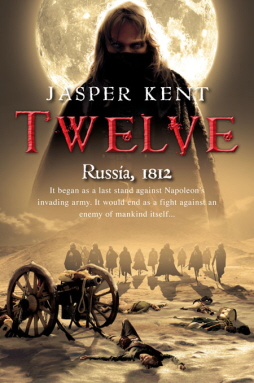 Twelve
By Jasper Kent
Pyr (447 pages, $17.00, September 2010)
Twelve is set in Russia in the year 1812. While America was fighting a trans-Atlantic war against the British, Napoleon led a Grand Armee of 450,000 soldiers across the Niemen river into Russia. The outnumbered and undertrained Tsarist armies fought a series of retreating actions, and the French successfully occupied Moscow just as winter was setting in.
The novel is narrated by Aleksei Ivanovich Danilov, a soldier already weary from a lifetime of war and marked by the loss of two fingers in a Turkish dungeon. At the time of the French invasion he is assigned to a unit of three other soldiers tasked with undermining the French war effort via espionage and commando raids.
The opening line of chapter 1 introduces their strategy: “Dmitry Fetyukovich said he knew some people.” Dmitry knows, in fact, a group of mercenaries from the Danube river valley who fought with the Russians in an earlier conflict with the Turks. These mercenaries share a common interest with Aleksei and his comrades: They love nothing better than killing Frenchmen, and their efficacy is legendary.
As the mercenaries approach Moscow from the south, Aleksei hears of a series of unusual “plagues” breaking out in small towns along their route, giving him a faint feeling of unease. At last, late at night, twelve men arrive in Moscow under the leadership of a man who introduces himself as Zmyeevich — in Russian, “Son of the Serpent.”
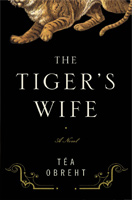 The Tiger’s Wife is an interlocking series of fabulist tales, set in an unnamed Balkan country that is obviously Yugoslavia before and after its dissolution into ethnic political states, which unfolds the life and death of the narrator’s grandfather. It’s a meditation on grief, cultural blindness and bigotry, among other things, but overarchingly the constant effort to try to live a decent life and see the decency in others, even those who seemingly don’t possess it. Written by Téa Obreht, whom The New Yorker named one of the twenty best American fiction writers under forty and the National Book Foundation’s “5 Under 35” list, it is, as you might expect given those accolades, considered a “literary” novel. Which is perhaps why you haven’t seen much mention of it in genre circles, despite the fact that it is a fantasy. However you want to classify it, it’s good and well-deserving of the hype it’s received. One thing that struck me that I don’t think I’ve seen mentioned is the similarity between Obreht and Ray Bradbury in his prime, back in the days when Clifton Fadiman was trying to sell The Martian Chronicles to the literary mainstream.

 As one of the new recruits here at Black Gate, I’ll be bringing you a series of what I hope you’ll find to be interesting posts soon enough. But first I wanted to say howdy and tell you a little bit about myself.