The Death of an Audi
 I usually reserve the Black Gate blog strictly for topics related to the genre. I hope you can forgive a brief trespass on that tradition today, as I celebrate being alive.
This morning I was on IL-47, a single-lane country highway, heading south to Champaign, where I work as a software salesman. At approximately 10:32 a.m. I watched as a fully-loaded 18 wheeler in the northbound lane went into a lock-up to prevent a crash with a stopped car. The truck lost control and twisted across the center meridian until it fully occupied both his lane and mine, still coming very fast and leaving me without a lot of options.
I hit him doing slightly over 60 mph. I’d already gone off-road on the right shoulder, but it wasn’t enough to avoid a collision. The impact triggered four of my Audi’s airbags, including three I didn’t even know I had. Seriously — there were airbags everywhere.
I took the hit on the driver side. It drove the chassis down into my left rear tire, immobilizing it and sending me into a 60-mph uncontrolled spin — past the truck and back onto the road, then deep into the shoulder on the right. Fortunately the road and the shoulder were both clear. I leveled about 120 feet of grass in a dead line.
I got out of the car without a scratch, for which I thank God, and German engineering.
I can’t say the same about my loyal car, which took a critical hit. It took ten minutes with a chain and a tow truck just to get it back on the road, and I can’t say for sure if it will ever move under its own power again.
But today, I have absolutely no complaints. I’m just glad to be alive. Alice and our three kids showed up in her van three hours later, and drove me home to St. Charles, where we went out to dinner and celebrated. I consider myself a very lucky man.
But tomorrow, I will miss my car.
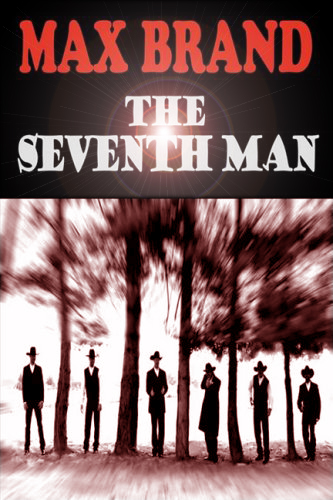 Prelim: The Seventh Man is in the public domain and
 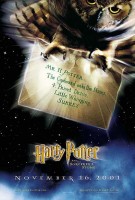 I remember walking through a movie theater and seeing a teaser poster for the first Harry Potter film. It showed an owl carrying a card addressed to Harry, in the cupboard under the stairs. There it is, to the right.
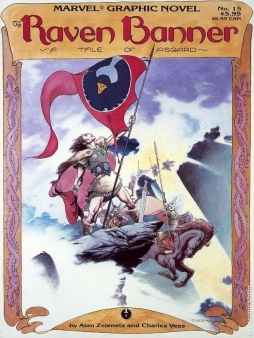 Marvel Comics has published some great works over the nearly fifty years since the company took its modern form with Fantastic Four #1. One thinks of the suberb superhero comics of Jack Kirby and Steve Ditko, but there’s a lot more than that in Marvel’s vaults. William Patrick Maynard’s done some strong work on this web site looking back at some excellent series, and I encourage everyone to take a look at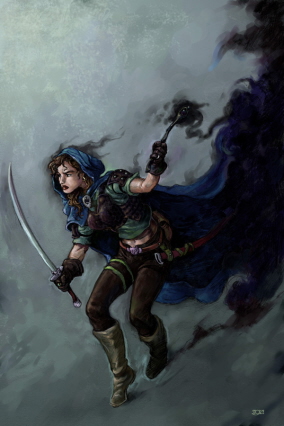
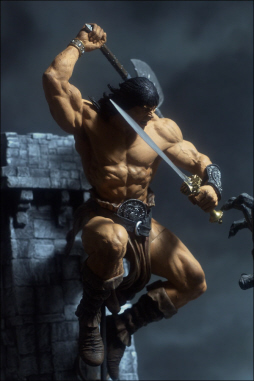 Imagine Conan in Shadizar, meeting with a beautiful woman calling herself Fortuna who pays him to find Thuris, the man who kidnapped her younger sister. Conan accepts the woman’s coin but finds himself in the middle of double and triple crosses as Fortuna — known as Brigid the Bold in the underworld — seeks for the Falcon of Maltus along with her betrayed confederates, Jubliex Cairo, Wilmer the Younger, and Gutmar.
 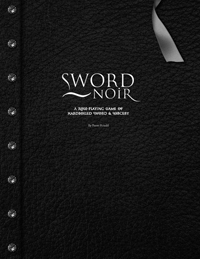 As usual, the kind of stories I was reading and writing bled into the kind of games I was playing, and this took me down a path I did not expect. I ended cobbling together a system that was purpose built to play “sword noir.” In order to do that, I had to define the term.
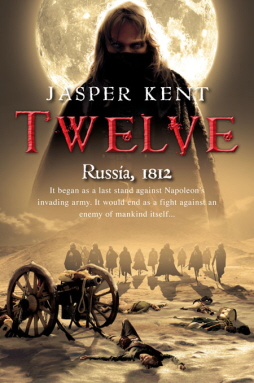 Twelve
 The Tiger’s Wife is an interlocking series of fabulist tales, set in an unnamed Balkan country that is obviously Yugoslavia before and after its dissolution into ethnic political states, which unfolds the life and death of the narrator’s grandfather. It’s a meditation on grief, cultural blindness and bigotry, among other things, but overarchingly the constant effort to try to live a decent life and see the decency in others, even those who seemingly don’t possess it. Written by Téa Obreht, whom The New Yorker named one of the twenty best American fiction writers under forty and the National Book Foundation’s “5 Under 35” list, it is, as you might expect given those accolades, considered a “literary” novel. Which is perhaps why you haven’t seen much mention of it in genre circles, despite the fact that it is a fantasy. However you want to classify it, it’s good and well-deserving of the hype it’s received. One thing that struck me that I don’t think I’ve seen mentioned is the similarity between Obreht and Ray Bradbury in his prime, back in the days when Clifton Fadiman was trying to sell The Martian Chronicles to the literary mainstream.